- Company Articles
- Products and Technology
- Product knowledge
- Key Advantages of 4040E EU Standard Aluminum Profile Over Steel in Lightweight Structures

Key Advantages of 4040E EU Standard Aluminum Profile Over Steel in Lightweight Structures
Related Product
4040E EU Standard Aluminum Profile
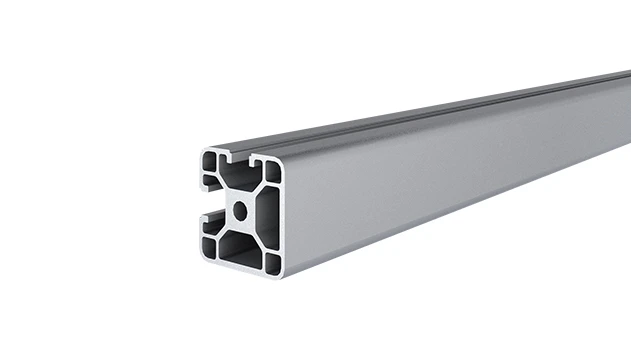
4040E is a 4.00x4.00 CM fractional 40 series square extrusion T-slot profile with two side open T-slots, two side with closed face, each side with 4.00cm face. The profile has align-a-grooves to assist in aligning connecting profiles.
In today's fast-paced manufacturing and engineering landscape, the quest for materials that balance strength, durability, and lightweight performance has never been more critical. For decades, steel reigned supreme as the go-to choice for building structures—from factory workbenches to industrial racks. But as industries evolve, so do their needs: flexibility, sustainability, and cost-efficiency are now just as important as raw strength. Enter aluminum, and more specifically, the 4040 EU standard aluminum profile. This unassuming yet versatile material is quietly revolutionizing how we design and build lightweight structures, offering a host of advantages that steel simply can't match. Let's dive into why engineers, manufacturers, and lean system enthusiasts are making the switch.
1. Unmatched Weight Reduction Without Sacrificing Strength
Let's start with the most obvious—and perhaps most impactful—advantage: weight. Aluminum is significantly lighter than steel, with a density of approximately 2.7 g/cm³ compared to steel's 7.8 g/cm³. That means, pound for pound, aluminum weighs roughly one-third of what steel does. For anyone who's ever struggled to move a heavy steel workbench or install a bulky steel rack, this difference is game-changing.
Consider the 4040 EU standard aluminum profile, a common choice for lightweight structures. A 40x40mm aluminum extrusion profile (measuring 40mm in width and height) weighs about 1.8 kg per meter, while a comparable steel square tube of the same dimensions tips the scales at around 5.5 kg per meter. That's a 67% weight reduction! When you scale this up to an entire production line—say, a series of workbenches, flow racks, or conveyor supports—the total weight savings add up dramatically.
Real-World Impact:
A mid-sized electronics manufacturer recently replaced their steel workbenches with ones built using 4040 aluminum profiles. The old steel benches weighed 80 kg each; the new aluminum ones? Just 25 kg. This made reconfiguring the factory floor—part of their lean system initiative—far easier. Workers could now move benches by hand, eliminating the need for forklifts and cutting downtime during layout changes by 40%.
But what about strength? Skeptics often worry that lighter materials mean weaker structures, but aluminum holds its own. The 4040 EU standard profile, made from high-grade aluminum alloy, offers excellent tensile strength (around 200-300 MPa) and rigidity, making it more than capable of supporting tools, components, and even heavy machinery in most industrial settings. For applications requiring extra reinforcement, aluminum profile accessories like corner brackets, gussets, and cross-braces can easily be added via the profile's T-slot design, boosting stability without adding significant weight.
2. Superior Corrosion Resistance: Less Maintenance, Longer Lifespan
Steel and rust go hand in hand—and anyone who's maintained steel structures knows the hassle. Without protective coatings (like paint, galvanizing, or powder coating), steel will corrode quickly, especially in humid, dusty, or chemical-exposed environments common in factories. Even with coatings, scratches or chips can expose the metal underneath, leading to rust spots that spread over time. This not only looks unprofessional but weakens the structure and requires constant upkeep.
Aluminum, on the other hand, is naturally corrosion-resistant. When exposed to air, it forms a thin, invisible oxide layer (aluminum oxide) that acts as a barrier, preventing further oxidation. This layer self-heals: if scratched, it quickly reforms, ensuring long-term protection. For the 4040 EU standard aluminum profile, this means it can withstand spills, moisture, and industrial fumes without rusting or degrading—no expensive coatings required.
Take, for example, a food processing plant where washdowns with water and sanitizers are daily occurrences. A steel workbench here would need frequent repainting or stainless steel upgrades (at a premium cost) to avoid rust. An aluminum extrusion profile workbench, though? It stays looking new for years, with only occasional wiping down needed. The result? Lower maintenance costs, fewer replacements, and a structure that retains its integrity even in harsh conditions.

3. Design Flexibility: Adaptable, Customizable, and Easy to Modify
Steel is strong, but it's also stubborn. Cutting, welding, or modifying steel requires specialized tools, skilled labor, and often a lot of time. Once a steel structure is built, changing its design—say, adding a shelf to a rack or reconfiguring a workbench—is a major undertaking. This rigidity clashes with modern manufacturing needs, where agility and adaptability are key to staying competitive (think lean system principles, where waste reduction and workflow optimization are priorities).
Aluminum extrusion profiles, particularly the 4040 EU standard, are the opposite: they're designed for flexibility. The extrusion process allows for complex, custom shapes, but even standard profiles come with built-in features that make modification a breeze. The most notable of these is the T-slot—a continuous groove running along the length of the profile. This slot lets you slide in aluminum profile accessories like brackets, connectors, panels, or even wheels, no welding or drilling required. Need to add a tool holder to your workbench? Just slide a T-nut into the slot and bolt it on. Want to extend a rack? Connect two profiles with a simple corner joint. It's like building with industrial-grade Legos.
This flexibility is a boon for lean system implementations. In a lean-focused facility, workflows change regularly as processes are optimized. With aluminum profiles, structures can evolve alongside these changes. A material rack that once held 3 rows of components can be reconfigured to 5 rows with minimal effort. A static workbench can be transformed into a mobile one by adding casters—all without cutting, welding, or damaging the original structure.
4. Sustainability: Eco-Friendly by Nature
Sustainability is no longer a buzzword; it's a business imperative. Companies are under increasing pressure to reduce their carbon footprint, and material choices play a huge role in this. Here, aluminum shines brighter than steel.
First, aluminum is 100% recyclable. Unlike steel, which loses some strength when recycled, aluminum retains its original properties no matter how many times it's melted down and reprocessed. In fact, recycling aluminum uses just 5% of the energy required to produce new aluminum from raw bauxite ore. This not only reduces greenhouse gas emissions but also cuts down on resource depletion.
Second, the longevity of aluminum structures means less frequent replacements. A steel workbench might need to be replaced every 5-7 years due to rust or wear; an aluminum one can last 15+ years with minimal maintenance. Fewer replacements mean less waste and fewer resources used over time.
Third, the lightweight nature of aluminum reduces transportation emissions. Shipping a truckload of aluminum profiles requires less fuel than shipping the same volume of steel, further lowering the carbon footprint of your supply chain. For companies aiming to meet sustainability goals, the 4040 aluminum profile is more than a material choice—it's a statement.
5. Cost-Efficiency: Lower Long-Term Expenses
At first glance, aluminum might seem pricier than steel. It's true: the upfront cost of a 4040 aluminum profile is higher than that of a comparable steel tube. But when you factor in the total cost of ownership—maintenance, labor, transportation, and replacement—aluminum often comes out ahead. Let's break it down:
| Cost Factor | Steel | 4040 EU Standard Aluminum Profile |
|---|---|---|
| Upfront Material Cost | Lower (e.g., $5-$8 per meter for steel tube) | Higher (e.g., $12-$15 per meter for aluminum profile) |
| Maintenance | High (painting, rust treatment, repairs: ~$200/year per structure) | Low (occasional cleaning: ~$20/year per structure) |
| Labor for Installation | High (requires heavy lifting equipment, welding: ~8 hours for a workbench) | Low (hand tools, no welding: ~2 hours for a workbench) |
| Transportation | High (heavier loads mean more fuel, larger vehicles) | Low (lighter weight reduces shipping costs by ~40%) |
| Lifespan | 5-7 years | 15-20 years |
| Total Cost Over 10 Years* | ~$1,200 per structure | ~$650 per structure |
*Estimates based on a standard 2-meter workbench with basic accessories.
The numbers speak for themselves: over a decade, aluminum structures cost nearly half as much as steel ones. And that's not even accounting for intangible benefits like reduced downtime (from easier modifications) or improved worker safety (from lighter, easier-to-handle materials).
6. A Perfect Fit for Lean Systems and Modern Workflows
Lean manufacturing isn't just about cutting costs—it's about creating efficient, waste-free workflows that adapt to changing needs. The 4040 EU standard aluminum profile aligns perfectly with this philosophy. Its lightweight nature makes it easy to reposition equipment, reducing setup time for new production runs. Its modular design (thanks to T-slots and aluminum profile accessories) means you can add or remove components on the fly, eliminating the waste of overbuilding or underutilizing space.
For example, a lean-focused auto parts supplier used to build fixed steel racks that held specific components. When production shifted to a new part, the old racks became obsolete and had to be scrapped. Now, they use 4040 aluminum profiles to build modular racks. When a new part comes in, they simply adjust the shelf heights or add dividers using T-slot accessories—no new racks needed. This not only saves money but also reduces waste, aligning with lean principles.
Workbenches, too, benefit from this flexibility. A 4040 aluminum workbench can start as a simple single-deck station, then evolve into a multi-tiered workspace with tool hooks, LED lights, or even integrated ESD (electrostatic discharge) protection—all without replacing the base structure. This adaptability ensures that your workspace grows with your needs, not against them.
Why 4040 EU Standard Aluminum Profile Stands Out
Not all aluminum profiles are created equal. The 4040 EU standard profile has become a favorite for a reason: it strikes the ideal balance between size, strength, and versatility. The "4040" refers to its dimensions (40mm x 40mm), making it large enough to support heavy loads (up to 200 kg per linear meter in some configurations) but small enough to remain lightweight. The EU standard ensures consistency in dimensions, slot sizes, and quality, so you can mix and match accessories from different suppliers without compatibility issues.
Whether you're building a simple workbench, a complex conveyor system, or a lean manufacturing cell, the 4040 profile provides a reliable foundation. Its smooth, clean finish also adds a professional look to any workspace—no more rough, rusty steel edges or mismatched welds.
Conclusion: The Future of Lightweight Structures is Aluminum
Steel has served us well, but the future belongs to materials that offer more than just strength. The 4040 EU standard aluminum profile embodies this future: lightweight yet strong, rigid yet flexible, durable yet sustainable. Its advantages—from weight reduction and corrosion resistance to design flexibility and long-term cost savings—make it the clear choice for modern lightweight structures. Whether you're a manufacturer looking to optimize your lean system, an engineer designing the next generation of workbenches, or a business owner focused on sustainability, aluminum profiles are more than a material upgrade—they're a strategic investment in efficiency, adaptability, and success.
So, the next time you're planning a structure, ask yourself: Do I need steel's brute strength, or do I need aluminum's smart advantages? For most lightweight applications, the answer is clear.