- Company Articles
- Products and Technology
- Product knowledge
- Key Advantages of Aluminum Free Flow Chain Conveyors for Lightweight Loads

Key Advantages of Aluminum Free Flow Chain Conveyors for Lightweight Loads
Related Product
Free Flow Chain Conveyor
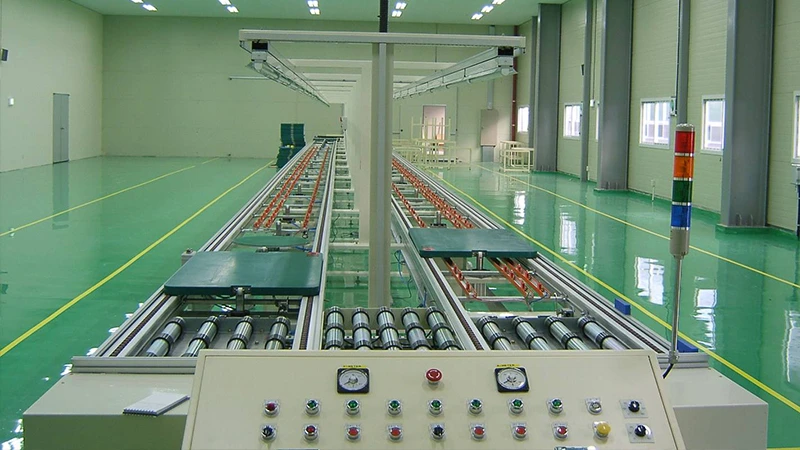
The free flow conveyor system uses a free flow chain that can increase the speed of the tooling board that supports the products. This can improve the efficiency and quality of the production process, as well as reduce the wear and tear of the system.
In the fast-paced world of manufacturing and warehousing, every second counts. Picture this: a production line where components move sluggishly from station to station, workers strain to adjust heavy equipment during reconfigurations, and bottlenecks form because the material handling system can't keep up with demand. These aren't just minor inconveniences—they're profit drains. The backbone of any efficient operation lies in how smoothly materials flow through the process, and that's where the right conveyor system becomes more than a tool; it's the heartbeat of your workflow. Today, we're diving into a solution that's transforming floors across industries: aluminum free flow chain conveyors. Designed specifically for lightweight loads, these systems blend agility, durability, and adaptability to solve some of the most common pain points in modern material handling. Let's explore why they're becoming the go-to choice for businesses aiming to streamline operations, cut waste, and stay ahead in a competitive market.
What Are Aluminum Free Flow Chain Conveyors?
Before we jump into their advantages, let's clarify what makes these conveyors unique. Aluminum free flow chain conveyors are material handling systems engineered to move lightweight to medium-weight items—think small components, packages, or subassemblies—with minimal friction and maximum efficiency. Unlike traditional conveyors that rely on belts or chains alone, these systems use a combination of
roller tracks
and a free-flowing chain mechanism, all mounted on a framework built from
aluminum extrusion profiles
.
At their core, these conveyors are modular. That means they're built from standardized parts—think of them as the Lego blocks of material handling. The
aluminum extrusion profile
serves as the sturdy yet lightweight frame, while
aluminum profile accessories
(like connectors, brackets, and guides) allow for easy assembly and customization. The roller tracks, often made from high-grade plastic or aluminum, reduce friction, letting items glide along the conveyor with little to no external force—hence the "free flow" name. When combined, these elements create a system that's not just a conveyor, but a flexible extension of your workflow, designed to adapt as your needs change.
But why aluminum? And why free flow? To answer that, we need to look at the challenges they're built to solve. Traditional steel conveyors, for example, are durable but heavy—making them hard to move or reconfigure. Plastic conveyors might be lightweight but lack the strength for long-term use. Aluminum free flow chain conveyors strike a balance, leveraging aluminum's unique properties to deliver a system that's both robust and nimble. And in an era where
lean systems
(focused on minimizing waste and maximizing value) are the gold standard, their ability to support continuous, efficient material flow makes them indispensable.
Key Advantage 1: Lightweight Design Without Sacrificing Strength
Let's start with the obvious: aluminum is light. Compared to steel, aluminum weighs roughly one-third as much, which might not sound like a big deal until you consider the entire conveyor system. Imagine installing a 50-foot conveyor line. A steel version could weigh hundreds of pounds, requiring heavy machinery to move and install, and putting stress on your facility's floor. An aluminum system, by contrast, can often be assembled and positioned by a small team with basic tools—no forklifts or cranes needed.
Strength Where It Matters
But "lightweight" doesn't mean "flimsy." Aluminum extrusion profiles are engineered for strength. The extrusion process—where aluminum is forced through a die to create specific shapes—results in consistent, structural integrity. Many aluminum conveyors use alloys like 6061-T6, which offers excellent tensile strength and corrosion resistance. This means they can handle daily wear and tear, including the constant movement of parts, without bending or warping. In fact, in applications with lightweight loads (typically up to 50 pounds per linear foot), aluminum conveyors often outlast plastic systems and match the durability of steel ones—all while being easier to handle.
Real-World Impact: Reduced Installation Downtime
Consider a small electronics manufacturer that needed to expand its production line. Their old steel conveyor took two days to install, requiring four workers and a rented forklift. When they switched to an aluminum free flow system, the new 30-foot line was up and running in six hours with just two workers. The lighter components meant they could maneuver the conveyor around existing equipment without disrupting other operations. The result? Less downtime, lower labor costs, and a faster transition to increased production capacity.
Key Advantage 2: Seamless Material Flow for Faster Throughput
In manufacturing, "flow" is everything. A single bottleneck can slow an entire line, leading to missed deadlines and frustrated teams. Aluminum free flow chain conveyors excel here, thanks to their
roller tracks
and low-friction design. Unlike belt conveyors, which can stretch or slip, or chain conveyors that require constant lubrication, free flow systems let items move using gravity or minimal power. For lightweight loads, this means items glide smoothly from one end to the other, with little to no jamming or sticking.
Precision Engineering for Consistency
The roller tracks in these conveyors are no afterthought. Each roller is spaced evenly and mounted on precision bearings, ensuring uniform movement. Even small items—like circuit boards or cosmetic packages—stay aligned and move at a steady pace. This consistency is a game-changer for quality control, too. When items move predictably, there's less risk of damage from sudden stops or collisions. For example, a pharmaceutical company using these conveyors to transport vials reported a 40% reduction in product breakage compared to their old belt system, simply because the vials moved more gently and consistently.
Supporting Just-In-Time (JIT) Production
In
lean systems
, JIT production is all about delivering materials exactly when they're needed—not a minute early, not a minute late. Aluminum free flow conveyors make this possible by creating a continuous, reliable flow between workstations. Imagine a car parts supplier where door handles are assembled in one area and then need to reach the final assembly line 50 feet away. With a free flow conveyor, each finished handle moves immediately to the next station, eliminating the need for workers to carry bins back and forth. This not only speeds up production but also reduces the risk of lost or misplaced items—key for maintaining JIT schedules.
Key Advantage 3: Unmatched Adaptability for Changing Workflows
If there's one thing businesses can count on, it's change. A new product line, a shift in demand, or a facility redesign can turn a once-efficient conveyor system into a rigid obstacle. Aluminum free flow chain conveyors, however, are built for change. Their modular design—powered by
aluminum extrusion profiles
and
aluminum profile accessories
—lets you reconfigure, extend, or repurpose the system with minimal effort.
Modular by Design: Mix, Match, and Modify
Let's say you need to add a 90-degree turn to your conveyor line to avoid a new machine. With traditional conveyors, this might require custom fabrication or replacing entire sections. With aluminum free flow systems, you'd simply purchase a corner module (one of the many
aluminum profile accessories
available) and bolt it into place. Need to extend the line by 10 feet? Add a few more extrusion profiles and roller track sections. The standardized components mean you don't need to reinvent the wheel—or hire a custom metalworker—every time your needs change.
From Production Line to Warehouse: Versatility in Action
These conveyors aren't limited to manufacturing floors, either. Warehouses, distribution centers, and even retail backrooms are finding uses for them. For example, an e-commerce fulfillment center might use them to connect
flow racks
(used for storing and picking items) to packing stations. During peak seasons, they can quickly extend the conveyor to handle more orders; during slower times, they can shorten it to save space. This versatility ensures the system grows with your business, rather than becoming a fixed cost that's soon outgrown.
Key Advantage 4: Cost-Efficiency Over the Long Haul
Let's talk numbers. At first glance, aluminum conveyors might seem pricier than plastic alternatives. But when you factor in their lifespan, maintenance needs, and adaptability, they often work out to be more cost-effective. Here's why:
Lower Maintenance Costs
Aluminum resists rust and corrosion, even in humid or dusty environments, which means less time and money spent on painting or replacing rusted parts. The roller tracks, often made from self-lubricating materials, require minimal upkeep—no regular oiling or greasing like chain conveyors. A food packaging plant, for instance, reported saving over $5,000 annually on maintenance after switching to aluminum free flow conveyors, simply because they no longer needed to shut down the line for weekly lubrication or rust removal.
Energy Efficiency
For lightweight loads, many aluminum free flow conveyors can operate using gravity alone—no motors, no electricity. Even motorized versions use minimal power, as the low friction of the roller tracks reduces the energy needed to move items. Over time, this adds up. A warehouse using a 100-foot gravity-fed aluminum conveyor estimated annual energy savings of $2,400 compared to their old motorized steel conveyor, which required constant power to run.
Longevity: A System That Grows With You
Unlike plastic conveyors that can crack or warp over time, or steel ones that rust, aluminum systems are built to last. With proper care, they can remain in service for 10+ years. And because they're modular, you won't need to replace the entire system if one part wears out—just swap in a new roller track or extrusion profile. This "replace as needed" approach keeps long-term costs low, making aluminum free flow conveyors an investment, not just an expense.
Comparing Conveyor Materials: Aluminum vs. Steel vs. Plastic
| Feature | Aluminum Free Flow Chain Conveyors | Steel Conveyors | Plastic Conveyors |
|---|---|---|---|
| Weight | Light (1/3 the weight of steel) | Heavy (high floor load stress) | Light, but less rigid |
| Strength | High strength-to-weight ratio; ideal for lightweight loads | Very strong, but overkill for lightweight applications | Low strength; prone to bending under stress |
| Installation Time | Fast (assembled by small teams with basic tools) | Slow (requires heavy machinery and multiple workers) | Fast, but less stable |
| Maintenance Cost | Low (rust-resistant, minimal lubrication) | High (rust prevention, regular lubrication) | Medium (prone to cracks, requires replacement parts) |
| Adaptability | High (modular, easy to reconfigure with accessories) | Low (rigid, hard to modify) | Medium (some modularity, but limited load capacity) |
| Energy Use | Low (often gravity-fed for lightweight loads) | High (requires more power to move heavy components) | Low, but limited to very light loads |
Real-World Applications: Where Aluminum Free Flow Conveyors Shine
To truly understand their value, let's look at how businesses across industries are using these conveyors to transform their operations.
Electronics Manufacturing: Precision and ESD Safety
In electronics manufacturing, static electricity is a silent killer—it can damage sensitive components like microchips or circuit boards. Many aluminum free flow conveyors are available with ESD-safe components (like conductive roller tracks or anti-static aluminum profiles), making them ideal for this industry. One semiconductor plant, for example, integrated these conveyors into their cleanroom, where they move ESD-sensitive wafers between inspection stations. The lightweight design allowed them to install the conveyors without disrupting the cleanroom's airflow, while the ESD protection reduced component damage by 65%.
E-Commerce Fulfillment: Speeding Up Order Processing
In e-commerce, the race to fulfill orders faster than competitors is never-ending.
Flow racks
(used for storing items in pick-ready slots) paired with aluminum free flow conveyors create a seamless path from storage to shipping. Workers pick items from flow racks and place them on the conveyor, which carries them directly to packing stations. A mid-sized online retailer implemented this setup and saw a 30% increase in order processing speed, as pickers no longer wasted time walking items to packing tables. The conveyor's modular design also let them add a "returns" lane during peak seasons, ensuring returned items were quickly routed to quality control without disrupting outgoing orders.
Automotive Parts: Supporting Lean Assembly Lines
Automotive manufacturing thrives on
lean systems
, and aluminum free flow conveyors fit right in. A car parts supplier uses them to move small components (like door locks and window switches) from assembly cells to the main production line. The conveyors are positioned at waist height, reducing worker bending and lifting, while the free flow design ensures components arrive exactly when the main line needs them—no stockpiling (a key lean principle). The result? A 25% reduction in work-in-progress inventory and a 15% boost in worker productivity.
Choosing the Right Aluminum Free Flow Chain Conveyor
Now that you understand their advantages, how do you select the right system for your needs? Here are a few key factors to consider:
Load Capacity
While these conveyors excel with lightweight loads, it's critical to match the system to your specific weight requirements. Most manufacturers provide load ratings (e.g., 20 lbs per linear foot, 50 lbs per linear foot), so be sure to calculate the maximum weight of the items you'll be moving—including any packaging.
Environment
Will the conveyor be used indoors or outdoors? In dry, clean environments (like electronics plants), standard aluminum profiles work well. In humid or dusty areas, look for corrosion-resistant coatings or stainless steel components. For ESD-sensitive industries, confirm the system includes ESD-safe features like conductive rollers or grounding accessories.
Integration with Existing Systems
Consider how the conveyor will connect to other equipment—
flow racks
, workstations, or packing tables. Look for
aluminum profile accessories
like adjustable height legs or connecting brackets to ensure a seamless fit. Many suppliers offer custom design services to help you map out the layout before purchasing.
Conclusion: Investing in the Future of Material Handling
Aluminum free flow chain conveyors aren't just another piece of equipment—they're a strategic investment in your operation's efficiency, flexibility, and bottom line. By combining the lightweight strength of
aluminum extrusion profiles
, the friction-reducing power of
roller tracks
, and the adaptability of
aluminum profile accessories
, these systems address the core challenges of modern material handling: slow workflows, rigid infrastructure, and rising costs. Whether you're running a small electronics shop or a large distribution center, they offer a path to smoother operations, happier workers, and greater competitiveness in a fast-changing market.
So, if you're tired of wrestling with heavy, outdated conveyors, or if your current system is holding back your
lean system
goals, it might be time to consider the switch. Aluminum free flow chain conveyors aren't just about moving items—they're about moving your business forward.