- Company Articles
- Products and Technology
- Application Cases
- Key Applications of 4040C EU Standard Aluminum Profile in the Medical Industry

Key Applications of 4040C EU Standard Aluminum Profile in the Medical Industry
Related Product
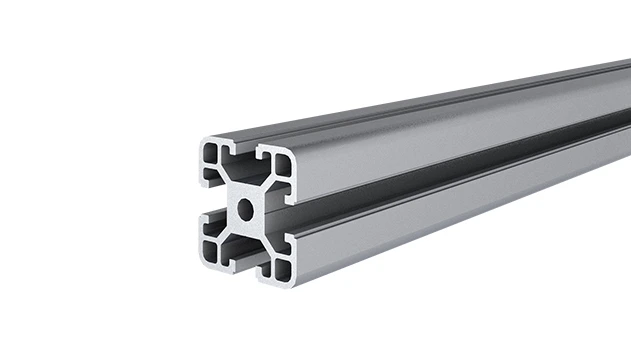
4040C EU Standard Aluminum Profile
4040C is a 4.00x4.00 CM fractional 40 series square extrusion T-slot profile with four open T-slots, each side with 4.00cm face. The profile has align-a-grooves to assist in aligning connecting profiles.
In the fast-paced world of healthcare, where every second counts and precision is non-negotiable, the tools and equipment that support daily operations play a silent yet critical role. From bustling hospital corridors to sterile lab environments, the infrastructure behind medical workflows needs to be durable, adaptable, and above all, designed with patient safety and staff efficiency in mind. Enter the 4040C EU Standard Aluminum Profile—a material that's quietly revolutionizing how medical facilities build, customize, and maintain their essential workspaces. In this article, we'll explore why this specific aluminum profile has become a go-to choice in healthcare, diving into its key applications, unique benefits, and how it integrates seamlessly with components like aluminum profile accessories, workbenches, roller tracks, and caster wheels to support lean systems in medical settings.
Understanding 4040C EU Standard Aluminum Profile: The Backbone of Medical Equipment
Before we dive into its applications, let's take a moment to get to know the 4040C EU Standard Aluminum Profile. Part of the broader 4040 series (which includes 4040A, 4040B, and others), the 4040C stands out for its balanced blend of strength, versatility, and medical-grade durability. Measuring 40mm x 40mm in cross-section—hence the "4040" designation—it's crafted from high-quality aluminum alloy (typically 6063-T5), known for its excellent corrosion resistance and lightweight properties. What truly sets the 4040C apart, though, is its precision-engineered T-slot design and compatibility with a wide range of aluminum profile accessories, making it a favorite for building custom, modular structures in environments where adaptability and hygiene are paramount.
In medical settings, where equipment must withstand frequent cleaning with harsh disinfectants, resist rust, and support heavy loads (think microscopes, centrifuges, or sterile supply carts), the 4040C's anodized surface treatment is a game-changer. This electrochemical process creates a hard, protective layer that not only boosts corrosion resistance but also makes the profile easy to wipe down—no crevices for bacteria to hide in. Unlike steel, which is heavy and prone to rust, or plastic, which lacks structural integrity, aluminum strikes the perfect balance: strong enough to support critical equipment, light enough to enable mobility, and inert enough to meet strict healthcare safety standards.
Why 4040C is a Cut Above for Medical Environments
To appreciate why healthcare facilities are increasingly turning to 4040C, let's break down its key advantages:
- Modularity & Customization: Thanks to aluminum profile accessories like brackets, connectors, and end caps, 4040C structures can be assembled and reconfigured without welding or specialized tools. Need a taller workbench for a new lab protocol? Swap out a few connectors. Want to add shelves to a medication cart? Slide in some brackets. This flexibility is invaluable in healthcare, where needs evolve—whether due to new technology, changing patient volumes, or pandemic-driven surges.
- Hygiene & Cleanability: The smooth, seamless surface of 4040C (enhanced by aluminum profile accessories like end caps that seal off T-slots) leaves nowhere for germs to linger. Unlike wooden workbenches, which can harbor bacteria in scratches, or steel frames with welded joints that trap moisture, 4040C stands up to daily disinfection with bleach, alcohol, or hydrogen peroxide—critical for infection control.
- Strength Without the Weight: Despite being lightweight, 4040C boasts impressive load capacity. A typical 4040C profile can support up to 200kg per linear meter, making it ideal for heavy lab equipment or stacked supply racks. This strength-to-weight ratio also makes it easier to build mobile structures (more on that later with caster wheels).
- Compliance & Safety: The 4040C meets EU standards for material safety, ensuring it's free from harmful chemicals that could leach into sterile environments. Its non-magnetic properties are also a boon for MRI facilities, where metal interference can disrupt imaging.

Key Applications: How 4040C Transforms Medical Workflows
Now, let's explore the real-world ways 4040C is making a difference in hospitals, labs, and clinics—with a focus on five critical applications: workbenches, roller tracks, caster wheels, and lean systems, all tied together by aluminum profile accessories.
1. Medical Workbenches: The Heart of Lab and Pharmacy Operations
Walk into any medical lab, pharmacy, or surgical prep area, and you'll likely find workbenches hard at work. These surfaces need to be stable, adjustable, and easy to sanitize—qualities that make 4040C the ideal frame material. Take a pathology lab, for example: technicians spend hours at workbenches analyzing tissue samples under microscopes, which require a rock-solid surface to avoid blurry images. A 4040C frame, paired with an aluminum honeycomb panel top (lightweight yet rigid), provides that stability. And because aluminum profile accessories like height-adjustable feet are available, the bench can be tailored to each technician's height, reducing strain and boosting productivity.
In pharmacies, where space is often tight and inventory changes daily, 4040C workbenches shine for their adaptability. Using T-slot aluminum profile accessories—like shelf brackets or tool hooks—pharmacists can add, remove, or reposition shelves to fit different medication bottle sizes or labeling equipment. No more one-size-fits-all workspaces; instead, a bench that evolves with the pharmacy's needs. And when it's time for deep cleaning at the end of the day, the smooth aluminum surfaces wipe clean in minutes, with no risk of warping or discoloration from disinfectants.
Even in surgical settings, 4040C plays a role. Pre-op workbenches, where instruments are laid out and sterilized, need to be both sturdy and easy to clean. A 4040C frame with a stainless steel top (another compatible accessory) checks both boxes, supporting heavy instrument trays while withstanding the high heat of autoclave sterilization cycles.
2. Roller Tracks: Streamlining Material Flow in Sterile Environments
In hospitals, efficiency is a matter of patient care. When sterile supplies, lab samples, or medication need to move from storage to operating rooms or labs, delays can have serious consequences. This is where roller tracks—often built with 4040C frames—come into play. Roller tracks are essentially gravity-fed or motorized conveyor systems that allow materials to glide smoothly from point A to point B, reducing the need for manual lifting (and the risk of staff injury).
4040C is the backbone of these systems, providing a stable frame for roller track components like plastic roller track guide rails (grey or yellow, depending on facility color-coding) and steel rollers. What makes 4040C ideal here is its compatibility with roller track placon mounts—aluminum profile accessories that secure the track to the frame without welding. This not only speeds up installation but also allows for easy adjustments: if a lab expands or a hospital rearranges its supply room, the roller track can be reconfigured in hours, not days.
Consider a busy emergency department: during a surge, sterile gauze, bandages, and IV fluids need to reach treatment bays quickly. A 4040C-framed roller track system, mounted above or along the wall, ensures these supplies glide right to the nurses' station—no more running back and forth to storage. And because the track's components are made from aluminum and plastic, they're easy to sanitize, critical for preventing cross-contamination.
3. Caster Wheels: Mobility Without Compromise
Mobility is key in healthcare. From medication carts that move between patient rooms to mobile workstations that follow surgeons during procedures, equipment needs to be both movable and stable. Enter caster wheels—another area where 4040C shines. When paired with lockable caster wheels (a type of aluminum profile accessory), 4040C frames become the foundation for highly maneuverable carts that can navigate tight hospital corridors or uneven lab floors with ease.
Take medication carts, for example. These carts carry hundreds of pounds of drugs, syringes, and patient charts, so stability is non-negotiable. A 4040C frame with heavy-duty caster wheels (often made of polyurethane for quiet, non-marking movement) ensures the cart rolls smoothly, even over thresholds. When the nurse stops at a patient's bed, locking the casters keeps the cart steady—no sliding, no tipping. And because the frame is lightweight, even fully loaded carts are easy to push, reducing strain on staff.
In labs, mobile workbenches built with 4040C and caster wheels allow technicians to move equipment where it's needed most. Need to take a centrifuge to a sample collection area? Simply unlock the casters and roll—no need for a team to lift heavy machinery. And when not in use, the cart can be stored compactly, freeing up floor space—another win for lean healthcare systems.
4. Supporting Lean Systems: Reducing Waste, Boosting Efficiency
Lean healthcare is all about eliminating waste—whether it's time wasted searching for supplies, space wasted on inefficient storage, or resources wasted on one-use equipment. 4040C aligns perfectly with these principles, thanks to its modular design and adaptability. A lean system in healthcare might involve reconfiguring a lab to reduce the distance between sample prep and analysis stations, or designing a medication cart that holds exactly the supplies a nurse needs for a shift—no more overstocking.
4040C makes these changes possible without major construction. For example, if a hospital wants to implement a "pull system" for sterile supplies (only restocking when items are used), a 4040C-framed flow rack with roller tracks can be installed. As supplies are taken from the front, new items slide down from the back, ensuring staff always have access to fresh stock—and reducing waste from expired products. And if the hospital's needs change (e.g., adding a new surgical specialty), the flow rack can be expanded with additional 4040C sections and aluminum profile accessories—no need to buy a whole new system.
Another lean win: 4040C's tool-free assembly cuts down on downtime. When a pandemic hits and a hospital needs to set up a temporary ICU overnight, 4040C workbenches, roller tracks, and carts can be assembled by staff with basic tools, ensuring critical care spaces are ready when patients arrive.
4040C vs. Other Aluminum Profiles: A Medical-Grade Comparison
Not all aluminum profiles are created equal. To see why 4040C is the top choice for medical use, let's compare it to other popular 4040 series profiles:
| Profile Type | Load Capacity (per linear meter) | Corrosion Resistance | Accessory Compatibility | Ease of Cleaning | Best For |
|---|---|---|---|---|---|
| 4040C EU Standard | Up to 200kg | High (thick anodized layer) | Excellent (universal T-slot design) | Easy (smooth, seamless surface) | Sterile environments, heavy equipment, mobile carts |
| 4040A EU Standard | Up to 150kg | Moderate (thinner anodization) | Good (limited T-slot positions) | Moderate (more seams) | Light-duty storage, non-sterile areas |
| 4040B EU Standard | Up to 180kg | Moderate-High | Good (fewer accessory options) | Moderate (some T-slot gaps) | General industrial use, not ideal for healthcare |
| 4040D EU Standard | Up to 220kg | High | Poor (proprietary slot design) | Easy | Heavy machinery, but limited customization |
As the table shows, 4040C strikes the best balance for medical use: high load capacity to support critical equipment, top-tier corrosion resistance for sterile environments, and universal compatibility with aluminum profile accessories for endless customization. While 4040D can handle more weight, its proprietary slots mean you're locked into specific accessories—limiting adaptability, a dealbreaker in dynamic healthcare settings.
Future-Proofing Healthcare with 4040C
As healthcare evolves—with telemedicine, AI-driven diagnostics, and personalized medicine on the rise—equipment needs will only grow more complex. 4040C is poised to meet these challenges head-on. Imagine a smart lab where 4040C workbenches integrate IoT sensors to monitor equipment usage or environmental conditions (temperature, humidity) in real time. Thanks to T-slot aluminum profile accessories, these sensors can be added without rewiring the entire bench. Or consider 3D-printed aluminum profile accessories, custom-designed for unique tools—all compatible with existing 4040C frames.
Another trend: antimicrobial surfaces. While 4040C's anodized layer already resists bacteria, researchers are exploring adding silver ions to the anodization process, creating profiles that actively kill germs on contact. This could be a game-changer for infection control, especially in high-risk areas like ICUs or isolation wards.
Conclusion: 4040C—The Backbone of Modern Medical Infrastructure
In the high-stakes world of healthcare, every detail matters. From the stability of a lab workbench to the smooth roll of a medication cart, equipment design directly impacts patient care, staff safety, and operational efficiency. 4040C EU Standard Aluminum Profile, with its winning combination of strength, modularity, and hygiene, is more than just a building material—it's a partner in delivering better healthcare.
Whether it's through aluminum profile accessories that enable tool-free customization, roller tracks that streamline material flow, caster wheels that bring mobility to critical equipment, or its role in supporting lean systems, 4040C is redefining what's possible in medical environments. It's durable enough to withstand the demands of daily use, flexible enough to adapt to changing needs, and safe enough to meet the strictest healthcare standards.
As hospitals, labs, and clinics continue to innovate, one thing is clear: 4040C won't just keep up—it will lead the way, ensuring healthcare facilities are efficient, safe, and ready for whatever the future holds.