- Company Articles
- Products and Technology
- Product knowledge
- Key Benefits of Using Flat Adjustable Swivel Castor Wheels in Medical Device Manufacturing

Key Benefits of Using Flat Adjustable Swivel Castor Wheels in Medical Device Manufacturing
Related Product
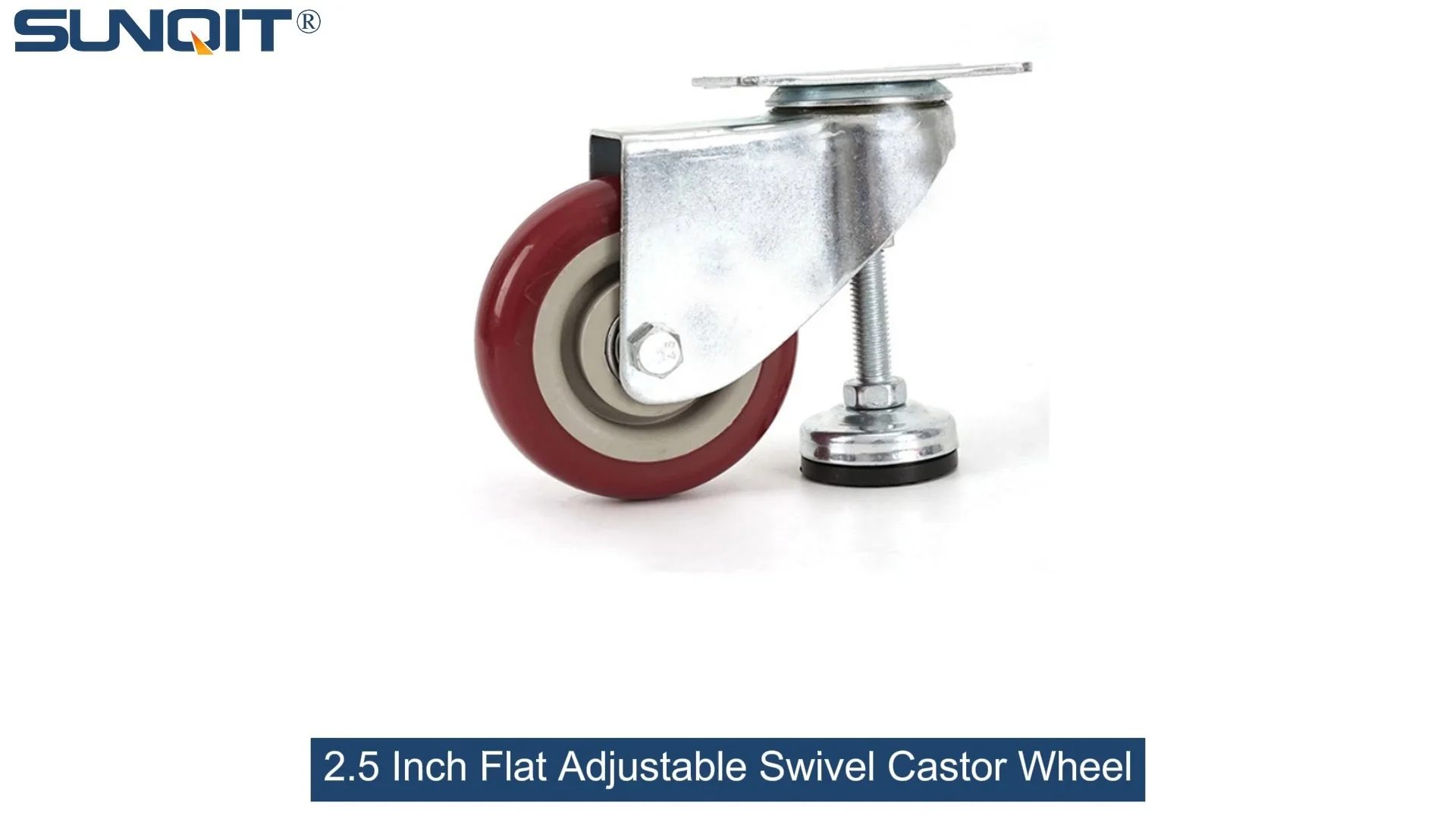
Flat Adjustable Swivel Castor Wheel
Swivel Chair Casters Ball Bearing Wheels Rubber Base with adjustable height function. Resistant to abrasion, impact and corrosion. Heavy payload can hold 80Kgs per pcs,which can make it works at a stable and smooth status.
Medical device manufacturing is a realm where precision isn't just a goal—it's a lifeline. Every component, from the tiniest sensor in a heart monitor to the frame of a surgical instrument, demands meticulous attention to detail. Yet, behind the scenes of this high-stakes industry, there's a quiet hero that often goes unnoticed: the components that keep workflows moving, adjusting, and adapting. Among these, flat adjustable swivel castor wheels stand out as a but indispensable tool. More than just "wheels on a cart," these specialized components play a critical role in enhancing mobility, stability, and safety—three pillars that define successful medical device production. Let's dive into why they've become a staple in modern medical manufacturing facilities.
Mobility Without Compromise: Navigating Tight Spaces with Precision
In a medical device assembly plant, space is often at a premium. Workstations are arranged to maximize efficiency, leaving narrow pathways between testing stations, assembly lines, and storage areas. Traditional casters might get the job done, but they often come with trade-offs: either they're too rigid to maneuver around corners, or they lack the precision needed to position equipment exactly where it's needed. Flat adjustable swivel castor wheels, however, are engineered to solve this dilemma.
Take, for example, a workbench used for assembling pacemaker components. The technician needs to move the workbench from the sterilization area to the testing station—a distance of just 20 feet, but one that requires navigating around a sharp corner and a stack of raw material bins. A standard caster wheel might snag on the floor seams or drift off course, risking jostling delicate parts. Flat adjustable swivel castors, with their 360-degree rotation and smooth-rolling design, glide effortlessly. The swivel mechanism allows the wheels to pivot independently, making tight turns feel seamless, while the flat base ensures the load (in this case, the workbench and its sensitive contents) stays stable throughout the move.
But mobility isn't just about movement—it's about control. Many flat adjustable models come with dual-locking mechanisms: one to lock the swivel rotation (keeping the wheel facing forward) and another to lock the wheel itself. This is a game-changer in scenarios where precision placement is non-negotiable. Imagine a technician positioning a workbench under a high-powered microscope for quality inspection. With the swivel locked, the workbench won't drift sideways; with the wheel locked, it stays perfectly still, ensuring the microscope's lens aligns exactly with the component being examined. In medical manufacturing, where a fraction of a millimeter can mean the difference between a functional device and a faulty one, this level of control is invaluable.
Stability Through Adjustability: Conquering Uneven Floors and Variable Loads
Medical facilities aren't always built on perfectly level ground. Older plants might have floor seams that dip or rise; newer ones might have slight gradients near doorways or ventilation grates. For equipment like workbenches or material carts, even a small unevenness can lead to wobbling—a problem that's more than just annoying. A wobbly workbench during assembly can cause technicians to misalign parts, leading to defects. In testing areas, it can throw off calibration, resulting in inaccurate readings. This is where adjustable leveling feet, a key feature of flat adjustable swivel castor wheels, shine.
Unlike fixed casters, which sit at a rigid height, these casters come with built-in leveling screws or pads that can be adjusted individually. If a workbench is placed on a floor with a slight slope, the technician can simply twist the leveling foot on the lower side to raise that corner, ensuring the entire surface is perfectly horizontal. This adjustability isn't just for floors, either. Medical device manufacturing often involves variable loads: a workbench might hold a lightweight circuit board in the morning and a heavy metal frame in the afternoon. Adjustable leveling feet compensate for these changes, maintaining stability regardless of whether the load is 10 pounds or 500 pounds.
Consider a material rack used to store sterilized surgical tools. The rack, loaded with metal instruments, needs to stay upright to prevent items from sliding off. If the floor near the sterilization autoclave has a slight tilt, a traditional caster might let the rack lean, putting stress on the shelves and risking tool damage. With flat adjustable swivel castors, the technician can tweak the leveling feet to counteract the slope, keeping the rack vertical and the tools secure. This stability isn't just about preventing damage—it's about maintaining compliance with safety regulations, which often mandate that storage and work surfaces remain level to avoid accidents.

Seamless Integration with Lean Systems: Reducing Waste, Boosting Efficiency
Over the past decade, lean system principles have become a cornerstone of medical device manufacturing. The goal is simple: eliminate waste, streamline workflows, and continuously improve processes. At the heart of lean is the idea that flexibility drives efficiency—workstations should adapt to changing production needs, not the other way around. Flat adjustable swivel castor wheels are a natural fit for this philosophy, as they turn static equipment into dynamic, reconfigurable assets.
Lean systems thrive on quick changeovers. For example, a production line might assemble insulin pumps in the morning and switch to glucose monitors in the afternoon. With traditional fixed workbenches, reconfiguring the line would take hours: disassembling, moving, and reassembling stations. With workbenches mounted on flat adjustable swivel castors, the process is drastically faster. Technicians can unlock the casters, roll the workbenches into new positions, lock them in place, and adjust the leveling feet—all in minutes. This reduces downtime, allowing the line to start producing the new device sooner and meet tight production deadlines.
Another lean principle is "5S" (Sort, Set in Order, Shine, Standardize, Sustain), which emphasizes organizing the workplace for maximum efficiency. Flat adjustable swivel castors support 5S by making it easy to "set in order" and "sustain" organization. At the end of a shift, instead of leaving workbenches scattered, technicians can quickly roll them back to their designated spots, keeping walkways clear and tools within easy reach. This not only reduces clutter but also minimizes the time spent searching for equipment—a common source of waste in manufacturing. Over time, this small change adds up: less wasted time means more time spent on value-adding tasks like assembly and inspection.
| Feature | Traditional Fixed Casters | Flat Adjustable Swivel Castor Wheels |
|---|---|---|
| Mobility | Limited swivel range; difficult to maneuver in tight spaces. | 360° swivel rotation; smooth rolling for easy navigation around obstacles. |
| Stability | Rigid height; prone to wobbling on uneven floors or with variable loads. | Adjustable leveling feet; compensates for uneven surfaces and load changes. |
| Lean System Compatibility | Fixed positioning; requires disassembly to reconfigure workflows. | Quick repositioning; supports fast changeovers and 5S organization. |
| Sterility & Safety | May have crevices that trap dirt; limited resistance to disinfectants. | Smooth, sealed designs; materials resistant to harsh cleaning agents. |
| Ergonomics | Fixed height; no adjustability for worker comfort. | Height-adjustable via leveling feet; reduces strain during long shifts. |

Safety and Sterility: Meeting the Strictest Standards
Medical device manufacturing is governed by some of the strictest regulations in the world, and for good reason: the devices produced here directly impact patient health. Sterility is non-negotiable—even a single bacterium on a surgical tool or implant can lead to life-threatening infections. Flat adjustable swivel castor wheels are designed with this in mind, incorporating features that make them easy to clean and resistant to the harsh chemicals used in medical facilities.
Unlike traditional casters, which often have crevices, seams, or exposed bearings that trap dirt and bacteria, flat adjustable models are built with smooth, sealed surfaces. The swivel joints are often enclosed to prevent debris from entering, and the wheels themselves are made from materials like polyurethane or stainless steel—both of which are non-porous and resistant to disinfectants like hydrogen peroxide or isopropyl alcohol. This means after a shift, technicians can wipe down the casters with a disinfectant wipe or spray, and there's no risk of germs hiding in hard-to-reach places.
Caster accessories also play a role in maintaining sterility. For example, sealed bearings prevent lubricants from leaking out and contaminating work surfaces—a critical feature in cleanrooms where even trace amounts of oil can compromise sterility. Some models also come with brake covers that shield the locking mechanism from spills, ensuring the brakes remain functional even after repeated cleanings. In environments like ISO 7 cleanrooms, where air particle counts are strictly controlled, these small design choices make a big difference in meeting regulatory standards.

Ergonomics: Protecting the People Behind the Products
Behind every medical device is a team of technicians, engineers, and inspectors who spend hours on their feet, bending, reaching, and manipulating small parts. Repetitive motion injuries, back strain, and fatigue are common risks in manufacturing, but they're especially problematic in medical device production, where tired workers are more likely to make mistakes. Flat adjustable swivel castor wheels address this by putting ergonomics at the forefront of their design.
Adjustable height is a key ergonomic feature. Many flat adjustable models allow the workbench or cart to be raised or lowered by adjusting the leveling feet, ensuring the surface is at elbow height for the technician. This reduces strain on the shoulders and back, as workers don't have to hunch over or reach up to access tools. For example, a technician assembling a small catheter might need the workbench lower to get a better view, while a colleague testing a larger device might need it higher to avoid bending. With adjustable casters, both can customize their workstations to their body types and tasks.
Reduced physical effort is another benefit. Moving a heavy workbench with traditional casters can require significant force, leading to muscle strain over time. Flat adjustable swivel castors, with their smooth-rolling wheels and swivel design, require far less effort to move. A study by the Ergonomics Research Institute found that workers using swivel casters with low-friction wheels exerted 30% less force to move equipment compared to those using fixed casters. Over a full shift, this reduction in effort translates to less fatigue, higher energy levels, and better focus—all of which contribute to higher-quality work and fewer errors.
Durability: Long-Term Reliability in Demanding Environments
Medical device manufacturing is a 24/7 operation, and equipment is expected to withstand constant use. Casters that fail prematurely can lead to costly downtime: a stuck wheel might halt an assembly line, or a broken leveling foot could render a workbench unstable. Flat adjustable swivel castor wheels are built to last, with materials and construction that stand up to the rigors of daily use.
High load capacity is a hallmark of these casters. Many models can support 500–1,000 pounds or more, making them suitable for heavy equipment like testing machines or material racks loaded with metal components. The wheels themselves are often made from polyurethane, which resists wear and tear better than rubber or plastic. Polyurethane also has excellent floor protection properties, preventing scratches on delicate hospital-grade flooring—a must in facilities where maintaining a clean, professional appearance is important.
Corrosion resistance is another key feature, especially in environments with frequent cleaning. Stainless steel frames and hardware ensure the casters don't rust or degrade when exposed to water, disinfectants, or humidity. This longevity reduces the need for frequent replacements, lowering maintenance costs over time. For medical manufacturers operating on tight budgets, this is a significant advantage: investing in durable casters upfront means spending less on repairs and replacements down the line.
Conclusion: The Quiet Catalyst for Better Medical Device Manufacturing
Flat adjustable swivel castor wheels may not be the most glamorous components in medical device manufacturing, but their impact is undeniable. They transform static workspaces into dynamic, efficient environments where mobility, stability, and safety coexist. By supporting lean systems, enhancing ergonomics, and ensuring compliance with strict sterility standards, these casters play a vital role in producing the high-quality devices that save and improve lives.
For manufacturers looking to stay competitive in a fast-paced industry, investing in flat adjustable swivel castor wheels isn't just a choice—it's a strategic decision. They're not just "wheels"; they're a tool for precision, a catalyst for efficiency, and a safeguard for both workers and the patients who rely on the devices they help produce. In the end, it's the attention to these small, critical details that separates good manufacturing from great manufacturing.