- Company Articles
- Products and Technology
- Product knowledge
- Key Benefits of Using T-Slot Rubber Seal Covers on Lean Pipe Systems and Workbenches

Key Benefits of Using T-Slot Rubber Seal Covers on Lean Pipe Systems and Workbenches
Related Product
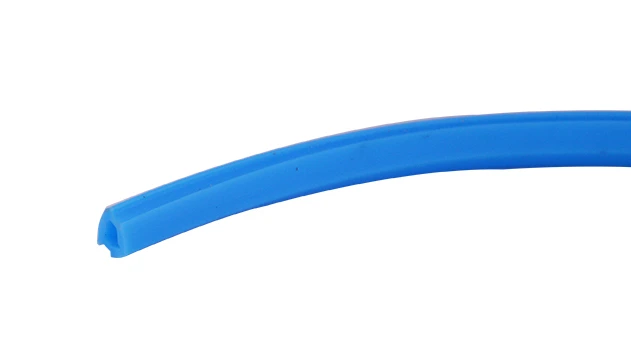
T-slot Rubber Seal Cover
The rubber T-slot seal cover prevents dust and debris buildup, covers wires in the T-slot channel, and adds an extra layer of protection to applications. It rolls into the T-slot, making it easy to assemble.
Let's set the scene: It's a busy Monday morning on the factory floor. Maria, an assembly line operator, is hunched over her lean pipe workbench , carefully attaching tiny circuit boards to a control panel. Beside her, Juan is wheeling a turnover trolley loaded with components, its wheels humming over the concrete. The air smells of machine oil and fresh plastic, and the sound of conveyor belts whirs in the background. This is the heartbeat of manufacturing—the place where ideas become products. But today, Maria pauses, frustration creasing her brow. A 2mm screw has slipped from her tweezers and vanished into the narrow T-slot running along the edge of her workbench's aluminum profile. She sighs, reaches for a flashlight, and starts fishing around in the slot with a paperclip. Two minutes later, she finds the screw, but the momentum of her work is broken. "Why do these slots have to be such a pain?" she mutters.
If you've spent any time around lean system setups—whether in automotive plants, electronics factories, or even warehouses—you've probably witnessed this scenario (or lived it). Those T-slots in aluminum profiles are the unsung heroes of lean manufacturing. They let you bolt on shelves, hang tools, mount monitors, and customize your workspace in seconds. But they're also dust magnets, part traps, and occasional safety hazards. That's where T-slot rubber seal covers come in. These simple, flexible strips of rubber might not look like much, but they're the quiet solution to Maria's problem—and a whole lot more. Let's unpack why these small accessories deserve a spot on every aluminum profile workbench, and how they can turn minor annoyances into major wins for your team.
What Are T-Slot Rubber Seal Covers, Anyway?
Before we dive into the benefits, let's get clear on the basics. T-slot rubber seal covers are thin, flexible strips designed to fit perfectly into the T-shaped grooves (T-slots) of aluminum extrusion profiles—the building blocks of most lean pipe workbenches and material racks. They're usually made from durable rubber compounds like EPDM (ethylene propylene diene monomer) or silicone, and they come in lengths that match standard profile sizes (think 1m, 2m, or custom cuts). Most are pre-notched or have a "lip" that snaps into the T-slot, holding them in place without adhesives or tools. Some even come in colors—yellow, grey, black—to match your workspace's vibe or color-coding system.
Here's the thing: aluminum profiles (like the 2020, 3030, or 4040 aluminum profile models you'll see in most factories) are engineered for versatility. Their T-slots let you add or remove accessories in minutes, which is why they're the backbone of lean systems. But that versatility comes with a trade-off: open slots. And open slots collect stuff—dust, metal shavings, coffee crumbs (we've all been there), and yes, tiny screws like Maria's. They also leave the sharp edges of the aluminum exposed, which can catch on gloves, clothing, or skin. T-slot rubber covers solve both problems by sealing the slot while keeping the profile's functionality intact. Need to attach a tool holder later? Just peel back the cover, mount the accessory, and press the cover back into place. Simple as that.
Benefit #1: No More Lost Parts (or Wasted Time)
Let's start with the most relatable benefit: stopping small parts from vanishing into T-slots. In manufacturing, time is money, and every second spent hunting for a lost screw or washer is a second not spent building products. According to a 2023 survey by the Manufacturing Performance Institute, factory operators lose an average of 12 minutes per shift to "minor interruptions"—including searching for dropped parts. Multiply that by 50 operators, and you're looking at 10 hours of lost productivity per day. Ouch.
T-slot rubber covers put an end to that. By sealing the slot, they create a smooth, continuous surface that parts (and crumbs, and dust) can't fall into. Imagine Maria's workbench with a black rubber cover running along its edges. When that 2mm screw slips, it bounces off the cover and lands on the work surface—easy to grab, no fishing required. The same goes for other small items: washers, O-rings, even loose wire strands. In electronics manufacturing, where components can be as small as a grain of rice, this isn't just a convenience—it's a precision saver. A single dust particle in a T-slot might not seem like a big deal, but when you're assembling a medical device or a smartphone, that dust can scratch delicate screens or interfere with electrical connections.
Real-World Example: A mid-sized electronics plant in Vietnam recently upgraded 50 lean pipe workbenches with T-slot rubber covers. Within a month, their production manager reported a 23% drop in "part retrieval time" interruptions. "Operators used to spend 5-10 minutes per shift digging parts out of slots," he noted. "Now, they just sweep them off the cover and keep working. It's like giving everyone an extra 45 minutes a week."
It's not just about parts, either. Dust and debris in T-slots can gunk up the works when you try to adjust accessories. Ever tried sliding a bracket along a T-slot only to have it jam halfway because of a dust ball? With a rubber cover, the slot stays clean, so adjustments are smooth and quick. For maintenance teams, this means faster changeovers between production runs—critical in industries with short product cycles, like consumer electronics or seasonal goods.

Benefit #2: Safer Workspaces, Happier Teams
Safety isn't just a buzzword—it's the foundation of any productive workplace. And while aluminum profiles are generally safe, their T-slots can have sharp edges (especially if the profile was cut on-site and not deburred properly). Run your finger along an uncovered T-slot, and you might feel a tiny burr or a sharp corner—nothing catastrophic, but enough to snag a glove, scratch skin, or even cause a minor cut if you're in a hurry. Over time, these small injuries add up: band-aids, lost time, and a general feeling of "this workspace doesn't care about me."
T-slot rubber covers eliminate that risk. The rubber acts as a buffer, softening sharp edges and creating a smooth, rounded surface. For operators who lean against workbenches, reach across profiles, or move quickly around the workspace, this is a game-changer. Take Juan, for example, pushing that turnover trolley. If he stumbles and bumps his arm against an uncovered aluminum profile, he might get a scrape. With a rubber cover, it's a soft bump—no harm, no foul. It's the kind of small detail that makes employees feel valued, which in turn boosts morale and reduces turnover.
Safety goes beyond cuts, too. In environments where liquids are present—like food processing or automotive plants where oil and coolant are common—uncovered T-slots can collect spills. That creates a slipping hazard if liquid pools, or a corrosion risk for the aluminum itself. Rubber covers repel most liquids, channeling spills off the workbench instead of letting them seep into slots. In a brewery, for instance, a spilled beer on an uncovered T-slot could turn into a sticky, moldy mess. With a cover, it's a quick wipe with a cloth, and the slot stays dry.

Benefit #3: Protecting Your Lean System Investment
Lean pipe systems and aluminum profile workbenches aren't cheap. A well-equipped workstation can cost hundreds (or thousands) of dollars, and you want it to last. But uncovered T-slots can shorten the life of your equipment in subtle ways. Let's break it down:
Corrosion: Aluminum is corrosion-resistant, but it's not invincible. When moisture, chemicals, or even salty air (in coastal factories) gets into T-slots, it can cause oxidation (that white, powdery stuff you sometimes see on metal). Over time, this weakens the slot's integrity, making it harder to attach accessories securely. Rubber covers act as a barrier, keeping moisture and corrosive substances out.
Wear and Tear: Every time you slide a bracket or bolt through a T-slot, the edges of the slot rub against the accessory. Uncovered slots can develop small dents or scratches, which make future adjustments harder (and noisier). Rubber covers reduce friction, acting as a cushion between the accessory and the slot. Think of it like a protective case for your phone—simple, but it prevents scratches that degrade value over time.
Contamination in Moving Parts: If you've got roller tracks (like the plastic roller track guide rails from your keyword list) or caster wheels attached to your aluminum profiles, debris in T-slots can migrate to those moving parts. A tiny metal shard in a slot might work its way into a caster bearing, causing it to seize up. With covers, debris stays out, and moving parts last longer. That means fewer repairs, less downtime, and lower replacement costs.
For example, a car parts manufacturer in Germany found that after installing T-slot covers on their material racks (which held heavy steel components), the racks' caster wheels lasted 40% longer. "We used to replace casters every 6 months because grit from the factory floor got into the T-slots and jammed the bearings," their maintenance supervisor explained. "Now, we're at 10 months and counting. The covers paid for themselves in caster savings alone."
Benefit #4: Quieter Workspaces, Less Stress
Factory floors are noisy places—there's no getting around that. But excess noise isn't just annoying; it's exhausting. Studies show that prolonged exposure to moderate noise (85 decibels, about the level of a busy restaurant) can increase stress, reduce focus, and even lower productivity. And guess what contributes to that noise? Metal accessories sliding in uncovered T-slots, small parts clinking into slots, and debris rattling around when workbenches are moved. It's not the loudest noise in the room, but it's the constant, high-pitched kind that wears on people.
T-slot rubber covers dampen that noise. Rubber is a natural sound absorber, so when a part hits a covered slot, it makes a soft "thud" instead of a sharp "clink." When you slide a bracket along the slot, the rubber reduces the metal-on-metal scraping sound. Even dust and debris that do find their way onto the cover (instead of into the slot) make less noise when moved. Over time, this adds up to a workspace that feels calmer and more controlled—exactly what you need for tasks that require precision, like assembling circuit boards or inspecting parts.
Maria, back at her workbench, would attest to this. With covers, the only sounds are her tools, the conveyor in the distance, and the occasional chatter with Juan. No more clinking screws or scraping brackets. It's the kind of quiet improvement that doesn't show up in spreadsheets, but makes people look forward to coming to work.
Benefit #5: A Cleaner, More Professional Workspace (That Boosts 5S)
If you're into lean manufacturing, you know all about 5S—Sort, Set in Order, Shine, Standardize, Sustain. It's the system that keeps workspaces organized, efficient, and visually intuitive. And nothing undermines 5S faster than a messy workbench with dust-filled T-slots, loose parts scattered about, and a general "lived-in" chaos. T-slot rubber covers might seem like a small detail, but they play a big role in maintaining that "Shine" (cleanliness) and "Standardize" (uniformity) in 5S.
With covers, T-slots stay clean, so wiping down your workbench takes 30 seconds instead of 5 minutes. No more digging dust bunnies out of slots with a toothbrush. The smooth, consistent surface of the covers also gives your workspace a polished, professional look. Walk into a factory where every aluminum profile has matching black rubber covers, and you'll think, "These people take pride in their work." That visual order isn't just for show—it helps new employees orient themselves faster, reduces errors (since tools and parts have designated, clean spots), and even impresses clients or auditors.
Color-coded covers can take this a step further. Use yellow covers on workbenches dedicated to quality control, grey on assembly stations, and black on storage racks. Suddenly, anyone can glance at a workspace and know its purpose—no training required. It's 5S in action, made easier by a simple rubber strip.
Choosing the Right T-Slot Rubber Seal Cover for Your Workspace
Not all T-slot covers are created equal, so it's worth taking a minute to pick the right one. Here's what to consider:
Size: Measure the width and depth of your T-slots before buying. Most covers are labeled by compatible profile size (e.g., "for 3030 aluminum profiles"), but double-checking ensures a snug fit. A cover that's too loose will fall out; too tight will tear when installing.
Material: EPDM rubber is great for general use—it's durable, temperature-resistant, and stands up to oils and chemicals. Silicone is better for high-heat environments (like near ovens or welding stations). For cleanrooms or food processing, look for FDA-approved silicone covers that are easy to sanitize.
Color: As we mentioned, color can aid organization. But it's also about visibility. Yellow covers are hard to miss, making them good for safety zones, while black or grey blend in for a sleek look.
ESD Compatibility: If you're working with sensitive electronics (like Maria's circuit boards), opt for conductive rubber covers. These prevent static buildup, which can fry delicate components—a must for ESD workstations.
Quick Comparison: Common T-Slot Cover Types
Prices vary by supplier and order quantity; bulk purchases often reduce costs by 10-15%.
Final Thoughts: Small Investment, Big Returns
T-slot rubber seal covers might not be the most glamorous part of your lean system, but they're a classic example of how small improvements can lead to big results. For a few dollars per meter, you get fewer lost parts, safer workspaces, longer-lasting equipment, quieter floors, and cleaner, more organized workbenches. It's the kind of upgrade that pays for itself in weeks—whether through saved time, reduced injuries, or lower maintenance costs.
So, the next time you walk past a lean pipe workbench and see those empty T-slots, think of Maria and her lost screw. Think of the operator who nicks their hand on a sharp edge, or the maintenance team replacing a caster wheel prematurely. Then imagine that workspace with rubber covers: smooth, clean, quiet, and ready to work. That's the power of T-slot rubber seal covers—turning "good enough" workspaces into great ones, one slot at a time.