- Company Articles
- Products and Technology
- Product knowledge
- Key Components of Suction Cup Anti-Slip Foot Adjusters: A Detailed Breakdown

Key Components of Suction Cup Anti-Slip Foot Adjusters: A Detailed Breakdown
Related Product
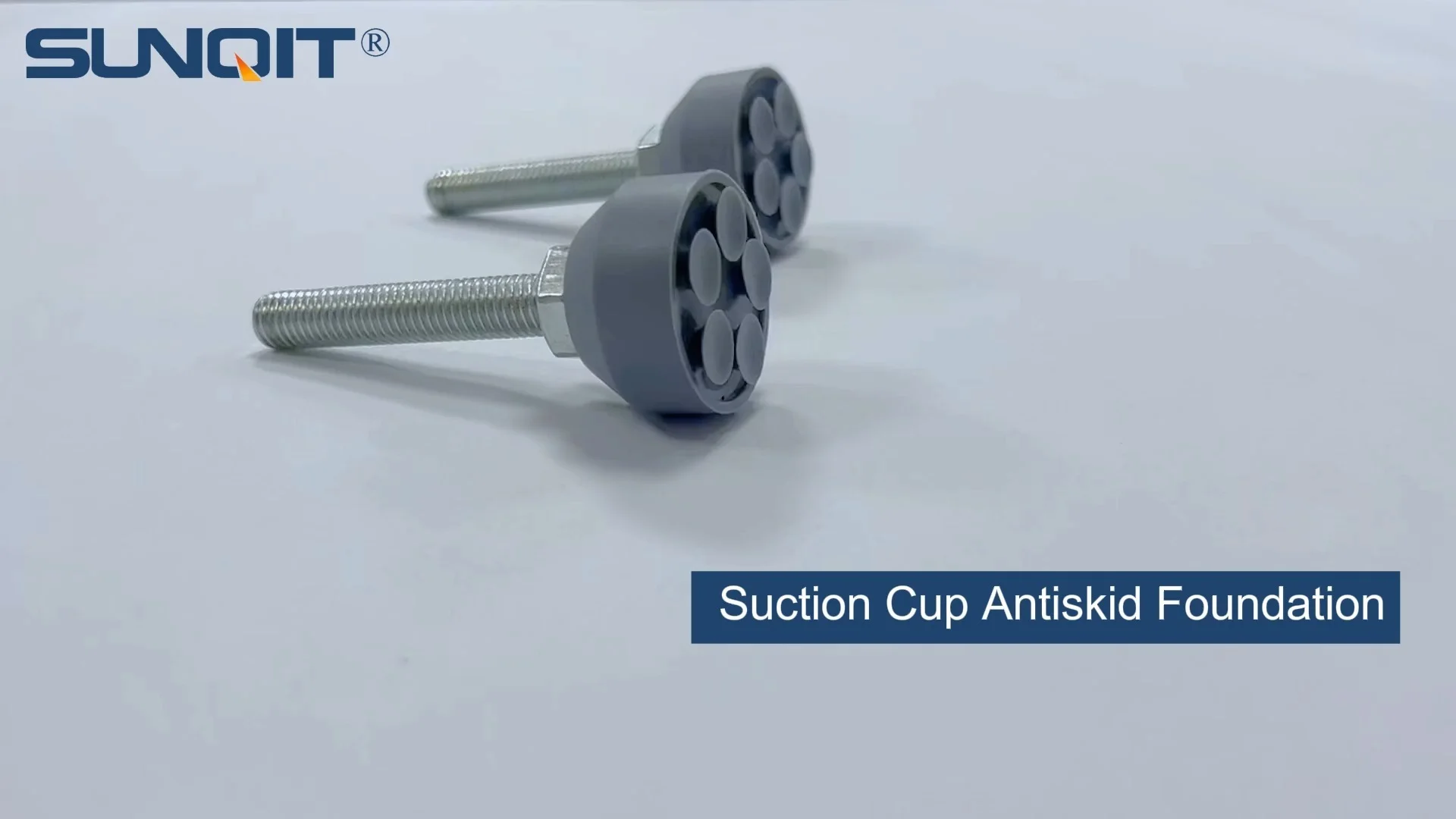
Suction Cup Anti-slip Foot Adjuster
D=35mm suction cup anti-slip foot adjusterï¼screw M10*55ï¼with a blot, used for workbench, flowrack pipe contact with groud.
Walk into any factory, workshop, or assembly line, and you'll notice something that rarely gets attention but keeps everything running smoothly: workbenches. These sturdy surfaces hold tools, parts, and products as workers assemble, test, or package goods. But here's the thing—if a workbench isn't stable, it's not just inefficient; it's dangerous. Tools slide off, delicate components get damaged, and workers strain to compensate for wobbling surfaces. That's where suction cup anti-slip foot adjusters come in. These small but mighty devices are the unsung heroes of stable workspaces, and today, we're breaking down their key components to understand how they work their magic.
What Are Suction Cup Anti-Slip Foot Adjusters?
Before diving into the parts, let's clarify what we're talking about. A suction cup anti-slip foot adjuster is a device attached to the bottom of equipment—like workbenches, material racks, or machinery—to do two critical jobs: adjust height to level uneven surfaces and prevent slipping using a suction cup grip. Think of them as the "feet" of your workbench, but with superpowers: they can grow or shrink to fit the floor and cling tight to avoid sliding, even when vibrations or bumps shake things up.
In industries like manufacturing, where precision and safety are non-negotiable, these adjusters aren't optional. They're especially vital for setups like lean pipe workbenches—modular, flexible workstations designed for efficiency—or aluminum profile workstations, which balance lightweight design with durability. Even when equipment has caster wheels for mobility, foot adjusters ensure it stays put when it needs to. Let's unpack the components that make this possible.
The Core Components: A Closer Look
At first glance, a suction cup anti-slip foot adjuster might look like a simple hunk of plastic or metal. But inside, it's a clever mix of parts working together to provide stability, adjustability, and grip. Let's break them down one by one.
1. The Suction Cup: Your Grip on the Floor
The star of the show is the suction cup itself—the part that touches the floor and prevents slipping. Made from flexible materials like rubber or silicone, its job is to create a tight seal with the ground, even on slightly rough surfaces. Unlike regular rubber feet, which rely on friction alone, suction cups use air pressure to "stick." When you press the cup down, it pushes air out from underneath, creating a vacuum that holds it in place. This makes them far more effective at resisting movement, especially on smooth floors like concrete or tile.
The design of the suction cup matters, too. Most have a domed shape with a slightly textured bottom to conform to minor floor imperfections. Some even have ribbing or grooves to channel away dust or small debris that could break the seal. And because they're flexible, they can compress when weight is applied—like when a heavy tool is placed on the workbench—strengthening the grip even more.
2. The Threaded Adjustment Rod: Precision in Every Turn
What good is a grippy foot if you can't adjust its height? That's where the threaded adjustment rod comes in. This is the part that lets you raise or lower the foot to level the workbench. Picture a long, thin rod with spiral grooves (threads) running along its length—similar to a bolt. One end connects to the suction cup, and the other screws into a base plate attached to the workbench leg. By twisting the rod, you either extend it (lowering the foot) or retract it (raising the foot), fine-tuning the height until the workbench is perfectly level.
The threads are key here. They're usually coarse enough to allow quick adjustments but precise enough to let you make small changes—down to a few millimeters. Some rods are even marked with measurements to help you match heights across multiple feet. And to prevent corrosion, especially in damp or dusty environments, rods are often coated with zinc or made from stainless steel.
3. The Base Plate: The Connection Point to Your Workbench
The base plate is the bridge between the adjuster and the workbench itself. It's a flat, sturdy piece of metal (or sometimes heavy-duty plastic) that attaches to the bottom of the workbench leg. Think of it as the "anchor" that holds all the other components in place. Without a strong base plate, the adjuster could twist or break under the weight of the workbench and its contents.
Base plates come in different shapes and sizes to fit various workbench designs. For example, if you're using an aluminum profile workbench—common in lean manufacturing setups—the base plate might have slots or holes that align with the profile's T-slots, making installation a breeze. Others might bolt directly to steel legs or clamp onto wooden frames. The key feature? It needs to distribute weight evenly to prevent bending or warping over time.
4. The Locking Nut: Keeping It All in Place
Imagine spending time adjusting your workbench to the perfect height, only to have it slowly sink or rise as tools are moved around. That's where the locking nut comes in. This small but crucial component sits on the threaded rod, just above the base plate. Once you've adjusted the height, you tighten the locking nut against the base plate, creating friction that prevents the rod from turning on its own. It's like putting a clamp on the threads to "lock" the adjustment in place.
Many locking nuts are designed with a nylon insert (called a "nylock" nut) that grips the threads even tighter, resisting vibrations that could loosen them over time. This is especially important in busy workshops where machinery vibrations are constant—without it, you'd be readjusting the feet every day.
5. Optional Extras: Protective Covers and Gaskets
Some foot adjusters include bonus features to boost durability or performance. For example, a rubber or plastic cover might wrap around the threaded rod to keep dust, oil, or water from gumming up the threads. This is a lifesaver in messy environments like auto repair shops or food processing plants. Others might have a metal gasket between the base plate and the workbench leg to reduce noise or prevent scratches.

Component Breakdown Table: Key Features at a Glance
| Component | Primary Function | Common Materials | Key Features |
|---|---|---|---|
| Suction Cup | Creates anti-slip grip via vacuum seal with the floor | Natural rubber, silicone, or synthetic rubber blends | Domed shape for surface conformity; textured bottom for enhanced friction; airtight seal |
| Threaded Adjustment Rod | Adjusts height to level the workbench | Zinc-plated steel, stainless steel, or aluminum | Precision threading; corrosion-resistant coating; length options (50mm–200mm) |
| Base Plate | Attaches adjuster to workbench; distributes weight | Steel, aluminum, or heavy-duty plastic | T-slot compatibility (for aluminum profiles); bolt holes or clamps; thick gauge for strength |
| Locking Nut | Secures height adjustment against vibration | Steel (with nylon insert for locking) | Nylon-insert "nylock" design; corrosion-resistant plating |
| Protective Cover (Optional) | Shields threaded rod from debris | PVC, rubber, or plastic | Flexible design; snap-on or screw-on attachment |

Materials Matter: Why Each Part Is Built That Way
The materials used in each component aren't chosen randomly—they're selected for durability, performance, and compatibility with different environments. Let's dive into why certain materials are preferred.
Suction Cup Materials: Rubber vs. Silicone
Most suction cups are made from rubber or silicone, and each has its pros and cons. Natural rubber is affordable, flexible, and provides excellent grip on smooth floors. It's a great all-around choice for dry, indoor environments like electronics assembly lines. However, it can degrade over time when exposed to oils, chemicals, or extreme temperatures—so in places like industrial kitchens or auto shops, silicone might be better. Silicone is heat-resistant, chemical-resistant, and more durable in harsh conditions, though it's slightly pricier. Some manufacturers blend the two for a balance of cost and performance.
Threaded Rods: Steel, Aluminum, or Stainless Steel?
The threaded rod needs to be strong enough to support heavy loads without bending, so steel is the go-to for most applications. Zinc-plated steel offers basic corrosion resistance at a low cost, making it ideal for dry workshops. In humid or wet environments—like outdoor workstations or marine factories—stainless steel is better, as it resists rust. Aluminum rods are lightweight and corrosion-resistant but less strong, so they're typically used for lighter equipment, like small workbenches or shelving units.
Base Plates: Strength and Compatibility
Steel base plates are the workhorses here, thanks to their high strength-to-weight ratio. They're thick, rigid, and can handle heavy loads—perfect for industrial workbenches. Aluminum base plates are lighter and won't rust, making them a favorite for aluminum profile setups where matching materials (and avoiding galvanic corrosion) is key. For lighter-duty use, like home workshops, heavy-duty plastic base plates are affordable and corrosion-proof, though they're not ideal for loads over 100kg.

How They Work: The Adjustment Process in Action
Now that we know the parts, let's walk through how to actually use a suction cup anti-slip foot adjuster. It's surprisingly simple, but getting it right ensures maximum stability.
Step 1: Assessing the Floor
First, check the floor where the workbench will sit. Is it smooth concrete, or does it have cracks, bumps, or uneven tiles? The suction cup works best on flat, non-porous surfaces—carpet or highly textured floors might reduce its grip. If the floor is very uneven, you might need adjusters with longer threaded rods to compensate.
Step 2: Attaching to the Workbench
Next, attach the base plate to the workbench leg. For aluminum profile workbenches, this is usually as easy as sliding bolts through the profile's T-slots and tightening them into the base plate's holes. For steel legs, you might drill holes and bolt the plate on, or use a clamp if drilling isn't an option. Make sure the plate is flush against the leg to avoid wobbling.
Step 3: Adjusting Height and Level
With the base plate attached, screw the threaded rod (with suction cup) into the plate. Place a level on the workbench surface and twist the rod to raise or lower the foot until the bubble is centered. Repeat this for all four feet—this is where patience pays off. A level workbench isn't just stable; it also reduces worker fatigue, as you won't be leaning to one side all day.
Step 4: Locking It Down
Once the workbench is level, tighten the locking nut against the base plate using a wrench. Give the suction cup a firm press to ensure it's sealed against the floor—you should feel it "stick." If the cup won't seal, check for debris under it (a quick wipe with a cloth usually fixes this). Finally, give the workbench a gentle shake to test stability—if it moves, double-check the locking nuts or reposition the suction cups.
Where They Shine: Applications in Industrial Settings
Suction cup anti-slip foot adjusters aren't just for workbenches—they're used wherever stability and adjustability matter. Let's look at a few key applications.
Lean Pipe Workbenches: Stability for Lean Manufacturing
Lean manufacturing is all about efficiency—minimizing waste, streamlining processes, and adapting quickly to changes. Lean pipe workbenches, made from modular tubes and joints, are a cornerstone of this approach. They're easy to reconfigure, but that flexibility can make them wobbly if not properly stabilized. Foot adjusters solve this by letting workers level the bench on any floor, ensuring tools and parts stay in place during assembly. In a lean setup, every second counts—you can't afford to waste time chasing rolling screwdrivers or realigning components because the bench shifted.
Aluminum Profile Workstations: Lightweight but Secure
Aluminum profile workstations are popular in industries like aerospace or medical device manufacturing, where lightweight, clean, and corrosion-resistant setups are needed. But aluminum is softer than steel, so it can flex under heavy loads. Foot adjusters with aluminum base plates (to match the profile) and strong suction cups prevent the workstation from sliding or tipping, even when workers lean on it or move heavy parts. They also make it easy to level the workstation on uneven lab floors, where precision is critical for tasks like microscopy or calibration.
Mobile vs. Stationary Equipment: Working with Caster Wheels
Many workbenches and material racks come with caster wheels for mobility—great for moving equipment around the shop. But when you need to lock it in place, caster brakes alone might not be enough. That's where foot adjusters team up with casters: lower the adjusters to lift the casters off the floor, and the suction cups grip tight. This turns a mobile cart into a stationary workstation in seconds. It's a game-changer in dynamic environments like warehouses, where the same cart might be used for storage in the morning and transport in the afternoon.
Why They're Better: Comparing to Other Foot Adjusters
You might be wondering: why not just use regular rubber feet or fixed metal legs? Let's compare to see why suction cup anti-slip foot adjusters stand out.
Regular Rubber Feet: No Grip, No Adjustment
Basic rubber feet provide some friction, but they don't "grip" the floor like suction cups. On smooth surfaces, they can slide if pushed, and they offer no way to adjust height—so if your floor is uneven, the workbench will wobble. They're cheap, but you get what you pay for.
Fixed Metal Feet: Rigid and Unforgiving
Metal feet are strong, but they're rigid—no height adjustment, and they scratch floors. They rely on weight alone to stay in place, so on slippery floors (like oil-spattered concrete), they can slide. Plus, they amplify noise—every tool dropped on the workbench echoes through the shop.
Caster Wheels Alone: Great for Moving, Bad for Staying Put
Casters are fantastic for mobility, but even with brakes, they're not as stable as foot adjusters. Brakes can wear out, or the wheel can "creep" on uneven floors. Foot adjusters eliminate this by lifting the casters entirely, putting the weight on the suction cups for a secure hold.
Maintenance Tips: Keeping Your Foot Adjusters in Top Shape
Like any tool, suction cup anti-slip foot adjusters need a little care to last. Here's how to keep them working like new:
Clean the Suction Cup
Dust, dirt, or oil on the suction cup can break the seal and reduce grip. Wipe it down with a damp cloth every few weeks, and use mild soap if it's really dirty. Avoid harsh chemicals, as they can degrade the rubber or silicone.
Lubricate the Threads
If the threaded rod starts to stick when adjusting, a drop of lubricating oil (like 3-in-1 oil) on the threads will make turning smoother. Just wipe off excess oil to prevent attracting dust.
Check for Wear and Tear
Inspect the suction cup for cracks, tears, or hardening—if it's damaged, replace it immediately (most manufacturers sell replacement cups). Check the threaded rod for bending or stripped threads, and tighten loose locking nuts regularly.
Tighten the Locking Nut
Even with a nylock nut, vibrations can loosen the locking nut over time. Give it a quick twist with a wrench every month to ensure it's tight—this simple step prevents unexpected height changes.
Common Myths and Misconceptions
Let's bust a few myths about suction cup foot adjusters:
Myth 1: "They only work on perfectly smooth floors." While they perform best on smooth surfaces, most suction cups can conform to minor bumps or cracks (up to 1–2mm). For larger unevenness, pair them with shims under the base plate.
Myth 2: "They're not strong enough for heavy equipment." Modern suction cups can hold hundreds of kilograms when properly sealed. A single adjuster with a 10cm diameter suction cup can support over 500kg on a smooth floor—more than enough for most workbenches.
Myth 3: "They're hard to install." Most adjusters come with all the hardware you need (bolts, washers) and take 5–10 minutes per leg to install—no special tools required.
Conclusion: Investing in Stability for a Safer, More Efficient Workplace
Suction cup anti-slip foot adjusters might be small, but their impact on workplace safety and efficiency is huge. By combining a grippy suction cup, precise adjustment rod, sturdy base plate, and reliable locking nut, they solve two of the biggest workspace headaches: uneven floors and slippery equipment. Whether you're setting up a lean pipe workbench in a factory, an aluminum profile workstation in a lab, or a simple workbench in your garage, these adjusters ensure your tools stay put, your workers stay safe, and your operations run smoothly.
Next time you walk past a stable workbench, take a second to look down—you might just spot these unsung heroes doing their job. And if you're still using wobbly, outdated feet? It might be time for an upgrade. Your back, your tools, and your bottom line will thank you.