- Company Articles
- Products and Technology
- Product knowledge
- Key Components of Swivel Stem Caster Wheels: Stem, Bearing & Wheel

Key Components of Swivel Stem Caster Wheels: Stem, Bearing & Wheel
Related Product
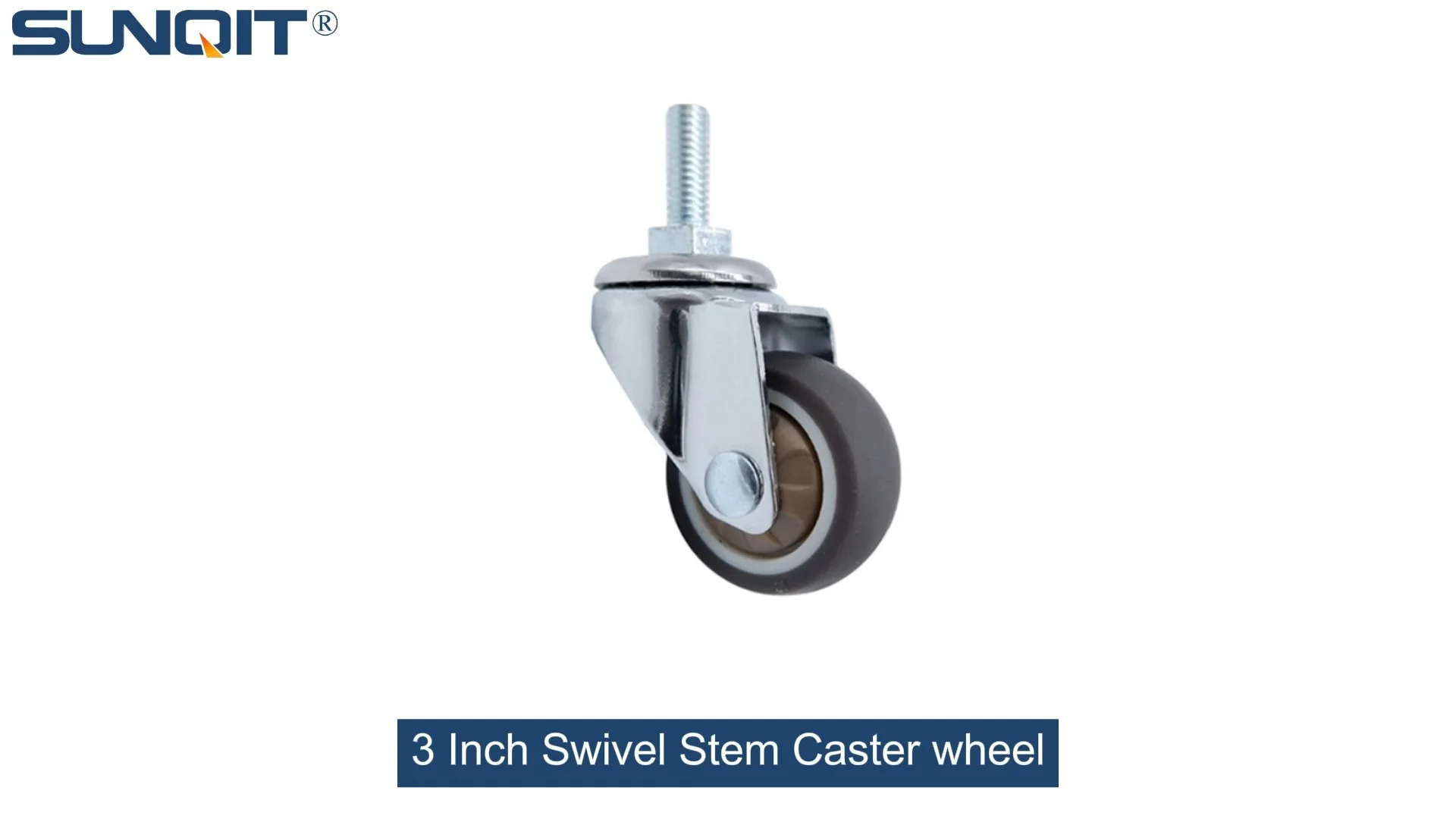
Swivel Stem Caster wheel
360 Degree Swivel Stem Caster. Threaded-post mount design, castors diameter 3 inch.Each swivel caster wheels loading 70KGS. Heavy enough and widely suit for carts, chairs, cabinet, flow rack, workbench, turnover rolley.
Ever stopped to think about what makes that hospital cart glide so smoothly when a nurse adjusts its position? Or how the tool trolley in your local workshop turns on a dime, even when loaded with heavy equipment? Chances are, you're looking at a set of swivel stem caster wheels —unassuming yet indispensable components that keep industries, workplaces, and even our daily lives moving. From the turnover trolleys in warehouses to the mobile workbenches in garages, these small but mighty wheels are the unsung heroes of mobility. In this article, we'll dive into the three core components that make swivel stem caster wheels tick: the stem, the bearing, and the wheel. We'll also explore how features like brakes (think swivel stem caster wheel with brake ) and handy caster accessories elevate their functionality, ensuring they meet the unique demands of everything from busy factories to quiet offices.
1. The Stem: The Unsung Backbone of Connection
If swivel stem caster wheels were a team, the stem would be the captain—responsible for holding everything together and linking the wheel assembly to the equipment it serves. Without a strong, reliable stem, even the best wheel and bearing would be useless. Let's break down why the stem matters, the different types you'll encounter, and how to choose the right one for the job.
What Does the Stem Do?
At its core, the stem is the bridge between the caster wheel assembly and the object it's attached to—whether that's a metal shelf, a plastic bin, or a wooden workbench. It bears the brunt of the load, ensures stability, and dictates how easy (or hard) it is to install the caster. Imagine trying to attach a wheel to a cart without a stem: you'd have a wobbly mess that can't support weight or move predictably. The stem solves that by providing a secure, rigid connection that locks the caster in place, even when the cart is jostled or turned sharply.
Common Types of Stems
Stems come in a few key varieties, each designed for specific applications. Let's meet the most common ones:
- Threaded Stem: Picture a long screw with a pointy end—that's a threaded stem. It screws directly into a pre-drilled hole in the equipment, creating a tight, permanent bond. You'll find these on heavy-duty gear like industrial trolleys or metal workbenches, where stability is non-negotiable. The downside? Once screwed in, they're hard to remove without tools, so they're best for equipment that won't need caster changes often.
- Expanding Stem: Think of this as the "universal adapter" of stems. Instead of threads, it uses a split design that expands when a bolt is tightened, gripping the inside of a hollow tube or leg. This makes it perfect for equipment with tubular frames, like folding tables or lightweight carts. The beauty here is versatility: you can adjust the stem's length to fit different tube sizes, and removing it is as simple as loosening the bolt.
- Grip Ring Stem: Small but mighty, grip ring stems are short, thin, and topped with a spring-loaded metal ring. They're designed to snap into pre-cut holes in thin materials (like sheet metal or plastic) and hold tight via friction. You'll spot these on office chairs, small utility carts, or even some kitchen appliances—anything where a low-profile, easy-to-install stem is needed. Just be warned: they're not ideal for heavy loads, as the grip can loosen over time under stress.
Materials matter too. Most stems are made of steel for strength, but stainless steel is a go-to for environments with moisture (like food processing plants) or chemicals (like laboratories) to prevent rust. Aluminum stems are rare but pop up in lightweight applications where corrosion resistance and low weight are priorities—think outdoor furniture or portable medical gear.
2. The Bearing: The Silent Enabler of Smooth Swiveling
If the stem is the captain, the bearing is the team's star athlete—quietly working behind the scenes to make swiveling look effortless. Ever noticed how some casters feel "sticky" when you try to turn them, while others spin like a top? The bearing is the culprit (or hero) here. Its job is to reduce friction between the stationary stem and the rotating wheel assembly, allowing the caster to swivel 360 degrees with minimal effort. Let's unpack why bearings are critical and the types you'll encounter.
Why Bearings Matter
Friction is the enemy of mobility. Without a bearing, the metal parts of the caster would grind against each other, making swiveling hard and causing premature wear. Bearings solve this by creating a smooth, low-friction interface. They also distribute the load evenly, ensuring that even heavy equipment doesn't strain the caster's components. For example, in a busy warehouse, a worker pushing a loaded turnover trolley needs to change direction quickly—without a good bearing, that trolley might jerk or get stuck, slowing down the entire workflow.
Types of Bearings in Caster Wheels
Not all bearings are created equal. The type you choose depends on how much weight the caster will carry, how often it will swivel, and the environment it will operate in. Here are the three main players:
- Ball Bearings: The most common type, ball bearings use small metal balls (usually steel or stainless steel) to separate moving parts. They're great for light to medium loads and excel at smooth, fast swiveling—think office chairs or small tool carts. However, they can struggle with heavy loads, as the small contact area of the balls can lead to deformation over time.
- Roller Bearings: For heavier jobs, roller bearings step in. Instead of balls, they use cylindrical rollers that spread the load over a larger surface area. This makes them ideal for industrial settings, like factories where trolleys carry hundreds of pounds of raw materials. Roller bearings are more durable than ball bearings but tend to be bulkier and slightly less smooth in swiveling.
- Plain Bearings (Bushings): The simplest (and often cheapest) option, plain bearings are just a smooth metal or plastic sleeve that fits between the stem and the swivel housing. They rely on lubrication (like oil or grease) to reduce friction. You'll find them on budget-friendly casters, like those on shopping carts or lightweight utility bins. While they're low-maintenance, they don't swivel as smoothly as ball or roller bearings and need regular lubrication to avoid squeaking or seizing.
Material choice here is also key. Chrome steel bearings are strong and affordable but can rust if exposed to moisture. Stainless steel bearings are rust-resistant, making them perfect for hospitals or food service, where cleanliness is a priority. Plastic bearings (often nylon or POM) are lightweight, corrosion-proof, and quiet—great for office or home use, though they can't handle extreme heat or heavy loads.

3. The Wheel: Where the Rubber Meets the Road (or Floor)
Finally, we arrive at the part everyone notices: the caster wheel itself. This is the component that actually touches the ground, dictating how smoothly the caster rolls, how much weight it can carry, and even how quietly it operates. Choosing the right wheel material and design can mean the difference between a caster that lasts for years and one that fails after a few months. Let's explore what makes a great caster wheel.
Wheel Materials: Finding the Right Balance
Caster wheels come in a rainbow of materials, each with its own strengths and weaknesses. Here's a quick guide to the most popular options:
| Wheel Material | Best For | Pros | Cons |
|---|---|---|---|
| Rubber | Quiet environments (offices, hospitals), uneven floors | Shock-absorbent, non-marking, excellent traction | Not ideal for heavy loads; can degrade in oil or chemicals |
| Polyurethane (PU) | Heavy loads, rough floors (warehouses, workshops) | Durable, oil-resistant, combines rubber's grip with plastic's strength | Heavier than rubber; can leave marks on very smooth floors |
| Nylon | Light to medium loads, clean environments (labs, kitchens) | Lightweight, chemical-resistant, easy to clean | Hard, noisy on concrete; poor traction on wet floors |
| Cast Iron | Extremely heavy loads (industrial machinery, steel mills) | Indestructible, heat-resistant, handles extreme weights | Very heavy, noisy, marks floors, rusts without coating |
Tread Patterns and Load Capacity
Beyond material, the wheel's tread (the pattern on its surface) plays a big role in performance. Smooth treads are best for hard, flat floors (like tile or concrete) as they reduce rolling resistance, making the caster easier to push. Grooved or knobby treads, on the other hand, provide extra traction on uneven surfaces (like gravel or cracked asphalt) or in wet conditions—think outdoor carts or construction equipment.
Load capacity is another critical factor. Every caster wheel has a maximum weight it can support, and exceeding that leads to premature wear or even failure. As a rule of thumb, larger wheels handle more weight: a 2-inch nylon wheel might support 100 pounds, while a 6-inch cast iron wheel can carry over 1,000 pounds. When in doubt, always check the load rating—especially if you're using the caster for heavy equipment like tool chests or industrial shelving.

4. Brakes and Beyond: Enhancing Safety with Swivel Stem Caster Wheel with Brake
So far, we've covered the basics: stem, bearing, wheel. But what if you need your caster to stay put once you've moved it? That's where brakes come in—and the swivel stem caster wheel with brake is a game-changer for safety and stability. Brakes prevent accidental rolling, keeping equipment stationary during loading, unloading, or use. Let's look at the most common brake types and why they matter.
Types of Brakes in Swivel Stem Casters
The two main brake designs you'll encounter are:
- Total Lock Brakes: These brakes do exactly what the name suggests—lock both the wheel (preventing rolling) and the swivel (preventing turning). They're ideal for situations where stability is critical, like a workbench trolley that needs to stay fixed while you hammer or drill. To engage, you typically step on a pedal that presses a brake pad against the wheel and locks the swivel housing. Release it with a quick tap of your foot.
- Wheel-Only Brakes: As the name implies, these only stop the wheel from rolling; the caster can still swivel. They're great for equipment that needs to stay in one spot but might need minor adjustments (like a hospital bed that should stay put but can be rotated slightly). Wheel-only brakes are simpler and cheaper than total lock brakes but offer less stability.
Brakes are often made of metal (for durability) with rubber or plastic pads to grip the wheel. In wet or oily environments, look for brakes with corrosion-resistant materials (like stainless steel) to avoid jamming. And don't overlook the importance of brake placement: a brake that's hard to reach (e.g., under a low cart) is one that won't get used, defeating the purpose entirely.
Caster Accessories: Small Additions, Big Impact
While the stem, bearing, wheel, and brake are the stars, caster accessories are the supporting cast that make swivel stem caster wheels more versatile, durable, and user-friendly. Here are a few you might encounter:
- Stem Covers: These plastic or rubber sleeves slip over the stem to protect floors from scratches (if the stem protrudes) or to hide unsightly threads. They're a small touch but make a big difference in office or home settings where aesthetics matter.
- Bearing Lubricants: While not a physical accessory, lubricants like silicone spray or lithium grease keep bearings smooth and prevent squeaking. They're essential for maintenance, especially in high-use environments like factories.
- Wheel Guards: Metal or plastic shields that wrap around the wheel to block debris (like dirt, hair, or small rocks) from getting stuck in the bearing or wheel axle. You'll see these on casters used outdoors or in dusty environments like construction sites.
- Swivel Locks: Similar to brakes but designed solely to lock the swivel function (not the wheel). They're useful for equipment that should roll in a straight line (like a conveyor) but not turn, preventing accidental veering.

5. How It All Comes Together: The Synergy of Stem, Bearing, Wheel
Now that we've explored each component, let's see how they work in harmony. Imagine a warehouse worker pushing a loaded turnover trolley. The stem (say, an expanding stem) is securely attached to the trolley's frame, bearing the weight of boxes stacked high. As the worker turns a corner, the ball bearings in the swivel housing reduce friction, allowing the caster to pivot smoothly without jerking. The polyurethane wheel, with its grooved tread, grips the concrete floor, preventing slips even when the floor is slightly wet. And when the worker reaches the loading dock, they step on the brake pedal of the swivel stem caster wheel with brake , locking both wheel and swivel to keep the trolley steady while they unload. Without any one of these components—stem, bearing, wheel—the whole system falls apart: a weak stem bends under load, a worn bearing makes turning a chore, a cheap wheel cracks under pressure.
This synergy is why choosing the right caster isn't just about picking a wheel that looks good. It's about matching the stem to the equipment, the bearing to the load, the wheel to the floor, and adding brakes or accessories to fit the environment. A restaurant might opt for rubber wheels with total lock brakes for their food carts (quiet, non-marking, stable). A factory might choose cast iron wheels with roller bearings for heavy machinery (durable, load-bearing). A hospital would prioritize stainless steel stems, plastic bearings, and easy-to-clean wheels (hygienic, corrosion-resistant). The key is to think about the "whole picture" of how the caster will be used.
Conclusion: The Little Wheels That Move the World
Swivel stem caster wheels may not grab headlines, but they're the backbone of mobility in countless industries. From the stem that anchors them to equipment, to the bearing that ensures smooth swiveling, to the wheel that meets the floor—and the brakes and accessories that make them safe and versatile—each component plays a vital role. Whether you're shopping for a swivel stem caster wheel with brake for a home workshop or sourcing heavy-duty casters for a factory, understanding these components helps you make smarter choices, ensuring your equipment moves when you need it to and stays put when you don't.
So the next time you push a cart, adjust a chair, or watch a nurse glide a medical trolley down a hallway, take a moment to appreciate the engineering magic underfoot. Those small, unassuming wheels? They're doing more than just rolling—they're keeping the world in motion.