- Company Articles
- Products and Technology
- Procurement Guidelines
- Key Considerations for Sourcing 2040 National Standard Profile Suppliers

Key Considerations for Sourcing 2040 National Standard Profile Suppliers
Related Product
2040 National Standard Profile
45° external bending joint, used for 45° external connection of two aluminum pipes.
Introduction: The Backbone of Modern Manufacturing
In the fast-paced world of manufacturing, automation, and industrial design, the choice of components can make or break a project. Among these components, aluminum profiles stand out as silent workhorses—versatile, durable, and infinitely adaptable. And when it comes to standardized aluminum profiles, the 2040 national standard profile has emerged as a cornerstone in countless applications, from assembly lines and workbenches to machine guards and structural frames. But here's the thing: not all 2040 profiles are created equal, and neither are their suppliers. Sourcing the right supplier isn't just about finding a company that sells metal; it's about partnering with a team that understands your needs, prioritizes quality, and delivers reliability when you need it most.
Whether you're a small workshop gearing up for a new production line or a large enterprise scaling operations, the process of selecting a 2040 national standard profile supplier can feel overwhelming. With so many options on the market, each promising "superior quality" or "unbeatable prices," how do you separate the trustworthy partners from the ones that might leave you with subpar materials, delayed shipments, or hidden costs? That's exactly what we'll unpack in this guide. We'll walk through the critical factors to consider, from material integrity and manufacturing capabilities to after-sales support and sustainability practices, helping you make an informed decision that aligns with your project goals and long-term success.
1. Understanding the 2040 National Standard Profile: What Sets It Apart?
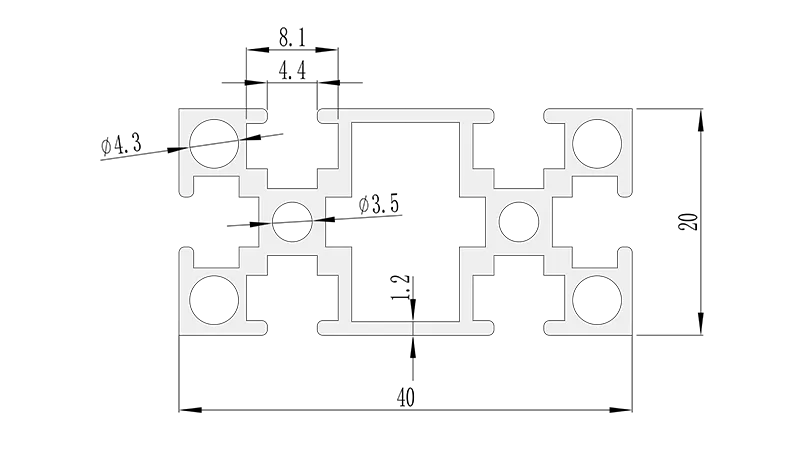
Before diving into supplier selection, let's start with the basics: what exactly is a 2040 national standard profile, and why does it matter? The "2040" designation refers to the profile's cross-sectional dimensions: 20mm in width and 40mm in height. But this simple measurement belies its complexity. As a national standard profile, it adheres to strict dimensional tolerances, material specifications, and performance criteria set by industry regulators—ensuring consistency across manufacturers and compatibility with a wide range of aluminum profile accessories. This standardization is what makes the 2040 profile a favorite among engineers and designers: it's predictable, reliable, and designed to work seamlessly with other components, from end caps and connectors to brackets and panels.
Unlike custom or non-standard profiles, the 2040 national standard profile is mass-produced using high-precision aluminum extrusion profile techniques. Extrusion—where molten aluminum is forced through a die to create a specific cross-sectional shape—gives the profile its uniform structure, excellent strength-to-weight ratio, and smooth surface finish. This process also allows for the integration of T-slots along the length of the profile, which are critical for attaching accessories without the need for welding or drilling. For example, a 2040 aluminum profile end cap snaps into place to protect edges and create a clean look, while T-slot nuts and bolts secure brackets or panels firmly in position. These features make the 2040 profile not just a structural element, but a flexible building block that can be reconfigured as project needs evolve.
But why choose the 2040 over other standard profiles, like the 3030 or 4040? Its unique dimensions strike a balance between strength and versatility. At 20mm x 40mm, it's narrow enough for applications where space is limited (think compact workstations or machine enclosures) yet robust enough to support moderate loads. This makes it ideal for everything from light-duty shelving and material racks to automated guided vehicle (AGV) frames and robotic arm mounts. In short, the 2040 national standard profile is the Swiss Army knife of aluminum extrusions—adaptable, reliable, and ready to tackle a wide range of industrial challenges.
2. Material Quality: The Foundation of Performance
When evaluating 2040 national standard profile suppliers, the first and most critical factor to assess is material quality. After all, even the most precise manufacturing process can't compensate for subpar aluminum. So, what should you look for? Start with the alloy composition. Most high-quality 2040 profiles are made from 6063-T5 aluminum alloy, a heat-treatable alloy known for its excellent extrudability, corrosion resistance, and mechanical properties. 6063-T5 offers a good balance of strength and ductility, making it easy to machine, weld, and anodize—key for applications where both structural integrity and aesthetics matter.
But how do you verify that a supplier is using genuine 6063-T5 alloy? Ask for material certificates, such as a Mill Test Report (MTR) or Certificate of Compliance (CoC), which should detail the alloy grade, temper, and chemical composition. Reputable suppliers will provide these documents without hesitation, as they have nothing to hide. Be wary of suppliers who dodge these requests or provide vague answers—this could be a red flag for counterfeit or low-grade material. For example, some suppliers might cut costs by using recycled aluminum with unknown impurities, which can weaken the profile and lead to premature failure under stress.
Another aspect of material quality is surface treatment. The 2040 national standard profile often undergoes anodizing—a process that creates a protective oxide layer on the aluminum surface, enhancing corrosion resistance and wear durability. Anodized profiles also have a matte, uniform finish that's easy to clean and maintain. When inspecting samples, look for consistent color (typically clear, black, or silver) and a smooth surface free of pits, scratches, or discoloration. A poor anodizing job can leave the profile vulnerable to rust, especially in humid or industrial environments, which can compromise both performance and lifespan.
Dimensional accuracy is equally important. The national standard for 2040 profiles specifies tight tolerances for width, height, wall thickness, and straightness. For instance, the width should measure 20mm ±0.2mm, and the height 40mm ±0.2mm, while the wall thickness (often around 1.5mm to 2mm) should be consistent across the profile's length. Even minor deviations can cause problems during assembly—imagine trying to attach a bracket to a profile that's 0.5mm narrower than specified; the fit will be loose, leading to wobbling or instability. To check this, request sample profiles and measure them with calipers or a micrometer. If possible, test-fit them with standard aluminum profile accessories, like T-slot nuts or end caps, to ensure compatibility.
In summary, material quality isn't just about meeting specifications—it's about ensuring that the 2040 profile will perform as expected in your application. By prioritizing alloy purity, surface treatment, and dimensional accuracy, you'll avoid costly rework, reduce downtime, and build a structure that stands the test of time.
3. Manufacturing Capabilities: Beyond the Basics
Once you've confirmed that a supplier uses high-quality aluminum, the next step is to evaluate their manufacturing capabilities. Extruding a 2040 national standard profile isn't a simple process; it requires advanced equipment, skilled operators, and strict process controls to ensure consistency and precision. Let's break down the key aspects to consider.
Extrusion Press Capacity and Technology
The heart of any aluminum extrusion operation is the extrusion press. Modern presses use hydraulic systems to generate the force needed to push molten aluminum through a die, and their capacity is measured in tons. For 2040 profiles, a press with a capacity of 600 to 1200 tons is typically sufficient, as these profiles are relatively small in cross-section. However, larger presses (1500 tons or more) may be necessary for longer profiles or for producing multiple profiles simultaneously (a process called "multi-hole extrusion"). Ask the supplier about their press sizes and whether they have the flexibility to handle your order volume—whether you need 100 meters or 10,000 meters of 2040 profile.
Equally important is the age of the equipment. Older presses may lack the precision controls of newer models, leading to variations in profile dimensions or surface finish. Newer presses often feature computer numerical control (CNC) systems that monitor and adjust pressure, speed, and temperature in real time, ensuring each profile meets exact specifications. For example, a CNC-controlled press can maintain a consistent extrusion speed of 3 to 5 meters per minute, preventing defects like "speed lines" (visible streaks on the profile surface) or uneven wall thickness.
Die Design and Maintenance
The extrusion die is what gives the 2040 profile its shape, and die quality directly impacts the final product. A well-designed die ensures uniform material flow, sharp corners, and consistent wall thickness. Ask the supplier about their die-making process—do they design and manufacture dies in-house, or do they outsource this critical step? In-house die design is often preferable, as it allows for tighter quality control and faster adjustments if issues arise. For example, if a die wears down and starts producing profiles with rounded corners, an in-house team can repair or replace it quickly, minimizing production delays.
Die maintenance is another area to probe. Dies are subject to extreme heat and pressure during extrusion, which causes wear over time. Suppliers should have a regular maintenance schedule, including cleaning, polishing, and dimensional checks, to ensure dies remain within tolerance. A worn die can lead to profiles with uneven dimensions, rough surfaces, or "flash" (excess material along the edges), all of which require secondary processing (like trimming or sanding) to fix—adding time and cost to your order.
Secondary Processing Capabilities
While the 2040 national standard profile is designed for easy assembly using T-slots, many projects require additional processing, such as cutting, drilling, tapping, or anodizing. A supplier with in-house secondary processing capabilities can save you time and money by delivering profiles ready for installation, rather than requiring you to send them to a third-party shop. For example, if you need profiles cut to specific lengths (say, 1200mm for workbench legs), a supplier with CNC saws can cut them to ±0.5mm accuracy, ensuring a perfect fit during assembly.
Anodizing is another key secondary process. As mentioned earlier, anodizing enhances corrosion resistance and appearance, but not all anodizing is created equal. Look for suppliers who offer Type II anodizing (sulfuric acid anodizing) with a thickness of at least 10 microns, which is standard for industrial applications. Some suppliers also offer color anodizing (black, gold, or custom colors) for applications where aesthetics are important, like retail displays or consumer electronics enclosures. If your project requires specialized finishes, such as powder coating or electrophoretic painting (e-coating), confirm that the supplier can handle these processes in-house or through trusted partners.
In short, a supplier's manufacturing capabilities determine not just the quality of the 2040 profiles, but also the efficiency of your supply chain. By choosing a supplier with advanced extrusion equipment, in-house die design, and comprehensive secondary processing, you'll streamline production, reduce lead times, and ensure that every profile meets your exact requirements.
4. Range of Aluminum Profile Accessories: Completing the Package
A 2040 national standard profile is only as useful as the accessories that accompany it. After all, even the most well-designed profile can't function alone—you need end caps to protect edges, connectors to join profiles, brackets to mount components, and so on. That's why evaluating a supplier's range of aluminum profile accessories is just as important as assessing the profiles themselves. A supplier that offers a comprehensive lineup of accessories not only saves you the hassle of sourcing from multiple vendors but also ensures compatibility between components.
Let's start with the basics: end caps and covers. The 2040 aluminum profile end cap is a small but essential accessory, designed to fit snugly into the ends of the profile to prevent dust, debris, or moisture from entering the T-slots. It also eliminates sharp edges, reducing the risk of injury during handling. Look for end caps made from high-quality plastic (like polypropylene) or rubber, which are durable and resistant to impact. Some suppliers offer color-coded end caps (e.g., black, white, or gray) to match the profile's anodized finish, adding a professional touch to the final assembly.
Next, consider connectors and fasteners. These are the "glue" that holds your 2040 profile structure together. Common connectors include angle brackets (for joining profiles at 90° or 45° angles), corner cubes (for 3-way connections), and T-connectors (for attaching cross-members). Fasteners range from T-slot nuts and bolts (which slide into the T-slots and secure with a hex key) to drop-in nuts (which lock in place with a simple twist). The best suppliers offer a variety of connector styles and sizes to accommodate different load requirements—for example, heavy-duty angle brackets with reinforced gussets for structural applications, or lightweight plastic connectors for non-critical assemblies.
Another essential category is surface protection and finishing accessories. Aluminum profile rubber strip, for instance, fits into the T-slots to seal out dust and moisture, reduce vibration, or provide a non-slip surface for resting materials. These strips are available in various colors (black, gray, yellow) and durometers (hardness levels), allowing you to choose the right option for your application. For example, a soft rubber strip might be used on a workbench surface to prevent scratches, while a harder strip could be used in a material handling application to guide parts along a conveyor.
To help visualize the range of accessories available, let's take a look at a sample table of common 2040 profile accessories and their uses:
| Accessory Type | Example Product | Primary Use | Material |
|---|---|---|---|
| End Caps | 2040 Aluminum Profile End Cap | Seal profile ends, protect edges | Polypropylene (PP) |
| Connectors | 90° Angle Bracket | Join profiles at right angles | Aluminum Alloy |
| Fasteners | M6 T-Slot Nut & Bolt | Secure components to T-slots | Stainless Steel |
| Surface Protection | Aluminum Profile Rubber Strip | Seal T-slots, reduce vibration | EPDM Rubber |
| Panels & Covers | Polycarbonate Panel (3mm) | Enclose structures, protect equipment | Polycarbonate (PC) |
When evaluating a supplier's accessory lineup, ask yourself: Do they offer all the components I need for my current project? Can they accommodate future needs, such as custom brackets or specialized fasteners? A supplier with a limited accessory range may force you to source from competitors, increasing the risk of compatibility issues. For example, a T-slot nut from one supplier might not fit the T-slot of a 2040 profile from another, leading to loose connections or stripped threads. By choosing a supplier with a comprehensive accessory portfolio, you'll ensure that every piece of your assembly works together seamlessly.
5. Customization Flexibility: Tailoring to Your Needs
While the 2040 national standard profile is designed to be versatile, many projects require more than just off-the-shelf components. Whether you need a custom length, a modified T-slot pattern, or a unique surface finish, the ability to customize is a key differentiator between good suppliers and great ones. So, how do you assess a supplier's customization capabilities?
Start with length customization. Most suppliers offer standard lengths (e.g., 3 meters, 4 meters, or 6 meters), but if your project requires shorter or longer profiles, you'll need a supplier that can cut to size with precision. As mentioned earlier, CNC saws are ideal for this, as they can cut profiles to within ±0.5mm of the desired length. Some suppliers even offer "cut-to-print" services, where they follow your detailed drawings to add holes, slots, or notches at specific locations. For example, if you need a 2040 profile with a 10mm diameter hole centered 50mm from the end, a supplier with CNC machining capabilities can drill this accurately and consistently across hundreds or thousands of profiles.
Another area of customization is die modification. While the 2040 national standard profile has a fixed cross-section, some suppliers can modify existing dies to add features like extra T-slots, grooves, or embossed markings. For instance, you might need an additional T-slot along one face of the profile to mount sensors or cable management clips. Keep in mind that die modifications require engineering expertise and may incur tooling costs, but for high-volume projects, the investment can be worthwhile. Ask the supplier about their die modification process, lead times, and minimum order quantities (MOQs) for custom dies—this will help you determine if the cost and timeline align with your project goals.
Surface finish customization is also worth exploring. While clear anodizing is standard, many suppliers offer color anodizing, powder coating, or even custom painting to match your brand colors or meet specific industry requirements. For example, food processing facilities often require profiles with FDA-compliant powder coatings, while automotive plants may need profiles in a specific RAL color to match production line aesthetics. Some suppliers also offer specialized finishes like sandblasting (for a matte texture) or hard anodizing (for increased wear resistance in high-friction applications).
Finally, consider assembly and kitting services. A supplier that can assemble 2040 profile components into subassemblies or complete kits saves you valuable time and labor. For example, if you need 50 workbenches, a supplier could pre-cut the profiles, attach the legs and shelves, and ship the fully assembled workbenches ready for use. Alternatively, they could kit all the components (profiles, connectors, end caps, tools) into labeled packages, making on-site assembly a breeze. This level of service is especially valuable for large projects or for companies with limited in-house assembly resources.
In summary, customization flexibility allows you to turn the standard 2040 national standard profile into a solution that's tailored to your unique needs. By partnering with a supplier that offers cutting, machining, die modification, and assembly services, you'll reduce lead times, minimize waste, and ensure that your project meets its performance and aesthetic goals.
6. Supply Chain Reliability: Ensuring On-Time Delivery
In manufacturing, time is money—and nothing derails a project faster than delayed shipments of critical components like 2040 national standard profiles. That's why supply chain reliability is a non-negotiable factor when selecting a supplier. A supplier could offer the highest quality profiles and accessories, but if they can't deliver on time, they'll cost you more in missed deadlines and lost opportunities. So, what steps can you take to assess a supplier's reliability?
Start by examining their production capacity and lead times. Ask for a clear breakdown of how long it takes to produce and deliver your order—from the time you place the PO to the time the profiles arrive at your facility. For standard 2040 profiles in stock, lead times should be 1 to 3 weeks. For custom orders (e.g., cut-to-length, anodized, or modified dies), lead times may extend to 4 to 6 weeks, depending on complexity. Reputable suppliers will provide a written quote with a firm delivery date, not just a vague "4-6 weeks" estimate. They'll also communicate proactively if delays occur—for example, if a die needs repair or raw material shipments are delayed due to logistics issues.
Next, evaluate their inventory management practices. Do they maintain a stock of standard 2040 profiles and aluminum profile accessories, or do they produce everything to order? A supplier with a well-stocked warehouse can often fulfill small to medium orders within days, which is crucial for emergency repairs or rush projects. On the other hand, suppliers with just-in-time (JIT) production models may offer lower costs but longer lead times. The best suppliers strike a balance, using demand forecasting to keep popular items in stock while maintaining flexibility for custom orders.
Logistics and shipping capabilities are another key aspect. How does the supplier get your profiles from their factory to your door? Do they work with reliable carriers, or do they outsource logistics to third parties with little oversight? Look for suppliers who have established relationships with freight forwarders and can offer multiple shipping options (ground, air, sea) to meet your timeline and budget. For international shipments, ask about their experience with customs documentation, import duties, and compliance with regulations like REACH or RoHS—this will help avoid delays at the border.
Finally, check their track record with other customers. Request references from clients in similar industries or with similar order sizes. Ask these references about on-time delivery rates, communication during delays, and how the supplier resolved any issues that arose. Online reviews and industry forums can also provide insights, though take them with a grain of salt—one negative review doesn't necessarily mean the supplier is unreliable, but a pattern of complaints about late shipments or poor communication is a warning sign.
In the end, supply chain reliability is about trust. You need to trust that your supplier will deliver the right profiles, in the right quantities, at the right time—every time. By thoroughly evaluating their lead times, inventory practices, logistics capabilities, and customer references, you'll be well on your way to building that trust.
7. Quality Control: Ensuring Consistency Every Step of the Way
Even the best materials and manufacturing processes can fall short without rigorous quality control (QC). When sourcing 2040 national standard profile suppliers, it's essential to understand how they ensure that every profile meets your specifications. A robust QC program should cover every stage of production, from raw material inspection to final shipment.
Raw material inspection is the first line of defense. Before any aluminum billet (the raw material used for extrusion) enters the production line, it should be checked for alloy composition, dimensional consistency, and surface defects. Suppliers should use tools like spectrometers to verify the chemical makeup of the billet, ensuring it matches the specified alloy grade (e.g., 6063-T5). They should also inspect for cracks, inclusions, or other flaws that could weaken the final profile. If a billet fails inspection, it should be rejected—no exceptions.
In-process QC occurs during extrusion, cooling, and heat treatment. During extrusion, operators should monitor key parameters like temperature (molten aluminum is typically extruded at 450°C to 500°C), press speed, and pressure. Deviations from these parameters can cause defects like surface tearing, internal porosity, or inconsistent wall thickness. Many modern extrusion lines use automated sensors to track these variables in real time, alerting operators to issues before they affect large batches of profiles. After extrusion, profiles are cooled (either by air or water) and then heat-treated to achieve the desired temper (e.g., T5). Heat treatment ovens should be calibrated regularly to ensure uniform temperature distribution, as uneven heating can lead to variations in hardness and strength across the profile.
Post-processing QC focuses on dimensional accuracy, surface finish, and mechanical properties. Dimensional checks involve measuring the profile's width, height, wall thickness, and T-slot dimensions using calipers, micrometers, or coordinate measuring machines (CMMs). For example, a CMM can scan the entire cross-section of a 2040 profile and compare it to the CAD model, highlighting any deviations from the standard. Surface finish checks involve visual inspections for scratches, dents, or discoloration, as well as measurements of anodize thickness using a coating thickness gauge. Mechanical testing, such as tensile strength or hardness tests, may be performed on sample profiles to ensure they meet the required specifications for the alloy and temper.
Final inspection before shipment is the last step. This involves checking each profile (or a statistically significant sample) for compliance with your order requirements—length, cut quality, holes, surface finish, and packaging. Profiles should be packaged securely to prevent damage during transit—common packaging methods include bundling with steel straps, wrapping in protective film, or placing in cardboard boxes for small quantities. Some suppliers also label each bundle with part numbers, quantities, and batch codes, making it easy to track and verify shipments upon arrival.
To ensure that a supplier's QC program is up to par, ask for a copy of their quality manual or ISO 9001 certification (if applicable). ISO 9001 is an international standard for quality management systems, and certification indicates that the supplier has implemented processes to consistently meet customer and regulatory requirements. You can also request a tour of their facility (in-person or virtual) to see their QC processes firsthand—this will give you confidence that they take quality seriously.
In short, quality control isn't just about catching defects—it's about preventing them from happening in the first place. By choosing a supplier with a comprehensive QC program, you'll minimize the risk of receiving subpar profiles, reduce waste, and ensure that your project stays on track.
8. Pricing and Cost Transparency: Avoiding Hidden Surprises
Let's be honest—pricing is always a factor when sourcing suppliers. But while it's tempting to choose the lowest bid, focusing solely on cost can lead to unpleasant surprises down the line, like hidden fees, poor quality, or delayed shipments. Instead, look for suppliers who offer competitive pricing with clear, transparent cost breakdowns. Here's how to approach this.
First, understand the components of a 2040 national standard profile price. The base price typically includes the aluminum alloy, extrusion, and standard length (e.g., 6 meters). From there, additional costs may apply for secondary processes like cutting, anodizing, or machining. For example, cutting to custom lengths might add $0.50 to $2.00 per cut, while anodizing could add $1.00 to $3.00 per meter, depending on the finish type and thickness. Accessories like 2040 aluminum profile end caps or aluminum profile rubber strip are usually priced separately, by the piece or by the meter.
Reputable suppliers will provide a detailed quote that itemizes these costs, so you know exactly what you're paying for. Be wary of suppliers who offer a single "all-in" price without explanation—this could hide extra charges for things like packaging, shipping, or small order fees. For example, a supplier might quote $5.00 per meter for 2040 profiles but then add a $50 "small order surcharge" if you order less than 100 meters. By asking for a detailed breakdown, you can compare apples to apples between suppliers and avoid unexpected costs.
Volume discounts are another area to explore. Most suppliers offer lower per-unit prices for larger orders, as they can spread fixed costs (like die setup or machine programming) across more units. For example, ordering 1000 meters of 2040 profile might cost $4.50 per meter, while ordering 5000 meters could drop the price to $4.00 per meter. Ask the supplier about their volume discount tiers and MOQs—this will help you determine the most cost-effective order size for your project. Keep in mind that some suppliers also offer blanket orders or long-term contracts, where you commit to purchasing a certain volume over time in exchange for a locked-in price. This can be beneficial if you anticipate ongoing needs for 2040 profiles and want to protect against price fluctuations in aluminum raw materials.
Payment terms are also part of the cost equation. Suppliers may offer discounts for early payment (e.g., 2% off for payment within 10 days) or flexible terms like net-30 (payment due 30 days after delivery). Evaluate these terms based on your cash flow needs—while early payment discounts can save money, they may not be worth it if they strain your working capital. Some suppliers also accept letters of credit (LCs) for international orders, which can provide security for both parties.
Finally, consider the total cost of ownership (TCO), not just the upfront price. TCO includes factors like quality (fewer defects mean less rework), delivery reliability (on-time shipments reduce downtime), and after-sales support (quick resolution of issues saves time). A slightly higher upfront price from a reputable supplier may result in lower TCO over time, as you avoid costs like replacing faulty profiles, paying rush fees for late shipments, or hiring extra staff to fix assembly problems. For example, a $5.00 per meter profile from a reliable supplier with 99% on-time delivery and free technical support may be a better value than a $4.50 per meter profile from a supplier with frequent delays and poor customer service.
In summary, pricing is important, but it shouldn't be the only factor in your decision. By seeking transparency in cost breakdowns, exploring volume discounts, evaluating payment terms, and considering TCO, you'll make a more informed choice that balances quality, reliability, and affordability.
9. Customer Support and After-Sales Service: Beyond the Sale
The relationship with your 2040 national standard profile supplier shouldn't end when your order ships. In fact, some of the most valuable support comes after the sale—when you're assembling the profiles, troubleshooting issues, or planning your next project. That's why evaluating a supplier's customer support and after-sales service is critical to a successful partnership.
Technical support is often the first point of contact after purchase. Whether you're trying to figure out which connector to use for a complex joint or need help calculating the load capacity of a 2040 profile structure, a knowledgeable technical team can save you hours of frustration. Look for suppliers who offer multiple support channels, such as phone, email, or live chat, and who respond promptly to inquiries (ideally within 24 hours). Some suppliers even provide online resources like CAD drawings, 3D models, or assembly guides that you can download for free. For example, you might find a step-by-step video tutorial on their website showing how to assemble a workbench using 2040 profiles and aluminum profile accessories—this can be invaluable for new users or complex projects.
Warranty and returns policies are another key aspect of after-sales service. A solid warranty demonstrates the supplier's confidence in their products. Most reputable suppliers offer a warranty against defects in materials and workmanship, typically ranging from 1 to 5 years. The warranty should cover profiles that fail prematurely due to poor alloy quality, extrusion defects, or improper heat treatment. Be sure to read the fine print—some warranties exclude damage from improper installation, misuse, or normal wear and tear. For returns, ask about the process for defective or incorrect items. Will the supplier arrange for pickup, or will you need to ship the items back at your own cost? How quickly will they issue a replacement or refund? A supplier with a hassle-free returns policy shows that they value customer satisfaction over short-term profits.
Training and education services can also set great suppliers apart. If your team is new to working with aluminum extrusion profiles, a supplier that offers on-site or virtual training sessions can help you get up to speed quickly. These sessions might cover topics like profile selection, assembly techniques, load calculation, or maintenance best practices. Some suppliers even provide certification programs for your staff, giving them the skills to design and build structures with confidence. For example, a training session could teach your engineers how to use design software to model 2040 profile assemblies and simulate their performance under different loads—helping you avoid over-engineering (and over-spending) on components.
Finally, consider the supplier's willingness to partner on future projects. A good supplier will take the time to understand your long-term goals and offer suggestions to help you save time or money. For example, they might recommend a different profile size or accessory that better suits your needs, or alert you to new products (like lightweight aluminum profile accessories) that could improve your designs. They might also share industry insights, such as emerging trends in automation or sustainability, that could impact your future projects. This level of collaboration turns a transactional relationship into a strategic partnership, where both you and the supplier benefit from mutual success.
In the end, customer support and after-sales service are about peace of mind. You want to know that if something goes wrong—or if you just have a question—your supplier will be there to help. By choosing a supplier with responsive technical support, fair warranty policies, and a commitment to your success, you'll build a relationship that grows stronger over time.
10. Conclusion: Building a Partnership for Success
Sourcing 2040 national standard profile suppliers is more than just a purchasing decision—it's about building a partnership that will support your manufacturing, automation, or industrial design projects for years to come. From material quality and manufacturing capabilities to customization flexibility and after-sales service, each factor we've discussed plays a role in determining whether a supplier is the right fit for your needs.
At the heart of this decision is trust. You need to trust that your supplier will deliver high-quality 2040 profiles that meet national standards and your specific requirements. You need to trust that they'll be transparent about pricing, honest about lead times, and responsive when issues arise. And you need to trust that they'll grow with you, offering new products, services, and insights as your business evolves.
So, where do you start? Begin by defining your project needs clearly: What are the load requirements? What secondary processes are needed? What's your timeline and budget? With these details in hand, research potential suppliers, ask for samples and references, and visit their facilities if possible. Don't be afraid to ask tough questions—about material certifications, QC processes, or how they handle delays. The answers will reveal whether they're truly committed to quality and customer satisfaction.
Remember, the cheapest supplier isn't always the best, and the most expensive isn't always the most reliable. Instead, look for the supplier that offers the best balance of quality, service, and value—a partner who understands your industry, shares your goals, and is invested in your success.
In the world of manufacturing, every component matters. The 2040 national standard profile may seem like a small part of the puzzle, but its quality and reliability can have a big impact on your project's efficiency, durability, and bottom line. By taking the time to select the right supplier, you'll ensure that this critical component works as hard as you do—supporting your operations, streamlining your processes, and helping you build a better, more productive future.