- Company Articles
- Products and Technology
- Product knowledge
- Key Considerations When Selecting One Side Rotatory Chrome Parallel Lean Pipe Joints

Key Considerations When Selecting One Side Rotatory Chrome Parallel Lean Pipe Joints
Related Product
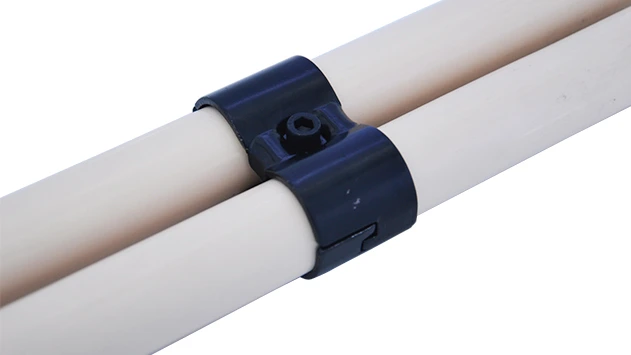
Parallel Lean Pipe Joint
Parallel lean pipe joint used for 2 pcs 28MM lean pipe connection in parallel direction to enhance frame structure, usually for heavy payload requirement for workbench. flow rack, hand trolley.
In the fast-paced world of manufacturing and logistics, efficiency isn't just a buzzword—it's the backbone of success. Every tool, every component, and every inch of workspace plays a role in keeping operations running smoothly. At the heart of many modern production lines and warehouses lies the lean system —a philosophy turned practical solution that minimizes waste, maximizes flow, and adapts to evolving needs. And within these lean systems, few components are as yet critical as the joints that hold everything together. Today, we're zeroing in on a game-changer for flexibility and adaptability: the one side rotatory chrome parallel lean pipe joint . Whether you're setting up a new assembly line, upgrading a workbench, or optimizing a material flow rack, choosing the right joint can mean the difference between seamless productivity and frustrating bottlenecks. Let's dive into what makes these joints unique, why they matter, and the key factors to weigh when selecting them for your operation.
Understanding Lean Pipe Systems: The Backbone of Modern Workspaces
Before we zoom in on the specifics of the one side rotatory chrome parallel joint, let's take a step back to appreciate the bigger picture: lean pipe systems. These systems are built around the idea that workspaces should be as dynamic as the teams using them. Traditional fixed structures—think heavy steel racks or immovable workbenches—lock businesses into rigid layouts, making it hard to scale, reconfigure, or adapt to new processes. Lean pipe systems, by contrast, use lightweight, modular components (pipes, joints, accessories) to create everything from workbenches and flow racks to conveyor systems and turnover trolleys. They're the Swiss Army knife of industrial design: simple, versatile, and endlessly customizable.
At the core of this modularity are the joints. If lean pipes are the bones of the system, joints are the ligaments—connecting pieces that determine how parts move, support weight, and interact. From fixed 90-degree joints that anchor vertical and horizontal pipes to swivel joints that allow for rotation, each type serves a unique purpose. And among these, the one side rotatory chrome parallel lean pipe joint stands out for its ability to blend stability with controlled movement. Imagine a workbench where one section can pivot to angle materials toward a worker, or a flow rack where a segment tilts slightly to guide products along a roller track—this is the flexibility these joints enable.
What Are One Side Rotatory Chrome Parallel Lean Pipe Joints?
Let's break down the name to understand the functionality: one side rotatory means the joint allows rotation on one axis (unlike a full swivel joint, which might rotate 360 degrees). Chrome parallel refers to two key features: the chrome plating (for durability and corrosion resistance) and the parallel design, which ensures the connected pipes remain aligned in a parallel plane even as they rotate. Unlike a joint that might bend or twist pipes out of alignment, this design keeps the structure stable while adding controlled movement.
Picture this: You're assembling a material rack where the top shelf needs to tilt forward slightly to let boxes slide down easily, but the bottom shelves must stay fixed. A one side rotatory chrome parallel joint connects the top shelf's pipes to the vertical supports, allowing that tilt without compromising the rack's overall stability. Or consider a workbench where a tool holder arm needs to swing out over the workspace when in use and tuck back when not—this joint makes that smooth, repeatable motion possible.
These joints are typically made from high-grade steel with a chrome finish, though some manufacturers offer variants compatible with aluminum lean pipe for lighter-duty applications. They come in standard sizes to fit common lean pipe diameters (often 28mm or 30mm) and are designed to work with other lean pipe accessories like clamps, brackets, and end caps, ensuring they integrate seamlessly into existing systems.

Key Considerations When Selecting These Joints
Choosing the right one side rotatory chrome parallel lean pipe joint isn't just about picking a part that "fits." It's about matching the joint's capabilities to your specific needs, environment, and long-term goals. Here are the critical factors to evaluate:
1. Material Quality and Chrome Plating Integrity
The first thing to check is the base material and the quality of the chrome plating. Most joints are made from carbon steel, but not all steel is created equal. Look for joints forged from high-strength steel (often S235 or S355 grades) that can withstand repeated stress without bending or cracking. The chrome plating isn't just for aesthetics—it's a protective layer that resists rust, scratches, and corrosion. A thick, evenly applied chrome coating (at least 0.01mm thick) will stand up to daily wear, cleaning, and exposure to oils or coolants in manufacturing environments. Avoid joints with thin, patchy plating or visible blemishes, as these are prone to peeling and premature failure.
If your workspace uses aluminum lean pipe , you'll need to ensure the joint is compatible. Some manufacturers offer aluminum-bodied joints with chrome-plated components, which are lighter and resist corrosion even better than steel—ideal for cleanrooms or food processing facilities where hygiene is critical.
2. Load Capacity: Know What You're Lifting
Every joint has a maximum load rating, and exceeding it is a recipe for disaster. Load capacity refers to the amount of weight the joint can support without deforming or failing, both in static (stationary) and dynamic (moving) conditions. For example, a joint rated for 50kg static load might only handle 30kg when rotating, as movement adds stress to the connection points.
To determine your needs, calculate the total weight the joint will bear. If it's part of a workbench, include the weight of tools, materials, and even the worker's arms resting on the surface. For a flow rack, factor in the heaviest product plus the cumulative weight of multiple items on the roller track. Always choose a joint with a load rating that exceeds your maximum expected weight by at least 20% to account for unexpected stress or wear over time.
3. Rotational Mechanism: Smoothness and Range
The "rotatory" part of the joint is its defining feature, so test the mechanism thoroughly. A well-designed joint should rotate smoothly without jerking or sticking, even after repeated use. Look for joints with precision-machined pivot points and lubricated bearings (some are pre-lubricated, others require occasional maintenance). The rotation range is also key—most one side rotatory joints offer 180 degrees of movement, but some are limited to 90 degrees or less. Consider how much rotation you need: a workbench shelf might only need 30 degrees to angle materials, while a tool arm could benefit from a full 180-degree swing.
Also, check if the joint has detents or locking positions. These are small notches or pins that hold the joint in place at specific angles (e.g., 0°, 45°, 90°), preventing accidental movement. This is especially useful in applications where stability during use is critical, like assembly workbenches where tools must stay in a fixed position during operation.
4. Compatibility with Lean Pipes and Accessories
Lean pipe systems thrive on compatibility, so the joint must fit your existing pipes and work with other components. Most lean pipes come in standard diameters (28mm is common for steel, 30mm for aluminum), but double-check the joint's inner diameter to ensure a snug fit. A loose joint will wobble, reducing stability and increasing noise during use. Some joints use set screws to secure the pipe—make sure these are made from hardened steel and have a Phillips or hex head for easy tightening.
Compatibility with lean pipe accessories is equally important. If you plan to add a caster wheel to the bottom of a trolley, does the joint leave enough space for the caster bracket? Can you attach a roller track guide rail to a joint-connected shelf? A reputable lean pipe supplier will provide compatibility charts or sample kits to test fit before you buy in bulk.
5. Corrosion Resistance: Adapting to Your Environment
Manufacturing environments can be tough on equipment. Humidity, dust, chemicals, and even temperature fluctuations can take a toll on metal components. Chrome plating helps, but it's not invincible. In high-moisture areas (like food processing or washing facilities), consider joints with additional corrosion resistance, such as stainless steel components or nickel-chrome plating. For cleanrooms or pharmaceutical settings, aluminum lean pipe joints with anodized finishes are better, as they resist flaking and don't release particles into the air.
If your workspace uses coolants, oils, or solvents, check that the joint's plating and materials are resistant to these substances. A quick test: wipe the joint with a cloth dampened with the chemical and check for discoloration or plating damage after 24 hours. A quality joint will hold up without issues.
6. Cost vs. Long-Term Value
It's tempting to opt for the cheapest joint to save money upfront, but this often backfires. A low-quality joint might cost half as much, but if it fails in six months, you'll spend more on replacements, downtime, and potential damage to materials. Instead, focus on long-term value. A well-made joint with a strong warranty (look for at least 12 months) will pay for itself by lasting 5–10 years with minimal maintenance.
Consider total cost of ownership: initial price + maintenance (lubrication, replacement parts) + downtime. A slightly pricier joint with sealed bearings (no lubrication needed) and a lifetime warranty could be cheaper over time than a budget option that requires quarterly oiling and frequent replacements.
7. Supplier Reliability: Trust the Source
Finally, the lean pipe supplier you choose matters as much as the joint itself. A reputable supplier will have strict quality control processes, provide test reports for load capacity and corrosion resistance, and offer technical support if you have questions about installation or compatibility. Avoid suppliers with vague product descriptions, no contact information, or poor customer reviews—these are red flags for subpar products.
Ask for samples before placing a large order. A good supplier will send a few joints for you to test in your environment, ensuring they meet your needs. Also, check if they offer customization—some suppliers can modify joint dimensions or plating for unique applications, which is invaluable for specialized setups.

Comparing Joint Types: A Quick Reference Table
| Joint Type | Rotation Range | Max Load (Static) | Best For | Material |
|---|---|---|---|---|
| One Side Rotatory Chrome Parallel | 0–180° (one axis) | 50–150kg | Tilted shelves, pivoting workbench sections | Chrome-plated steel, aluminum (optional) |
| Fixed 90° Joint | 0° (no rotation) | 100–200kg | Vertical/horizontal frame connections | Steel, zinc-plated |
| 360° Swivel Joint | 360° (full rotation) | 30–80kg | Tool arms, adjustable lighting | Plastic, steel with nylon bearings |
| Three-Way Lean Pipe Joint | 0° (fixed, multi-directional) | 80–150kg | Junction points in racks or frames | Steel, chrome-plated |
Real-World Impact: How the Right Joints Transform Workspaces
To put these considerations into perspective, let's look at a real example. A mid-sized electronics manufacturer was struggling with their assembly line workbenches. Workers had to reach across the bench to grab components from a fixed shelf, leading to fatigue and occasional errors. The facility manager decided to upgrade to workbenches using one side rotatory chrome parallel joints, allowing the component shelves to pivot 45 degrees toward the worker. Within a month, they noticed a 15% reduction in reach time, fewer mistakes, and workers reporting less shoulder strain. The joints' smooth rotation meant shelves stayed in place during use, and the chrome plating held up to daily cleaning with disinfectant wipes—proving that the right joint isn't just a part, but a productivity booster.
Another example: a warehouse using static flow racks for distributing packages. The racks were angled slightly, but packages sometimes got stuck, requiring workers to manually push them. By installing one side rotatory joints on the rack sections, they could adjust the angle dynamically—steeper for heavier boxes, gentler for lighter ones. Stuck packages dropped by 70%, and the warehouse team saved 2 hours daily on troubleshooting. These stories highlight that the best lean solutions aren't just about tools—they're about understanding how people work and designing systems that support them.
Maintenance Tips for Longevity
Even the best joints need a little care to last. Here's how to keep your one side rotatory chrome parallel lean pipe joints in top shape:
- Clean regularly: Wipe joints with a dry cloth to remove dust and debris. For greasy environments, use a mild detergent and water, then dry thoroughly to prevent rust.
- Lubricate moving parts: If the joint has exposed bearings, apply a few drops of machine oil every 3–6 months (check the manufacturer's recommendations). Sealed bearings typically don't need lubrication.
- Tighten set screws: Over time, vibrations can loosen set screws. Check them monthly and tighten with a screwdriver if they're loose.
- Inspect for wear: Look for cracks in the chrome plating, bent pivot pins, or excessive play in the rotation. replace joints at the first sign of damage to avoid system failure.
Conclusion: Small Joints, Big Impact
In the world of lean manufacturing, success lies in the details. The one side rotatory chrome parallel lean pipe joint may seem like a small component, but its impact on workflow, worker comfort, and system flexibility is enormous. By prioritizing material quality, load capacity, rotational smoothness, compatibility, and supplier reliability, you're not just buying a joint—you're investing in a workspace that adapts, grows, and supports your team's best work.
Remember, the goal of a lean system is to eliminate waste—including the waste of time, effort, and frustration caused by poorly designed components. So take the time to evaluate your needs, test samples, and choose joints that align with your long-term vision. After all, a workspace that works with your team, not against them, is the foundation of every successful operation.
Whether you're a seasoned plant manager or just starting to build your first lean setup, the right joints will make all the difference. Here's to smoother workflows, happier teams, and a lean system that grows with you.