- Company Articles
- Products and Technology
- Product knowledge
- Key Differences Between Standard and Heavy-Duty Castor Install Bases

Key Differences Between Standard and Heavy-Duty Castor Install Bases
Related Product
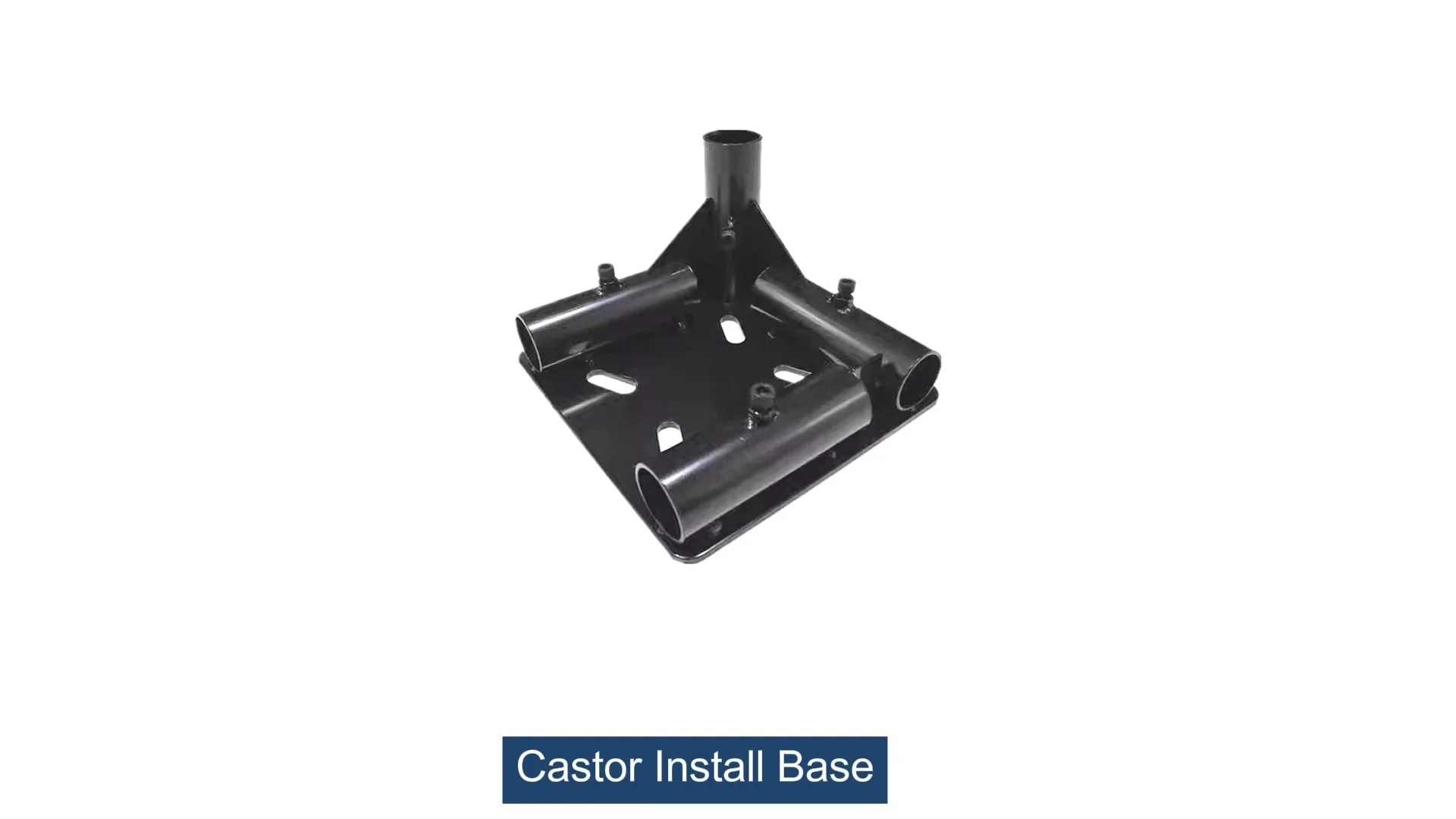
Castor Install Base
Castor install base, used for connection between pipe and castor, it can connect 4 pcs pipe by 1 pcs castor base, to make the structure strong and stable.
Walk into any busy warehouse, manufacturing plant, or even a bustling restaurant kitchen, and you'll notice something but absolutely critical: the wheels and bases that keep equipment moving. From carts transporting raw materials to workbenches that need repositioning, these moving parts rely on one often-overlooked component: the caster installation base . It's the unsung hero that connects the caster wheel to the equipment, ensuring stability, mobility, and safety. But not all bases are created equal. In fact, choosing between a standard and heavy-duty castor install base can mean the difference between smooth operations and costly breakdowns. Let's dive into what sets these two types apart, and how to decide which one is right for your needs.
What Are Castor Install Bases, Anyway?
Before we jump into the differences, let's make sure we're on the same page. A castor install base is essentially the "middleman" between a caster wheel and the equipment it's attached to. Think of it as the foundation: it bolts or welds to the bottom of a cart, workbench, or machine, and then the caster wheel is mounted to it. Without a solid base, even the best caster wheel would wobble, fail, or worse—putting workers and equipment at risk.
These bases are part of a larger system of caster and accessories , which includes everything from wheel bearings to brakes to mounting hardware. But while wheels get all the attention for their role in movement, the base is what ensures that movement is controlled and reliable. It bears the brunt of the load, absorbs shocks from uneven floors, and keeps the entire setup aligned. So, whether you're moving a 50-pound office cart or a 5,000-pound industrial machine, the base is doing the heavy lifting—literally.
Standard Castor Install Bases: Lightweight and Versatile
Standard castor install bases are the "everyday" option, designed for lighter loads and less demanding environments. They're the ones you'll find on office chairs, shopping carts, and small utility trolleys. Let's break down their key features:
Design and Materials
Standard bases are typically made from lightweight materials like mild steel, aluminum, or even high-grade plastic. Their design is simple: a flat plate with pre-drilled holes for bolting to equipment, and a mounting hub or plate where the caster wheel attaches. They're often thin—maybe 3/16 to 1/4 inch thick—and lack the reinforced edges or extra bracing you'd see in heavy-duty models. This simplicity keeps them affordable and easy to install.
Load Capacity: What They Can (and Can't) Handle
When it comes to load capacity, standard bases are built for the "light to medium" end of the spectrum. Most can handle between 100 and 500 pounds per caster, though this varies by size and material. For example, a small aluminum base might top out at 150 pounds, while a steel one could hit 500. But here's the catch: that's per caster. If you're using four casters on a cart, the total load capacity would be four times that (so 400 to 2,000 pounds total). But remember, this is for static loads—when the cart is sitting still. Dynamic loads (when it's moving) put more stress on the base, so you'll want to factor in a safety margin.
Applications: Where They Shine
Standard bases thrive in environments where loads are light, movement is frequent but gentle, and the floor is smooth. Think: office furniture (those rolling chairs we all love), retail display carts, medical supply trolleys in hospitals, or even home projects like a DIY workshop cart for your garage. They're also popular in settings where weight matters—like in catering, where staff need to push food carts around tight corners without straining.
Pros and Cons
Pros: They're cheap (often $10 to $30 per base), lightweight (so they don't add unnecessary bulk to equipment), and easy to install with basic tools (a wrench and some bolts). Replacement is a breeze too—no need for a professional.
Cons: Their Achilles' heel is heavy loads or rough use. drop a standard-base cart off a curb, overload it with heavy boxes, or use it on a bumpy factory floor, and you'll likely see bending, cracking, or the base pulling away from the equipment. They also don't hold up well in harsh environments—moisture can rust steel bases, and plastic ones might warp in extreme heat.

Heavy-Duty Castor Install Bases: Built for the Toughest Jobs
Now, let's shift to the heavyweights: heavy-duty castor install bases. These are the workhorses of industrial settings, designed to handle massive loads, rough terrain, and constant use. If standard bases are sedans, heavy-duty ones are tanks.
Design and Materials: Reinforced for Strength
Heavy-duty bases mean business when it comes to design. They're thicker—often 1/2 inch or more in steel thickness—and feature reinforced edges, gussets (triangular support brackets), or even double plates for extra rigidity. Materials are top-tier too: high-grade steel (like 304 stainless steel for corrosion resistance), or in some cases, forged iron. You might also come across specialized designs like the heavy duty split foot seat , a type of base with a split mounting plate that distributes weight more evenly and allows for easier alignment during installation.
Load Capacity: When "Heavy" Is an Understatement
Load capacity here is where things get impressive. Heavy-duty bases can handle anywhere from 500 pounds per caster up to 5,000 pounds or more. Some industrial-grade models even hit 10,000 pounds per caster—think of moving entire pieces of machinery or shipping containers. Again, this is per caster, so a cart with four heavy-duty bases could theoretically carry 40,000 pounds (though you'd need equally tough wheels and axles to match). These bases are also engineered for dynamic loads: they can absorb shocks from uneven floors, sudden stops, and frequent direction changes without flexing.
Applications: Industrial Strength for Industrial Needs
You'll find heavy-duty bases in places where "light duty" just won't cut it. Manufacturing plants use them on assembly line carts carrying engine blocks or steel beams. Construction sites rely on them for dollies moving tools and materials over gravel or concrete. Warehouses use them on pallet jacks and heavy-duty storage racks that need occasional repositioning. Even in agriculture, they're used on feed carts and equipment transporters that navigate muddy, uneven fields.
Pros and Cons
Pros: Unmatched durability is the big one. These bases can take years of abuse—rust, impacts, heavy loads—and keep going. They're also safer: a heavy-duty base is far less likely to fail under stress, reducing the risk of accidents. Many are also customizable, with options for locking mechanisms, corrosion-resistant coatings, or specialized mounts for unique equipment.
Cons: They're not cheap. A single heavy-duty base can cost $50 to $200 or more, depending on size and material. They're also heavy—sometimes 10 pounds or more per base—so installing them might require a second person or even a hoist. Overkill is another issue: using a heavy-duty base for a light office cart is like using a sledgehammer to hang a picture—it works, but it's unnecessary and adds extra weight.

Side-by-Side: Standard vs. Heavy-Duty at a Glance
| Feature | Standard Castor Install Base | Heavy-Duty Castor Install Base |
|---|---|---|
| Materials | Mild steel, aluminum, plastic | High-grade steel, stainless steel, forged iron |
| Thickness | 3/16 – 1/4 inch | 1/2 inch or more |
| Load Capacity (per caster) | 100 – 500 lbs | 500 – 10,000+ lbs |
| Typical Applications | Office chairs, retail carts, medical trolleys | Industrial carts, construction dollies, warehouse pallet jacks |
| Installation Difficulty | Easy (DIY with basic tools) | Moderate to hard (may need professionals) |
| Cost (per base) | $10 – $30 | $50 – $200+ |
| Durability | Good for light, gentle use | Excellent for heavy, rough use |

How to Choose: 5 Key Questions to Ask
Deciding between standard and heavy-duty isn't just about picking "stronger"—it's about matching the base to your specific needs. Here are five questions to guide you:
1. What's the Maximum Load You'll Be Carrying?
Start with the numbers. Calculate the total weight of your equipment plus the heaviest load it will ever carry, then divide by the number of casters (usually 4). That gives you the per-caster load. If it's under 500 pounds per caster, standard might work. Over 500? Go heavy-duty. And remember: always add a 20-30% safety margin for dynamic loads (movement) or unexpected bumps.
2. Where Will It Be Used?
Smooth office floors? Standard is fine. Rough concrete, gravel, or outdoor terrain? Heavy-duty is a must. Moisture, chemicals, or extreme temperatures? Look for heavy-duty bases with stainless steel or corrosion-resistant coatings—standard steel will rust, and plastic will degrade.
3. How Often Will It Move?
A cart that's moved once a day (like a storage shelf) can get away with standard bases. One that's pushed back and forth 50 times a day (like an assembly line cart) needs the durability of heavy-duty. Frequent movement means more wear and tear, so the base needs to stand up to repeated stress.
4. What's Your Budget?
Standard bases save money upfront, but if you misuse them (overloading, rough terrain), you'll end up replacing them often—costing more in the long run. Heavy-duty bases have a higher initial price, but they last years, making them cheaper over time for heavy-use applications.
5. Is Safety a Concern?
If the equipment carries people, fragile goods, or hazardous materials, skimping on the base is risky. A failed base could lead to injuries, broken products, or spills. In these cases, heavy-duty is non-negotiable—it's an investment in safety.
The Bottom Line: It's All About Balance
At the end of the day, there's no "better" option—only the right option for your needs. Standard castor install bases are perfect for light, everyday tasks where cost and weight matter. Heavy-duty bases are the way to go when you need strength, durability, and peace of mind in tough environments. And remember, they're just one part of the caster and accessories system—pairing the right base with the right wheel, brake, and mounting hardware is key to a setup that works seamlessly.
So, next time you're shopping for casters, don't overlook the base. It might not be as flashy as the wheel, but it's the foundation that keeps everything moving—safely, efficiently, and reliably. Whether you're outfitting a small workshop or a massive factory, choosing the right castor install base is one decision that will pay off every time you push, pull, or roll.