- Company Articles
- Products and Technology
- Procurement Guidelines
- Key Factors to Consider When Buying 40 Aluminum Roller Track Grey

Key Factors to Consider When Buying 40 Aluminum Roller Track Grey
Related Product
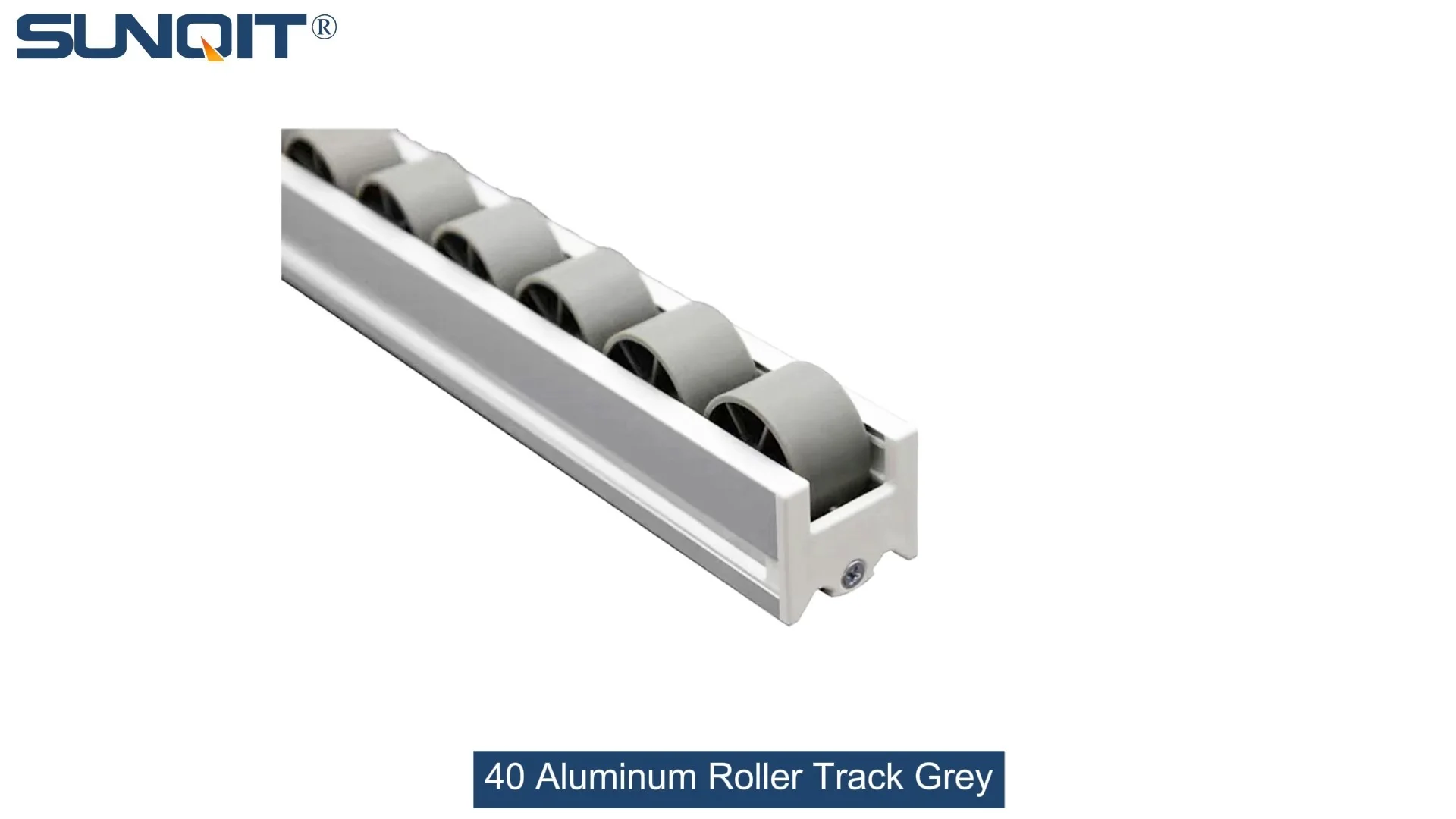
40 Aluminum Roller Track Grey
Durable and smooth-running modular roller rails. The system is fully assembled. The roller rail profile contains plastic rollers mounted on steel axles. Aluminum frame with plastic wheel make it anti corrosion,and material convey more smooth.
In the fast-paced world of manufacturing, warehousing, and assembly lines, every component plays a silent but critical role in keeping operations running smoothly. Among these unsung heroes is the 40 aluminum roller track grey—a seemingly simple piece of equipment that can make or break efficiency, safety, and long-term cost-effectiveness. Whether you're setting up a new flow rack, upgrading a conveyor system, or optimizing an assembly workstation, choosing the right roller track isn't just about picking a product off a shelf. It's about understanding how this single component integrates with your entire workflow, supports your team's daily tasks, and stands up to the demands of your unique environment. In this guide, we'll walk through the essential factors to consider when buying 40 aluminum roller track grey, helping you make a decision that aligns with your goals, budget, and operational needs.
1. Material Quality: Why Aluminum and Why Grey?
At the heart of any roller track is its material, and when it comes to 40 aluminum roller track grey, aluminum is the star of the show—and for good reason. Aluminum's natural properties—lightweight yet surprisingly strong, corrosion-resistant, and easy to shape—make it ideal for applications where both durability and maneuverability matter. Unlike steel, which can rust and add unnecessary weight, aluminum holds up well in humid warehouses, cleanrooms, or even outdoor loading areas without succumbing to corrosion. This resistance to the elements not only extends the track's lifespan but also reduces maintenance headaches down the line.
But not all aluminum is created equal. The quality of the aluminum used in your roller track directly impacts its strength and performance. Look for tracks made from high-purity aluminum alloys, often labeled with designations like 6061 or 6063—these alloys are known for their excellent balance of strength, weldability, and formability. A lower-grade aluminum might save you money upfront, but it could bend under heavy loads or wear down quickly with repeated use, leading to costly replacements.
Then there's the "grey" finish. Far more than just a color choice, the grey coating (typically a powder coating) serves multiple practical purposes. Powder coating adds a protective layer that resists scratches, chips, and fading—critical in high-traffic areas where carts, boxes, or tools might bump against the track. It also provides a non-slip surface for items sliding along the rollers, reducing the risk of accidental slips that could damage products or injure workers. Additionally, the neutral grey tone blends seamlessly with most industrial environments, maintaining a clean, professional look without clashing with existing equipment or color-coded workflows.
2. Load Capacity: Matching Strength to Your Needs
If material quality is the foundation of a reliable roller track, load capacity is the backbone. After all, what good is a lightweight, corrosion-resistant track if it can't support the weight of your products? Load capacity refers to the maximum weight the track can safely handle—both static (when items are stationary) and dynamic (when items are in motion, such as sliding down a flow rack). Getting this wrong can lead to bent rollers, sagging tracks, or even catastrophic failure, putting your team and inventory at risk.
Several factors influence a 40 aluminum roller track grey's load capacity, starting with the roller design itself. Rollers are the points of contact between the track and your items, so their diameter, spacing, and material thickness matter. Larger rollers (e.g., 25mm vs. 19mm) distribute weight more evenly, while closer roller spacing (e.g., 50mm apart vs. 100mm) prevents items from sagging between rollers. The thickness of the aluminum track frame also plays a role—a thicker frame (1.5mm vs. 1.0mm) adds rigidity, especially when spanning longer distances between supports.
To illustrate how these variables interact, let's look at a practical example. Suppose you're using the track in a flow rack to store boxes weighing 30kg each. A track with 25mm rollers spaced 75mm apart might comfortably handle this load, but if you increase the box weight to 50kg, you'd need either larger rollers, closer spacing, or a thicker frame. Dynamic load is another consideration: if items are sliding down the track at a steady pace (common in order-picking scenarios), the track must withstand not just the weight but also the momentum of moving objects. A track rated for 100kg static load might only support 70kg dynamically, so always check both specifications.
| Roller Diameter (mm) | Roller Spacing (mm) | Track Frame Thickness (mm) | Max Static Load (kg/m) | Max Dynamic Load (kg/m) |
|---|---|---|---|---|
| 20 | 100 | 1.0 | 50 | 35 |
| 25 | 75 | 1.2 | 80 | 60 |
| 30 | 50 | 1.5 | 120 | 90 |
| 30 | 50 | 2.0 | 150 | 110 |
When calculating your needs, always err on the side of caution. If your average box weight is 40kg, choose a track rated for at least 60kg dynamic load to account for occasional heavier items or unexpected impacts. Consult with suppliers to share your specific use case—they can often recommend custom configurations if standard options don't meet your requirements.

3. Compatibility with Accessories: Building a Cohesive System
A roller track rarely works alone. In most setups, it's part of a larger ecosystem of aluminum profiles, mounts, brackets, and guides—all of which need to work together seamlessly. This is where compatibility with accessories becomes make-or-break. The last thing you want is to invest in a 40 aluminum roller track grey only to find that the roller track placon mount for aluminum profile flat you ordered doesn't fit, or that the end supports you need are out of stock and take weeks to ship.
Start by checking if the track is designed to work with standard aluminum profile accessories. Aluminum profile systems (like 2020, 3030, or 4040 series) are industry standards for modular setups, and many roller tracks are engineered to connect with these profiles using standardized mounts. The roller track placon mount for aluminum profile flat, for example, is a common accessory that bridges the track to flat aluminum profiles, ensuring a secure, wobble-free connection. If your facility already uses a specific profile system, prioritize tracks that are compatible with its accessories to avoid costly custom fabrication.
Beyond mounts, consider other essential accessories: end stops to prevent items from sliding off the track, side guides to keep items centered, and support brackets to reinforce longer track sections. These accessories should be easy to source from the same supplier as the track, or from third-party vendors with a reputation for matching industry standards. Avoid proprietary systems that lock you into one supplier—while they might offer "exclusive" features, they often limit flexibility and drive up long-term costs if you need replacements or upgrades.
Modularity is another key aspect of compatibility. A good 40 aluminum roller track grey should integrate with a range of aluminum profile accessories, allowing you to reconfigure your setup as your needs change. Maybe today you need a straight track for a flow rack, but next year you need to add a curve or a branch—modular accessories make this possible without replacing the entire track system.

4. Ease of Installation: Saving Time and Reducing Downtime
Time is money in any operation, and installing a new roller track system is no exception. Whether you're a small business owner handling installation in-house or a large facility with a dedicated maintenance team, ease of installation directly impacts downtime, labor costs, and frustration levels. A track that requires specialized tools, complex assembly steps, or professional installation can eat into your budget and delay your project—so it's worth prioritizing user-friendly designs.
Look for 40 aluminum roller track grey systems that are designed for "tool-less" or minimal-tool assembly. Many modern aluminum systems use click-and-lock mechanisms, pre-drilled holes, or quick-release pins that allow you to snap components together without welding or heavy drilling. For example, some tracks come with pre-attached rollers, eliminating the need to thread rollers onto axles—a tedious step that adds hours to assembly. Similarly, accessories like the roller track placon mount for aluminum profile flat often feature bolt-on designs with standard hardware (M5 or M6 screws), so you can secure them with a simple hex key.
Clear, detailed instructions are also a must. Even the most modular system can become a headache if the manual is vague or poorly translated. Reputable suppliers will provide step-by-step guides, video tutorials, or even virtual support to walk you through installation. If you're unsure about your team's ability to handle the job, ask suppliers if they offer installation support or can recommend certified installers in your area.
Don't overlook the importance of adjustability, either. During installation, you might need to tweak the track's angle (for flow racks), level it on uneven floors, or align it with existing conveyor systems. Tracks with slotted mounting holes or adjustable feet make these (fine adjustments) easy, ensuring the track works perfectly from day one.

5. Durability and Long-Term Maintenance: Investing in Reliability
A roller track is a long-term investment, not a disposable tool. To maximize that investment, you need to consider durability—how well it holds up over years of daily use—and the maintenance required to keep it in top shape. A track that looks great in the catalog but starts showing signs of wear after six months will end up costing more than a slightly pricier, more durable option.
Aluminum's natural corrosion resistance is a big plus here, but the grey powder coating adds an extra layer of protection. Over time, however, even the best coating can chip or scratch, especially in high-impact areas. Look for tracks with a thick, high-quality powder coating (at least 60 microns) and ask suppliers about the coating's adhesion rating—this measures how well it bonds to the aluminum, preventing flaking. Some suppliers also offer warranties on the finish, which is a good indicator of confidence in their product.
Rollers are another durability hot spot. Most 40 aluminum roller track grey systems use plastic or rubber-coated steel rollers, which are quiet and gentle on delicate items. Check that the rollers are precision-machined with smooth bearings—rough or poorly lubricated bearings will cause items to stick, increasing friction and wear on both the rollers and the track. Sealed bearings are ideal, as they prevent dust and debris from getting inside, reducing the need for frequent cleaning and lubrication.
Maintenance-wise, aluminum roller tracks are relatively low-effort compared to steel or plastic alternatives. Regular cleaning with a damp cloth to remove dust and debris is usually enough, and lubricating rollers (if not sealed) every 3–6 months with a light machine oil will keep them rolling smoothly. Avoid harsh chemicals that can damage the powder coating, and inspect the track monthly for loose screws, bent rollers, or signs of stress (like cracks in the frame). Catching these issues early prevents small problems from turning into big, expensive ones.
6. Application-Specific Considerations: Tailoring to Your Workflow
Finally, no two operations are exactly alike, so your 40 aluminum roller track grey should be tailored to your specific application. What works for a small electronics assembly line might not be right for a large-scale warehouse flow rack, and vice versa. Taking the time to map out your workflow will help you identify unique needs that standard tracks might miss.
For example, if you're using the track in a cleanroom or ESD-sensitive environment (like electronics manufacturing), look for grey powder coatings that are ESD-safe, preventing static buildup that could damage components. If your items are irregularly shaped or have sharp edges, opt for rollers with soft rubber coatings to avoid scratching. In high-temperature environments (e.g., near ovens or furnaces), confirm that the aluminum alloy and powder coating can withstand the heat without warping or discoloring.
Flow racks are a common application for 40 aluminum roller track grey, and here, the track's angle is a critical detail. Items should slide down the track at a steady, controlled pace—not too fast (risking damage) or too slow (reducing efficiency). Most suppliers offer adjustable-angle brackets or can recommend the ideal angle based on your item weight and roller spacing. For conveyor systems, consider the track's compatibility with motorized drives or gravity-fed designs, depending on whether you need powered movement or rely on inclines.
Don't forget about ergonomics, either. A track that's mounted at the wrong height can lead to worker strain, especially if team members are bending or reaching repeatedly. Adjustable-height supports or modular mounting systems let you set the track at a comfortable level, boosting productivity and reducing injury risk.
Conclusion: Making an Informed Choice
Choosing a 40 aluminum roller track grey might seem like a small decision in the grand scheme of your operations, but its impact is far-reaching. From material quality and load capacity to compatibility, installation, and application-specific needs, each factor plays a role in ensuring your track is a reliable, long-term asset rather than a source of frustration. By prioritizing these considerations, you'll not only select a track that meets your current needs but also adapts to future changes, keeping your workflow efficient, safe, and cost-effective for years to come.
Remember, the best roller track isn't necessarily the cheapest or the most feature-packed—it's the one that aligns with your unique challenges and goals. Take the time to research suppliers, ask for samples or case studies, and consult with your team to understand their pain points. With the right information, you'll be able to confidently choose a 40 aluminum roller track grey that works as hard as your team does.