- Company Articles
- Products and Technology
- Procurement Guidelines
- Key Factors to Consider When Purchasing Aluminum Guide Rail B for Your Facility

Key Factors to Consider When Purchasing Aluminum Guide Rail B for Your Facility
Related Product
Aluminum Guide Rail B
The aluminum guide rails hold the transport goods securely on the roller track. For installation, the guide rails are simply pushed over the roller tracks.To protect sensitive products.
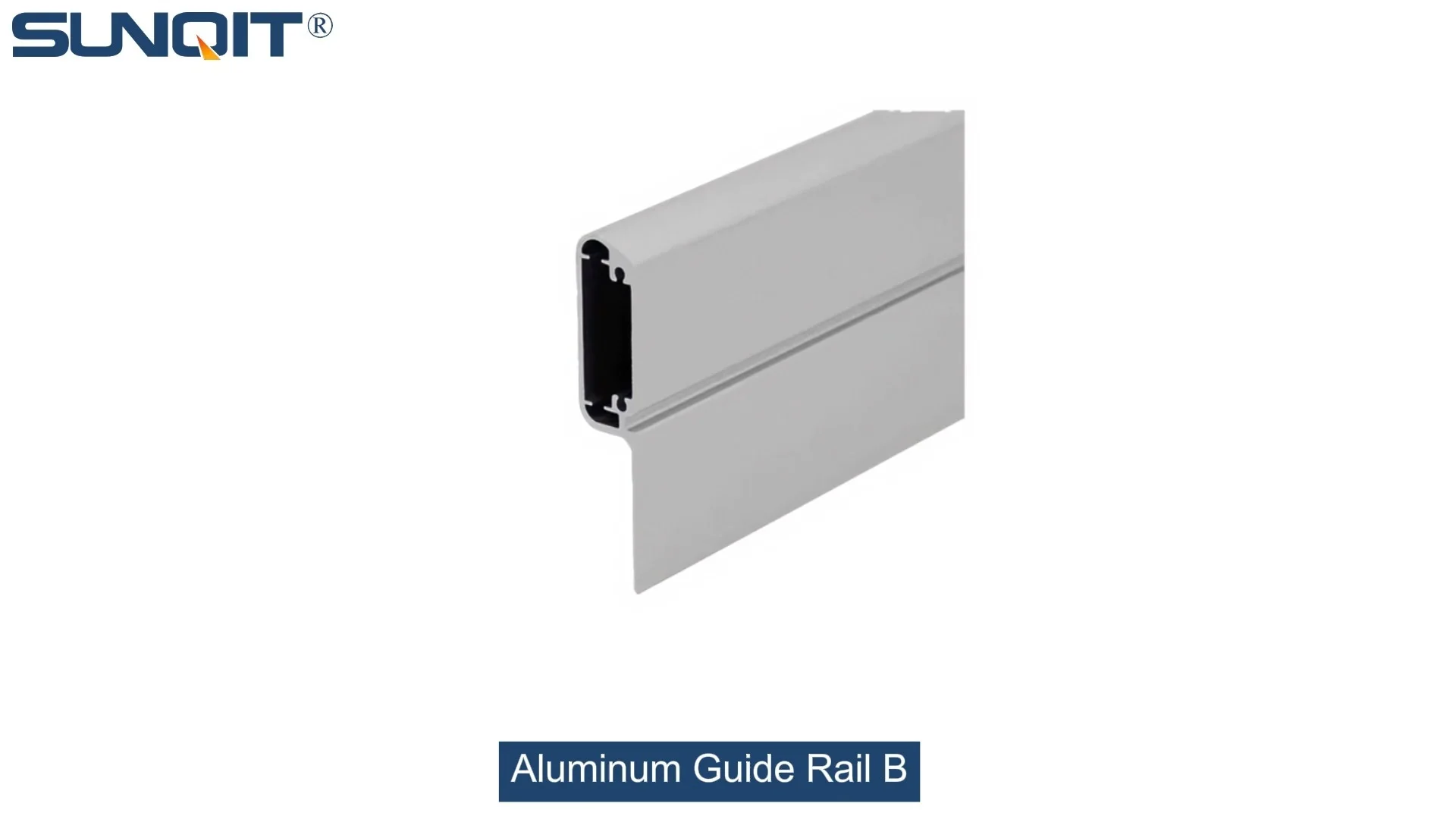
Choosing the right aluminum guide rail isn't just about picking a metal bar—it's about building the backbone of your production line. Whether you're setting up a new facility or upgrading an existing one, Aluminum Guide Rail B plays a quiet but critical role in keeping operations smooth, efficient, and adaptable. Let's break down the essential factors that will help you make a decision that aligns with your goals, budget, and long-term needs.
1. Material Quality: It's More Than Just "Aluminum"
Not all aluminum guide rails are created equal. The first thing to dig into is the material quality, because this directly impacts durability, load capacity, and even safety. Aluminum Guide Rail B is typically made from extruded aluminum alloy, but the grade, thickness, and surface treatment can vary widely between suppliers.
Let's start with the alloy itself. Most industrial-grade guide rails use 6000-series aluminum (like 6061 or 6063), known for its excellent balance of strength, corrosion resistance, and machinability. Why does this matter? If your facility operates in a humid environment (think food processing or coastal locations) or handles chemicals (like in medical device manufacturing), a low-quality alloy might rust or degrade over time, leading to frequent replacements and unexpected downtime.
Real-World Example: A 3C assembly plant in Guangdong once opted for a budget-friendly aluminum guide rail with a lower alloy grade. Within six months, the rails in their cleaning area showed signs of pitting corrosion due to exposure to cleaning agents. The result? They had to shut down two production lines for a week to replace the rails—a cost far higher than investing in a corrosion-resistant alloy upfront.
Next, look at the wall thickness. Aluminum Guide Rail B often comes in standard thicknesses (e.g., 1.2mm, 1.5mm, 2.0mm), but don't assume "thicker is always better." A thicker rail can handle heavier loads, but it also adds weight to your system. If you're integrating the rail into a lean pipe workbench or a mobile turnover trolley, excess weight might reduce maneuverability or strain the frame. For instance, a conveyor system moving small electronic components (like smartphone parts) doesn't need the same thickness as one transporting automotive engines.
Surface treatment is another hidden gem. Anodizing, powder coating, or chromate conversion coating can significantly enhance the rail's resistance to scratches, chemicals, and wear. In ESD-sensitive environments (common in electronics manufacturing), an anodized surface can also help dissipate static electricity, protecting sensitive components from damage. Don't skip asking suppliers about their surface treatment processes—this small detail can extend the rail's lifespan by 3-5 years.
| Alloy Grade | Key Properties | Best For |
|---|---|---|
| 6061-T6 | High strength, good machinability | Heavy-load applications (automotive, machinery) |
| 6063-T5 | Excellent corrosion resistance, smooth finish | ESD workstations, medical device assembly |
| 5052-H32 | Superior corrosion resistance, flexible | Outdoor or humid environments |
2. Compatibility: Does It Play Well With Your Existing System?
Imagine this: You order a batch of Aluminum Guide Rail B, excited to upgrade your flow rack system, only to find out it doesn't fit with your current lean pipe joints or roller track connectors. Suddenly, what should have been a quick upgrade turns into a logistical nightmare of returning parts, redesigning layouts, and delaying production. Compatibility is where many buyers stumble, but it's easily avoidable with a little homework.
First, map out your existing setup. What other components will the guide rail connect to? Common pairings include:
- Lean pipe workbenches (e.g., Workbench E in single-deck configurations)
- Roller tracks (like 40 Steel Roller Track or 38 Aluminum Roller Track)
- Conveyors (belt, roller, or chain conveyors)
- Aluminum profile accessories (hinges, clamps, end caps)
For example, if you're using 40-series aluminum profiles (like 4040 or 4080) in your workstations, Aluminum Guide Rail B should have compatible T-slot dimensions. A mismatch here could mean you can't attach accessories like sensors, guides, or stop blocks without drilling custom holes—undoing the "lean" principle of quick adjustments.
Don't forget about connectors! Aluminum Guide Rail B often relies on specialized joints, like internal rotary aluminum joints or 90° crossing joints, to link to other rails or structures. If your current system uses metric-sized connectors, a rail with imperial measurements (or vice versa) will cause alignment issues. Ask your supplier for detailed CAD drawings or sample pieces to test fit before placing a bulk order—it's a small step that saves big headaches.
Pro Tip: If you're unsure about compatibility, look for suppliers who offer "system packages." Many lean system suppliers bundle Aluminum Guide Rail B with matching roller track placon mounts, end supports, and joint connectors. This not only ensures everything fits but also simplifies ordering and inventory management.

3. Load Capacity: Know What You're Really Moving
"How much weight can it hold?" is a question that deserves more than a one-word answer. Load capacity isn't just about the rail itself—it's about how it's installed, the spacing between supports, and the type of load (static vs. dynamic). Let's break this down so you can avoid overestimating (and risking accidents) or underestimating (and limiting productivity).
Start with the static load : the weight the rail supports when everything is stationary. This is important for storage applications, like a material rack (e.g., Material Rack B with 3 rows and 3 floors) where boxes or components sit for hours. Aluminum Guide Rail B typically lists a static load rating per linear meter, but remember: the longer the rail span between supports, the lower the effective load capacity. For example, a 2.0mm thick rail might handle 50kg/m when supported every 50cm, but drop to 30kg/m if supports are 1m apart.
Then there's the dynamic load : the weight when items are moving, like parts sliding down a flow rack or products being conveyed. Dynamic loads add stress due to friction, vibration, and sudden stops. A rail that handles 100kg static might only safely carry 70kg dynamically. If your facility uses high-speed conveyors (e.g., free flow chain conveyors), factor in acceleration forces too—sudden starts can create "shock loads" that exceed the rail's rated capacity.
| Application | Typical Dynamic Load (per linear meter) | Recommended Rail Thickness |
|---|---|---|
| 3C Assembly (small components) | 10-30kg | 1.2-1.5mm |
| Medical Device Packaging | 20-40kg | 1.5mm |
| Automotive Parts Handling | 50-100kg | 2.0mm+ |
| Heavy Machinery Components | 100-200kg | 2.5mm+ (with reinforced supports) |
Don't forget to account for future growth . A facility today might be assembling smartwatches, but next year could expand into tablet production with larger components. Choosing a rail with a 20-30% buffer above your current load needs can save you from a full system upgrade down the line—aligning with the lean principle of "sustainable improvement."

4. Customization Flexibility: Lean Isn't "One-Size-Fits-All"
Lean manufacturing thrives on adaptability, and your aluminum guide rail should be no exception. Off-the-shelf rails work for basic setups, but many facilities need customizations to meet unique workflows. When evaluating suppliers, ask: How easy is it to modify Aluminum Guide Rail B to fit your specific needs?
Common customizations include:
- Length: Standard rails might come in 2m or 3m lengths, but you might need shorter segments for tight spaces or longer ones for a continuous conveyor line.
- Notches/Cutouts: For integrating sensors, cables, or guide wheels (e.g., plastic roller track guide rails in yellow or grey).
- Surface Modifications: Adding anti-slip coatings for inclined tracks or ESD-safe finishes for electronics manufacturing.
- End Treatments: Rounded ends to prevent worker injuries or threaded ends for quick assembly with other components.
Take the healthcare industry, for example. A medical device manufacturer might need Aluminum Guide Rail B with precision-machined slots to route cables for automated testing equipment. A supplier that offers in-house cutting, drilling, or anodizing can deliver this in days, while a "standard-only" supplier might force you to compromise on design or wait weeks for third-party.
Why It Matters: The lean philosophy emphasizes "continuous improvement," which means your production line will evolve. A rigid, one-size rail might work today, but tomorrow's process could require reconfiguring workstations or adding new equipment. A customizable rail system lets you adapt without scrapping entire sections—saving time, money, and resources.
Also, check if the supplier offers modular designs. For instance, Aluminum Guide Rail B that can be easily connected to other rail types (like mini aluminum roller track or 85 staggered roller track) gives you the flexibility to mix and match based on task. This is especially valuable in facilities with diverse needs, such as a single plant handling both small-parts assembly and bulk material storage.

5. Supplier Reliability: Your Partner in Uptime
Finally, but certainly not least: the supplier. Even the best aluminum guide rail is useless if your supplier can't deliver on time, provide technical support, or stand behind their product. When vetting suppliers, look beyond price tags and focus on these critical factors:
Technical Expertise: Do they understand your industry? A supplier who specializes in lean systems for automotive manufacturing might not grasp the unique needs of a medical device facility (like strict ESD requirements). Ask if they have case studies or references from businesses similar to yours.
Lead Times: In fast-paced industries like consumer electronics, a delay in rail delivery can hold up an entire production launch. Look for suppliers with local warehouses or the ability to fulfill bulk orders (e.g., lean pipe wholesale or roller track wholesale) within 1-2 weeks, not months.
After-Sales Support: What happens if a rail arrives damaged or doesn't perform as expected? A reliable supplier should offer a clear warranty (at least 12 months), responsive customer service, and even on-site assistance for installation or troubleshooting. Avoid suppliers who treat post-purchase questions as an afterthought.
Sustainability Practices: More facilities are prioritizing eco-friendly suppliers, and aluminum guide rails are no exception. Ask if the supplier uses recycled aluminum or has energy-efficient extrusion processes. This aligns with the "sustainable improvement" lean and can even help with green certifications (like ISO 14001) for your facility.
Red Flag: If a supplier hesitates to share details about their manufacturing process, quality control checks, or warranty terms—proceed with caution. Transparency is a sign of confidence in their product.
Wrapping Up: It's About Building for the Future
Purchasing Aluminum Guide Rail B is an investment in your facility's efficiency, safety, and adaptability. By focusing on material quality, compatibility, load capacity, customization, and supplier reliability, you're not just buying a component—you're building a foundation that can grow with your business.
Remember, the goal isn't to find the "cheapest" option, but the one that delivers the best value over time. A slightly higher upfront cost for a durable, compatible, and customizable rail will pay off in fewer replacements, less downtime, and a production line that can evolve with your needs.
So, take the time to evaluate your options, ask tough questions, and test samples if possible. Your facility (and your bottom line) will thank you.