- Company Articles
- Products and Technology
- Product knowledge
- Key Factors to Consider When Selecting Vertical Lean Pipe Joint Chrome

Key Factors to Consider When Selecting Vertical Lean Pipe Joint Chrome
Related Product
Vertical Lean Pipe Joint Chrome
Vertical lean pipe joint is used for 28mm lean pipe fixed on ground and keep it stable.
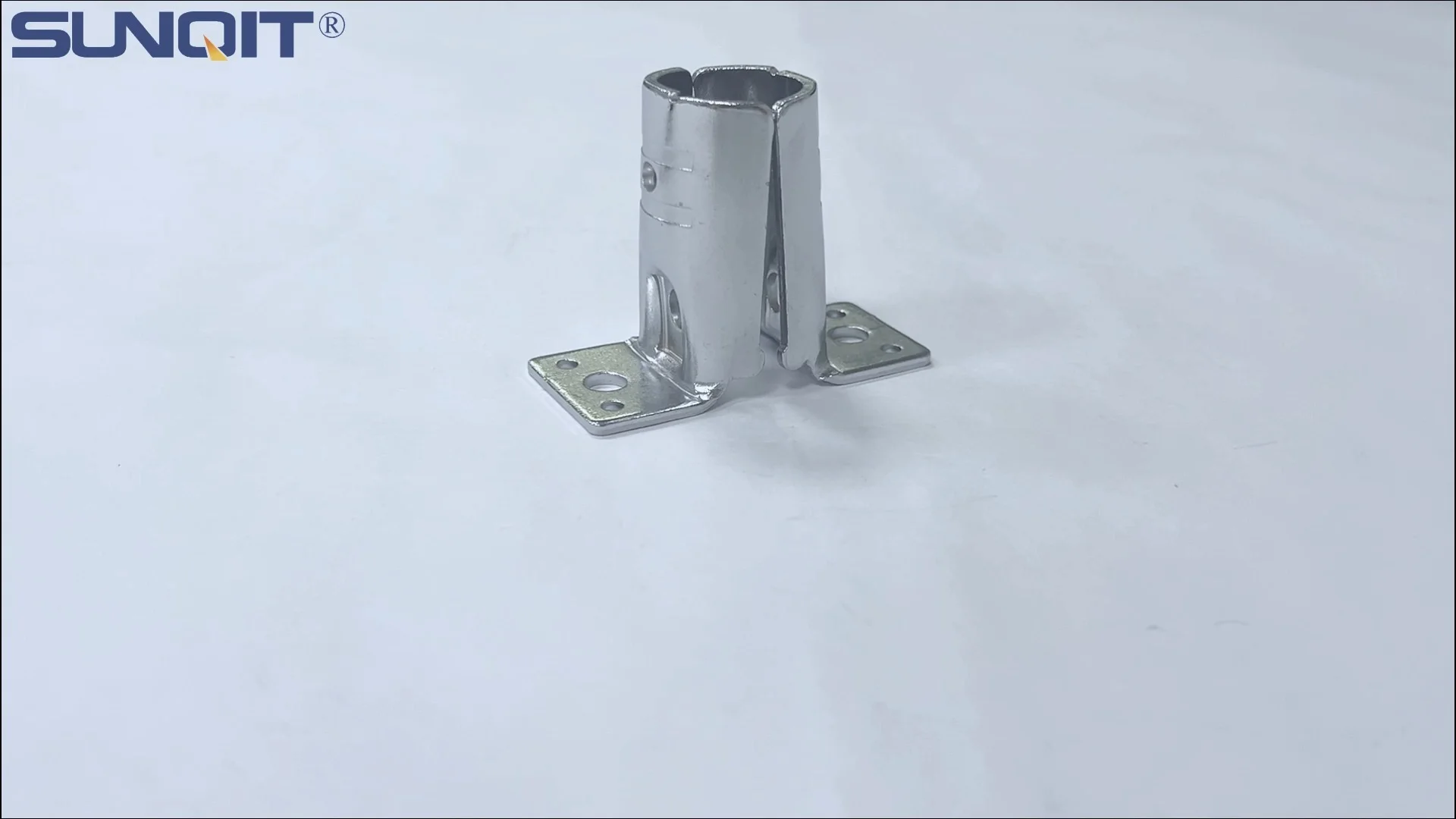
In the fast-paced world of manufacturing and warehouse operations, efficiency isn't just a buzzword—it's the backbone of profitability and sustainability. Lean manufacturing principles have revolutionized how businesses approach production, emphasizing waste reduction, workflow optimization, and continuous improvement. At the heart of these systems lie the tools and components that bring lean strategies to life, and few are as critical as the humble yet indispensable vertical lean pipe joint chrome. These small but mighty connectors are the unsung heroes of workbenches, flow racks, material trolleys, and assembly lines, holding together the structure that keeps operations running smoothly.
But here's the thing: not all vertical lean pipe joints are created equal. Choosing the right one can mean the difference between a sturdy, flexible system that adapts to your needs and a rickety setup that causes delays, safety hazards, and unnecessary costs. Whether you're upgrading an existing lean system or building a new one from scratch, selecting vertical lean pipe joint chrome requires careful consideration of multiple factors—from material quality to supplier reliability. In this guide, we'll walk you through the key elements you need to evaluate to make an informed decision, ensuring your lean system is built to last and thrive.
Understanding Vertical Lean Pipe Joint Chrome: What Are They, and Why Do They Matter?
Before diving into the selection process, let's take a moment to demystify vertical lean pipe joint chrome. These components are specialized connectors designed to join lean pipes (also known as "lean tubes") at vertical angles, forming the framework for various structures in a lean manufacturing environment. Unlike generic pipe fittings, vertical lean pipe joints are engineered with precision to support the unique demands of lean systems—think stability, adjustability, and compatibility with other components like aluminum profiles, flow rack rollers, and workbench surfaces.
The "chrome" in their name refers to the chromium plating applied to the joint's surface, a finish that serves both functional and aesthetic purposes. Chrome plating enhances corrosion resistance, making the joints suitable for use in environments where moisture, oils, or chemicals might be present. It also adds a smooth, professional look and improves durability by protecting the underlying material from wear and tear. But beyond the finish, the design of vertical lean pipe joint chrome is what truly sets them apart: they're typically built with T-slots, threaded holes, or clamping mechanisms that allow for quick assembly, disassembly, and reconfiguration—core tenets of lean flexibility.
So why does choosing the right vertical lean pipe joint chrome matter so much? Imagine this: You've invested in high-quality aluminum profiles for your workbench, sourced durable flow rack rollers for material handling, and trained your team in lean principles. But if the vertical joints holding everything together are weak or ill-fitting, the entire structure could wobble under load, leading to damaged products, worker frustration, or even accidents. In contrast, a well-chosen joint ensures your lean system is not just a collection of parts, but a cohesive, efficient unit that supports your operational goals.
Key Factor 1: Material Quality—The Foundation of Reliability
When evaluating vertical lean pipe joint chrome, the first factor to scrutinize is material quality. The joint's base material and the chrome plating itself directly impact its strength, longevity, and performance. Let's break this down into two parts: the underlying material and the chrome coating.
Base Material: Steel vs. Aluminum vs. Alloy
Most vertical lean pipe joints are made from one of three materials: steel, aluminum, or alloy blends. Steel joints are known for their high tensile strength, making them ideal for heavy-duty applications like supporting loaded flow racks or industrial workbenches. However, uncoated steel is prone to rust, which is why chrome plating is especially crucial here. Aluminum joints, on the other hand, are lighter and naturally resistant to corrosion, making them a popular choice for environments where weight is a concern (e.g., mobile trolleys) or where aesthetics matter (e.g., cleanrooms). Alloy joints, often a mix of steel and other metals, aim to balance strength and weight but can vary widely in quality depending on the manufacturer.
When assessing base material quality, look for specifications like thickness (e.g., 1.2mm vs. 2.0mm steel) and tensile strength ratings. A joint made from thin, low-grade steel might save you money upfront, but it will bend or crack under repeated stress, leading to frequent replacements. For example, a 2.0mm steel vertical joint can typically support more weight than a 1.0mm counterpart, making it better suited for heavy material racks or multi-level workbenches.
Chrome Plating: Thickness, Adhesion, and Uniformity
The chrome plating is more than just a shiny layer—it's a protective barrier. A high-quality chrome coating should be thick enough to withstand abrasion but not so thick that it interferes with the joint's fit. Most reputable manufacturers specify plating thickness (e.g., 0.001mm to 0.003mm), and you'll want to avoid joints with plating that's too thin (prone to chipping) or uneven (which can lead to premature corrosion in weak spots).
Adhesion is another critical factor. Poorly adhered chrome will peel or flake off over time, exposing the base material to moisture and wear. To test this (if possible), gently scratch the surface with a fingernail or a soft tool—if the plating chips easily, it's a red flag. Uniformity is also key: look for joints where the chrome covers all surfaces, including hard-to-reach areas like internal threads or clamping grooves. Gaps in plating are weak points where corrosion can start.
Don't be afraid to ask suppliers for material certificates or test reports. Reputable suppliers will readily provide information on plating thickness, base material composition, and corrosion resistance testing (e.g., salt spray tests, which simulate exposure to harsh environments). For instance, a joint that passes a 500-hour salt spray test is far more likely to hold up in a humid warehouse than one that only lasts 200 hours.

Key Factor 2: Compatibility with Your Lean Pipe System
A vertical lean pipe joint chrome is only as good as its ability to work seamlessly with the rest of your lean system. Compatibility issues can turn a simple assembly project into a frustrating ordeal, with parts that don't fit, wobble, or require custom modifications to function. To avoid this, you'll need to consider three main aspects: pipe diameter, system type (T-slot vs. traditional), and compatibility with accessories.
Pipe Diameter: Matching Joints to Your Pipes
Lean pipes (and aluminum pipes) come in various diameters, the most common being 28mm (standard lean pipe), 40mm (heavy-duty), and 20mm (lightweight aluminum). Vertical lean pipe joint chrome is designed to fit specific diameters, so it's critical to match the joint's inner diameter to your pipes. A joint meant for 28mm pipes will be too loose on 20mm pipes, leading to instability, while a 40mm joint won't fit at all on smaller pipes. Some manufacturers offer adjustable joints, but these are rare and often compromise on strength—stick to fixed-diameter joints for the most reliable fit.
If you're using T-slot aluminum profiles (a popular alternative to traditional lean pipes), ensure the vertical joint is compatible with the profile's slot size (e.g., 2020, 3030, 4040). T-slot joints use bolts or brackets that slide into the profile's slots, so the joint's design must align with the slot's width and depth. Mismatched T-slot joints can lead to loose connections or stripped threads, which are both safety risks and efficiency killers.
System Type: Lean vs. Aluminum vs. Hybrid
Your lean system might be built with traditional lean pipes (coated steel), aluminum profiles, or a hybrid of both. Vertical joints are often designed for specific systems. For example, a joint made for traditional lean pipes may not work with T-slot aluminum profiles, as the connection mechanisms differ (clamping vs. T-slot bolts). If you're transitioning from a steel lean system to aluminum (a common upgrade for better corrosion resistance), check if your existing vertical joints can be reused or if you need to switch to aluminum-specific joints.
Hybrid systems, which combine steel pipes and aluminum profiles, require even more attention to compatibility. For instance, if you're attaching an aluminum workbench top to steel pipes, the vertical joints holding the pipes must be able to connect to both materials without compromising stability. Some manufacturers offer universal joints, but again, these are best used only when necessary—dedicated joints for your system type will always be more reliable.
Accessory Compatibility: Rollers, Workbenches, and Side Guards
Vertical lean pipe joints rarely work in isolation—they often need to support accessories like flow rack rollers, workbench surfaces, side guards, or material trays. For example, if you're building a flow rack, the vertical joints must have mounting points for roller tracks (e.g., 40 fluent flat joints or roller track placon mounts). Similarly, a workbench might require joints with brackets to hold aluminum honeycomb panels or corrugated aluminum sheets.
Before purchasing, list out all the accessories your system will use and check if the vertical joint has the necessary holes, slots, or brackets to accommodate them. A joint without pre-drilled holes for side guards, for example, will require you to drill your own—which weakens the joint and voids any warranties. Save yourself the hassle by choosing joints designed with your accessories in mind.

Key Factor 3: Load Capacity and Structural Integrity
At the end of the day, a vertical lean pipe joint's job is to hold things up—safely and consistently. Load capacity is the maximum weight the joint can support without bending, breaking, or loosening, and it's non-negotiable when selecting a joint. Underestimating load needs is a recipe for disaster, while overestimating can lead to unnecessary costs. To get it right, you'll need to calculate your system's expected load and choose a joint that exceeds it by a healthy margin.
Calculating Load: Static vs. Dynamic
Load capacity isn't just about how much weight the joint can hold when everything is stationary (static load). You also need to consider dynamic loads—weight that moves or shifts, like a trolley being pushed along a flow rack or a worker leaning on a workbench. Dynamic loads exert more stress on joints than static loads, so your vertical joint should have a dynamic load rating that exceeds your system's peak dynamic forces.
To calculate load, start by determining the weight of the structure itself (pipes, panels, accessories) plus the maximum weight of materials it will hold. For a flow rack with three levels, for example, multiply the weight of one level's materials by three, then add the weight of the rack frame and rollers. Then, add a safety factor—typically 1.5x to 2x the calculated load—to account for unexpected stress (e.g., a heavy box being dropped on the rack). If your total load is 200kg, choose a vertical joint with a load capacity of at least 300kg (1.5x safety factor).
Structural Design: Joint Geometry and Stress Points
A joint's load capacity isn't just about material thickness—it's also about design. Look for joints with reinforced stress points, like gussets or thicker walls at corners, where bending forces are highest. For example, a 90° vertical crossing joint (used to connect two pipes at a right angle) should have a reinforced base to prevent the joint from cracking under downward pressure. Similarly, parallel joints (which connect two pipes side by side) need strong clamping mechanisms to avoid slipping.
Avoid joints with sharp edges or thin, flimsy components. A joint with a "weak link" (e.g., a thin threaded rod or plastic insert) will fail long before the base material does. When possible, request load test reports from the supplier—reputable companies will test their joints to destruction and provide data on when failure occurs (e.g., "Fails at 500kg dynamic load").
Key Factor 4: Ease of Installation and Adjustability
In lean manufacturing, time is money—and nowhere is this truer than during system setup or reconfiguration. A vertical lean pipe joint that's difficult to install or adjust can slow down assembly, frustrate workers, and discourage the flexibility that lean systems are known for. When evaluating joints, prioritize those that balance security with ease of use.
Assembly Mechanism: Clamping vs. Threaded vs. Snap-Fit
Vertical joints use various assembly mechanisms, each with pros and cons. Clamping joints (common in traditional lean systems) use a bolt that tightens around the pipe, creating friction. They're quick to install but require a wrench and can loosen over time if not checked regularly. Threaded joints (more common in aluminum systems) screw directly into the pipe or profile, offering a secure, vibration-resistant connection but requiring precise alignment to avoid cross-threading.
Snap-fit or quick-release joints are the fastest to install—they click into place without tools—but they're generally only suitable for light loads (e.g., small workbenches or display racks). For heavy-duty applications, stick to clamping or threaded joints, but look for designs that speed up installation, like ergonomic bolt heads (easy to grip by hand) or pre-assembled components.
Adjustability: Fine-Tuning for Your Needs
One of the biggest advantages of lean systems is their ability to adapt to changing needs. A workbench that's 80cm high today might need to be 90cm high next month to accommodate a new process. Vertical joints should allow for easy height or angle adjustments without requiring the entire structure to be disassembled.
Look for joints with incremental adjustment options, like multiple holes for bolts or sliding brackets that allow pipes to be repositioned by small increments. For example, a parallel aluminum joint with slots instead of fixed holes lets you slide the connected pipe left or right, fine-tuning the distance between components. Avoid joints that are welded or glued in place—these are permanent and defeat the purpose of a flexible lean system.
Tool Requirements: Keep It Simple
The fewer tools needed to install a joint, the better. A joint that requires a specialized wrench or tool you don't have on hand will slow down assembly and increase the risk of errors. Ideally, vertical joints should be installable with common tools like hex keys, screwdrivers, or adjustable wrenches. Some manufacturers even offer tool-free joints (using hand-tightened knobs), which are great for quick reconfigurations but may not be as secure as tool-tightened options for heavy loads.
Key Factor 5: Corrosion Resistance and Long-Term Durability
Your lean system is an investment, and you want it to last. Vertical lean pipe joint chrome is exposed to a variety of environmental factors—moisture, dust, oils, chemicals, and even UV light—that can degrade its performance over time. Corrosion resistance and durability are therefore critical factors, especially if your facility is in a harsh environment (e.g., a food processing plant with frequent washdowns or a warehouse near the coast with salty air).
Chrome Plating vs. Other Finishes
Chrome plating is a popular choice for corrosion resistance, but not all chrome is equal. As discussed earlier, plating thickness and adhesion play a big role, but you should also consider the type of chrome plating. Hard chrome plating (thicker, more durable) is better for high-wear areas, while decorative chrome (thinner, shinier) is more about aesthetics. For industrial use, hard chrome is the way to go.
If your environment is extremely corrosive (e.g., chemical processing), you might consider stainless steel joints instead of chrome-plated steel. Stainless steel (especially 304 or 316 grades) is naturally resistant to rust and chemicals, though it's more expensive. For aluminum joints, anodization (a process that forms a protective oxide layer) can enhance corrosion resistance—look for joints with anodized finishes (e.g., clear, black, or silver) for added durability.
Environmental Testing and Real-World Performance
Ask suppliers about environmental testing their joints have undergone. Salt spray testing (ASTM B117) is a common standard, where joints are exposed to a saltwater mist for a set period (e.g., 500 hours) to measure corrosion resistance. A joint that passes 1000 hours of salt spray testing is far more durable than one that fails at 200 hours. Similarly, humidity testing can reveal how well the joint holds up in damp environments.
Real-world durability also depends on maintenance. Even the best chrome-plated joint will corrode if scratched and not cleaned. Look for joints with features that make maintenance easier, like smooth surfaces that are easy to wipe down or replaceable parts (e.g., gaskets or O-rings) that can be swapped out without replacing the entire joint.
Key Factor 6: Cost-Effectiveness and Long-Term Value
Cost is always a consideration, but when it comes to vertical lean pipe joint chrome, the cheapest option is rarely the best. A low-cost joint might save you money upfront, but it will cost more in the long run through frequent replacements, downtime, and safety issues. Instead of focusing solely on price, evaluate the joint's long-term value by considering its lifespan, maintenance costs, and impact on system efficiency.
Total Cost of Ownership (TCO)
Total Cost of Ownership (TCO) accounts for more than just the purchase price—it includes installation costs, maintenance, replacement frequency, and even the cost of downtime if the joint fails. For example, a $5 low-quality joint that lasts 6 months and requires 2 hours of maintenance per year has a higher TCO than a $10 high-quality joint that lasts 5 years with no maintenance. To calculate TCO, use this simple formula:
TCO = (Purchase Price + Installation Cost + Annual Maintenance Cost × Lifespan) ÷ Lifespan
A joint with a lower TCO is the better value, even if it costs more upfront. Don't be afraid to ask suppliers for data on average lifespan and maintenance requirements—reputable companies will have this information on hand.
Balancing Quality and Budget
That said, you don't need to buy the most expensive joint on the market if your needs are simple. For a light-duty workbench in a dry environment, a mid-range chrome-plated steel joint might be sufficient. For a heavy-duty flow rack in a humid warehouse, invest in a high-quality stainless steel or thick-gauge aluminum joint. The key is to match the joint's quality to your specific application—over-engineering (buying a $20 joint for a $50 workbench) is just as wasteful as under-engineering.
Key Factor 7: Supplier Reliability and Support
Even the best vertical lean pipe joint chrome is only as good as the supplier behind it. A reliable supplier will not only provide quality products but also offer technical support, fast delivery, and responsive customer service. When evaluating suppliers, look for the following:
Experience and Expertise
Choose a supplier with experience in lean manufacturing systems. Suppliers who specialize in lean components (not just generic hardware) will have a deeper understanding of your needs and can offer valuable advice on joint selection, system design, and compatibility. Ask how long they've been in business and what industries they serve—experience in automotive, aerospace, or logistics is a good sign, as these industries have strict quality standards.
Certifications and Quality Control
Look for suppliers with quality certifications like ISO 9001, which ensures they have robust quality control processes in place. Certifications like RoHS (for environmental compliance) or REACH (for chemical safety) are also important if you operate in regulated industries. A supplier with in-house testing labs is even better, as they can verify product quality before shipping.
Technical Support and Availability
What happens if you have a question about installing the joint or need help troubleshooting a compatibility issue? A good supplier will offer technical support via phone, email, or live chat, with knowledgeable staff who can answer your questions. They should also provide detailed product documentation, including installation guides, CAD files, and load capacity charts.
Delivery and Inventory Management
Lean systems often require quick turnaround times, so supplier lead times matter. Look for suppliers with local warehouses or fast shipping options to avoid delays. Some suppliers also offer inventory management services (e.g., just-in-time delivery or consignment stock), which can help you reduce inventory costs while ensuring you always have joints on hand when needed.
Comparison Table: Top Vertical Lean Pipe Joint Chrome Options
| Joint Type | Material | Chrome Plating Thickness | Load Capacity (Static/Dynamic) | Compatibility | Corrosion Resistance (Salt Spray Test) | Price Range | Best For |
|---|---|---|---|---|---|---|---|
| Standard Vertical Chrome Joint | 1.2mm Steel | 0.002mm | 200kg / 150kg | 28mm Lean Pipes | 200 hours | $3–$5 | Light-duty workbenches, small trolleys |
| Heavy-Duty Vertical Chrome Joint | 2.0mm Steel | 0.003mm Hard Chrome | 500kg / 350kg | 28mm–40mm Lean Pipes | 500 hours | $8–$12 | Heavy flow racks, industrial workbenches |
| Aluminum Vertical T-Slot Joint | 6063 Aluminum | N/A (Anodized) | 300kg / 250kg | 2020–4040 T-Slot Profiles | 1000 hours (Anodized) | $10–$15 | Corrosive environments, cleanrooms |
| Stainless Steel Vertical Joint | 304 Stainless Steel | N/A | 400kg / 300kg | 28mm–40mm Stainless Pipes | 1000+ hours | $15–$20 | Food processing, chemical plants, coastal warehouses |
| Hybrid Vertical Joint (Steel/Aluminum) | 1.5mm Steel + Aluminum Clamps | 0.002mm | 350kg / 250kg | 28mm Lean Pipes, 2020 Aluminum Profiles | 300 hours | $7–$9 | Hybrid lean systems, mixed material setups |
Case Study: How the Right Vertical Joints Transformed a Warehouse's Efficiency
The Challenge: Unreliable Joints Slowing Down Production
A mid-sized electronics manufacturer in Ohio was struggling with their existing lean system. Their assembly line workbenches and flow racks were built using low-quality vertical lean pipe joints that frequently loosened or corroded, leading to wobbly work surfaces and material jams on the flow racks. Workers spent 10–15 minutes per shift tightening joints, and the company was replacing joints every 3 months at a cost of $2,000 per year. Worse, a joint failure had caused a small batch of circuit boards to fall, resulting in $5,000 in damaged products.
The Solution: Upgrading to Heavy-Duty Vertical Chrome Joints
After evaluating their options, the manufacturer switched to heavy-duty vertical chrome joints (2.0mm steel, 0.003mm hard chrome plating, 500kg static load capacity). They also upgraded their flow racks to use 40mm aluminum profiles with compatible T-slot joints, ensuring better compatibility and corrosion resistance in their humid warehouse.
The Results: 40% Less Downtime, 80% Fewer Replacements
Within six months, the results were clear: Joint-related downtime dropped by 40%, as the new joints stayed tight and required minimal maintenance. Joint replacements decreased by 80%, saving the company $1,600 per year. The sturdier flow racks also reduced material jams by 30%, speeding up assembly times by 5 minutes per unit. Most importantly, there were no more product damage incidents due to joint failure. The initial investment of $3,000 in new joints paid for itself within a year, proving that quality joints are a smart long-term investment.
Common Mistakes to Avoid When Selecting Vertical Lean Pipe Joint Chrome
Even with careful planning, it's easy to make mistakes when choosing vertical lean pipe joints. Here are some pitfalls to watch out for:
1. Prioritizing Price Over Quality
It's tempting to buy the cheapest joints available, but as the case study above shows, this often backfires. Low-quality joints fail faster, require more maintenance, and can cause costly downtime. Always balance price with quality, focusing on TCO rather than upfront cost.
2. Ignoring Compatibility
Assuming all joints fit all pipes is a recipe for disaster. Always check pipe diameter, system type (lean vs. aluminum), and accessory compatibility before purchasing. If you're unsure, ask the supplier for samples to test fit.
3. Underestimating Load Capacity
Guessing at load needs instead of calculating them can lead to joint failure. Take the time to measure static and dynamic loads, and add a safety factor to ensure the joint can handle unexpected stress.
4. Overlooking Corrosion Resistance
Even in dry environments, humidity and oils can cause corrosion. Don't skimp on chrome plating thickness or choose uncoated steel joints unless you're certain the environment is corrosion-free.
5. Choosing the Wrong Supplier
A supplier with poor customer service or inconsistent quality can turn a simple purchase into a nightmare. Do your research: read reviews, ask for references, and verify certifications before placing a large order.
Conclusion: Building a Lean System That Lasts
Selecting vertical lean pipe joint chrome might seem like a small detail in the grand scheme of your lean system, but as we've explored, it's a decision that impacts everything from safety to efficiency to bottom-line costs. By focusing on material quality, compatibility, load capacity, ease of installation, corrosion resistance, cost-effectiveness, and supplier reliability, you can choose joints that not only hold your system together but also support your long-term lean goals.
Remember, a lean system is only as strong as its weakest link—and with the right vertical lean pipe joint chrome, that link will be anything but weak. Whether you're building a new system or upgrading an existing one, take the time to evaluate your options, ask questions, and prioritize quality. Your workers, your products, and your bottom line will thank you.