- Company Articles
- Products and Technology
- Procurement Guidelines
- Key Factors When Buying M10*56 Rubber Leveling Feet

Key Factors When Buying M10*56 Rubber Leveling Feet
Related Product
M10*56 Rubber Leveling Feet
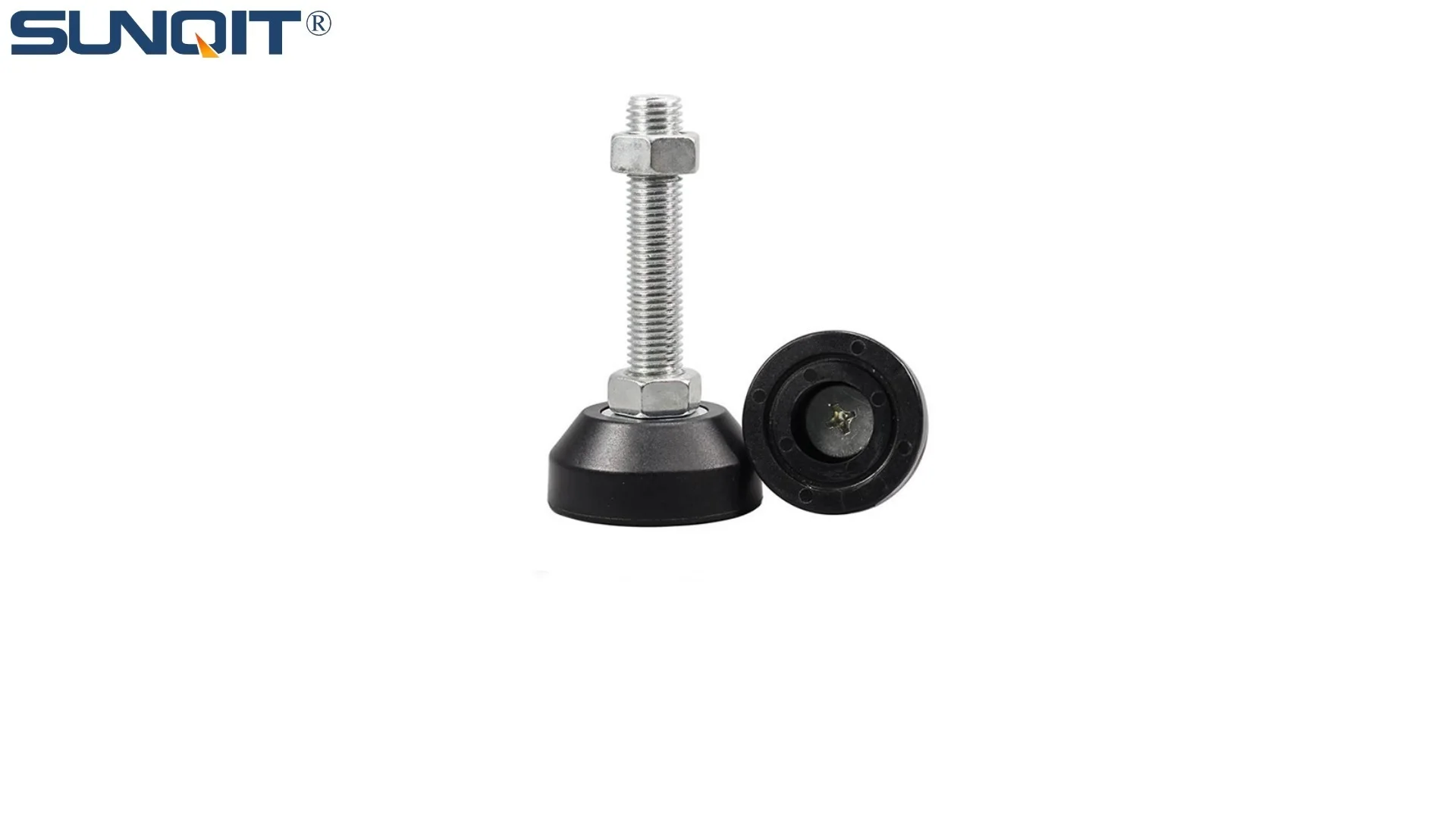
Adjustable leveling feet are designed to keep machines level when placed on uneven or sloped ground. Otherwise known as adjustable equipment feet, they are available to order in a wide variety of size and load capacity combinations.
Let's start with a familiar scenario: You've just spent weeks setting up your new production line. The lean pipe workbench is assembled, the conveyor belt is calibrated, and everything looks ready to go. But when you power up the first machine, there's a problem—a subtle but persistent wobble. You check the floor, and it's level. Then you notice it: the workbench legs aren't sitting solidly. A quick inspection reveals the culprit: the leveling feet you chose are cheaply made, their rubber pads compressed unevenly, and the threads feel loose. By the end of the day, that wobble has led to misaligned parts, slower assembly times, and a few near-misses with tools sliding off the bench. Sound familiar? If you've ever underestimated the importance of something as "small" as leveling feet, you know how quickly they can derail efficiency.
M10*56 rubber leveling feet might not be the flashiest components in your workspace, but they're the unsung heroes of stability. Whether you're building a workbench, mounting a conveyor, or securing heavy machinery, these unassuming parts keep everything grounded—literally. In this guide, we'll walk through the critical factors to consider when buying M10*56 rubber leveling feet, so you can avoid the headaches of wobbly equipment, extend the life of your tools, and keep your team safe. Let's dive in.
First Things First: What Are M10*56 Rubber Leveling Feet?
Before we get into the nitty-gritty, let's make sure we're on the same page about what M10*56 rubber leveling feet actually are. At their core, they're adjustable support components designed to stabilize equipment by compensating for uneven surfaces. The "M10" refers to the metric thread size—10mm in diameter—while "56" indicates the length of the threaded rod (56mm). The rubber pad at the base provides grip, absorbs vibrations, and protects floors from scratches.
Think of them as the "feet" of your equipment: just as a sturdy foundation is key to a house, reliable leveling feet are critical for any setup, from a simple workbench to a complex conveyor system. They're especially vital in lean manufacturing environments, where precision and efficiency leave no room for instability.
The Key Factors That Matter Most
Not all leveling feet are created equal. A cheap pair might save you a few dollars today, but they'll cost you in downtime, repairs, or even accidents tomorrow. Here are the six factors you can't afford to overlook.
1. Load Capacity: Don't Skimp on Strength
Load capacity is the maximum weight a leveling foot can support without deforming or failing—and it's non-negotiable. Imagine placing a 500kg assembly on a workbench supported by feet rated for 200kg each: it's a disaster waiting to happen. The feet will compress, the bench will sag, and you could damage both the equipment and the products on it.
When evaluating load capacity, look for the "static load rating" in the product specs. This number represents the weight the foot can handle under steady, non-moving conditions. For dynamic loads—like a conveyor belt with shifting materials—aim for a rating 20-30% higher than your expected maximum weight to account for sudden jolts.
Example: If your lean pipe workbench will hold tools, parts bins, and a 150kg assembly, and it uses four leveling feet, each foot should ideally support at least (150kg + tools + bins)/4 + 30% buffer. A 50kg per foot rating might seem enough, but a 75kg rating would be far safer.
2. Material Quality: Rubber and Metal Matter
A leveling foot has two main parts: the rubber pad and the metal (usually steel or stainless steel) threaded rod and base. Both need to be high-quality to perform well long-term.
Rubber Compounds: The rubber pad isn't just for grip—it also dampens vibrations and protects floors. Look for "durometer" ratings (a measure of hardness) between 60-80 Shore A. Softer rubber (60A) is better for floor protection and vibration absorption, while harder rubber (80A) offers more stability for heavy loads. Avoid generic "black rubber" pads; instead, opt for compounds labeled "oil-resistant" or "chemical-resistant" if your workspace uses lubricants or cleaning agents. These will resist swelling or breaking down over time.
Metal Components: The threaded rod and base should be made from corrosion-resistant materials. Stainless steel is ideal for humid or wet environments (like food processing plants), while zinc-plated steel works well for dry indoor setups. Avoid plain carbon steel—it will rust quickly, weakening the thread and compromising adjustability.
Pro Tip: A quick test? Scratch the metal base with a key. If the scratch reveals a different color (like silver under gold), it's likely a thin plating over cheap steel. A solid stainless steel base will show a consistent color.
3. Thread Size and Compatibility: M10*56 Isn't Just a Number
The "M10*56" in the name tells you two critical things: the thread size (M10) and the length of the threaded rod (56mm). But compatibility goes beyond just matching these numbers.
Thread Pitch: M10 threads can have different pitches (distance between threads). Most M10 leveling feet use a 1.5mm pitch (coarse thread), but some use 1.25mm (fine thread). Mismatched pitches won't screw into your equipment's mounting holes properly—they'll cross-thread, stripping the holes and ruining both the foot and your workbench frame.
Rod Length: The 56mm length refers to the threaded portion. If your equipment's mounting hole is 60mm deep, a 56mm rod will work, but a 50mm rod would bottom out before you can adjust the height. Measure the depth of your mounting holes first, and ensure the rod length leaves at least 5mm of thread engagement when fully tightened—this prevents the rod from bending or breaking under load.
Compatibility Check: If you're buying from a lean pipe supplier, ask if their M10*56 feet are designed to fit standard lean pipe workbench frames. Many suppliers sell feet pre-matched to their own pipe and joint systems, reducing the risk of mismatches.
4. Adjustability Range: More Than Just "Up and Down"
Leveling feet are adjustable for a reason: floors are rarely perfectly flat, and equipment can settle over time. The best feet let you fine-tune height by at least 10-15mm. But adjustability isn't just about range—it's about ease of use.
Adjustment Mechanism: Look for feet with a hexagonal or knurled base (the part you turn to adjust height). A hexagonal base lets you use a wrench for tight spaces, while knurled bases are easy to grip by hand. Avoid smooth bases—they're impossible to adjust without slipping.
Lock Nuts: Once you've set the height, you don't want the foot to loosen over time. Many high-quality feet include a "jam nut" (a second nut that tightens against the equipment frame) to lock the position. If your feet don't have jam nuts, buy them separately—they're a small investment to prevent big headaches later.
5. Environmental Resistance: Think About Your Workspace
Your workspace's conditions will dictate how well a leveling foot holds up. A foot that works in a clean office might fail in a factory with oil spills or extreme temperatures.
- Moisture: In warehouses with high humidity or occasional water exposure, stainless steel metal parts and "waterproof" rubber are a must. Ordinary steel will rust, and uncoated rubber will degrade.
- Temperatures: If your equipment is near ovens or freezers, check the rubber's temperature range. Most standard rubbers work between -20°C to 80°C, but extreme environments may need silicone rubber (resists -60°C to 200°C).
- Chemicals: Auto shops, labs, or factories using solvents need feet with "chemical-resistant" rubber. Harsh cleaners can cause regular rubber to crack or dissolve, leading to instability.
6. Supplier Reliability: Trust the Source
Finally, don't overlook the importance of buying from a reputable lean pipe supplier. A no-name brand might offer "M10*56 feet" at half the price, but they often cut corners on material quality or load testing. A reliable supplier will provide clear specs (load capacity, material certifications), offer samples for testing, and stand behind their products with warranties.
Ask potential suppliers: "Can you provide a material safety data sheet (MSDS) for the rubber compound?" or "Do you test load capacity in-house?" A supplier that can't answer these questions is a red flag.
Comparing M10*56 Rubber Leveling Feet: Features to Look For
| Feature | Basic Economy Foot | Industrial-Grade Foot | Premium Heavy-Duty Foot |
|---|---|---|---|
| Load Capacity (per foot) | 30-50kg | 75-100kg | 150-200kg |
| Rubber Type | Generic black rubber (no resistance ratings) | Oil-resistant rubber (60 Shore A) | Chemical-resistant rubber (70 Shore A) |
| Metal Material | Zinc-plated carbon steel | Stainless steel (304 grade) | Stainless steel (316 grade, corrosion-proof) |
| Adjustment Range | 5-10mm | 10-15mm | 15-20mm |
| Lock Nut Included? | No | Yes | Yes (stainless steel) |
Final Thoughts: Invest in Stability
M10*56 rubber leveling feet might seem like small parts, but they're the foundation of a stable, efficient workspace. By focusing on load capacity, material quality, compatibility, environmental resistance, and supplier reliability, you'll avoid wobbly workbenches, damaged equipment, and costly downtime.
Remember: The cheapest option rarely saves money in the long run. A high-quality leveling foot will outlast, outperform, and keep your operations running smoothly—proving that sometimes, the smallest components make the biggest difference.