- Company Articles
- Products and Technology
- Product knowledge
- Key Features of Anti-Slip Adjustable Leveling Feet for Industrial Use

Key Features of Anti-Slip Adjustable Leveling Feet for Industrial Use
Related Product
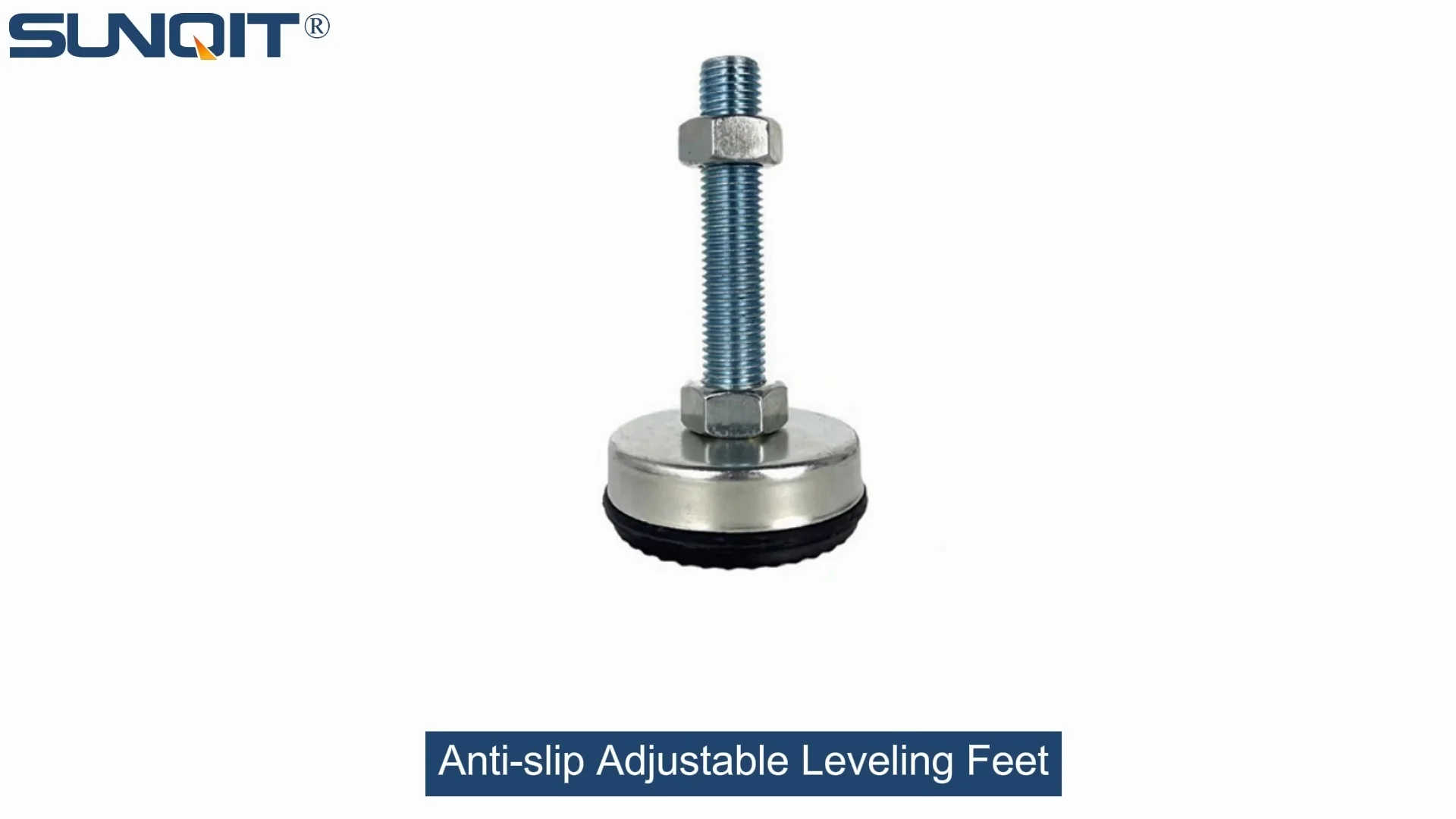
Anti-slip Adjustable Leveling Feet
Anti-slip Adjustable Leveling Feet are designed to keep machines level when placed on uneven or sloped ground, the rubber base will prevent product slip during work.
In the fast-paced world of manufacturing, warehousing, and industrial operations, stability isn't just a luxury—it's the backbone of efficiency, safety, and precision. From bustling assembly lines to quiet lab workbenches, the equipment we rely on must stand firm, even when faced with uneven floors, constant vibration, or heavy loads. Enter anti-slip adjustable leveling feet: unassuming yet critical components that quietly ensure everything from workbenches to material racks stays steady. Let's dive into the key features that make these small but mighty tools indispensable in industrial settings.
Why Stability Matters: The Hidden Cost of Wobble
Imagine a factory floor where a workbench teeters slightly every time a worker tightens a bolt. Or a warehouse where a material rack leans just enough to make employees second-guess stacking boxes to the top. These might seem like minor nuisances, but they add up. A wobbly workbench can throw off measurements, leading to defective products and wasted materials. An unstable rack increases the risk of spills, damage, or even injury. Over time, these issues erode productivity, inflate costs, and chip away at workplace morale.
Anti-slip adjustable leveling feet address these problems head-on. By combining precise height adjustment with superior grip, they transform uneven surfaces into stable foundations. Whether you're setting up a lean pipe workbench for assembly, a heavy-duty material rack for storage, or a specialized workstation for quality control, these feet ensure your equipment stays exactly where it needs to be—no slipping, no tilting, no compromises.
Real-World Example:
A mid-sized electronics manufacturer recently upgraded their assembly line with new lean pipe workbenches. Initially, workers complained about tools sliding off the benches during use, and microscopic misalignments in circuit board assembly were causing quality checks to fail. The culprit? Uneven concrete floors in the older facility. After installing anti-slip adjustable leveling feet, the workbenches sat perfectly level, tool slippage dropped by 90%, and assembly errors decreased by 35% within a month. The solution was simple, but the impact was transformative.
Key Feature 1: Precision Adjustability—Taming Uneven Floors
Industrial floors are rarely perfect. Years of heavy equipment traffic, temperature fluctuations, and general wear leave behind cracks, dips, and bumps. Anti-slip adjustable leveling feet tackle this variability with threaded stems that allow for fine-tuned height adjustment. Most models offer a range of 10mm to 50mm, though heavy-duty versions can extend even further. This means you can raise or lower each foot individually to compensate for unevenness, ensuring your workbench or rack sits perfectly level—no matter the surface beneath it.
How does it work? The feet typically consist of a threaded metal stem (often steel or aluminum) attached to a base with anti-slip material. By twisting the base or the stem, you adjust the height. Once set, a lock nut can secure the position, preventing accidental movement over time. This level of control is especially valuable in settings like laboratories or precision manufacturing, where even a 1mm tilt can affect outcomes.
For example, a pharmaceutical lab using a workbench for weighing chemicals needs absolute stability to ensure accurate measurements. With anti-slip adjustable leveling feet, technicians can calibrate the bench to within fractions of an inch, eliminating the risk of measurement errors due to an unlevel surface.

Key Feature 2: Superior Anti-Slip Design—Grip That Doesn't Quit
Adjustability is only half the battle; once level, the feet need to stay put. That's where the "anti-slip" in anti-slip adjustable leveling feet comes into play. The base of each foot is designed to maximize friction between the equipment and the floor, preventing sliding even under stress.
Materials matter here. Many feet use rubber or polyurethane bases, which naturally grip smooth surfaces like concrete or tile. Some models add texture—tiny ridges or patterns—to the base, enhancing traction on wet or oily floors (common in automotive or machine shops). Others incorporate suction-cup-like features for extra hold on perfectly flat surfaces, though these are less common in industrial settings where floors are rarely pristine.
Consider a busy warehouse where forklifts zoom by, causing vibrations that ripple through the floor. A material rack without proper anti-slip feet might inch forward over time, creating gaps between racks or blocking walkways. With anti-slip bases, the rack stays anchored, even when the floor vibrates. Similarly, in food processing plants, where floors are frequently hosed down, rubber-based feet resist water and maintain grip, reducing the risk of equipment shifting during cleaning.

Key Feature 3: Durability—Built to Withstand Industrial Abuse
Industrial environments are tough on equipment. From heavy loads to chemical spills, constant foot traffic to extreme temperatures, components need to stand up to daily punishment. Anti-slip adjustable leveling feet are no exception, and their durability starts with high-quality materials.
- Stems: Steel is a popular choice for stems due to its strength and resistance to bending. Stainless steel adds corrosion resistance, making it ideal for humid or wet environments (e.g., food processing, outdoor warehouses). Aluminum stems, while lighter, are strong enough for medium-duty applications and won't rust, making them a good fit for cleanrooms or electronics manufacturing.
- Bases: Rubber and polyurethane bases are not only grippy but also resilient. They absorb shocks (like when a heavy part is dropped on a workbench) and resist wear from friction. For extra durability, some bases are reinforced with metal plates to prevent cracking under extreme loads.
- Threads: The threads that allow height adjustment must stay smooth and functional over time. High-quality feet use precision machining to ensure threads don't strip, even after repeated adjustments. Some models add a protective coating to threads, preventing debris from gumming up the works in dusty environments.
The result? Feet that last for years, even in harsh conditions. A manufacturer of automotive parts, for instance, uses stainless steel-stemmed leveling feet on their welding workbenches. Exposed to sparks, oil, and daily heavy use, these feet have remained functional for over five years—far longer than the plastic feet they replaced, which cracked and wore out within 12 months.

Key Feature 4: Compatibility—Fitting Seamlessly Into Your Setup
Industrial equipment comes in all shapes and sizes, and your leveling feet should too. The best anti-slip adjustable leveling feet are designed to work with a wide range of industrial furniture and machinery, from standard workbenches to custom lean pipe systems.
Compatibility starts with standardized threading. Most feet use metric threads (e.g., M10, M12) that match common mounting holes in workbenches, racks, and trolleys. This means you can easily replace old, worn feet with new ones without drilling new holes or modifying your equipment. For non-standard setups, some suppliers offer custom threading or adapters to ensure a perfect fit.
Lean pipe workbenches, which are popular in lean manufacturing for their modularity, benefit especially from this compatibility. These workbenches use lightweight pipes and joints to create flexible workspaces, and adjustable leveling feet ensure the entire structure remains stable, even as you reconfigure shelves or add accessories. Similarly, material racks with varying leg sizes can all use the same style of leveling foot, simplifying inventory and replacement.
Don't forget about caster accessories, either. Many industrial workbenches and trolleys are designed to switch between mobility (with casters) and stability (with leveling feet). Some leveling feet even come with integrated caster cups, allowing you to lock casters in place while the feet bear the load. This versatility lets you move equipment when needed and secure it when stationary—all with minimal effort.
Key Feature 5: Load Capacity—Supporting the Weight of Productivity
An industrial workbench might hold hundreds of pounds of tools, materials, and products. A material rack could stack pallets weighing thousands of pounds. Anti-slip adjustable leveling feet must support these loads without buckling, bending, or sinking into the floor.
Load capacity is measured per foot, and it's critical to choose feet that match your equipment's needs. A standard workbench might require feet rated for 500 lbs each, while a heavy-duty machine base could need feet rated for 2,000 lbs or more. Exceeding the load capacity risks stem bending, base cracking, or the foot sinking into soft flooring (like concrete that's deteriorated over time).
Manufacturers test load capacity rigorously, often under both static (constant weight) and dynamic (shifting weight) conditions. Look for feet with clear load ratings, and when in doubt, overestimate. It's better to have feet that can handle more weight than needed than to cut corners and risk failure.
Case Study:
A furniture manufacturer was struggling with sagging workbenches in their woodshop. The benches, loaded with power tools and slabs of hardwood, were supported by generic plastic feet that deformed under the weight, causing the benches to tilt. After switching to steel-stemmed anti-slip adjustable leveling feet rated for 1,000 lbs each, the benches not only stayed level but also showed no signs of stress—even when workers stood on them to reach high shelves.
Comparing Top Anti-Slip Adjustable Leveling Feet Models
With so many options on the market, choosing the right anti-slip adjustable leveling feet can feel overwhelming. To simplify, here's a comparison of three popular models, each designed for different industrial needs:
| Model | Material (Stem/Base) | Load Capacity (Per Foot) | Adjustment Range | Anti-Slip Feature | Best For |
|---|---|---|---|---|---|
| Standard Duty (SD-100) | Steel/Rubber | 500 lbs | 10-30mm | Textured rubber base | General workbenches, light material racks |
| Heavy Duty (HD-200) | Stainless Steel/Polyurethane | 2,000 lbs | 15-50mm | Reinforced polyurethane base with suction cups | Machine bases, heavy material racks, lean pipe workbenches with heavy loads |
| Corrosion-Resistant (CR-300) | Aluminum/Rubber (Chemical-Resistant) | 800 lbs | 10-40mm | Smooth rubber base (resists oils/chemicals) | Food processing, cleanrooms, labs, wet environments |
As you can see, each model prioritizes different features. The SD-100 is a budget-friendly workhorse for everyday use, while the HD-200 is built for extreme loads and precision. The CR-300 shines in environments where corrosion or chemical exposure is a concern. By matching the model to your specific needs, you ensure optimal performance and value.
Applications: Where Anti-Slip Adjustable Leveling Feet Make the Most Impact
Anti-slip adjustable leveling feet are versatile, but they truly excel in a few key applications:
1. Workbenches (Including Lean Pipe Workbenches)
Workbenches are the heart of any workshop, and their stability directly impacts worker efficiency and product quality. Whether it's a wooden workbench in a carpentry shop or a modular lean pipe workbench in a manufacturing plant, leveling feet ensure the surface stays flat and steady. For lean pipe workbenches, which are often reconfigured, adjustable feet make it easy to readjust stability after moving or modifying the bench.
2. Material Racks and Storage Systems
Material racks hold everything from raw materials to finished products, and uneven floors can turn them into hazards. Leveling feet distribute weight evenly, preventing racks from leaning and reducing the risk of collapse. They also make it easier to align multiple racks in a row, maximizing storage space and improving accessibility.
3. Industrial Machinery Bases
Machinery like lathes, mills, and 3D printers requires precise alignment to function correctly. Even a small tilt can cause parts to wear unevenly or produce inaccurate results. Heavy-duty leveling feet with high load capacities and fine adjustment ensure these machines stay level, extending their lifespan and maintaining performance.
4. Mobile Equipment (With Caster Compatibility)
Many industrial trolleys and carts use a combination of casters and leveling feet. When mobility is needed, the casters take over; when stability is required, the leveling feet are lowered to lift the casters off the ground. This hybrid design is common in hospitals, labs, and factories where equipment needs to be both movable and stationary.
Conclusion: Small Component, Big Difference
Anti-slip adjustable leveling feet may not be the most glamorous components in an industrial setup, but their impact is undeniable. By combining precision adjustability, superior grip, durability, and compatibility, they transform unstable equipment into reliable, safe, and efficient tools. Whether you're setting up a new lean pipe workbench, upgrading an old material rack, or simply ensuring your existing workbenches are as stable as possible, these feet deliver the foundation your operations need to thrive.
When choosing anti-slip adjustable leveling feet, remember to prioritize load capacity, material compatibility with your environment, and adjustability range. And don't underestimate the value of anti-slip features—grip that holds under pressure can save you from costly accidents and repairs down the line.
In the end, stability isn't just about keeping things still. It's about creating a workspace where workers feel confident, equipment performs at its best, and every process runs smoothly. With anti-slip adjustable leveling feet, that stability is within reach.