- Company Articles
- Products and Technology
- Product knowledge
- Key Features of One Side Rotatory Parallel Lean Pipe Joints for Lean Manufacturing

Key Features of One Side Rotatory Parallel Lean Pipe Joints for Lean Manufacturing
Related Product
Parallel Lean Pipe Joint
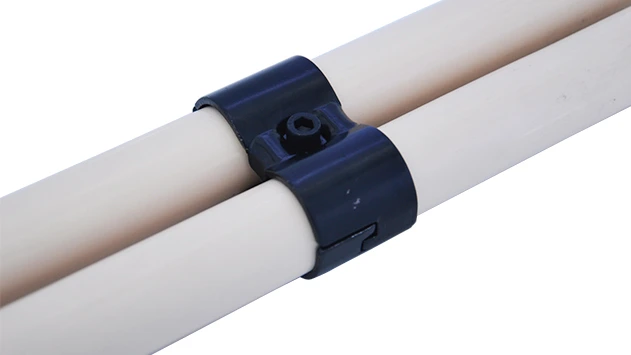
Parallel lean pipe joint used for 2 pcs 28MM lean pipe connection in parallel direction to enhance frame structure, usually for heavy payload requirement for workbench. flow rack, hand trolley.
In the fast-paced world of manufacturing, where efficiency and adaptability can make or break a production line, lean manufacturing has emerged as more than just a buzzword—it's a philosophy that drives smarter, waste-free operations. At its core, lean manufacturing is about streamlining processes, eliminating unnecessary steps, and creating systems that can evolve with changing demands. But behind every successful lean operation lies a network of tools and components working in harmony, often unseen but critical to keeping the workflow smooth. Among these unsung heroes are lean pipe systems, and within those systems, one component stands out for its ability to balance rigidity with flexibility: the one side rotatory parallel lean pipe joint. In this article, we'll dive deep into what makes these joints indispensable, exploring their key features, real-world applications, and why they've become a go-to choice for manufacturers aiming to build truly agile lean systems.
The Backbone of Lean: Understanding Lean Pipe Systems
Before we zoom in on the one side rotatory parallel lean pipe joint, let's take a step back to understand the foundation it supports: lean pipe systems. Also known as "flexible pipe systems," these structures are built using lightweight, durable pipes and connectors, designed to create custom workbenches, flow racks, turnover trolleys, and material handling setups. Unlike traditional fixed machinery, lean pipe systems are modular—meaning they can be easily adjusted, expanded, or reconfigured as production needs change. This modularity is why they're a cornerstone of lean manufacturing: they reduce waste by eliminating the need for custom-built, single-use equipment, and they empower teams to adapt on the fly.
At the heart of any lean pipe system are the joints. These small but mighty components are what hold the pipes together, dictating the system's stability, flexibility, and ease of use. From fixed 90-degree joints to swivel connectors, the type of joint used directly impacts how a lean structure performs. And among the wide array of joints available, the one side rotatory parallel lean pipe joint has gained popularity for its unique ability to combine fixed parallel alignment with controlled rotation—offering a level of adaptability that's hard to match with other designs.
Meet the Star: What Are One Side Rotatory Parallel Lean Pipe Joints?
Let's start with the basics: what exactly is a one side rotatory parallel lean pipe joint? As the name suggests, these joints are designed to connect two parallel lean pipes while allowing one side of the joint to rotate along a fixed axis. Picture this: two horizontal pipes running side by side, connected by a joint that lets one pipe pivot up or down slightly, or left to right, while the other remains stationary. This rotation isn't 360-degree chaos, though—most designs limit rotation to a specific range (often 0-180 degrees) to ensure stability. The result? A connection that's both rigid enough to support heavy loads and flexible enough to adjust angles or positions without fully disassembling the structure.
These joints are typically made from high-strength materials like steel (often with a chrome plating for corrosion resistance) or aluminum, ensuring they can withstand the daily wear and tear of manufacturing environments. They're also designed to work with standard lean pipe sizes—most commonly 28mm diameter pipes, the industry standard for lean systems—making them compatible with existing setups and easy to source from lean pipe suppliers.

Key Features: Why These Joints Stand Out in Lean Systems
What makes one side rotatory parallel lean pipe joints so valuable in lean manufacturing? Let's break down their standout features, each contributing to a more efficient, adaptable, and cost-effective production environment.
1. Unmatched Flexibility for Dynamic Workflows
In lean manufacturing, rigidity is the enemy of efficiency. Production lines rarely stay the same for long—products change, order volumes fluctuate, and new processes are introduced. One side rotatory parallel lean pipe joints address this by adding a layer of flexibility that traditional fixed joints simply can't match. Imagine a workbench used for assembling small electronics: one day, operators might need a flat surface for soldering, and the next, they might need a slightly angled shelf to hold components at eye level. With a fixed joint, adjusting that shelf would mean loosening bolts, repositioning the pipe, and retightening—wasting valuable time. With a one side rotatory parallel joint, the operator can simply rotate the shelf to the desired angle, lock it in place, and get back to work.
This flexibility extends beyond workbenches. Think about flow racks, which are used to move materials from one workstation to the next. If a new product is taller than the previous one, the height of the flow rack's roller track might need to be adjusted to prevent jams. A one side rotatory joint allows the roller track to be tilted up or down incrementally, ensuring materials glide smoothly without rebuilding the entire rack. This adaptability reduces downtime and empowers teams to make on-the-spot adjustments, keeping production flowing even when plans change.
2. Robust Durability for Heavy-Duty Use
Flexibility means little if a joint can't support the weight of the tools, materials, or products it's meant to hold. One side rotatory parallel lean pipe joints are built to last, even in high-stress environments. Take chrome-plated steel variants, for example: the chrome coating resists rust and scratches, while the steel core provides tensile strength, allowing the joint to support loads of up to 50kg or more (depending on the specific design). This durability is critical in manufacturing settings where equipment is used around the clock and subjected to constant vibration, movement, and occasional bumps.
Aluminum versions, while lighter, are also surprisingly strong—thanks to aluminum's natural resistance to corrosion and its ability to be alloyed for added strength. This makes them a great choice for cleanrooms or food processing facilities where moisture or chemicals might degrade steel. Either way, these joints are engineered to maintain their structural integrity over years of use, reducing the need for frequent replacements and lowering long-term maintenance costs.
3. Tool-Free Assembly and Disassembly
In lean manufacturing, every second counts. Traditional joints often require wrenches, screwdrivers, or even welding to assemble, which slows down setup and reconfiguration. One side rotatory parallel lean pipe joints, however, are designed for quick, tool-free installation. Most models use a simple clamp-and-lock mechanism: slide the joint onto the pipe, tighten a lever or knob (often with a plastic grip for easy handling), and the joint locks securely in place. Rotation is just as straightforward—loosen the lock, adjust the angle, and retighten. No tools, no hassle, no downtime.
This tool-free design is a game-changer for lean teams. For example, if a turnover trolley needs to be modified to carry taller bins, operators can adjust the side rails using one side rotatory joints in minutes, rather than hours. This speed not only keeps production on track but also encourages teams to experiment with layouts—testing new configurations to find the most efficient workflow without fear of "breaking" the system.
4. Seamless Compatibility with Lean Pipe Ecosystems
A great lean component doesn't work in isolation—it plays well with others. One side rotatory parallel lean pipe joints are designed to integrate seamlessly with the broader lean pipe ecosystem, including standard pipes, accessories, and other joint types. Need to connect a rotatory joint to a fixed three-way joint? No problem—they share the same pipe diameter and connection mechanisms. Want to add caster wheels to a workbench supported by these joints? The base plates on most joints are compatible with standard caster mounts.
This compatibility extends to materials, too. Whether your lean system uses steel lean pipes, aluminum lean pipes, or a mix, there's a one side rotatory joint designed to fit. For example, aluminum joints pair perfectly with aluminum lean pipes in lightweight setups, while chrome-plated steel joints complement heavier steel pipe systems. This versatility means manufacturers don't have to overhaul their entire lean infrastructure to adopt these joints—they can simply upgrade specific components, reducing transition costs.
5. Cost-Efficiency: Long-Term Savings for Lean Budgets
At first glance, specialized joints like these might seem more expensive than basic fixed joints. But in the long run, their durability, flexibility, and reusability translate to significant cost savings. Let's do the math: a traditional fixed joint might cost $5, while a one side rotatory parallel joint costs $10. But if the fixed joint requires the entire structure to be rebuilt when workflows change (costing $500 in labor and new materials), while the rotatory joint allows a 10-minute adjustment (costing $0 in new materials and minimal labor), the rotatory joint quickly pays for itself.
Additionally, their reusability reduces waste. When a production line is retired or reconfigured, the joints can be removed and reused in new setups, rather than being thrown away. This aligns perfectly with lean manufacturing's focus on eliminating waste—not just in processes, but in resources, too.

How Do They Compare? Traditional Joints vs. One Side Rotatory Parallel Joints
To truly appreciate the value of these joints, let's compare them to two common alternatives: standard fixed parallel joints and fully swivel joints. The table below highlights key differences in performance, flexibility, and cost.
| Feature | Traditional Fixed Parallel Joints | Fully Swivel Joints | One Side Rotatory Parallel Joints |
|---|---|---|---|
| Adjustability | No rotation; fixed angle only | 360-degree rotation (uncontrolled) | Controlled rotation (0-180 degrees) on one side; fixed parallel alignment |
| Assembly Time | Medium (requires tools for bolts/nuts) | Medium (tools often required for locking mechanisms) | Fast (tool-free; clamp-and-lock design) |
| Load Capacity | High (rigid connection) | Medium (swivel mechanism reduces stability) | High (rigid base with flexible rotation) |
| Best For | Static structures (permanent workbenches, fixed racks) | Lightweight, highly adjustable setups (temporary displays, small parts handling) | Dynamic workflows (adjustable workbenches, flow racks, turnover trolleys) |
| Long-Term Cost | High (requires replacement/rebuilding for adjustments) | Medium (lower durability than fixed joints) | Low (reusable, minimal adjustments needed) |
As the table shows, one side rotatory parallel joints strike a unique balance: they offer the stability of fixed joints with the adjustability of swivel joints, all while being faster to assemble and more cost-effective over time. This "best of both worlds" performance is why they're becoming a staple in modern lean systems.
Real-World Applications: Where These Joints Shine
Theory is one thing—seeing these joints in action is another. Let's explore a few common applications where one side rotatory parallel lean pipe joints make a tangible difference in manufacturing efficiency.
Adjustable Workbenches for Ergonomic Assembly
Ergonomics is a cornerstone of lean manufacturing—happy, comfortable workers are more productive and less prone to injury. One side rotatory parallel joints are ideal for building adjustable workbenches where table height, shelf angles, or tool holder positions need to be tailored to individual operators. For example, a workbench used for assembling car parts might have a side shelf supported by these joints. Taller operators can rotate the shelf upward to keep tools at chest level, while shorter operators can lower it to waist level—all without changing the bench's core structure.
Flow Racks with Variable Angles for Material Handling
Flow racks rely on gravity to move materials from the back to the front, reducing the need for manual lifting. But different materials (e.g., heavy boxes vs. lightweight bins) require different angles to flow smoothly. One side rotatory parallel joints allow the roller tracks on flow racks to be adjusted—steeper angles for heavier items, gentler angles for lighter ones—ensuring consistent, jam-free material flow. This is especially useful in facilities that handle a mix of products, as the same rack can be reconfigured for different items throughout the day.
Turnover Trolleys for Versatile Transport
Turnover trolleys are used to move materials between workstations, and their design often needs to adapt to different load sizes. A trolley with side rails supported by one side rotatory parallel joints can have its rails rotated inward to secure small parts or outward to accommodate larger bins. This eliminates the need for multiple trolleys (one for small parts, one for large) and reduces clutter in the facility—another win for lean waste reduction.
Overcoming Common Concerns: Stability, Maintenance, and Sourcing
While these joints offer numerous benefits, manufacturers often have questions before adopting them. Let's address the most common concerns.
Stability: Do Rotating Joints Compromise Load Capacity?
A common worry is that rotating joints might be less stable than fixed ones, especially under heavy loads. However, one side rotatory parallel joints are engineered with stability in mind. Most designs include a locking mechanism (like a friction clamp or set screw) that secures the joint once adjusted, preventing unwanted movement. When properly locked, these joints can support the same loads as fixed joints—often up to 100kg per joint, depending on the material and design. For extra peace of mind, lean pipe suppliers often provide load capacity charts, so you can choose the right joint for your specific needs.
Maintenance: Do They Require Frequent Adjustments?
Another concern is that moving parts might wear out or loosen over time. While it's true that any rotating component needs occasional maintenance, these joints are designed for low upkeep. Chrome-plated steel joints resist rust and corrosion, while aluminum joints are naturally resistant to wear. A quick check every few months to ensure the locking mechanism is tight is usually sufficient. In most cases, the joints will outlast the pipes they connect, making them a low-maintenance addition to any lean system.
Sourcing: Are They Easy to Find from Lean Pipe Suppliers?
Yes! As these joints have grown in popularity, most reputable lean pipe suppliers now stock them as standard items. They're also available in bulk from lean pipe wholesalers, making them cost-effective for large-scale projects. When sourcing, look for suppliers that offer both steel (chrome-plated) and aluminum options, as well as replacement parts (like locking knobs or clamps) to ensure long-term support.
The Future of Lean Pipe Systems: Innovations in Joint Design
As manufacturing continues to evolve—with trends like Industry 4.0, customization, and shorter production runs—lean pipe systems will need to become even more adaptable. One side rotatory parallel lean pipe joints are just the beginning. We're already seeing innovations like joints with integrated sensors (to monitor load capacity or rotation wear) and quick-release mechanisms for even faster reconfiguration. These advancements will further blur the line between rigid structures and flexible tools, making lean systems more responsive than ever to changing demands.
For manufacturers, this means staying ahead of the curve by investing in components that can grow with their needs. One side rotatory parallel lean pipe joints are a smart first step—offering the flexibility to adapt today and the durability to last until tomorrow's innovations arrive.
Conclusion: A Small Component with a Big Impact on Lean Success
In the world of lean manufacturing, success lies in the details. One side rotatory parallel lean pipe joints may seem like small components, but their ability to combine flexibility, durability, and cost-efficiency makes them a powerful tool for building agile, waste-free production systems. Whether you're assembling adjustable workbenches, reconfiguring flow racks, or designing versatile turnover trolleys, these joints empower your team to adapt quickly, work smarter, and focus on what matters most: creating value for your customers.
So, if you're looking to take your lean system to the next level, consider the one side rotatory parallel lean pipe joint. It's not just a connector—it's a catalyst for efficiency, adaptability, and long-term success in the ever-changing world of manufacturing.