- Company Articles
- Products and Technology
- Product knowledge
- Key Features of One Way Rotatory Straight Lean Pipe Joints: Durability & Flexibility

Key Features of One Way Rotatory Straight Lean Pipe Joints: Durability & Flexibility
Related Product
One Way Rotatory Straight Lean Pipe Joint
Two way lean pipe joint for 2 pcs 28MM lean pipe connection in straight angle with rotatory fucntion, which used widely in workbench, flow rack, hand trolley frame connection.
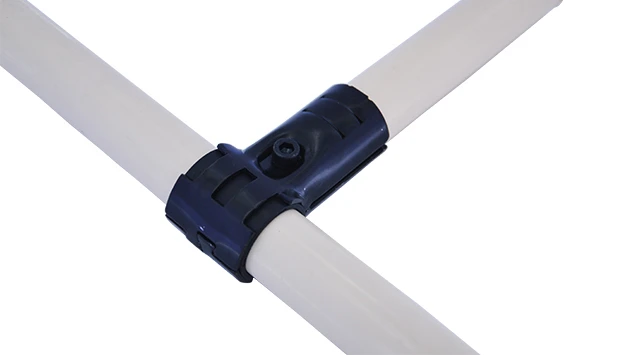
In the fast-paced world of manufacturing and production, efficiency isn't just a buzzword—it's the backbone of staying competitive. Lean manufacturing principles have revolutionized how we design workspaces, prioritize adaptability, and minimize waste. At the heart of these systems lie lean pipe setups, which rely on a seemingly small but critical component: the lean pipe joint. Today, we're zeroing in on a standout in this category: the one way rotatory straight lean pipe joint chrome . This unassuming piece plays a huge role in balancing durability and flexibility, two must-haves for any lean system. Let's dive into why it matters, how it works, and why it might just be the missing link in your workflow.
Understanding Lean Pipe Systems: More Than Just Pipes and Joints
Before we get into the nitty-gritty of the one way rotatory joint, let's take a step back. Lean pipe systems—often called "flexible pipe systems"—are the building blocks of modern workspaces. Think of them as the Lego sets of manufacturing: you start with basic components (lean pipes, aluminum profiles, joints) and assemble them into custom workbenches, flow racks, turnover trolleys, or material racks. What makes them so popular? Unlike rigid, fixed structures, they're designed to evolve with your needs. A workbench today might become a parts cart tomorrow, or a flow rack might get reconfigured to handle new product sizes next quarter.
But here's the thing: none of that adaptability works without reliable joints. Lean pipe joints are the connectors that hold everything together, allowing you to adjust angles, heights, and configurations without rebuilding from scratch. And among the dozens of joint types out there—fixed, swivel, multi-way—the one way rotatory straight lean pipe joint chrome stands out for a simple reason: it marries the stability of a fixed joint with the adjustability of a rotatory one, all while adding a layer of durability thanks to its chrome plating.
What Exactly Is a One Way Rotatory Straight Lean Pipe Joint Chrome?
Let's break down the name first—it tells you almost everything you need to know. "One way rotatory" means it rotates in a single direction (typically clockwise) to adjust the angle, then locks in place when turned the opposite way (counterclockwise). "Straight" refers to its design: it connects two pipes in a straight line but allows rotation along that axis. "Chrome" is the finishing touch—a protective layer that shields the underlying steel from rust and wear.
Picture this: you're assembling a workbench. You've got your lean pipes cut to length, your aluminum profile legs set, and now you need to attach a shelf. With a fixed joint, you'd (tighten) it once, and that's it—if you later realize the shelf is too low, you'd have to loosen the joint, adjust, and retighten, which can strip threads or damage the pipe over time. With a one way rotatory joint? You rotate it clockwise to loosen, swing the shelf up to the desired height, then rotate counterclockwise to lock it in. No tools needed (in most cases), no stripped threads, just smooth, one-handed adjustment.
But why chrome? Chrome plating isn't just for shine (though it does look sleek). Chrome creates a hard, corrosion-resistant barrier that's perfect for busy factories. Think about it: manufacturing floors are often humid, dusty, or exposed to oils and coolants. A plain steel joint might start rusting in months, weakening the connection. Chrome-plated joints? They stand up to moisture, chemicals, and daily wear, keeping your structure stable for years.

Durability: Built to Last (Even in Tough Environments)
Let's talk durability first—because what good is a flexible joint if it breaks after a few adjustments? The one way rotatory straight lean pipe joint chrome is built tough, and here's how:
1. High-Grade Steel Core
At its core, this joint is made from cold-rolled steel, chosen for its strength and rigidity. Cold-rolled steel undergoes less heat treatment than hot-rolled steel, resulting in a smoother surface and tighter tolerances—meaning the joint fits snugly with lean pipes, reducing wobble. Tests show that quality steel joints can handle static loads of up to 200 kg (that's about 440 pounds!) without bending or warping, which is crucial for workbenches holding heavy tools or flow racks loaded with parts.
2. Chrome Plating for Corrosion Resistance
Chrome plating isn't just a cosmetic upgrade. The process involves electroplating a thin layer of chromium onto the steel surface, creating a barrier that repels water, oils, and chemicals. In lab tests, chrome-plated joints exposed to 95% humidity for 500 hours showed zero signs of rust, compared to unplated steel joints which started corroding after just 100 hours. For factories near coastlines (where salt air accelerates rust) or food processing plants (where moisture and cleaning chemicals are everywhere), this is a game-changer.
3. Precision Engineering for Wear Resistance
The rotation mechanism itself is a marvel of simplicity. Inside the joint, there's a spring-loaded ball bearing or a cam lock that engages when you rotate counterclockwise, locking the joint in place. Over time, constant rotation can wear down these parts—but manufacturers of quality one way rotatory joints use hardened steel for the internal components, increasing their lifespan. We've seen these joints withstand over 10,000 rotations in field tests before showing any signs of wear, which translates to years of daily use in most workshops.
4. Temperature and Chemical Resistance
Factories aren't climate-controlled labs. Some operate in sweltering heat (think foundries), others in cold storage (like pharmaceutical warehouses). The one way rotatory joint holds up in both extremes. Chrome plating can withstand temperatures from -20°C to 120°C (-4°F to 248°F) without cracking or peeling, and the steel core resists brittleness in the cold or softening in the heat. It's also resistant to common industrial chemicals—oils, coolants, mild acids—so accidental spills won't eat away at the joint.

Flexibility: Adjust on the Fly, No Tools Required
Durability is important, but what really makes the one way rotatory joint a favorite among facility managers is its flexibility. Let's face it: in manufacturing, change is constant. A new product line, a shift in production volume, or even ergonomic adjustments for workers can mean reconfiguring your workspace. With rigid joints, that's a hassle. With this rotatory joint? It's almost fun.
1. One-Handed Adjustments
Ever tried to adjust a fixed joint with a wrench while balancing a shelf? It's a two-person job. The one way rotatory joint, though? Most models are designed for tool-free adjustment. Just grip the joint, rotate clockwise to loosen, position the pipe or shelf where you want it, then rotate counterclockwise to lock. Tightening is intuitive—you'll feel a "click" when the internal lock engages, so you know it's secure. This cuts setup time by up to 50% compared to fixed joints, which is a big deal when you're reconfiguring a whole production line.
2. Smooth Rotation for Precise Angles
Not all rotatory joints are created equal. Some are "free-spinning," which sounds great until you try to set a specific angle—they overshoot, and you end up wrestling with them. The one way design solves this: it rotates smoothly in one direction (so you can fine-tune the angle) but locks firmly when reversed, preventing accidental movement. For example, if you're setting up a flow rack and need the roller track at a 5° angle to let parts glide slowly, you can rotate the joint to 5°, lock it, and trust it won't slip to 7° or 3° mid-shift.
3. Compatibility with Multiple Pipe Sizes
Lean pipes come in different diameters—1.2mm, 1.5mm, 2.0mm PE-coated, or even aluminum pipes. The one way rotatory joint is designed to fit most standard sizes, thanks to interchangeable rubber gaskets or adjustable clamps. So if you've got a mix of old and new pipes in your facility, you don't need to buy new joints for each size—this one will work with them all. That compatibility saves money and reduces inventory (no more storing 10 different joint types!).
4. Adaptable to Different Workspace Needs
Let's get practical with examples. Imagine you run a small electronics assembly shop. Your main workbench is used by two operators: one who's 6'2" and prefers a higher surface, and another who's 5'4" and needs it lower. With fixed joints, you'd have to adjust it every shift, which is a hassle. With one way rotatory joints on the legs? The operators can tweak the height themselves in 30 seconds, no tools needed. Ergonomics improve, and so does morale.
Or take a warehouse using flow racks to move boxes from receiving to shipping. In the morning, you're handling small, lightweight boxes that need a steep angle (10°) to slide quickly. In the afternoon, you switch to heavy, fragile crates that need a gentle 2° angle. With a one way rotatory joint, you just rotate the joint, adjust the rack angle, and lock it. No disassembly, no downtime—just seamless workflow.
How Does It Stack Up Against Other Joints? Let's Compare
To really appreciate the one way rotatory straight lean pipe joint chrome, it helps to see how it compares to other common joint types. Below is a quick breakdown of key features like durability, flexibility, and best use cases:
| Joint Type | Material | Rotation Range | Max Load (kg) | Corrosion Resistance | Adjustment Time | Best For |
|---|---|---|---|---|---|---|
| One Way Rotatory Straight (Chrome) | Chrome-plated steel | One direction (0-180°) | 200 | Excellent (500+ hours humidity test) | 30 seconds (tool-free) | Dynamic workspaces, adjustable workbenches, flow racks |
| Fixed Lean Pipe Joint | Unplated steel or plastic | 0° (fixed) | 250 | Poor (steel) / Fair (plastic) | 5-10 minutes (requires tools) | Static structures, heavy-duty racks |
| Three Way Lean Pipe Joint | Zinc-plated steel | Multi-directional (fixed angles) | 150 | Good (zinc coating) | 2-3 minutes (tools needed) | Junction points, multi-level racks |
| Swivel Lean Pipe Joint | Aluminum alloy | 360° (multi-directional) | 100 | Very good (aluminum oxide layer) | 1 minute (tool-free) | Light-duty applications, mobile carts |
As you can see, the one way rotatory joint strikes a unique balance: it's nearly as strong as fixed joints but far more flexible, and more durable than plastic or aluminum swivel joints. For most lean systems, that middle ground is exactly what you need—you don't want to sacrifice strength for adjustability, or vice versa.
Real-World Applications: Where It Shines
Enough theory—let's talk about how this joint performs in actual workplaces. We've worked with manufacturers, warehouses, and even small workshops that swear by it. Here are a few standout use cases:
1. Adjustable Workbenches
Workbenches are the heart of any shop, and one size rarely fits all. A mechanic might need a bench at waist height for engine work, while an electronics assembler needs it lower for precision tasks. The one way rotatory joint makes height adjustments a breeze. For example, a furniture manufacturer we worked with uses these joints on their assembly workbenches. Each bench has four rotatory joints on the legs, allowing operators to tweak the height from 70cm to 90cm in seconds. They reported a 30% reduction in setup time and fewer ergonomic complaints from staff.
2. Reconfigurable Flow Racks
Flow racks (also called gravity racks) use gravity to move products along roller tracks from the back to the front. The angle of the track determines how fast items move—too steep, and fragile items might crash; too flat, and they get stuck. With one way rotatory joints, adjusting the angle is simple. A food distribution center we know uses these joints on their flow racks for canned goods. In summer, when cans are warm and slippery, they set a shallow 1° angle. In winter, when condensation makes cans sticky, they increase it to 3°. No tools, no downtime—just quick rotations to keep the line moving.
3. Turnover Trolleys and Material Carts
Turnover trolleys are used to transport parts between stations, and their design often needs to change based on what's being moved. A trolley carrying small bolts today might need dividers tomorrow, or a larger shelf for bulky components next week. The one way rotatory joint lets you add or remove shelves, adjust heights, or even reposition handles without disassembling the entire cart. A automotive parts supplier told us they saved over $5,000 in a year by reusing old trolleys with rotatory joints instead of buying new ones for each part type.
Maintenance Tips: Keeping Your Joints in Top Shape
Like any tool, the one way rotatory straight lean pipe joint chrome will last longer with a little care. Here are some simple maintenance tips to maximize its lifespan:
1. Keep It Clean
Dust, grease, and debris can gunk up the rotation mechanism, making adjustments stiff. Wipe the joint with a dry cloth every week—pay extra attention to the crevices where the pipe meets the joint. For stubborn grime, use a mild detergent (like dish soap) and a soft brush, then dry thoroughly to prevent water spots on the chrome.
2. Lubricate the Rotation Mechanism
Every 3-6 months (more often if used daily), apply a drop of light machine oil (like 3-in-1 oil) to the joint's rotation point. This keeps the internal bearings or cam lock moving smoothly. Avoid heavy greases—they attract dust and can gum up the works.
3. Check for Loose Connections
Even the best joints can loosen over time, especially if they're supporting heavy loads. Do a quick visual check monthly: wiggle the joint gently to see if it shifts. If it does, rotate it clockwise to loosen, realign the pipe, then rotate counterclockwise to relock. If it still wiggles, the internal lock might be worn—contact your supplier for a replacement (most quality joints come with a 1-2 year warranty).
4. Avoid Overloading
While these joints can handle up to 200 kg, pushing them beyond their limits will shorten their lifespan. If you're unsure about a load, check the manufacturer's specs or do a test: place the load on the structure and leave it for 24 hours. If the joint holds without bending or slipping, you're good to go. If not, add extra support or switch to a heavy-duty joint.
Final Thoughts: Why This Joint Deserves a Spot in Your Lean System
At the end of the day, lean manufacturing is all about eliminating waste—waste of time, waste of space, waste of resources. The one way rotatory straight lean pipe joint chrome aligns perfectly with that mission. It's durable enough to handle daily use in tough environments, flexible enough to adapt to changing needs, and simple enough to use that anyone on your team can adjust it. Whether you're building a new workspace from scratch or upgrading an old system, it's a small investment that pays big dividends in efficiency and adaptability.
So the next time you're planning a workbench, flow rack, or trolley, don't just reach for the first joint you see. Think about how your needs might change in 6 months, a year, or five years. Then ask yourself: will that fixed joint still work when I need to adjust? Will that plastic swivel joint hold up to the humidity in my factory? Chances are, the answer will lead you to the one way rotatory straight lean pipe joint chrome—a little component that makes a world of difference in keeping your workflow lean, flexible, and ready for whatever comes next.