- Company Articles
- Products and Technology
- Product knowledge
- Key Features of Parallel Rotatory Lean Pipe Joint Chrome: Why It Stands Out

Key Features of Parallel Rotatory Lean Pipe Joint Chrome: Why It Stands Out
Related Product
Parallel Rotatory Lean Pipe Joint
Parallel rotatory lean pipe joint, for 2 pcs pipe conenction in parallel direction with rotatory function.
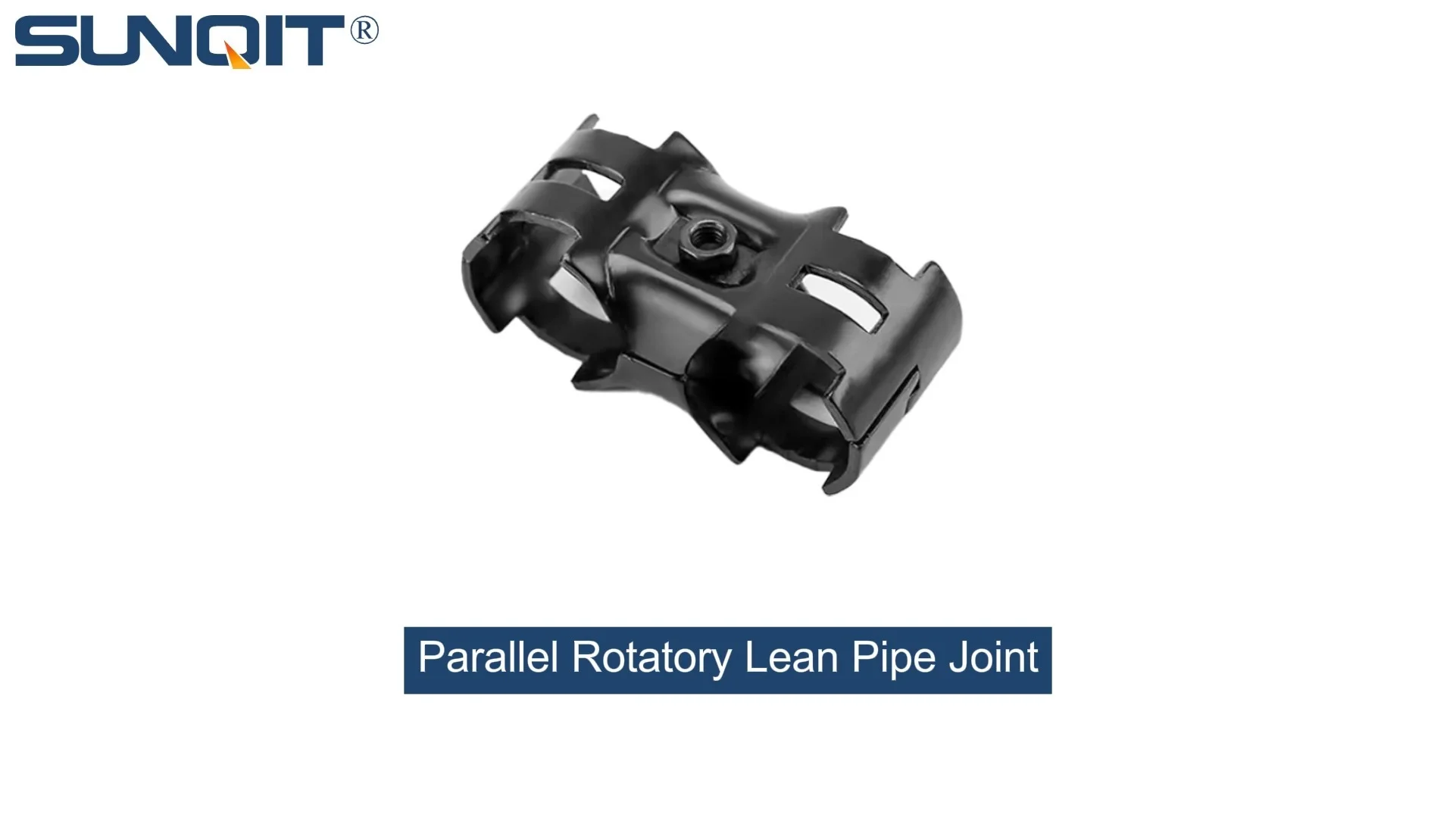
In the fast-paced world of manufacturing, where efficiency and adaptability can make or break a production line, lean principles have become more than just a buzzword—they're a way of life. At the heart of lean manufacturing lies the pursuit of eliminating waste, streamlining processes, and creating systems that can pivot with changing demands. And when it comes to building these agile systems, the unsung heroes often aren't the big machines or high-tech software, but the small, unassuming components that hold everything together. Enter the parallel rotatory lean pipe joint chrome —a component that might seem simple at first glance, but plays a critical role in making lean pipe systems truly flexible, durable, and efficient.
Lean pipe systems, built with lean pipe , aluminum lean pipe , and a range of lean pipe accessories , have long been favored for their modularity. They let manufacturers design workbenches, flow racks, conveyor systems, and turnover trolleys that can be reconfigured on the fly, without the need for welding or heavy machinery. But none of this flexibility would matter if the joints connecting the pipes were rigid, flimsy, or hard to adjust. That's where the parallel rotatory lean pipe joint chrome steps in. It's not just a connector—it's a bridge between structure and adaptability, making it a standout choice for anyone building or upgrading a lean system .
First Things First: What Exactly Is a Parallel Rotatory Lean Pipe Joint Chrome?
Before diving into its features, let's clarify what this joint is. At its core, the parallel rotatory lean pipe joint chrome is a mechanical component designed to connect two or more lengths of lean pipe (or aluminum lean pipe) in a parallel configuration—meaning the pipes run alongside each other—while allowing for rotational movement. Unlike fixed joints that lock pipes into a static angle (like 90 or 45 degrees), this joint lets the connected pipes rotate relative to each other, within a controlled range, to adapt to different angles or workflows. And the "chrome" in its name? That's the finishing touch—a layer of chrome plating that adds durability and corrosion resistance, making it suitable for even the busiest factory floors.
Think of it as the "swivel hinge" of the lean pipe world. Where fixed joints are like a rigid elbow, the parallel rotatory joint is more like a well-oiled wrist—strong enough to hold weight, but flexible enough to move when you need it to. This combination of strength and movement is what makes it so valuable in dynamic production environments.
Key Feature 1: Precision Rotational Flexibility—No More "One-Size-Fits-All" Rigidity
The most defining feature of the parallel rotatory lean pipe joint chrome is its rotational flexibility—and it's not just "some movement" but precision movement. Unlike cheaper joints that wobble or get stuck, this joint is engineered to rotate smoothly, with consistent resistance and a defined range of motion (typically up to 180 degrees, though some models offer more). This precision is a game-changer for two big reasons: adaptability and user control.
Let's say you're building a workbench for an assembly line where workers alternate between standing and sitting, or where tasks require materials to be angled differently throughout the day. With a fixed joint, the workbench surface is locked in place—if a worker needs to tilt it 30 degrees for a better angle, they're out of luck. But with a parallel rotatory joint, adjusting the angle is as simple as loosening a setscrew, rotating the surface to the desired position, and tightening it back down. No tools, no hassle, no downtime.
Or consider a flow rack in a warehouse where products come in varying sizes. A rigid rack might force you to use the same angle for all items, leading to jams or slowdowns. With a rotatory joint, you can adjust the roller track angle to match the product—steeper for heavier boxes, gentler for fragile items—without rebuilding the entire rack. This kind of on-the-fly adaptability is exactly what lean systems thrive on: eliminating waste (like time spent reconfiguring rigid setups) and keeping workflows smooth.
The secret to this smooth rotation lies in the joint's internal design. High-quality models use ball bearings or precision-machined contact points, ensuring that even after months of use, the rotation stays consistent. There's no "sticking" or "grinding"—just a fluid movement that feels intuitive, even for workers who aren't engineers. This user-friendliness matters because it means less training time and fewer mistakes when reconfiguring the system.
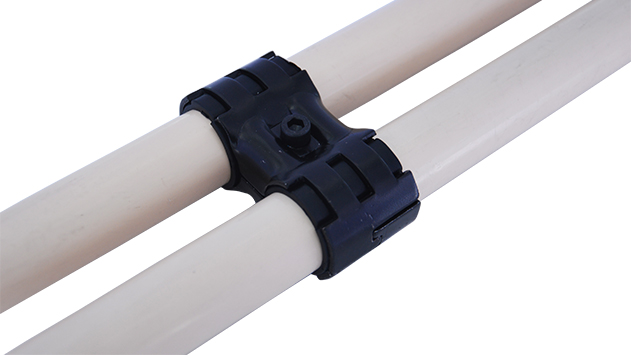
Key Feature 2: Chrome Plating—Durability That Stands Up to the Toughest Floors
Manufacturing environments are tough. Dust, oil, moisture, and constant use can take a toll on equipment—especially small components like joints. That's why the chrome plating on the parallel rotatory lean pipe joint chrome isn't just a cosmetic choice; it's a durability upgrade. Chrome plating adds a hard, smooth layer to the underlying steel (or aluminum) joint, making it resistant to corrosion, scratches, and wear.
Let's break down the benefits: corrosion resistance means it won't rust, even in humid factories or areas where water or coolants are used (think automotive or food processing plants). Scratch resistance ensures that accidental bumps from tools or materials won't weaken the joint over time. And easy cleaning —chrome's smooth surface wipes clean with a cloth, so dust and grime don't build up and gunk up the rotation mechanism. Compare this to unplated steel joints, which can start rusting after a few weeks in a damp environment, or plastic joints that scratch and degrade under heavy use. The chrome plating extends the joint's lifespan by years, making it a cost-effective choice in the long run.
I once visited a electronics assembly plant that had switched from plastic joints to chrome-plated ones. The maintenance manager told me their replacement rate for joints dropped by 70%—and that was in a cleanroom, where conditions are relatively controlled! In a busier shop with more debris, the savings would be even bigger. When you multiply that by hundreds of joints in a typical lean system, the durability of chrome plating becomes impossible to ignore.

Key Feature 3: Universal Compatibility—Works Seamlessly with Lean Pipe and Aluminum Lean Pipe
A joint is only useful if it plays well with the pipes and accessories you already have (or plan to buy). The parallel rotatory lean pipe joint chrome shines here, too, with broad compatibility across standard lean pipe sizes and materials—including traditional steel lean pipe and lighter, modern aluminum lean pipe. Most models are designed to fit the most common pipe diameters (28mm, 30mm, and 40mm), with adjustable clamps or inserts that grip the pipe securely without damaging it.
Why does this matter? Because lean systems are rarely "all new" or "all old." Many factories mix and match: maybe they're upgrading from steel lean pipe to aluminum lean pipe for lighter workbenches, or adding new accessories (like roller tracks or casters) to an existing setup. A joint that only works with one type of pipe would force you to replace everything—or limit your options. The parallel rotatory joint avoids that headache, letting you integrate it into both new builds and retrofits.
Take aluminum lean pipe, for example. It's growing in popularity because it's lighter than steel, making systems easier to move and reconfigure. But aluminum is also softer, so joints need to grip it without crushing or deforming the pipe. The parallel rotatory joint's clamps are designed with this in mind—using rubberized inserts or adjustable pressure screws to hold aluminum pipe securely, even during rotation. For steel lean pipe, the same joint provides a tight, vibration-resistant grip, ensuring stability for heavier loads.
And it's not just pipes—it works with lean pipe accessories , too. Need to attach a roller track for a flow rack? The joint's flat surfaces and pre-drilled holes (on some models) make it easy to bolt on accessories without extra adapters. Want to add a caster wheel to a turnover trolley? The joint can pivot to angle the trolley for easier maneuvering in tight spaces. This compatibility turns a single joint into a multi-tool for building and customizing lean systems.

Key Feature 4: Tool-Free Installation and Reconfiguration—Because Time Is Money
In lean manufacturing, downtime is the enemy. Every minute spent disassembling or rebuilding a workbench is a minute not spent producing. That's why the parallel rotatory lean pipe joint chrome is designed for speed —both in initial installation and in reconfiguration. Unlike welded joints (which require a skilled technician and hours of work) or even some bolt-together joints (which need wrenches and time), this joint can be installed with nothing more than a hex key (or sometimes just a hand-tightened knob, on quick-release models).
Here's how it works: Slide the joint onto the end of a lean pipe, align it with the second pipe, tighten the clamp screws until it's secure, and you're done. No welding, no drilling, no waiting for adhesives to dry. Even a new employee can learn to install it in 5 minutes or less. And when you need to reconfigure? Loosen the screws, rotate the joint to the new angle, retighten, and you're back to work. Compare that to fixed joints, which often require you to disassemble the entire section of pipe to change the angle—costing hours of production time.
A furniture manufacturer I worked with once shared a story: They used to spend 2 hours reconfiguring a workbench for a new product line, using fixed joints. After switching to parallel rotatory joints, the same reconfiguration takes 20 minutes—saving 100 hours a year on that single workbench alone. Multiply that across a factory with dozens of workbenches and flow racks, and the time savings add up to real dollars.
This ease of use also reduces the barrier to experimentation. In lean manufacturing, continuous improvement means testing new layouts and workflows. With a joint that's easy to adjust, workers feel empowered to tweak their stations to be more efficient—whether that's tilting a work surface for better ergonomics or angling a material rack to reduce reaching. When reconfiguration is fast and painless, people are more likely to try new ideas, driving innovation on the factory floor.
Key Feature 5: Heavy-Duty Load Capacity—Strength to Handle Real-World Demands
Flexibility is great, but if a joint can't hold weight, it's useless. The parallel rotatory lean pipe joint chrome doesn't skimp on strength. Most models are rated to support 50–100 kg per joint (depending on size and material), which is more than enough for typical factory loads—think toolboxes, product bins, or even small machinery on a workbench. This load capacity comes from two factors: high-quality base materials and smart engineering.
The base of the joint is usually made from cold-rolled steel or aluminum alloy—materials known for their strength-to-weight ratio. Cold-rolled steel, in particular, is stronger than hot-rolled steel because the rolling process aligns the metal's grains, reducing weaknesses. For aluminum models, alloys like 6061-T6 are used, which are heat-treated for extra hardness. The chrome plating adds another layer of strength, preventing dents or deformation that could compromise the joint's integrity under load.
The design matters, too. The joint's "grip" on the pipes is distributed evenly, so weight isn't concentrated on a single point (which could bend the pipe or loosen the joint). Instead, the load is spread across the clamp's surface area, reducing stress and ensuring stability even during rotation. This is crucial for applications like material racks, where items are constantly being added and removed, creating dynamic weight shifts.
I saw this in action at a automotive parts plant, where they used parallel rotatory joints to build a multi-level material rack holding heavy engine components (each bin weighed around 80 kg). The joints not only supported the weight but allowed workers to rotate the bins to angle them toward the assembly line, reducing the need to reach over the rack. After six months of daily use, the joints showed no signs of wear—no loosening, no bending, just consistent performance.
How Does It Compare? A Quick Look at Rotatory vs. Fixed Joints
To really see why the parallel rotatory lean pipe joint chrome stands out, it helps to compare it to a common alternative: fixed lean pipe joints. Fixed joints are cheaper and simpler, but they lack the flexibility that makes rotatory joints so valuable. Here's a quick breakdown:
| Feature | Parallel Rotatory Lean Pipe Joint Chrome | Standard Fixed Lean Pipe Joint |
|---|---|---|
| Rotation | Smooth rotation (up to 180°+) | No rotation (fixed angle, e.g., 90° or 45°) |
| Durability | Chrome-plated; corrosion and scratch-resistant | Often unplated steel or plastic; prone to rust/scratches |
| Compatibility | Works with steel lean pipe, aluminum lean pipe, and accessories | Limited to specific pipe sizes; fewer accessory mounting options |
| Installation Time | 5–10 minutes (tool-free or hex key only) | 5–10 minutes (similar time, but reconfiguration takes longer) |
| Best For | Dynamic systems (workbenches, flow racks, trolleys) needing adaptability | Static systems (fixed shelving, rigid frames) with no need for movement |
The takeaway? Fixed joints have their place, but for lean systems that need to evolve with changing production needs, the parallel rotatory joint is worth the investment. It's not just a "better joint"—it's a joint that enables lean principles like flexibility and continuous improvement.
Real-World Applications: Where This Joint Shines Brightest
So, where exactly do you use a parallel rotatory lean pipe joint chrome? The short answer: anywhere a lean system needs a mix of stability and movement. Here are a few common applications where it's making a difference:
Adjustable Workbenches
Workbenches are the backbone of assembly lines, but one worker might prefer a flat surface, while another needs a tilted one for better visibility. With parallel rotatory joints, the bench's top can pivot to different angles, keeping workers comfortable and productive. Add aluminum lean pipe legs, and the whole bench becomes lightweight enough to move, too.
Flow Racks with Variable Angles
Flow racks use gravity to move products from the back to the front, but the angle of the rack affects how fast items flow. Heavier products need a gentler angle to avoid jamming; lighter ones need a steeper angle to move smoothly. Rotatory joints let you adjust each shelf's angle independently, ensuring every product flows at the right speed.
Turnover Trolleys for Tight Spaces
Turnover trolleys carry materials between stations, but factory aisles can be narrow. With rotatory joints, the trolley's handle or shelves can pivot, letting workers maneuver the trolley around corners without hitting walls or other equipment.
ESD Workstations
Electrostatic discharge (ESD) workstations need to control static, but they also need to be adaptable for different electronics. Rotatory joints allow ESD-safe shelves or tool holders to be angled, reducing the risk of static buildup from awkward reaching and improving access to sensitive components.
Why It Stands Out: More Than a Joint—A Catalyst for Lean Success
At the end of the day, the parallel rotatory lean pipe joint chrome isn't just a better mousetrap—it's a tool that makes lean systems work better . Its combination of precision rotation, chrome durability, universal compatibility, easy installation, and heavy-duty strength solves real problems for manufacturers: reducing downtime, improving ergonomics, and making it easier to adapt to changing production needs. In a world where flexibility and efficiency are everything, these aren't just "nice-to-have" features—they're essential.
Whether you're building a new lean system from scratch or upgrading an old one, this joint is worth considering. It's a small component, but it has a big impact—turning rigid, one-use systems into dynamic, ever-evolving tools that grow with your business. And in lean manufacturing, that's the ultimate goal: not just eliminating waste, but creating systems that can thrive in an unpredictable world.
So the next time you walk through a factory, take a closer look at the workbenches, racks, and trolleys. Chances are, the ones that look the most adaptable—the ones that seem to "fit" the workflow perfectly—are held together by joints like this. Because in the end, lean manufacturing isn't just about pipes and shelves; it's about the little components that make those pipes and shelves work for the people using them. And the parallel rotatory lean pipe joint chrome does exactly that.