- Company Articles
- Products and Technology
- Procurement Guidelines
- Key Features to Check When Purchasing Aluminum Workbench C

Key Features to Check When Purchasing Aluminum Workbench C
Related Product
Aluminum Workbench C
aluminum-tube-workbench-is-more-flexible-and-durable,-compared-with-traditional-pe/abs-coated-steel-tube.-it-is-easy-to-assemble,-anti-corrosion,-rust-protection,-and-recycle-use-after-disassemble.
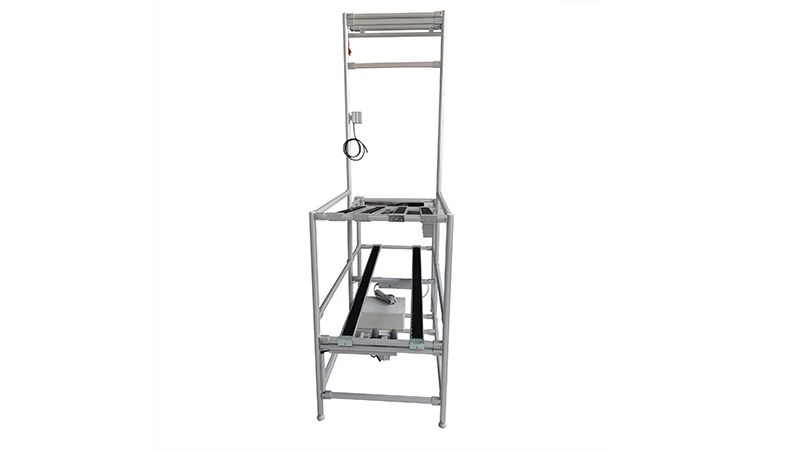
If you've ever spent a day in a workshop, factory floor, or even a home garage, you know this to be true: a workbench isn't just a table. It's the heartbeat of your workspace. It's where ideas take shape, parts get assembled, and projects cross the finish line. And when it comes to durability, flexibility, and long-term value, few options hold a candle to the Aluminum Workbench C. But with so many workbenches on the market, how do you make sure you're choosing the right one? Let's dive into the key features you need to check before hitting that "buy" button—because the right workbench doesn't just fit your space; it elevates how you work.
First Things First: What Makes Aluminum Workbench C Stand Out?
Before we jump into the checkpoints, let's clarify what Aluminum Workbench C is (and isn't). Unlike clunky wooden workbenches that warp over time or heavy steel ones that are a hassle to move, this model is built around aluminum profile —a lightweight yet surprisingly tough material that's become a staple in modern manufacturing and DIY spaces. It's designed to balance strength and versatility, making it a favorite for assembly lines, labs, electronics workshops, and even hobbyist garages. But not all aluminum workbenches are created equal. Aluminum Workbench C, in particular, often comes with a range of customizable features, but only if you know what to look for.
Key Feature 1: Material Quality—It All Starts with the Aluminum Profile
Let's start with the foundation: the aluminum profile itself. This isn't just any aluminum—it's aluminum extrusion profile , a process where aluminum is pushed through a die to create consistent, precision-shaped beams. Why does that matter? Extruded aluminum profiles have uniform strength, smooth surfaces, and most importantly, T-slots (those handy grooves running along the length) that let you attach accessories with ease. But here's the catch: not all extrusion profiles are the same. Here's what to inspect:
- Wall Thickness : A flimsy profile with thin walls might save a few dollars upfront, but it won't hold up to daily use. Aluminum Workbench C should have a wall thickness of at least 1.5mm—thicker if you're planning to load it with heavy tools or machinery. Ask the supplier for specs; reputable ones will happily share.
- Alloy Grade : Most workbench profiles use 6061 or 6063 aluminum alloys. 6061 is stronger (great for heavy loads), while 6063 is more malleable (easier to extrude into complex shapes). Either is fine, but avoid generic "aluminum alloy" without a grade—it could be a weaker mix.
- Surface Treatment : Look for anodized or powder-coated finishes. Anodizing adds a protective layer that resists scratches and corrosion (perfect if you work in humid environments or handle chemicals). Powder coating adds color and extra durability—just ensure it's evenly applied with no bubbles or chips.
Think of it this way: the aluminum profile is the backbone of your workbench. A weak backbone means everything else—shelves, tools, even the work surface—will suffer. Don't skimp here.

Key Feature 2: Stability & Load Capacity—How Much Can It Really Handle?
You've checked the profile—now, how does it all hold together? Even the best aluminum profile won't matter if the joints are shoddy or the frame wobbles under pressure. This is where aluminum pipe accessories (like joints, clamps, and brackets) come into play. They're the glue that turns individual profiles into a rock-solid workbench. Here's what to test:
| Component | What to Check | Why It Matters |
|---|---|---|
| Joints | Look for tight, precision-fit joints (avoid loose or wobbly connections). Check if they're made of die-cast aluminum (stronger) or plastic (weaker for heavy use). | Loose joints lead to a wobbly workbench, which can damage tools or even cause accidents. |
| Cross-Bracing | Does the frame have horizontal cross-braces near the top and bottom? These prevent side-to-side sway. | Without bracing, the workbench might flex when you lean on it or place uneven loads. |
| Load Rating | Ask for the maximum uniform load (e.g., 500kg per square meter). Test with a heavy box or tool during a demo if possible. | Overloading a workbench can bend the profile or snap joints—costing you more in repairs later. |
Pro tip: If you're buying online, read customer reviews for mentions of "sturdiness" or "wobble." A common complaint with cheaper models is that they feel unstable once loaded—Aluminum Workbench C should avoid that.

Key Feature 3: Mobility (If You Need It)—Don't Overlook Caster Accessories
Not every workspace needs a mobile workbench, but if you do (say, you move between assembly stations or need to clean under it regularly), caster accessories are non-negotiable. Aluminum Workbench C often comes with optional casters, but here's the thing: not all casters are created equal. Cheap plastic wheels might work on smooth office floors, but in a workshop with debris or uneven concrete? They'll jam or break in months. Here's what to demand:
- Wheel Material : Rubber or polyurethane wheels are best—they absorb shocks, roll smoothly, and won't scratch floors. Avoid hard plastic unless you only work on carpet.
- Locking Mechanisms : Each caster should have a brake that locks both the wheel and the swivel (called a "total lock"). This prevents the workbench from rolling or spinning when you're using it. Test the brakes—they should engage easily and hold firm under pressure.
- Weight Capacity per Caster : If the workbench holds 500kg, each of the four casters should rated for at least 150kg (more is better, to account for uneven loading). A sticker or spec sheet should list this.
- Mounting Quality : Casters should attach to the workbench legs via metal plates (not just screws into the aluminum profile). Welded or bolted plates distribute weight better and prevent stripping.
If mobility isn't a priority, Aluminum Workbench C might come with fixed feet (look for rubber-padded ones to prevent slipping). Either way, ensure the base is stable—no rocking when you push on the corners.

Key Feature 4: Customization—T-Slots and Aluminum Pipe Accessories Are Your Friends
One of the biggest perks of aluminum workbenches is how easy they are to customize. Thanks to those T-slots in the aluminum profile, you can add shelves, tool hooks, monitor arms, or even lighting—without drilling holes or welding. But this only works if the workbench is designed with compatibility in mind. Here's what to check for customization potential:
- T-Slot Compatibility : Most T-slots are either M5, M6, or M8 (referring to the bolt size they accept). Aluminum Workbench C should use a standard size so you can buy third-party accessories (like clamps, brackets, or bins) without hassle. Avoid proprietary slots—they lock you into overpriced "official" parts.
- Included Accessories : Many suppliers bundle basic aluminum pipe accessories like end caps (to cover sharp edges), corner brackets, or shelf supports. Check if these are made of the same quality aluminum as the profile—flimsy plastic accessories will break quickly.
- Weight of Add-Ons : Even with T-slots, there's a limit to how much you can hang off the sides. The profile's strength (remember that wall thickness?) and the quality of the accessories determine this. For example, a heavy tool rack might need reinforced brackets.
Imagine this: You start with a basic Aluminum Workbench C, then add a shelf for parts, a pegboard for tools, and a laptop mount for work instructions. A year later, you need a second shelf—so you buy a bracket, slide it into the T-slot, and tighten a bolt. No fuss, no redesign. That's the power of good customization.
Key Feature 5: Work Surface—The Part You'll Actually Touch
Let's not forget the top of the workbench—the surface where you'll spend hours assembling, repairing, or creating. Aluminum Workbench C might come with a few options here, from plain aluminum sheets to composite materials. Here's what to prioritize:
- Thickness & Material : A 12mm-thick aluminum honeycomb panel is a great middle ground—lightweight but rigid, with good impact resistance. For heavier use, a solid aluminum plate (15mm+) works, but it adds weight. Avoid particleboard or thin plastic tops—they scratch and warp.
- Edge Treatment : Sharp edges are a safety hazard. Look for rounded or beveled edges, ideally with a rubber or plastic trim to prevent cuts and protect delicate parts (like electronics) from chipping.
- Finish : A smooth, non-porous finish is easier to clean (important if you work with oils, adhesives, or chemicals). Some surfaces are ESD-safe (electrostatic discharge) for electronics work—if that's your field, ensure the top is labeled as such.
Test the surface by dragging a tool across it (gently!)—it should resist scratches. Spill a little water—does it bead up (good) or soak in (bad)? These small details make a big difference in daily use.
Bonus: Supplier Reliability—It's Not Just the Workbench, It's Who Stands Behind It
Even the best Aluminum Workbench C can let you down if the supplier cuts corners. Before buying, ask: Do they offer a warranty (at least 1-2 years)? Can they provide replacement parts (like aluminum pipe accessories or casters) if something breaks? Read reviews—do other customers mention responsive support? A supplier who's hard to reach after the sale is a red flag, especially if you need help customizing or repairing your workbench later.
Final Thoughts: Your Workbench Should Grow with You
At the end of the day, Aluminum Workbench C isn't just a piece of equipment—it's an investment in your productivity, safety, and sanity. By checking the aluminum profile quality, stability, caster accessories, customization options, and work surface, you're not just buying a table—you're building a workspace that adapts to your needs. Whether you're assembling circuit boards, repairing machinery, or crafting prototypes, the right workbench makes every task easier. So take your time, ask questions, and don't settle for "good enough." Your future self (and your projects) will thank you.
Ready to find your perfect Aluminum Workbench C? Start with these checkpoints, and you'll be well on your way to a workspace that works as hard as you do.