- Company Articles
- Products and Technology
- Product knowledge
- Key Features to Look for in a Heavy-Duty Castor Install Base for Automotive Trolleys

Key Features to Look for in a Heavy-Duty Castor Install Base for Automotive Trolleys
Related Product
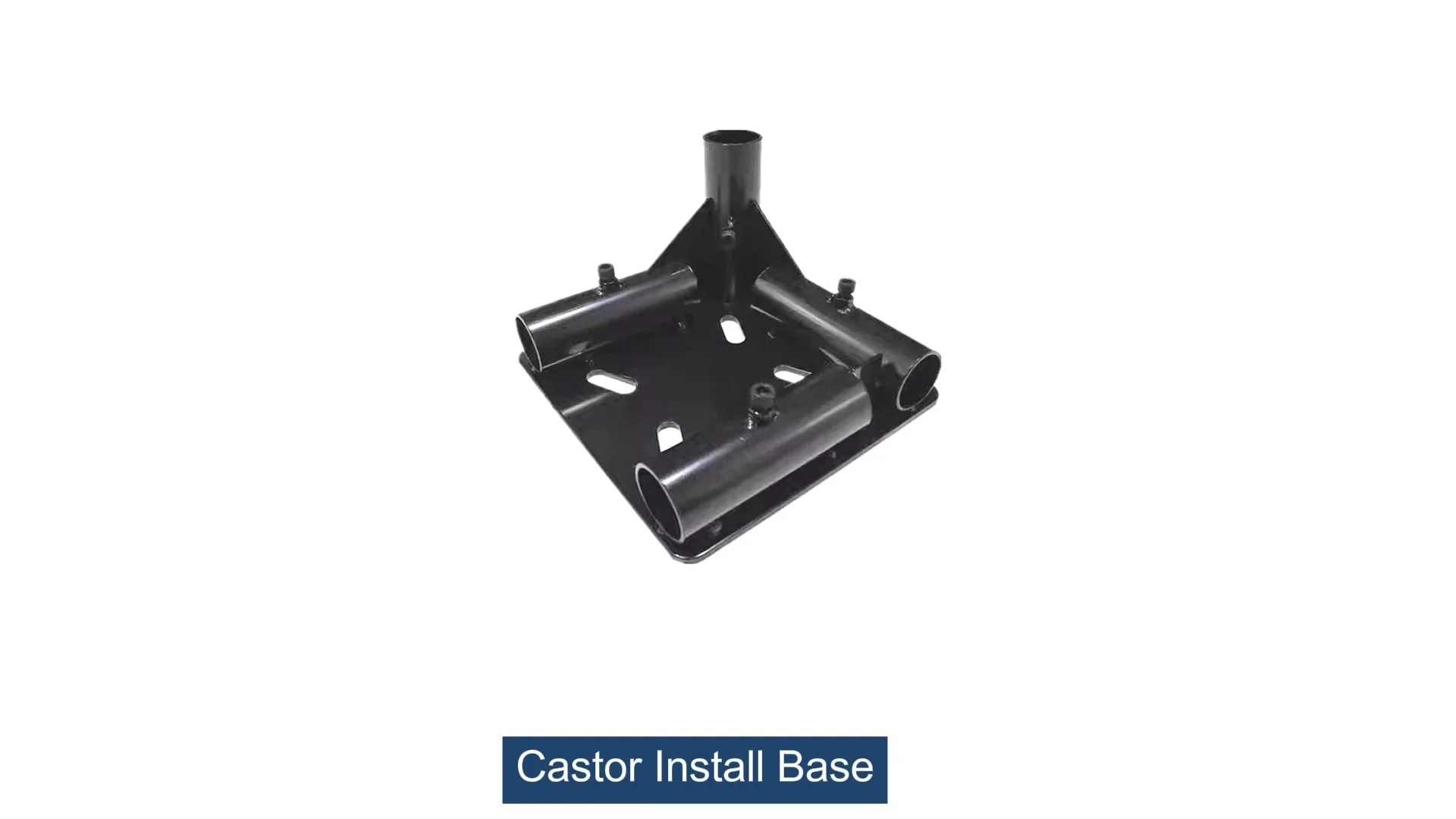
Castor Install Base
Castor install base, used for connection between pipe and castor, it can connect 4 pcs pipe by 1 pcs castor base, to make the structure strong and stable.
In the fast-paced world of automotive workshops, garages, and manufacturing facilities, the humble trolley is a workhorse. From hauling heavy engine parts and tools to transporting assemblies across the shop floor, these trolleys keep operations moving smoothly. But behind every reliable trolley is a critical component that often goes unnoticed: the castor install base. This unassuming part acts as the bridge between the trolley's frame and its caster wheels, bearing the brunt of heavy loads, constant movement, and harsh workshop conditions. Choosing the right heavy-duty castor install base isn't just about durability—it's about safety, efficiency, and long-term cost savings. In this guide, we'll break down the essential features to consider when selecting a castor install base for automotive trolleys, ensuring you invest in a solution that stands up to the demands of your workspace.
Why the Castor Install Base Matters More Than You Think
Automotive trolleys aren't just carts—they're essential tools that directly impact productivity and safety. A trolley that wobbles, tips, or gets stuck can slow down workflows, damage expensive parts, or even cause workplace injuries. The castor install base is the unsung hero here: it distributes the trolley's load evenly across the caster wheels, ensures stable movement, and prevents the frame from flexing or breaking under stress. Think of it as the foundation of the trolley's mobility system. A weak or poorly designed base can turn even the sturdiest caster wheels into a liability. For example, if the base bends under a heavy load, the caster wheels may no longer align properly, leading to uneven wear, increased rolling resistance, and a higher risk of the trolley veering off course. In contrast, a high-quality castor install base works in harmony with the caster wheels and accessories to create a smooth, reliable system that can handle the rigors of daily use.
Another reason the castor install base is critical is its role in adaptability. Automotive workshops often use trolleys for multiple purposes: one day hauling a transmission, the next carrying a stack of brake components. This means the base must be versatile enough to pair with different caster types—swivel, rigid, braked, or heavy-duty—and accommodate various caster accessories, such as locking mechanisms or shock-absorbing pads. A one-size-fits-all base might work for light loads, but in automotive settings, where weights can range from 100kg to over 1000kg, customization and compatibility are key. The right base ensures you can swap out caster wheels or add accessories without needing to replace the entire trolley, saving time and money in the long run.
Key Feature 1: Load Capacity—Matching Strength to Your Needs
The first and most non-negotiable feature of a heavy-duty castor install base is its load capacity. In automotive environments, trolleys frequently carry items like engines, transmissions, axles, or stacks of metal panels—all of which can weigh several hundred kilograms. A base that's undersized for the load will warp, crack, or fail entirely, putting both workers and equipment at risk. When evaluating load capacity, it's important to look beyond the "maximum weight" label and consider real-world conditions. For example, a base rated for 500kg might seem sufficient for a 400kg load, but if the trolley is frequently pushed over uneven floors or sudden bumps, the impact force can exceed the static load capacity. This is why dynamic load capacity (the weight the base can handle while in motion) is often more critical than static capacity (weight when stationary) in workshop settings.
To determine the right load capacity, start by calculating the maximum weight your trolley will carry. Add a 30-50% safety margin to account for impacts, uneven loading, or future needs (e.g., upgrading to heavier parts). For instance, if your typical load is 300kg, a base with a dynamic capacity of 450kg or more is a smart choice. Look for bases that explicitly state both static and dynamic load ratings, and avoid generic labels like "heavy-duty" without specific numbers. Some manufacturers also offer reinforced designs, such as those incorporating a heavy duty split foot seat—a specialized accessory that distributes weight across a larger area of the trolley frame, reducing stress on the base itself. This is especially useful for trolleys that carry concentrated loads, like a single large engine block, which can strain a standard base.
| Trolley Use Case | Typical Load (kg) | Recommended Dynamic Load Capacity (kg) | Ideal Base Type |
|---|---|---|---|
| Tool Storage Trolley | 100-200 | 250-350 | Standard Steel/Aluminum |
| Engine/Transmission Trolley | 300-600 | 500-800 | Reinforced Steel with Heavy Duty Split Foot Seat |
| Assembly Line Parts Trolley | 200-400 | 350-600 | Aluminum Alloy (Lightweight, High Strength) |
| Heavy-Duty Equipment Trolley | 600+ | 900+ | Stainless Steel with Reinforced Brackets |
Remember, load capacity isn't just about the base itself—it's a system. The base must work with the trolley frame, caster wheels, and caster accessories to support the load. A strong base paired with weak caster wheels will still fail, so always ensure all components are rated for the same or higher capacity. When in doubt, consult with a supplier who specializes in caster and accessories for automotive applications; they can help you match the base to your specific needs.

Key Feature 2: Material Quality—Durability in Harsh Environments
Automotive workshops are tough on equipment. Oil, grease, coolant, solvents, and metal shavings are constant companions, not to mention temperature fluctuations and heavy impacts. The material of your castor install base must stand up to all these challenges without corroding, bending, or degrading over time. The most common materials for heavy-duty bases are steel, aluminum alloy, and stainless steel—each with its own strengths and weaknesses.
Steel is a classic choice for heavy-duty applications. It's strong, affordable, and readily available. However, untreated steel is prone to rust, so most steel bases come with a protective coating like powder coating or zinc plating. Powder coating, in particular, provides a tough, chip-resistant finish that stands up to scratches and chemical exposure—ideal for workshops with oil and grease. Look for bases with a thickness of at least 3mm for heavy loads; thinner steel may flex under pressure. Steel bases often pair well with a heavy duty split foot seat, which adds an extra layer of reinforcement and helps distribute weight more evenly across the trolley frame.
Aluminum Alloy is gaining popularity for its lightweight yet strong properties. Aluminum bases are easier to maneuver than steel, which can reduce operator fatigue, and they're naturally resistant to corrosion—no need for extra coatings. This makes them a great choice for clean or semi-clean workshops, or those where weight is a concern (e.g., trolleys that need to be lifted or moved manually). However, aluminum has a lower load capacity than steel, so it's best suited for medium-duty applications (up to 400-500kg dynamic load). Some aluminum bases are reinforced with thicker walls or internal ribs to boost strength without adding excessive weight.
Stainless Steel is the premium option, offering unbeatable corrosion resistance. It's ideal for workshops with high humidity, frequent washing, or exposure to harsh chemicals (e.g., marine or industrial automotive settings). Stainless steel bases are strong and durable, but they come with a higher price tag. They're also heavier than aluminum, so they're best reserved for applications where corrosion resistance is non-negotiable. Look for 304 or 316 grade stainless steel; 316 is more resistant to saltwater and chemicals, making it suitable for coastal workshops.
When evaluating material quality, check for signs of shoddy manufacturing, like uneven welds, rough edges, or thin sections. A high-quality base will have clean, consistent construction, with no visible defects. Remember, the material of the base should complement the environment it will operate in. For example, a steel base with powder coating might work well in a dry workshop, but in a damp environment, aluminum or stainless steel would be a better long-term investment. Don't skimp on material—replacing a corroded or bent base every few months will cost more than investing in a durable one upfront.

Key Feature 3: Compatibility with Caster Wheels and Accessories
A castor install base is only as good as its ability to connect to the caster wheels and accessories that make the trolley mobile. Ill-fitting components can lead to loose connections, wobbling, or even the caster wheel detaching from the base—an obvious safety hazard. Compatibility starts with the mounting pattern: the holes or brackets on the base must match the mounting holes on the caster wheel. Most caster wheels use a standard bolt pattern (e.g., 4-hole or 2-hole), but sizes can vary (e.g., 50mm x 50mm, 100mm x 100mm). Always check the bolt hole spacing and diameter before purchasing; a base with 8mm holes won't work with a caster wheel that requires 10mm bolts.
Beyond bolt patterns, consider the type of caster wheel you'll be using. Swivel casters, which allow 360° rotation, require a base with a pivot housing or bearing race to accommodate the swivel mechanism. Rigid casters, which only move forward and backward, need a fixed mounting plate. Some bases are designed to work with both types, offering flexibility if you need to switch between swivel and rigid casters for different tasks. Additionally, if you plan to use caster accessories like brakes, locks, or shock absorbers, the base must have the necessary mounting points or clearance to install these components. For example, a brake lever on a caster wheel needs enough space to engage without hitting the base or trolley frame.
Another aspect of compatibility is the height of the base. The base adds to the overall height of the trolley, which can affect stability (taller trolleys are more prone to tipping) and usability (e.g., fitting under workbenches). Measure the distance from the trolley frame to the floor with the base and caster wheel installed to ensure it meets your needs. Some bases come in low-profile designs, which are ideal for applications where height is a constraint. Additionally, consider the offset between the base's mounting plate and the caster wheel's axle—this affects the trolley's maneuverability. A larger offset can make the trolley more stable but less agile, while a smaller offset improves maneuverability but may reduce stability.
To avoid compatibility issues, look for bases from manufacturers that also offer caster wheels and accessories. This ensures all components are designed to work together seamlessly. If you're mixing brands, ask for technical specifications or test-fit the components before purchasing in bulk. A good supplier will provide detailed drawings or samples to verify compatibility. Remember, even a small mismatch can lead to big problems down the line—investing time in checking compatibility now will save you from headaches later.

Key Feature 4: Installation and Maintenance—Ease of Use for Busy Workshops
In a busy automotive workshop, time is money. A castor install base that's difficult to install or requires specialized tools can slow down trolley assembly or repairs, cutting into productivity. Look for bases with user-friendly installation features, like pre-drilled holes, slotted mounting plates (to allow for minor adjustments), or quick-release mechanisms. Pre-drilled holes should be clean and properly aligned—no burrs or misaligned holes that make bolt insertion a struggle. Slotted plates are especially useful if the trolley frame has slightly off-center mounting points, as they allow you to shift the base into the correct position without redrilling.
The type of fasteners required is another consideration. Most bases use standard bolts or screws, which are easy to source from hardware stores or caster accessories suppliers. Avoid bases that require proprietary fasteners—these can be hard to replace if lost or damaged, leading to downtime. Additionally, consider whether the base can be installed from above, below, or both sides. Installing from below is often easier for trolleys with low clearance, while top-mounted bases may be simpler for open-frame designs.
Maintenance is equally important. Over time, bolts can loosen due to vibration, and moving parts (like swivel mechanisms) can wear or become clogged with debris. A good base should be easy to inspect and maintain. Look for features like accessible bolt heads (no need to disassemble the entire trolley to tighten a loose bolt) and sealed bearings (to prevent dirt and grease from entering swivel components). Some bases even have grease fittings, allowing you to lubricate moving parts without disassembly—this can extend the life of the base and caster wheel significantly.
Finally, consider the weight of the base itself. While a heavy base may offer more stability, it can make installation difficult—especially if you're mounting it to a large trolley frame alone. Aluminum bases are lighter and easier to handle than steel, which can reduce installation time and operator fatigue. If you're unsure about installation or maintenance, check the manufacturer's instructions or reach out to their customer support. A reputable supplier will provide clear guidelines and be available to answer questions, ensuring you get the most out of your castor install base.
Key Feature 5: Stability and Rigidity—Preventing Wobble and Tipping
A trolley that wobbles or tips is not just annoying—it's dangerous. Stability is determined by the base's design, including its width, depth, and how it attaches to the trolley frame. A wider base provides a larger footprint, which reduces the risk of tipping, especially when cornering or navigating uneven floors. For example, a base with a width of 150mm will be more stable than one with a width of 100mm, all else being equal. Additionally, the base should be rigid enough to prevent flexing. Flexing can cause the trolley to sway, making it harder to control and increasing stress on the caster wheels and accessories.
Reinforcement features like gussets, ribs, or a heavy duty split foot seat can significantly improve rigidity. Gussets are triangular metal plates welded to the base and trolley frame, adding strength at stress points. Ribs are raised ridges in the base's mounting plate that resist bending. The heavy duty split foot seat, as mentioned earlier, is a specialized accessory that clamps around the trolley frame, creating a stronger connection between the frame and base. This is particularly useful for trolleys with round or tubular frames, which can be harder to mount bases to securely.
Another factor in stability is the alignment of the bases. All four bases (on a four-wheeled trolley) should be mounted at the same height and square to the frame. Misaligned bases can cause the trolley to lean to one side, increasing the risk of tipping. Look for bases with built-in alignment guides or adjustable mounting slots to ensure all bases are level and parallel. Additionally, consider the distance between the front and rear bases (wheelbase). A longer wheelbase improves straight-line stability, while a shorter wheelbase makes the trolley more maneuverable. Balance is key—choose a wheelbase that suits your workshop layout (tight corners may require a shorter wheelbase, while long straightaways benefit from a longer one).
To test a base's stability, apply pressure to the trolley from different angles and see if it wobbles or flexes. A stable base will feel solid, with minimal movement. If you're purchasing online, read reviews from other automotive professionals to see if they mention stability issues. Remember, stability isn't just about the base—it's a combination of the base, caster wheels, trolley frame, and load distribution. Even the best base can't save a poorly designed trolley, so ensure all components work together to create a stable system.
Conclusion: Investing in Quality for Long-Term Success
Choosing the right heavy-duty castor install base for your automotive trolley is a decision that impacts safety, productivity, and costs. By prioritizing load capacity, material quality, compatibility with caster wheels and accessories, ease of installation, and stability, you can select a base that stands up to the demands of your workshop for years to come. Remember, the castor install base is the foundation of your trolley's mobility system—skimping on quality here can lead to frequent replacements, downtime, and even accidents.
When shopping for a base, don't hesitate to ask suppliers for technical specifications, load test reports, or samples. Reputable suppliers will be happy to provide this information and help you find the right solution for your needs. And don't forget to consider the full system: the base, caster wheels, caster accessories, and trolley frame must all work together to create a reliable, safe, and efficient tool. With the right castor install base, your automotive trolleys will become more than just carts—they'll be trusted partners in keeping your workshop running smoothly.