- Company Articles
- Products and Technology
- Product knowledge
- Key Features to Look for in a Quality Multi-Angle Fixed Aluminum Joint

Key Features to Look for in a Quality Multi-Angle Fixed Aluminum Joint
Related Product
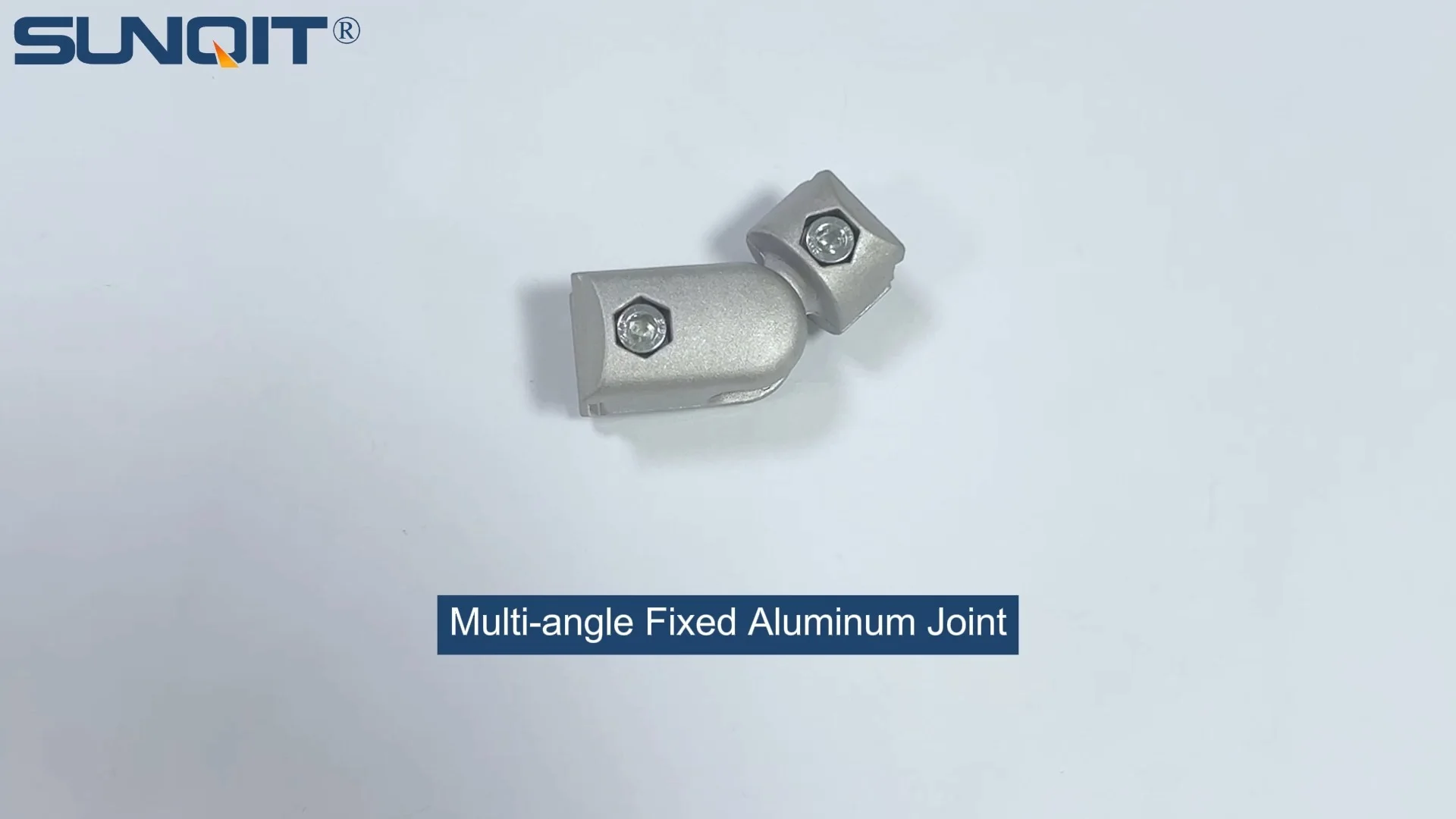
Multi-angle Fixed Aluminum Joint
Aluminum joint pipe connection for two pipe connection and work in mutiple angle.
The Unsung Hero of Your Workspace
Walk into any well-organized factory, workshop, or warehouse, and you'll notice a common thread: structures that just work. The workbenches stay steady during assembly, the flow racks glide smoothly as materials move, and the shelves hold heavy loads without so much as a creak. What's the secret behind this seamless functionality? More often than not, it's the small, unassuming components that hold everything together—like the multi-angle fixed aluminum joint.
These joints might not grab attention at first glance, but they're the backbone of modular aluminum systems. Whether you're building a custom workbench for your team, a material rack to streamline inventory, or a production line that adapts to changing needs, the right joint can make the difference between a setup that frustrates your team and one that empowers them. But not all joints are created equal. A cheap, poorly designed joint can turn even the sturdiest aluminum pipe into a wobbly mess, leading to wasted time, compromised safety, and endless headaches.
So, what should you look for when shopping for a multi-angle fixed aluminum joint? Let's dive into the key features that separate the reliable workhorses from the ones that'll leave you regretting your purchase. Along the way, we'll explore why these features matter, how they impact real-world performance, and why partnering with a trusted lean system supplier can save you from costly mistakes.
Material Matters: Why Aluminum is the Gold Standard
First things first: the material. A joint is only as strong as what it's made of, and when it comes to aluminum joints, not all aluminum is created equal. The best multi-angle fixed aluminum joints are crafted from high-grade aluminum alloys—typically 6061 or 6063—known for their winning combination of strength, lightweight, and corrosion resistance. Why does this matter? Let's break it down.
Aluminum 6061, for example, boasts excellent tensile strength (around 45,000 psi) and is heat-treatable, making it ideal for applications where durability is non-negotiable. Imagine a workbench in an automotive assembly line, where technicians are torquing bolts or hammering parts—you need a joint that can handle that constant stress without bending or warping. 6063 aluminum, on the other hand, is prized for its extrudability, which means it can be shaped into intricate joint designs with tight tolerances. This is crucial for multi-angle joints, where precision in angle alignment is everything.
But material quality goes beyond just the alloy. Look for joints that have been anodized or powder-coated. Anodization creates a protective oxide layer on the aluminum surface, boosting corrosion resistance and preventing rust—a must if your workspace is humid, dusty, or exposed to chemicals. Powder coating adds a durable, scratch-resistant finish that keeps the joint looking new and functioning smoothly for years. Cheaper joints might skip these steps, leaving them vulnerable to wear and tear that shortens their lifespan.
Compare this to joints made from low-grade aluminum or even plastic: they might save you a few dollars upfront, but they'll start to degrade quickly. A plastic joint might crack under heavy loads, while soft aluminum could bend when you tighten a bolt, throwing off the entire structure. When you're investing in a setup that's supposed to last, cutting corners on material quality is a false economy.

Precision Engineering: The Backbone of Multi-Angle Functionality
A "multi-angle" joint is only useful if those angles are precise. Think about it: if a joint is supposed to lock at 90 degrees but actually sits at 88 or 92 degrees, your entire structure will be off-kilter. Shelves won't line up, workbenches will wobble, and flow racks might jam as materials try to move along uneven surfaces. That's why precision engineering is non-negotiable.
High-quality joints are manufactured using CNC (Computer Numerical Control) machining, which ensures tolerances as tight as ±0.1mm. This level of accuracy means that whether you're building a small workbench or a large material rack with dozens of joints, every angle will match perfectly. No more "eyeballing" or forcing pieces into place—each joint will click into position, creating a stable, uniform structure.
Let's take a real-world example: a electronics manufacturer that needed to build 50 identical workbenches for their assembly line. They initially bought budget joints from a supplier that didn't prioritize precision. The result? Each workbench was slightly different—some legs were taller, others leaned to one side. Technicians complained about uneven surfaces, and quality control flagged more errors because parts didn't align properly. When they switched to joints with CNC-machined angles, the difference was night and day: every workbench was identical, assembly time dropped by 30%, and error rates plummeted.
Another thing to check is consistency across batches. Even if one joint is precise, if the next one from the same supplier is off, you'll still run into problems. Reputable manufacturers test samples from every batch to ensure angle accuracy, so don't hesitate to ask your lean system supplier about their quality control processes. A simple question like, "What's your tolerance for angle deviation?" can reveal a lot about their commitment to precision.

Load-Bearing Capacity: When Strength Can't Be Compromised
How much weight can your joint handle? It's a question that's easy to overlook—until a shelf full of parts comes crashing down. Load-bearing capacity is critical, and it's not just about the joint itself; it's about how it distributes weight across the entire structure. A quality multi-angle fixed aluminum joint should clearly state its static and dynamic load ratings. Static load is the weight it can hold when stationary (like a stack of boxes on a shelf), while dynamic load is the weight it can handle when in motion (like materials sliding along a flow rack).
Let's say you're building a material rack B (3 row and 3 floor) to store heavy automotive components. Each shelf might hold 500 pounds of parts. If your joint is rated for only 300 pounds, you're asking for trouble. Overloading a joint can lead to bending, cracking, or even complete failure—putting your team and products at risk. The best joints are tested to exceed industry standards, with load ratings that give you a comfortable margin of safety.
But load capacity isn't just about raw strength; it's about design. Look for joints with reinforced stress points—like thicker walls at the connection points or ribbed interiors—that distribute weight evenly. A well-designed joint will transfer the load from the aluminum pipe to the joint and then to the next component, rather than concentrating stress in one weak spot. For example, a joint with a 90-degree angle should have extra material at the "corner" where the two pipes meet, as that's where most of the tension will occur.
Don't make the mistake of assuming "bigger is better." A bulky joint might look strong, but if it's made from low-grade aluminum or has poor internal design, it could fail under less weight than a sleeker, well-engineered joint. Always check the manufacturer's load-testing data, and if possible, ask for a sample to test yourself. Many lean system suppliers will send a few joints for you to put through their paces—after all, they're confident in their product's performance.

Seamless Compatibility: Playing Well With Others
A joint is rarely used alone—it's part of a system. That means it needs to play nice with other components, like aluminum pipes, aluminum profile accessories, and even the tools your team uses to assemble everything. Compatibility issues can turn a simple build into a frustrating puzzle, so this is another key feature to prioritize.
Start with pipe size. Most aluminum systems use standard pipe diameters (like 28mm or 30mm), but some manufacturers cut corners by using non-standard sizes. A joint that's supposed to fit a 28mm pipe but actually has a 27.5mm opening will be loose, leading to instability. Always check that the joint's inner diameter matches your aluminum pipe's outer diameter—even a fraction of a millimeter can make a difference.
Next, consider aluminum profile accessories. These might include brackets, clamps, end caps, or even casters for mobile setups. A quality joint should have pre-drilled holes or slots that align with standard accessories, making it easy to add shelves, hooks, or wheels without custom modifications. For example, if you want to add a side shelf to your workbench, the joint should have mounting points that fit standard aluminum profile accessories, saving you from drilling holes or using makeshift solutions.
Ease of assembly is another part of compatibility. The best joints don't require special tools or advanced technical skills to install. Look for features like captive screws (so you don't lose small parts), clear alignment marks, or tool-free tightening mechanisms. Imagine a team of technicians who need to reconfigure a production line quickly—they shouldn't have to fumble with obscure tools or spend 20 minutes per joint. A joint that's compatible with common tools (like hex keys or ratchets) can cut assembly time in half.
Ease of Installation: Saving Time (and Sanity) on the Floor
Let's be honest: no one likes wrestling with complicated hardware. A joint that's a hassle to install doesn't just waste time—it frustrates your team and increases the risk of mistakes. The best multi-angle fixed aluminum joints are designed with the end user in mind, making installation straightforward and stress-free.
What does "easy installation" look like? For starters, clear instructions. Even if the joint seems simple, a quick guide with diagrams can prevent confusion. Look for joints that come with step-by-step directions, or ask your lean system supplier if they offer installation tutorials. Some suppliers even provide online videos showing how to assemble common setups, which can be a game-changer for new teams.
Tool requirements are another factor. The fewer tools needed, the better. Many high-quality joints use standard hex keys (Allen wrenches) that most workshops already have on hand. Avoid joints that require proprietary tools—if you lose that special wrench, you're stuck. Additionally, features like self-locking nuts or quick-release levers can speed up installation and make adjustments easier down the line.
Let's hear from a maintenance supervisor: "We used to install joints that required two people—one to hold the pipe, one to tighten the bolts. It took forever, and we'd often strip the threads because we couldn't get the angle right. Now we use joints with a cam-lock design—you just slide the pipe in, twist the lock, and it's secure. One person can assemble a entire workbench in 20 minutes, and we haven't stripped a single thread since." That's the power of user-friendly design.
A Quick Checklist: Features to Verify Before You Buy
| Feature | What to Look For | Why It Matters |
|---|---|---|
| Material | High-grade aluminum alloy (6061 or 6063), anodized or powder-coated finish | Ensures strength, corrosion resistance, and long lifespan |
| Angle Precision | CNC-machined with tolerances of ±0.1mm, consistent across batches | Prevents wobbling, misalignment, and uneven structures |
| Load Capacity | Clearly stated static/dynamic load ratings, reinforced stress points | Supports heavy loads without bending or failure |
| Compatibility | Fits standard aluminum pipe sizes, works with aluminum profile accessories | Saves time on assembly and avoids custom modifications |
| Installation | Tool-free or uses common tools, clear instructions, user-friendly design | Reduces assembly time and frustration for your team |
Why Partnering With the Right Supplier Makes All the Difference
At the end of the day, even the best joint is only as good as the supplier behind it. A reputable lean system supplier won't just sell you a product—they'll act as a partner, helping you choose the right components for your specific needs. They'll answer your questions, provide technical support, and stand behind their products if something goes wrong.
So, what should you ask a potential supplier? Start with their experience: "How long have you been manufacturing aluminum joints?" A supplier with decades of experience has likely refined their design and quality control processes. Next, ask about customization: "Can you modify a joint to fit our unique pipe size?" While standard joints work for most cases, a supplier that offers custom solutions shows flexibility. Finally, check their warranty: "What's your warranty on multi-angle fixed aluminum joints?" A strong warranty (like 5 years or more) is a sign they believe in their product's durability.
Remember, the cheapest option isn't always the best. A joint that costs $5 less might save you money upfront, but if it fails in six months, you'll spend far more on replacements, downtime, and repairs. Investing in quality now means fewer headaches later—and a workspace that works as hard as your team does.
Final Thoughts: Build a Structure You Can Rely On
Multi-angle fixed aluminum joints might not be the most glamorous part of your workspace, but they're essential. They're the quiet enablers of efficiency, safety, and productivity—turning simple aluminum pipes into powerful tools that help your team do their best work. By prioritizing material quality, angle precision, load capacity, compatibility, and ease of installation, you can choose joints that will stand the test of time.
So, the next time you're shopping for aluminum joints, take a closer look. Ask questions, verify specs, and don't settle for anything less than the best. Your workbench, your team, and your bottom line will thank you.