- Company Articles
- Products and Technology
- Product knowledge
- Key Features to Look for in Aluminum Pipe Adjustable Leveling Feet

Key Features to Look for in Aluminum Pipe Adjustable Leveling Feet
Related Product
Aluminum Pipe Adjustable Leveling Feet
Aluminum Pipe Adjustable Leveling Feet are designed to keep machines level when placed on uneven or sloped ground. Otherwise known as adjustable equipment feet, they are available to order in a wide variety of size and load capacity combinations.
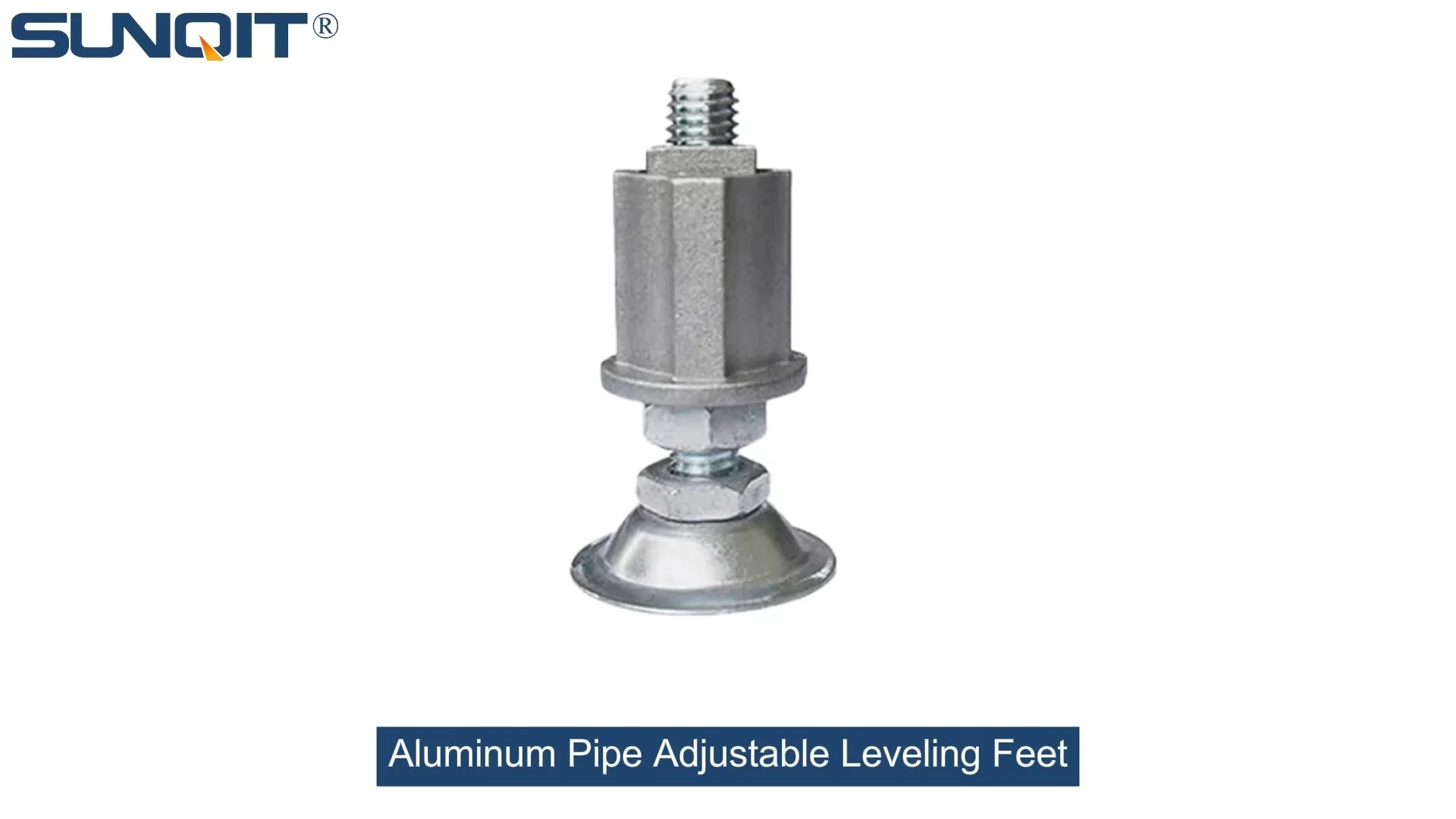
In the world of manufacturing, warehousing, and lean production systems, the smallest components often play the biggest roles in ensuring efficiency, safety, and longevity. Take, for example, the humble adjustable leveling foot—a part that quietly supports everything from workbenches and material racks to assembly lines and conveyor systems. When paired with aluminum pipe, these feet become even more critical, blending lightweight durability with precise adjustability. But not all aluminum pipe adjustable leveling feet are created equal. Whether you're setting up a new lean workstation, upgrading an existing production line, or sourcing parts for a custom material handling solution, knowing what features to prioritize can save you time, money, and headaches down the line. Let's dive into the key attributes that separate reliable, high-performance leveling feet from the rest.
1. Material Composition: Why Aluminum (and Its Alloys) Matter
At the heart of any aluminum pipe adjustable leveling foot is, of course, the material itself. Aluminum is chosen for a reason: it's lightweight, corrosion-resistant, and offers an impressive strength-to-weight ratio. But not all aluminum is the same. The best leveling feet are typically made from high-grade aluminum alloys, such as 6061 or 6063, which are known for their durability and machinability. These alloys contain trace elements like magnesium and silicon, which enhance their strength without adding excess weight—critical for applications where portability (like in turnover trolleys) or reduced structural load is a priority.
Compare this to leveling feet made from steel or plastic. Steel is strong but heavy, which can complicate setup and increase shipping costs, especially for large systems like multi-tier material racks. Plastic, while cheap, lacks the load-bearing capacity needed for heavy-duty use; a plastic foot might warp or crack under the weight of a fully loaded workbench or a pallet of components. Aluminum, by contrast, strikes that sweet spot: it's light enough to make installation manageable (even for solo workers) and tough enough to withstand the daily grind of factory floors, where vibrations, impacts, and occasional bumps are par for the course.
Another material consideration is the base plate of the leveling foot. Many models feature a rubber or polyurethane pad attached to the bottom of the aluminum base. This pad serves two key purposes: it prevents slipping (critical for stability on smooth concrete or tiled floors) and protects the floor from scratches caused by metal-on-concrete contact. Look for pads that are thick (at least 3-5mm) and made from high-density rubber—they'll last longer and provide better grip than thin, low-quality alternatives.
Pro Tip: When evaluating aluminum quality, ask suppliers about the alloy grade and whether the material is anodized. Anodization creates a protective oxide layer on the aluminum surface, boosting corrosion resistance—essential if your workspace deals with moisture, oils, or chemicals (common in automotive or food processing plants).
2. Adjustability Range: Precision for Uneven Surfaces
Walk into any factory or warehouse, and you'll quickly notice that "level" is often more of a goal than a reality. Floors settle, concrete cracks, and heavy machinery creates uneven wear patterns—all of which can throw workbenches, racks, and production lines off-kilter. This is where adjustability becomes non-negotiable. A good aluminum pipe adjustable leveling foot should offer a wide enough range of height adjustment to compensate for these imperfections, ensuring your equipment stays stable and level, no matter the surface.
So, what's a "wide enough" range? It depends on your application. For standard workbenches or lightweight material racks, a range of 10-50mm (about 0.4-2 inches) might suffice. But for heavier systems—like multi-tier flow racks or assembly stations with integrated conveyor tracks—you'll want more flexibility, ideally 30-100mm (1.2-4 inches). This extra range allows you to fine-tune even the most uneven floors, preventing wobbling that could damage products or compromise worker safety.
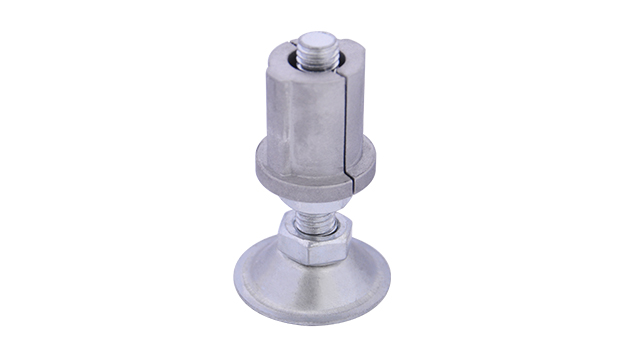
Equally important is the adjustment mechanism itself. Most leveling feet use a threaded rod design: twist the foot clockwise to raise it, counterclockwise to lower it. The quality of the threading matters here. Look for feet with precise, cleanly cut threads (preferably metric, like M12 or M16, for compatibility with standard aluminum pipe accessories) that turn smoothly without sticking. Avoid feet with rough or mismatched threads—they'll be frustrating to adjust and may seize up over time, especially if exposed to dust or debris.
Some advanced models also include a lock nut or locking collar. This small feature is a game-changer: once you've set the desired height, tighten the lock nut against the aluminum pipe or workbench leg to prevent the foot from loosening due to vibrations. In high-traffic areas or environments with constant machinery rumble, this can extend the life of your setup and reduce the need for frequent readjustments.
| Application | Recommended Adjustment Range | Key Consideration |
|---|---|---|
| Aluminum Workbench (Single Deck) | 10-30mm | Fine adjustment for ergonomic height (e.g., matching worker waist level) |
| Material Rack B (3 Row, 3 Floor) | 30-80mm | Stability for stacked inventory (prevents shelf tilting) |
| Roller Conveyor System | 50-100mm | Precision alignment to ensure smooth product flow |
3. Load-Bearing Capacity: Safety Under Pressure
Imagine this: you've just set up a brand-new aluminum lean pipe workbench, loaded it with tools, parts bins, and a 50kg assembly fixture—and the next day, one of the leveling feet buckles, sending everything crashing to the floor. Not only is this a safety hazard, but it also costs time, money, and trust in your equipment. That's why load-bearing capacity is perhaps the most critical feature to verify when choosing aluminum pipe adjustable leveling feet.
Load capacity is measured in kilograms (or pounds) per foot, and it refers to the maximum weight the foot can support without deforming or failing. This number isn't arbitrary: it's determined by the material thickness, thread strength, and base design. For example, a small foot with a thin aluminum base and M10 thread might handle 200kg, while a heavy-duty model with a reinforced base and M16 thread could support 800kg or more.
To choose the right capacity, start by calculating the total weight your system will bear, then divide by the number of feet. Let's say you're building a workbench that will hold 600kg of tools and materials, with 4 leveling feet. Each foot needs to support at least 150kg (600kg ÷ 4). But here's the catch: always add a safety margin—aim for 1.5 to 2 times the calculated weight. In this example, that means choosing feet rated for 225-300kg each. This buffer accounts for uneven weight distribution (e.g., if all tools are stacked on one corner) and unexpected impacts (like dropping a heavy part on the bench).
Don't be fooled by vague claims like "heavy-duty" or "industrial-grade." Ask suppliers for test certificates or load ratings from third-party labs. Reputable manufacturers will happily provide this data, while less scrupulous ones may dodge the question. Also, pay attention to the base size: a larger base (e.g., 80mm diameter vs. 50mm) distributes weight more evenly, reducing stress on both the foot and the floor. This is especially important for lightweight floors or surfaces like tile, where concentrated weight can cause cracking.
Warning:
Never exceed the rated load capacity. Overloading can lead to foot failure, which may result in equipment damage, product loss, or injury. If you're unsure about your needs, consult with the supplier—they can help you select the right model based on your specific application.

4. Corrosion Resistance: Longevity in Tough Environments
Aluminum is naturally resistant to corrosion, thanks to its protective oxide layer. But in harsh environments—think factories with high humidity, food processing plants with water and cleaning chemicals, or outdoor warehouses exposed to rain and salt—this natural resistance might not be enough. That's where additional corrosion-resistant features come into play, ensuring your leveling feet last for years (not months) in the field.
The most common way to boost corrosion resistance is through surface treatments. Anodization is a popular choice: it involves electrochemically thickening the aluminum's oxide layer, creating a hard, porous surface that can be dyed (for color coding) or sealed (for extra protection). Anodized leveling feet are ideal for indoor environments with moderate moisture, like beverage bottling plants or pharmaceutical labs.
For even tougher conditions—such as marine facilities or outdoor storage yards—look for feet with a powder coating. Powder coating applies a dry powder (usually polyester) to the aluminum surface, which is then baked to form a durable, chip-resistant finish. It's thicker than anodization and offers better protection against salt, UV rays, and chemicals. Some manufacturers also offer stainless steel threaded rods or base plates, though this adds weight; if aluminum is a must, opt for a powder-coated finish with a minimum thickness of 60 microns.
Don't overlook the small parts, either. The lock nut, washers, and any moving components should also be corrosion-resistant. Stainless steel lock nuts or zinc-plated hardware are good choices—they'll prevent rust from jamming the adjustment mechanism over time. In wet environments, even the rubber pad can degrade; look for pads made from EPDM or nitrile rubber, which resist water, oils, and chemicals better than standard natural rubber.

5. Compatibility with Aluminum Pipe and Accessories
Aluminum pipe adjustable leveling feet don't work in isolation—they're part of a larger ecosystem of lean system components, from aluminum profiles and joints to workbenches and material racks. For seamless integration, compatibility is key. The last thing you want is to order feet that don't fit your existing aluminum pipe or require custom adapters (which add cost and complexity).
Start with the pipe diameter. Most aluminum lean pipe systems use standard sizes: 28mm, 30mm, or 40mm outer diameter (OD). Your leveling feet should match this size—either with a built-in sleeve that slides over the pipe or a threaded insert that screws into the pipe end. For example, if you're using 30mm aluminum pipe, choose feet designed for 30mm OD; a 28mm foot will be too loose, while a 40mm foot won't fit at all.
Next, check the mounting style. Some feet thread directly into the pipe (using a threaded insert welded or glued into the pipe end), while others bolt onto the pipe via a flange or clamp. Threaded mounting is sleek and space-saving, but it requires the pipe to have internal threads (or a threaded insert). Clamp-on feet are more versatile—they work with plain-end pipes and can be repositioned if needed—but they add bulk and may require extra tools for installation.
Don't forget about accessories, either. If your system uses aluminum profile accessories like end caps, corner brackets, or panel holders, ensure the leveling feet don't interfere with these parts. For example, a foot with a large base might block the T-slot on an aluminum profile, making it impossible to attach a side panel. Similarly, if you're using casters (for mobile trolleys), the leveling feet should be compatible with caster mounting plates—some models even combine leveling feet and casters into a single unit, allowing you to switch between stationary and mobile modes.
6. Ease of Installation and Maintenance
Time is money in any production environment, and complex installation processes eat into both. The best aluminum pipe adjustable leveling feet are designed to be set up quickly, with minimal tools and no specialized training. Look for features like pre-threaded rods (so you don't have to tap the pipe yourself), easy-grip adjustment knobs (no wrench needed for fine-tuning), and clear installation instructions.
Maintenance is another factor. Over time, dust, grease, and debris can build up in the threads, making adjustment difficult. Feet with smooth, exposed threads are easier to clean than those with recessed or hidden threads. Some models also include a dust cap or boot to protect the threads when not in use—handy for storage or environments with heavy dust, like woodworking shops.
Replacement parts are important, too. What if the rubber pad wears out? Can you buy a replacement pad, or do you have to replace the entire foot? Reputable suppliers will offer spare parts like pads, lock nuts, and threaded rods, extending the life of your feet and reducing waste. Avoid "disposable" feet that can't be repaired—they'll cost more in the long run.
Conclusion: Investing in Quality for Long-Term Success
Aluminum pipe adjustable leveling feet may not be the most glamorous part of your lean system, but they're the foundation on which efficiency, safety, and productivity rest. By prioritizing material quality, adjustability, load capacity, corrosion resistance, compatibility, and ease of use, you'll ensure your setup runs smoothly for years to come—saving you from costly repairs, downtime, and frustration.
Remember, the best leveling feet are those that fit your specific needs. A small workbench in a dry office might thrive with basic, lightweight feet, while a heavy-duty conveyor system in a humid factory demands rugged, corrosion-resistant models. Take the time to calculate your load, measure your floor unevenness, and verify compatibility with your existing aluminum pipe and accessories. When in doubt, partner with a trusted aluminum pipe supplier who can guide you through the selection process—they'll have the expertise to match you with the perfect feet for your application.
In the end, quality adjustable leveling feet are more than just components—they're an investment in the reliability of your entire operation. Choose wisely, and they'll quietly support your success for years to come.