- Company Articles
- Products and Technology
- Procurement Guidelines
- Key Features to Look for When Buying Aluminum Side Guards for Material Racks

Key Features to Look for When Buying Aluminum Side Guards for Material Racks
Related Product
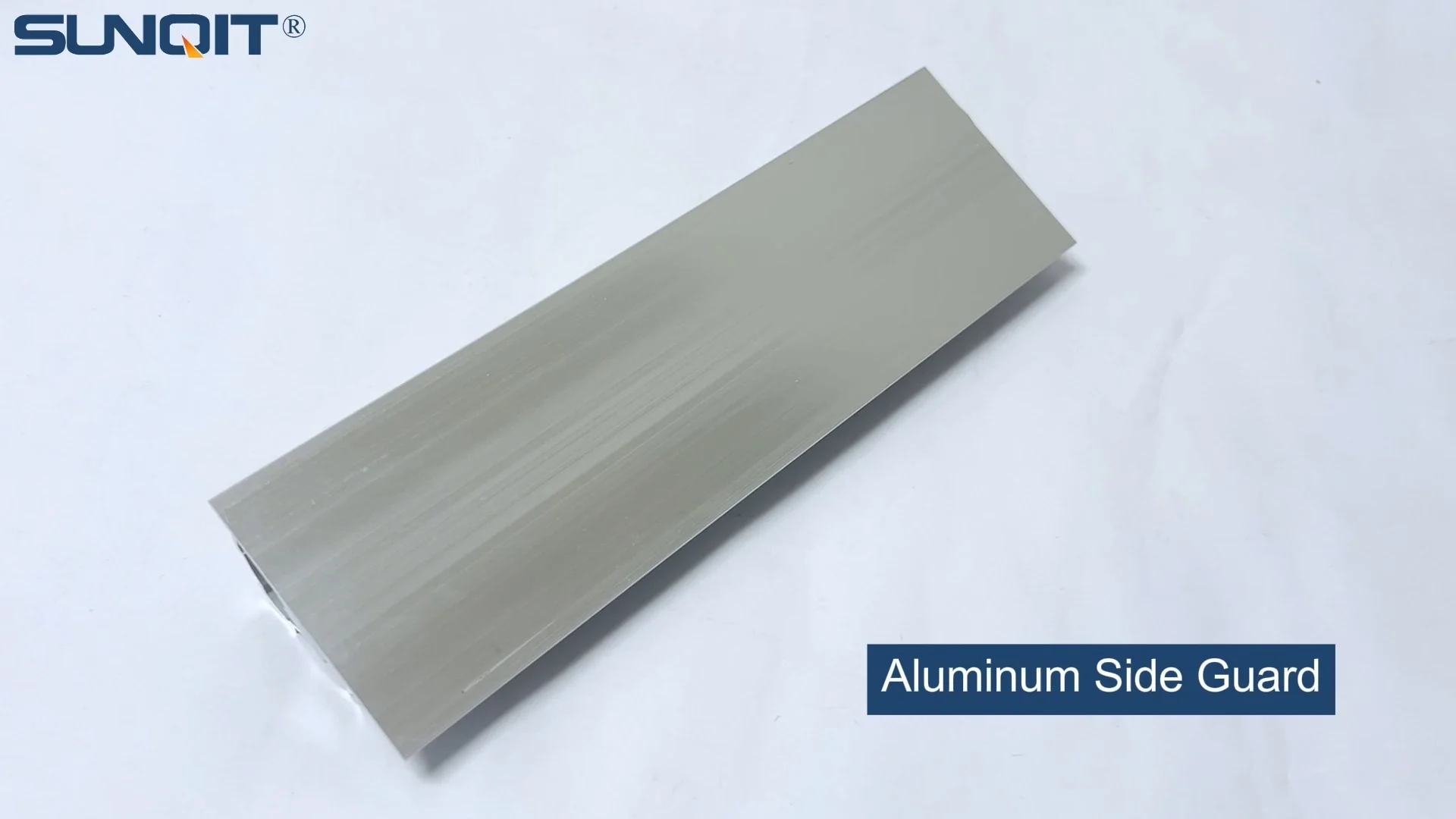
Aluminum Side Guard
Aluminum side guard, it works with a aluminum pipe or a roller track as side guard to prevent material drop,or move to wrong direction.
Walk into any warehouse, manufacturing facility, or distribution center, and you'll quickly notice the unsung heroes keeping operations running smoothly: material racks. These structures—from simple shelving units to complex multi-tier systems—are the backbone of organized storage, ensuring inventory is accessible, space is maximized, and workflows stay efficient. But if you look closer, there's a component that often flies under the radar, yet plays a critical role in protecting both your products and your team: aluminum side guards.
Consider a typical scenario: A busy production floor where material rack b (3 row and 3 floor) units are stacked with fragile components—think circuit boards, medical supplies, or precision tools. A forklift operator, rushing to meet a tight deadline, navigates a turn a little too sharply. Without reliable side guards, even a minor bump could send boxes sliding off the shelves, leading to shattered inventory, costly delays, or worse, injuries. In this context, aluminum side guards aren't just accessories; they're essential safeguards that turn a basic rack into a secure, reliable storage solution.
But not all side guards are created equal. With a market flooded with options—from flimsy plastic strips to heavy steel bars—choosing the right aluminum side guards requires careful consideration of your specific needs. Whether you're outfitting a new facility or upgrading existing material rack b (3 row and 3 floor) units, this guide will walk you through the key features that separate high-quality aluminum side guards from the rest. We'll dive into material composition, design compatibility, load capacity, and more, ensuring you invest in guards that protect your assets, streamline operations, and stand the test of time.
1. Material Quality: Why Aluminum Profile Matters
At the heart of any durable aluminum side guard is the aluminum profile itself. Aluminum is a popular choice for side guards for good reason: it's lightweight, corrosion-resistant, and offers an ideal balance of strength and flexibility. But not all aluminum profiles are suited for the demands of warehouse and manufacturing environments. To ensure your side guards can withstand daily wear and tear, pay close attention to the type and grade of aluminum used.
Most high-quality side guards are crafted from extruded aluminum profiles, a process that shapes aluminum into consistent, precise cross-sections. Extrusion ensures uniformity, which is critical for structural integrity—no weak spots or inconsistencies that could fail under pressure. Look for profiles made from 6061 or 6063 aluminum alloys, which are known for their excellent strength-to-weight ratios and resistance to corrosion. These alloys are commonly used in industrial applications because they can handle impacts from forklifts, pallet jacks, and shifting inventory without bending or cracking.
Another factor to consider is the profile's thickness. Thinner profiles (under 1.5mm) might be cheaper, but they're prone to denting or warping when exposed to heavy loads or impacts. For most material rack applications—including material rack b (3 row and 3 floor) units, which often hold multiple layers of inventory—opt for profiles with a thickness of at least 2mm. This ensures the guard can support the weight of leaning items and absorb minor collisions without compromising its shape.
Don't overlook surface treatments, either. While aluminum naturally resists rust, untreated profiles can still corrode in humid or chemical-heavy environments (like warehouses storing cleaning supplies or industrial fluids). Anodized or powder-coated finishes add an extra layer of protection, preventing oxidation and making the guards easier to clean. Powder coating also allows for color customization, which can help with visual organization—for example, yellow guards for high-traffic areas or red guards for restricted zones.
Pro Tip: Ask your supplier for material certifications. Reputable manufacturers will provide documentation confirming the aluminum grade, thickness, and finish, ensuring you're getting a product that meets industry standards for strength and durability.
2. Design Compatibility: Fitting Your Material Racks Seamlessly
Even the strongest aluminum profile won't perform well if the side guard doesn't fit your material racks properly. Material racks come in countless configurations—from standard shelving units to custom-built systems like material rack b (3 row and 3 floor)—and side guards must align with your rack's dimensions, frame design, and shelf layout to provide effective protection.
Start by measuring your racks carefully. Note the height of each shelf, the depth of the rack, and the spacing between vertical posts. Side guards that are too short won't cover the entire shelf height, leaving gaps where items can fall through. Guards that are too long, on the other hand, might overlap with adjacent racks or impede access to inventory. For material rack b (3 row and 3 floor) units, which typically have uniform shelf heights, you'll need guards that match each shelf's vertical dimensions precisely.
Next, consider the rack's frame material. Are your racks made of steel, aluminum, or a combination? Aluminum side guards are versatile, but their mounting hardware must be compatible with the rack's frame. For example, if your rack uses steel uprights, you'll need guards with steel brackets or fasteners to avoid galvanic corrosion (a reaction that occurs when dissimilar metals are in contact). Many manufacturers offer universal mounting kits, but custom solutions may be necessary for non-standard rack designs.
Modularity is another key consideration. Warehouses rarely stay static—inventory needs change, and racks are often reconfigured or expanded. Look for side guards built on a modular aluminum profile system, which allows you to adjust lengths, add extensions, or reposition guards as your storage needs evolve. Modular systems use aluminum profile accessories like connectors, brackets, and corner joints to create flexible configurations, ensuring your side guards can grow with your operation.
For example, if you later decide to add a fourth shelf to your material rack b (3 row and 3 floor) unit, a modular side guard can be extended with additional aluminum profile sections, rather than requiring a full replacement. This not only saves money but also reduces downtime during upgrades.

3. Load Capacity: Supporting Your Inventory Without Buckling
Side guards aren't just barriers—they're structural supports. When items are loaded onto a shelf, they often lean or shift, placing pressure on the guard. A guard with insufficient load capacity will bend, bow, or even detach from the rack, putting your inventory at risk. To avoid this, always check the guard's load rating before purchasing.
Load capacity is typically measured in pounds per linear foot (lb/ft) or kilograms per meter (kg/m), indicating how much weight the guard can support along its length. For material rack b (3 row and 3 floor) units, which may hold boxes, tools, or components weighing 20–50 lbs per shelf, a guard with a load capacity of 50–75 lb/ft is usually sufficient. For heavier items—like automotive parts or machinery—opt for guards rated for 100+ lb/ft.
The guard's design plays a big role in its load capacity. Solid aluminum profiles, for example, distribute weight evenly and are stronger than hollow or slotted profiles. However, hollow profiles are lighter and may be easier to install, making them a good choice for lighter loads. If you need both strength and weight savings, look for profiles with internal reinforcing ribs—these add rigidity without significantly increasing the guard's weight.
Mounting density also affects load capacity. Guards secured with brackets every 12 inches will support more weight than those mounted every 24 inches, as the brackets distribute the load across the rack frame. When installing, follow the manufacturer's guidelines for bracket spacing to ensure the guard can handle its rated capacity.
| Aluminum Profile Type | Thickness | Typical Load Capacity (lb/ft) | Best For | Pros | Cons |
|---|---|---|---|---|---|
| 2020 Aluminum Profile | 1.5mm | 30–40 | Small parts, lightweight boxes | Lightweight, affordable, easy to install | Not ideal for heavy or bulky items |
| 3030 Aluminum Profile | 2.0mm | 50–65 | Material rack b (3 row and 3 floor), medium-weight inventory | Balances strength and weight, versatile | Slightly heavier than 2020 profiles |
| 4040 Aluminum Profile | 2.5mm | 75–100+ | Heavy machinery parts, large pallets | High load capacity, durable for industrial use | More expensive, requires stronger mounting hardware |
Remember, load capacity isn't just about the guard itself—it's also about the connection to the rack. Even a heavy-duty profile will fail if mounted with weak brackets or screws. Invest in high-quality aluminum profile accessories like steel bolts, reinforced brackets, and lock washers to ensure the guard stays securely attached, even under stress.

4. Ease of Installation: Saving Time and Labor
Installing side guards shouldn't require a team of engineers or hours of downtime. In fast-paced warehouses, every minute spent on installation is time taken away from core operations. That's why ease of installation is a critical feature to prioritize—especially if you're outfitting multiple racks, like a fleet of material rack b (3 row and 3 floor) units.
Look for guards with a tool-free or minimal-tool design. Many modern aluminum side guards use snap-on or clamp-on mounting systems, which eliminate the need for drilling or welding. These systems are ideal for facilities without dedicated maintenance teams, as they allow workers to install or adjust guards in minutes. For example, some guards attach to rack shelves using adjustable clamps that tighten with a hand knob, while others slide into pre-cut slots on the rack's vertical posts.
If your racks require permanent installation, choose guards with pre-drilled holes and compatible mounting hardware. Reputable suppliers will include all necessary aluminum profile accessories—like brackets, screws, and washers—with the guard, ensuring you don't have to hunt for matching parts. Pre-drilled holes also ensure alignment, reducing the risk of installation errors that could weaken the guard's stability.
Modular designs shine here, too. Instead of purchasing a single long guard for a shelf, opt for interlocking sections that can be connected on-site. This makes transportation easier (smaller sections fit in standard vehicles) and allows for customization—if a shelf is slightly longer than standard, you can add an extra section to extend the guard. Interlocking systems also simplify repairs: if one section is damaged, you can replace just that part, rather than the entire guard.
Real-World Example: A manufacturing plant recently upgraded 50 material rack b (3 row and 3 floor) units with modular aluminum side guards. Using clamp-on brackets and interlocking profile sections, their team of two workers installed guards on all units in just one day—half the time estimated for traditional welded steel guards. The plant saved on labor costs and avoided production downtime, proving that easy installation directly impacts the bottom line.
4. Durability and Longevity: Standing Up to Daily Wear
Warehouses and manufacturing floors are tough environments. Side guards face constant abuse: bumps from pallet jacks, scrapes from loading/unloading, exposure to dust, moisture, and temperature fluctuations. A guard that fails after a few months isn't just a waste of money—it's a safety hazard. To ensure your investment lasts, prioritize durability-focused features.
Start with the aluminum profile's structural design. As mentioned earlier, profiles with internal ribs or reinforced edges are more resistant to bending and denting. Avoid guards with sharp corners or thin, protruding edges, which are prone to chipping or breaking when impacted. Instead, look for rounded edges, which distribute impact force and reduce the risk of damage.
The quality of aluminum profile accessories matters just as much as the profile itself. Cheap brackets or connectors can rust, bend, or strip over time, causing the guard to loosen. Opt for accessories made from stainless steel or zinc-plated steel, which resist corrosion, and check that screws or bolts are rated for industrial use (e.g., grade 8 steel for high-tension connections).
Consider the guard's resistance to environmental factors. In cold storage facilities, aluminum can become brittle, so look for profiles rated for low-temperature use. In humid areas, ensure the guard and accessories have corrosion-resistant finishes. For warehouses with heavy dust or debris, smooth, non-porous finishes (like powder coating) are easier to clean and less likely to trap particles that can cause abrasion over time.
Don't forget about UV resistance, either. If your racks are near windows or in outdoor storage areas, prolonged sun exposure can fade finishes and weaken plastic components (like end caps or gaskets). Choose guards with UV-stabilized finishes and accessories to prevent cracking or discoloration.
Finally, check the manufacturer's warranty. A strong warranty (5+ years) is a sign of confidence in the product's durability. Be sure to read the fine print—some warranties cover material defects but not damage from misuse, so clarify what's included before purchasing.
5. Safety Features: Protecting Workers and Inventory
At the end of the day, side guards exist to keep people and products safe. Beyond preventing items from falling, look for features that reduce injury risks and enhance overall workplace safety.
Rounded edges are a must. Sharp edges on aluminum profiles can cause cuts or bruises if a worker bumps into them. Most industrial-grade aluminum side guards have rounded or beveled edges, which minimize injury risk. Some guards even include rubber or plastic edge trim, adding a cushioning layer that further protects workers and prevents damage to inventory (e.g., preventing scratches on painted or polished items).
Visibility is another key safety feature. Guards that blend into the background can be easy to overlook, increasing the risk of collisions. High-visibility colors (like bright yellow or orange) make guards stand out, alerting forklift operators and pedestrians to the rack's presence. Reflective strips are even better for low-light areas, like warehouses with dimly lit corners or night shifts.
For racks holding small or loose items (like nuts, bolts, or electronic components), consider side guards with a mesh or slotted design. These prevent items from falling through while still allowing air circulation and visibility—workers can quickly see what's on the shelf without removing the guard. Mesh guards are also lighter than solid profiles, making them easier to install and adjust.
Finally, ensure the guard doesn't impede access to inventory. Guards that are too tall or too close to the shelf edge can make it hard to reach items, leading to strained movements or workers climbing on shelves (a major safety violation). Look for guards with a height that covers the majority of the shelf (at least 80% of the item height) but leaves enough space for easy retrieval. For example, on a material rack b (3 row and 3 floor) unit with 18-inch-tall shelves, a 12–14 inch tall guard provides ample protection without blocking access.
6. Customization: Tailoring Guards to Your Unique Needs
No two warehouses are identical. Your storage needs depend on the type of inventory, rack design, workflow, and even local safety regulations. A one-size-fits-all side guard might work for some, but custom features ensure your guards address your facility's specific challenges.
Start with length and height. Most suppliers offer custom cutting, allowing you to order guards that match your shelf dimensions exactly. For example, if your material rack b (3 row and 3 floor) unit has shelves of varying depths, you can order guards in different lengths to ensure full coverage. Custom heights are also available—some facilities need taller guards for unstable items (like stacks of paper towels) or shorter guards for low-profile inventory (like flat boxes).
Color customization goes beyond aesthetics. While safety yellow is standard, some facilities use color-coding to improve organization. For example, red guards for hazardous materials, blue guards for finished products, or green guards for raw materials. This visual system helps workers quickly identify where items belong, reducing errors and streamlining workflows.
Specialized features can address unique challenges. If your racks are in a cold storage facility, ask about guards with frost-resistant finishes. For cleanrooms or medical facilities, look for antimicrobial coatings that prevent bacterial growth. Some manufacturers even offer fire-retardant guards for facilities storing flammable materials, though these are less common for standard warehouses.
Don't hesitate to ask for custom mounting solutions, either. If your racks have unusual dimensions or non-standard posts, a reputable supplier can design brackets or adapters that ensure a secure fit. For example, a warehouse with vintage steel racks might need custom clamps to attach aluminum guards, while a facility with automated storage and retrieval systems (ASRS) might require low-profile guards that don't interfere with robotic arms.
Final Thought: Customization doesn't have to mean higher costs. Many modular aluminum profile systems are inherently customizable, allowing you to mix and match sections, accessories, and finishes without paying for fully bespoke manufacturing. Talk to your supplier about your needs—they may have off-the-shelf solutions that can be adapted to your facility.
Conclusion: Investing in Safety, Efficiency, and Peace of Mind
Aluminum side guards are more than just add-ons—they're a critical investment in your facility's safety, efficiency, and bottom line. By prioritizing material quality (look for robust aluminum profiles), design compatibility (ensuring a snug fit with your racks, like material rack b (3 row and 3 floor) units), load capacity (matching your inventory's weight), and ease of installation, you'll ensure your guards protect your assets and stand the test of time.
Remember, the cheapest option rarely pays off in the long run. A flimsy guard might save money upfront, but it will need frequent replacement and could fail when you need it most. Instead, focus on value: a high-quality aluminum side guard with the right features will reduce downtime, prevent inventory loss, and keep workers safe—all of which translate to long-term savings.
As you shop, don't hesitate to ask suppliers for samples, certifications, or references. A reputable supplier will be happy to discuss your needs, recommend solutions, and provide evidence of their product's performance. With the right side guards in place, you can focus on what matters most: running a smooth, efficient operation where your inventory is secure, and your team is protected.