- Company Articles
- Products and Technology
- Procurement Guidelines
- Key Features to Look for When Buying Flat Rigid Castor Wheels for Workstations

Key Features to Look for When Buying Flat Rigid Castor Wheels for Workstations
Related Product
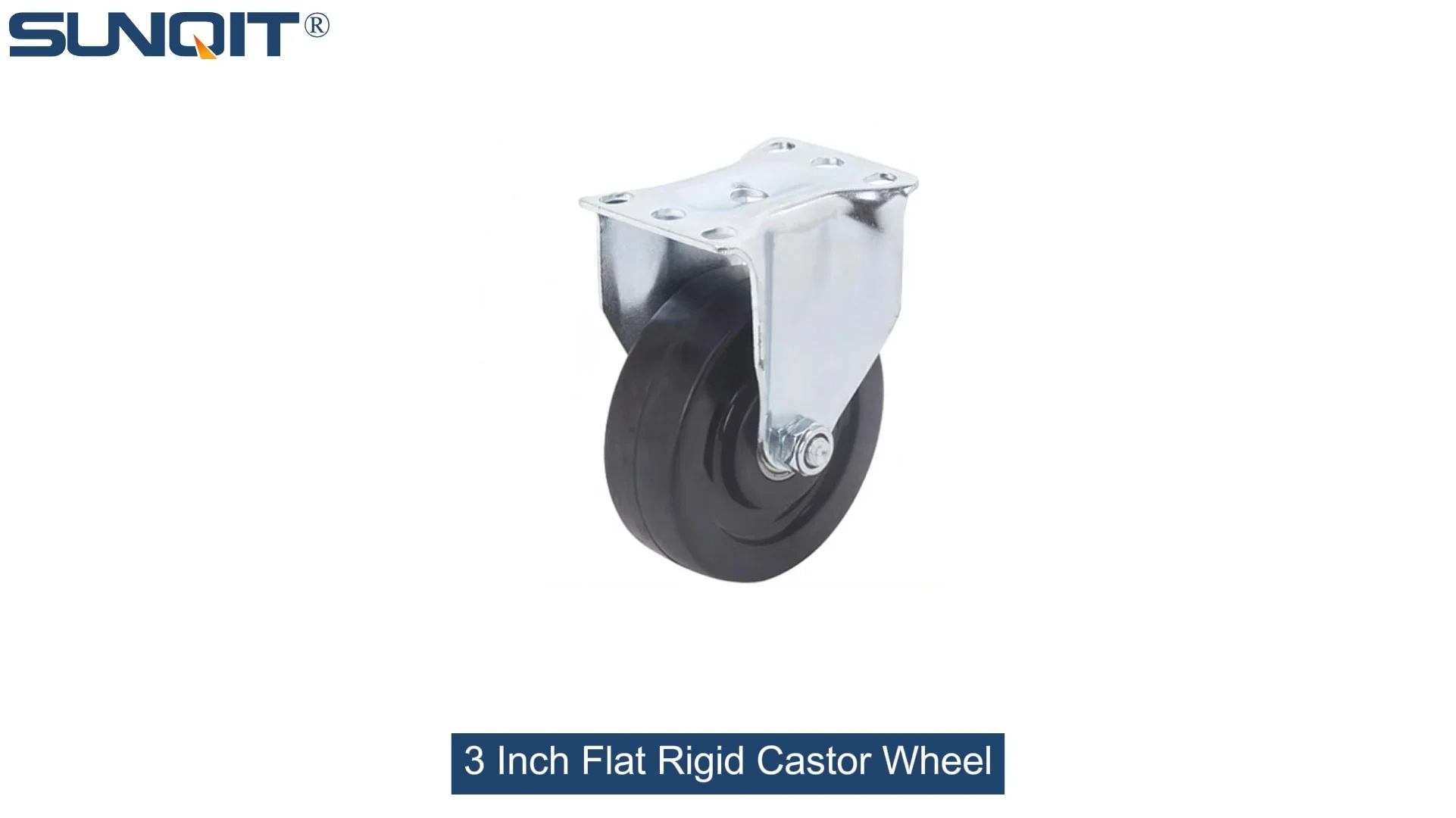
Flat Rigid Castor Wheel
Chair Casters Ball Bearing Wheels Rubber Base. Resistant to abrasion, impact and corrosion. Heavy payload can hold 70Kgs per pcs,which can make it works at a stable and smooth status.
In the bustling world of manufacturing plants, research labs, commercial kitchens, and even modern offices, workstations are the unsung heroes that keep operations running smoothly. Whether it's a sturdy workbench in an electronics assembly line, a mobile turnover trolley shuttling materials across a warehouse, or a lab station holding delicate equipment, these workspaces rely on more than just their surface area to deliver efficiency. One component that often flies under the radar but plays a critical role in their functionality is the humble castor wheel. While swivel castors get attention for their maneuverability, there's a quiet workhorse in the mix: the flat rigid castor wheel. Unlike their swiveling counterparts, flat rigid castors lock movement into a fixed direction, offering stability and control in environments where straight-line mobility is key. But choosing the right flat rigid castor wheels isn't as simple as picking the first option off the shelf. The wrong choice can lead to jamming, floor damage, premature wear, or even safety hazards. In this guide, we'll break down the essential features to consider when selecting flat rigid castor wheels for your workstations, ensuring you invest in a solution that enhances productivity, protects your space, and stands the test of time.
1. Load Capacity: The Foundation of Reliability
At the top of any castor wheel shopping list should be load capacity—and for good reason. A flat rigid castor wheel's ability to support weight isn't just a numbers game; it's about safety, durability, and preventing costly downtime. Imagine a workbench in a automotive parts workshop loaded with heavy tools, metal components, and a diagnostic machine. If the flat rigid castors beneath it are underrated for the load, every push or pull could stress the wheels, bearings, or mounting hardware, leading to cracks, bending, or even catastrophic failure. Similarly, a turnover trolley and rack used to transport bulk materials in a distribution center needs castors that can handle both the static weight (when stationary) and dynamic weight (when in motion). Overlooking load capacity isn't just a risk to the equipment; it's a risk to the operators who rely on these workstations daily.
When evaluating load capacity, it's important to distinguish between two key terms: static load and dynamic load. Static load refers to the maximum weight the castor can support when the workstation is stationary. Dynamic load, on the other hand, is the weight it can handle while in motion—this is often lower than the static load, as movement introduces additional stress from vibrations, uneven floors, and sudden stops. For example, a flat rigid castor rated for 500 lbs static load might only safely support 400 lbs when the workstation is being moved. To avoid overloading, always calculate the total weight your workstation will carry, including the weight of the workstation itself, plus tools, materials, or equipment. Then, add a 20-30% buffer to account for unexpected loads (like a sudden stack of boxes added to a turnover trolley) or uneven weight distribution. This "safety margin" ensures you never push the castor beyond its limits.
Load capacity varies widely across flat rigid castor models, so it's crucial to match the castor to the workstation's intended use. A light-duty workbench in a retail stockroom, for instance, might only need castors rated for 100-200 lbs, while an industrial turnover trolley and rack hauling heavy machinery parts could require castors rated for 1,000 lbs or more. To simplify the selection process, manufacturers often categorize castors by load class: light-duty (up to 300 lbs), medium-duty (300-750 lbs), heavy-duty (750-2,000 lbs), and extra-heavy-duty (2,000 lbs+). Be sure to check the manufacturer's specifications for both individual castor capacity and the total load when using multiple castors (most workstations use 4 castors, so total capacity is 4x the individual castor's dynamic load). Cutting corners here is a false economy—investing in a castor with a higher load rating than you initially need can extend its lifespan and prevent accidents down the line.
| Workstation Type | Typical Load Range (Dynamic) | Recommended Castor Load Class | Example Applications |
|---|---|---|---|
| Office Workbench | 50-200 lbs | Light-Duty | Printer stations, document storage |
| Lab Workstation | 200-500 lbs | Medium-Duty | Microscopes, chemical storage, lab equipment |
| Manufacturing Workbench | 500-1,000 lbs | Heavy-Duty | Tool storage, assembly parts, small machinery |
| Turnover Trolley and Rack | 1,000-2,500 lbs | Extra-Heavy-Duty | Bulk material transport, palletized goods |
2. Wheel Material: Balancing Durability and Floor Protection
Once you've nailed down load capacity, the next critical factor is wheel material. The material of a flat rigid castor's wheel dictates everything from how smoothly it rolls to how well it protects your floors and resists wear. With options ranging from rubber and polyurethane to nylon and steel, each material brings its own set of strengths and weaknesses, making it suited to specific environments. Let's break down the most common materials and how they stack up in real-world workstation scenarios.
Rubber: The Gentle Giant for Sensitive Floors
Rubber wheels are a popular choice for environments where floor protection is a priority. Their soft, flexible tread absorbs shocks and vibrations, making them ideal for smooth floors like hardwood, vinyl, or polished concrete—common in offices, retail spaces, or labs where scratches or scuffs would be costly to repair. Rubber also offers excellent traction, which is helpful for preventing workstation slippage on glossy surfaces. However, rubber has limitations: it's not the most durable option for heavy loads or rough terrain, and prolonged exposure to oils, solvents, or extreme temperatures can cause it to degrade or harden over time. For light to medium-duty workstations (like office workbenches or lab carts) on smooth floors, though, rubber wheels are a reliable, budget-friendly choice.
Polyurethane: The All-Rounder
If you're looking for a middle ground between durability and floor protection, polyurethane (PU) wheels are hard to beat. Made by coating a hard core (often nylon or metal) with a layer of polyurethane, these wheels combine the best of both worlds: the toughness of the core for heavy loads and the flexibility of the PU layer for floor safety. Polyurethane is resistant to oils, chemicals, and abrasion, making it suitable for industrial settings like manufacturing plants or warehouses. It also rolls quietly and smoothly, even over minor floor imperfections, which is a plus for noise-sensitive environments. PU wheels handle medium to heavy loads (up to 1,500 lbs per castor) and are a top pick for workbenches and turnover trolley and rack setups that need to transition between different floor types (e.g., from concrete to tile). The only downside? They're slightly pricier than rubber, but the longevity and versatility make them worth the investment.
Nylon: The Heavyweight Champion
When it comes to raw strength, nylon wheels take the crown. These hard, rigid wheels are built to handle heavy loads (often 1,000 lbs or more per castor) and thrive in tough industrial environments. Nylon is resistant to chemicals, oils, and high temperatures, making it a staple in automotive shops, metalworking facilities, and construction sites. It also rolls easily over rough surfaces like gravel or uneven concrete, where softer materials would wear down quickly. However, nylon's hardness is a double-edged sword: it offers minimal floor protection, so it's not ideal for delicate floors. It also tends to be noisier than rubber or polyurethane, which can be a drawback in quiet workspaces. For heavy-duty turnover trolley and rack systems or manufacturing workbenches loaded with machinery, though, nylon wheels are the go-to for long-term reliability.
Steel: The Industrial Workhorse
Steel wheels are the ultimate choice for extreme conditions. Made from solid steel, they're virtually indestructible, handling loads up to 5,000 lbs per castor and resisting impacts, corrosion (if galvanized), and extreme temperatures. They're commonly used in foundries, mining operations, or outdoor applications where durability is non-negotiable. That said, steel wheels are heavy, noisy, and will scratch or dent even the toughest floors, so they're overkill for most indoor workstations. Unless you're dealing with extreme heat, sharp debris, or ultra-heavy loads, steel wheels are likely more than you need—but when the going gets tough, they're the last castors standing.
Choosing the right wheel material boils down to balancing three factors: floor type, load, and environment. For smooth floors and light loads, rubber or polyurethane works best. For heavy loads and rough surfaces, nylon or steel is the way to go. And if you need versatility, polyurethane is the safe bet. Always test material compatibility with your workspace's unique conditions—for example, a lab using harsh chemicals should avoid rubber, while a retail stockroom with hardwood floors should steer clear of nylon. When in doubt, consult with a caster supplier who can recommend materials based on your specific workstation needs.

3. Wheel Diameter and Tread Width: Rolling Efficiency in a Fixed Path
While flat rigid castors don't swivel, their ability to roll smoothly in a straight line depends heavily on two often-overlooked factors: wheel diameter and tread width. These dimensions might seem minor, but they have a big impact on how easily your workstation moves, how much effort operators exert, and how well the castors handle obstacles like cracks or thresholds. Let's dive into why size matters when it comes to flat rigid castor wheels.
Wheel diameter is the distance across the wheel from one edge to the other, and it directly affects rolling resistance—the force needed to move the workstation. Larger diameter wheels (e.g., 6-8 inches) roll more easily over small obstacles like floor seams or debris because they have a higher "climbing" ability. Think of it like a bicycle: a larger wheel rolls over a rock more smoothly than a smaller one. This is especially important for flat rigid castors, which can't swivel to avoid obstacles—they have to power through them. For workstations that need to move across uneven floors (like a manufacturing plant with cracked concrete) or over thresholds (like a lab with doorways between rooms), a larger diameter wheel reduces operator fatigue and prevents the workstation from getting stuck. Smaller diameter wheels (e.g., 2-4 inches), on the other hand, are better for tight spaces or lightweight workstations where precision is key—like a mobile office workbench that needs to fit through narrow doorways. They're also lower to the ground, which can improve stability for top-heavy loads, but they require more force to roll, making them less efficient for frequent movement.
Tread width, the width of the wheel's contact surface with the floor, is equally important. A wider tread distributes the workstation's weight over a larger area, reducing pressure on the floor and lowering the risk of indentations or damage—critical for soft floors like carpet or vinyl. It also improves traction, especially on slippery surfaces, and helps prevent the wheel from sinking into gaps or cracks. For example, a turnover trolley and rack carrying bulk materials would benefit from a wider tread to stabilize the load and protect warehouse floors. Narrow treads, by contrast, are lighter and more maneuverable in tight spaces but concentrate weight, making them better suited for lightweight workstations on hard, smooth floors. When pairing diameter and tread width, a good rule of thumb is: larger diameter + wider tread = better for heavy loads and rough surfaces; smaller diameter + narrower tread = better for light loads and tight spaces. Always match these dimensions to how often the workstation moves, the type of floor it will roll on, and the obstacles it might encounter.

4. Mounting Type: Securing the Connection Between Castor and Workstation
Even the strongest, best-designed flat rigid castor wheel is useless if it can't securely attach to your workstation. That's where mounting type comes in. The way a castor is mounted to the workstation's frame or legs determines its stability, load-bearing capacity, and ease of installation. For flat rigid castors, two mounting types dominate the market: plate mount and stem mount. Each has its own advantages, and choosing the right one depends on your workstation's design and how it will be used.
Plate Mount: The Standard for Stability
Plate mount castors are the most common choice for flat rigid applications, and for good reason: they're simple, strong, and versatile. As the name suggests, these castors feature a flat metal plate (usually steel or aluminum) with pre-drilled holes, which bolts directly to the bottom of the workstation's frame. The plate distributes the load evenly across the workstation's structure, reducing stress on individual bolts and minimizing the risk of the castor detaching. Plate mount castors are ideal for workbenches, turnover trolley and rack systems, and other heavy-duty equipment with flat, sturdy bases. They're also easy to install—no special tools required, just a wrench or screwdriver to tighten the bolts. When choosing a plate mount castor, pay attention to the plate size (larger plates offer more stability) and the number of mounting holes (more holes mean a more secure attachment). Most plate mount castors come with standard hole patterns, but custom drilling may be needed for non-standard workstation frames—always measure the distance between bolt holes on your workstation before purchasing.
Stem Mount: For Tight Spaces and Custom Setups
Stem mount castors feature a metal stem (a rod or bolt) that inserts into a hole or socket on the workstation's leg or frame. They're a space-saving option for workstations with narrow legs or tubular frames, where a plate mount wouldn't fit. Stem mounts come in two varieties: threaded stems (which screw into a nut or threaded hole) and grip ring stems (which use a spring-loaded ring to lock into a pre-drilled hole). While stem mount castors are compact, they generally have lower load capacities than plate mount models, as the load is concentrated on a single point (the stem) rather than a plate. They're best suited for lightweight to medium-duty workstations, like small office carts or portable lab stations. If you opt for a stem mount, ensure the stem's diameter and length match the workstation's leg holes, and use caster accessories like locking nuts or washers to prevent loosening over time. For most flat rigid castor applications, though, plate mount is the safer, more reliable choice—especially for heavy loads or industrial environments.
In addition to the mounting type itself, don't overlook the quality of the mounting hardware. Cheap bolts or screws can shear under load, leading to castor failure. Always use the hardware provided by the castor manufacturer, or upgrade to high-strength bolts (grade 5 or higher) for heavy-duty applications. If your workstation's frame is made of wood or plastic, reinforce the mounting area with metal plates or inserts to prevent the wood from splitting or the plastic from cracking. A secure mount isn't just about installation—it's about ensuring the castor and workstation work as a single unit, even under stress.

5. Caster Accessories: Enhancing Performance and Longevity
While the castor wheel itself is the star of the show, caster accessories play a supporting role that shouldn't be ignored. These small but mighty add-ons can enhance performance, extend the life of your castors, and customize them to your workstation's unique needs. From brakes and floor locks to bearing upgrades and replacement parts, investing in the right accessories can turn a good castor into a great one.
One of the most useful accessories for flat rigid castors is a floor lock or brake. While flat rigid castors don't swivel, they can still roll unexpectedly on inclines or uneven floors. A floor lock (a metal pad that presses against the floor when engaged) or a wheel brake (which clamps onto the wheel to stop rotation) keeps the workstation stationary when needed, preventing accidents. For workbenches used in assembly or lab work, where stability during use is critical, a brake is a must-have. Other accessories include bearing covers (to protect against dust and debris, extending bearing life), replacement wheels (allowing you to swap out worn wheels without replacing the entire castor), and mounting plates (for retrofitting stem mount workstations to use plate mount castors). When shopping for castors, ask your supplier about compatible accessories—they can often bundle them with the castors for a better price, and they'll ensure everything works together seamlessly.
Conclusion: Investing in Workstation Success
Flat rigid castor wheels may not be the most glamorous part of your workstation, but they're undeniably essential. From supporting heavy loads and protecting floors to ensuring smooth, straight-line mobility, these unassuming components play a vital role in keeping your operations efficient, safe, and productive. By prioritizing load capacity, wheel material, diameter and tread width, mounting type, and caster accessories, you can select flat rigid castors that meet your workstation's unique needs—whether it's a light-duty office workbench or a heavy-duty turnover trolley and rack in a manufacturing plant. Remember, the best castor isn't the cheapest or the most feature-packed; it's the one that aligns with your workspace, your load, and your long-term goals. So take the time to evaluate your needs, consult with a reputable caster supplier, and invest in quality. Your workstation (and your operators) will thank you.