- Company Articles
- Products and Technology
- Product knowledge
- Key Features to Look for When Buying Parallel Lean Pipe Joints

Key Features to Look for When Buying Parallel Lean Pipe Joints
Related Product
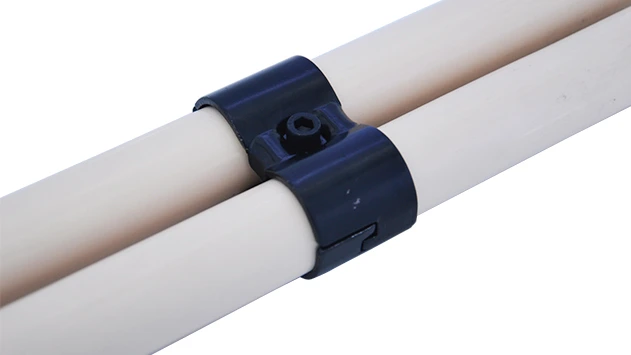
Parallel Lean Pipe Joint
Parallel lean pipe joint used for 2 pcs 28MM lean pipe connection in parallel direction to enhance frame structure, usually for heavy payload requirement for workbench. flow rack, hand trolley.
If you've ever stepped foot in a manufacturing plant, warehouse, or even a small workshop, you've likely seen the backbone of efficient operations: lean systems. These systems—composed of workbenches, flow racks, conveyors, and other modular structures—rely on one yet critical component: the parallel lean pipe joint. These small connectors are the unsung heroes that hold everything together, ensuring stability, flexibility, and adaptability in dynamic work environments. But not all parallel lean pipe joints are created equal. Whether you're setting up a new assembly line, upgrading an existing workbench, or sourcing parts for a lean solution, knowing what to look for in these joints can mean the difference between a system that runs like a well-oiled machine and one that constantly breaks down, slows productivity, or even risks worker safety. In this guide, we'll walk through the key features you need to consider to make an informed purchase, drawing on real-world scenarios and industry best practices.
1. Material Quality: The Foundation of Reliability
The first thing to inspect when evaluating parallel lean pipe joints is the material they're made from. This isn't just about durability—it impacts everything from load capacity to corrosion resistance, and even the overall weight of your lean system. Let's break down the most common materials and what they bring to the table.
Aluminum Lean Pipe Joints: Lightweight and Versatile
Aluminum has become a go-to material for modern lean systems, and for good reason. Aluminum lean pipe joints are significantly lighter than their steel counterparts, making them ideal for applications where mobility is key—think workbenches on caster wheels or turnover trolleys that need to be moved around the shop floor. But don't let their light weight fool you: high-grade aluminum alloys (often paired with internal reinforcements) offer impressive strength, able to support the daily wear and tear of manufacturing environments. They're also naturally resistant to rust and corrosion, which is a huge plus in humid or damp settings, such as food processing facilities or warehouses near coastal areas. If your operation uses aluminum lean pipe or aluminum profile structures, aluminum joints are a no-brainer for seamless compatibility.
Steel Joints: Heavy-Duty Strength
For applications that demand maximum load capacity—like material racks holding heavy components or flow racks supporting large batches of goods—steel parallel lean pipe joints are often the preferred choice. Hot-dipped galvanized steel or stainless steel variants (like those in the stainless steel pipe series) excel in high-stress environments, resisting bending and warping even under constant pressure. However, steel joints add weight to the system, so they're best suited for stationary setups, such as fixed workbenches or permanent material storage racks. Keep in mind that non-stainless steel joints may require regular maintenance (like painting or coating) to prevent rust, especially in industrial settings with exposure to chemicals or moisture.
Plastic and Composite Joints: Cost-Effective but Limited
Plastic or composite parallel lean pipe joints are often marketed as budget-friendly options, and while they can work for light-duty tasks (e.g., small parts storage racks or temporary workstations), they come with trade-offs. These materials are prone to cracking under heavy loads or temperature fluctuations, and they lack the structural integrity needed for long-term use in high-traffic areas. Unless you're building a temporary lean solution with minimal stress, it's usually worth investing in metal joints for longevity.
| Material Type | Key Advantages | Best For | Potential Drawbacks |
|---|---|---|---|
| Aluminum (Alloy) | Lightweight, corrosion-resistant, compatible with aluminum lean pipe | Movable workbenches, turnover trolleys, humid environments | Lower load capacity than steel |
| Stainless Steel | High strength, rust-proof, ideal for heavy loads | Fixed material racks, industrial workbenches, food/chemical settings | Heavy; more expensive than aluminum |
| Galvanized Steel | Durable, cost-effective for static systems | Permanent storage racks, low-moisture environments | Prone to rust if coating is damaged |
| Plastic/Composite | Low cost, lightweight | Temporary setups, light-duty tasks | Poor durability; limited load capacity |
2. Load Capacity: Matching Joints to Your Workload
Imagine this: You've just installed a new flow rack using budget parallel lean pipe joints, only to have it collapse under the weight of your products during peak production. Not only does this disrupt workflow, but it also risks damaging inventory and endangering employees. That's why load capacity is non-negotiable when selecting joints. Every manufacturer should provide a maximum load rating (usually in kilograms or pounds) for their joints, indicating how much weight they can safely support under normal conditions. But here's the catch: this rating isn't just about the joint itself—it's about how it interacts with the lean pipe, connectors, and the overall structure. For example, a joint rated for 200kg might only safely hold 150kg if paired with thin-walled lean pipe or low-quality accessories.
To avoid overloading, start by calculating the total weight your system will bear. If you're building a workbench, factor in the weight of tools, materials, and even the operator. For flow racks, consider the average weight of the products being stored, plus the dynamic stress of items being loaded and unloaded. Always choose joints with a load capacity that exceeds your calculated needs by at least 20%—this "safety margin" accounts for unexpected stress, such as accidental impacts or uneven weight distribution. Reputable lean pipe suppliers will often provide load-testing data or certification, so don't hesitate to ask for proof before purchasing.

3. Ease of Installation and Adjustability: Modularity Matters
One of the biggest benefits of lean systems is their modularity—they're designed to be easily reconfigured as your needs change. A parallel lean pipe joint that's a hassle to install or adjust undermines this flexibility. So, what makes a joint "easy" to work with? Look for features like tool-free assembly (e.g., twist-lock mechanisms or quick-release levers), clear alignment markers, and standardized sizing that fits common lean pipe diameters (typically 28mm for standard lean pipe or 40mm for aluminum profile). For example, internal rotary aluminum joints allow for 360-degree rotation during setup, making it simple to adjust the angle of pipes without disassembling the entire structure. Similarly, joints with pre-threaded holes or built-in clamps (like aluminum pipe clamps) save time during installation, reducing downtime for your team.
Avoid joints that require specialized tools or complex tightening procedures. In fast-paced environments, every minute spent fumbling with a wrench or aligning misfit parts is a minute lost to productivity. Modular joints should also allow for quick disassembly—say, if you need to reconfigure a workbench from a single-deck to a double-deck setup or repurpose a flow rack into a turnover trolley. The best joints feel intuitive to use; even a new employee should be able to assemble or adjust them with minimal training.

4. Compatibility with Lean Pipe and Accessories
A parallel lean pipe joint is only as good as its ability to work with the rest of your lean system. Before buying, confirm that the joint is compatible with your existing (or planned) lean pipe, aluminum profile, and accessories. For instance, if your facility uses 28mm pe-coated lean pipe, a joint designed for 30mm aluminum pipe won't fit, leading to wobbly structures or stripped threads. Most reputable suppliers (like established lean pipe suppliers) will clearly list compatible pipe diameters and profile types (e.g., 4040 aluminum profile, 3030 aluminum profile) in their product specs—always double-check these details.
Compatibility extends beyond pipes, too. If your system includes roller tracks, caster wheels, or material racks, the joints should integrate seamlessly with these components. For example, a parallel lean pipe joint with a built-in bracket for roller track placon mounts can simplify the installation of a flow rack, ensuring the rollers align perfectly with the pipe structure. Similarly, joints with threaded holes for caster accessories make it easy to add mobility to a workbench by attaching caster wheels. Incompatible joints can lead to gaps, misalignments, or weak points in the system—all of which compromise safety and efficiency.
5. Durability: Standing Up to the Daily Grind
In a busy manufacturing or warehouse setting, parallel lean pipe joints take a beating. They're bumped by forklifts, exposed to oils and chemicals, and subjected to constant vibration from machinery. A durable joint should withstand this punishment without degrading. Look for features like reinforced stress points (e.g., 45° reinforce aluminum pipe joints), smooth edges to prevent wear on pipe coatings, and high-quality threading that resists stripping, even after repeated assembly and disassembly. For example, joints with cold-forged or machined threads (instead of cast threads) are less likely to strip when tightened, ensuring a secure fit every time.
Environmental factors also play a role. If your operation is in a high-temperature area (like a foundry) or a cold storage facility, the joint material should maintain its strength across temperature extremes. Stainless steel and aluminum joints typically handle these conditions well, while plastic joints may become brittle or warp. Additionally, consider the finish: powder-coated or anodized aluminum joints are more resistant to scratches and corrosion than bare metal, extending their lifespan.
6. Supplier Reliability: The Hidden Factor in Quality
Even the most well-designed parallel lean pipe joint is only as good as the supplier behind it. Choosing a reputable lean pipe supplier isn't just about getting a quality product—it's about ensuring consistency, accountability, and support. A reliable supplier will have strict quality control processes in place, testing each batch of joints for load capacity, dimensional accuracy, and material integrity. They'll also provide clear documentation, including material certifications, load ratings, and compatibility guides. Avoid suppliers that offer vague specs or refuse to share test data—this is often a red flag for subpar products.
Customer support is another key factor. What happens if a batch of joints arrives with defects? A good supplier will offer prompt replacements or refunds, minimizing disruption to your operations. They may also provide technical assistance, helping you select the right joints for your specific application (e.g., advising on whether aluminum or steel is better for your workbench). Established suppliers often have a track record of working with businesses in your industry, so don't hesitate to ask for references or case studies. Remember: the cheapest joint isn't a bargain if it fails in six months—investing in a trusted supplier pays off in fewer replacements, less downtime, and a safer work environment.
Conclusion: Investing in the Right Joints for Long-Term Success
Parallel lean pipe joints may seem like small components, but they're the glue that holds your lean system together. By prioritizing material quality, load capacity, ease of installation, compatibility, durability, and supplier reliability, you can ensure your lean system runs efficiently, safely, and adaptably for years to come. Whether you're building a new workbench, upgrading a flow rack, or scaling your entire production line, taking the time to evaluate these features will save you from costly mistakes and keep your operations running smoothly. After all, in the world of lean manufacturing, every detail counts—and that includes the joints that keep everything in place.