- Company Articles
- Products and Technology
- Product knowledge
- Key Features to Prioritize in Industrial Suction Cup Anti-Slip Foot Adjusters

Key Features to Prioritize in Industrial Suction Cup Anti-Slip Foot Adjusters
Related Product
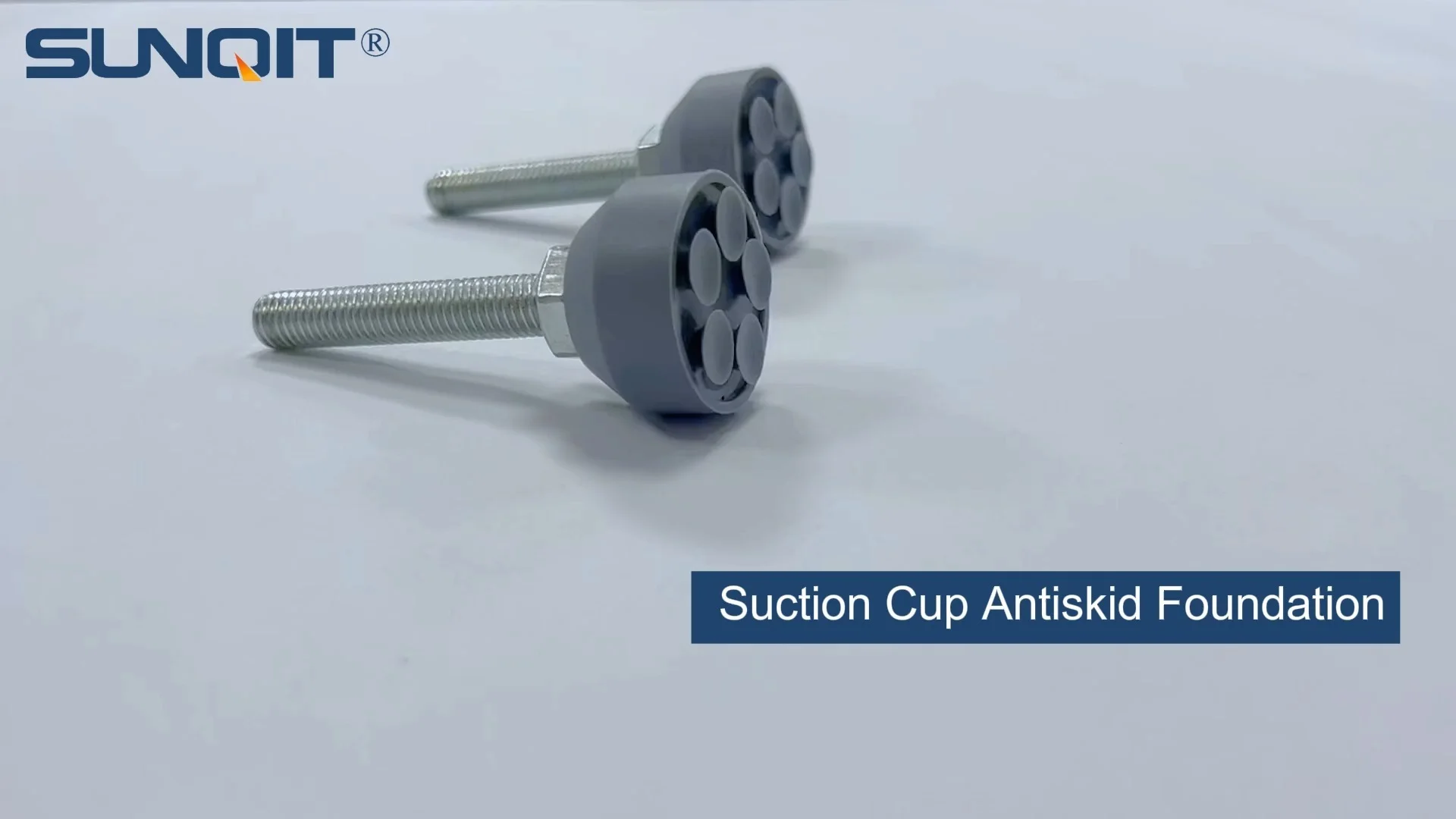
Suction Cup Anti-slip Foot Adjuster
D=35mm suction cup anti-slip foot adjusterï¼screw M10*55ï¼with a blot, used for workbench, flowrack pipe contact with groud.
Walk into any manufacturing plant, warehouse, or assembly facility, and you'll notice a common unsung challenge: the floor. It's rarely perfectly level. Cracks, uneven concrete, or even minor slopes can turn a stable workbench into a wobbly hazard, a precision assembly line into a source of errors, and a material rack into a tipping risk. In these environments, where safety and efficiency are non-negotiable, the right equipment foundations matter—and that's where industrial suction cup anti-slip foot adjusters come into play.
These small but mighty components are the quiet problem-solvers of the industrial world. They anchor everything from workbenches to production machinery, ensuring stability on uneven surfaces, reducing vibration, and preventing dangerous slips. But not all foot adjusters are created equal. To truly protect your team, your equipment, and your bottom line, you need to know which features to prioritize. Let's dive into the critical factors that separate a reliable foot adjuster from one that might fail when you need it most.
1. Material Durability: The Foundation of Longevity
When it comes to industrial equipment, "good enough" doesn't cut it. Your suction cup anti-slip foot adjusters will face daily wear and tear: exposure to oils, coolants, chemicals, heavy loads, and constant pressure. The materials used in their construction directly determine how well they'll hold up over time.
Suction Cup Material: Rubber Compounds That Conform and Endure
The suction cup is the heart of the adjuster—it's what creates the grip that prevents slipping. Most high-quality models use synthetic rubber compounds, but not all rubbers are the same. Look for options with a Shore A hardness rating between 60-70. This range strikes a balance: soft enough to conform to minor floor irregularities (like small cracks or texture) but firm enough to maintain shape under heavy loads. Avoid overly soft rubbers (below 50 Shore A), which can tear or degrade quickly, or overly hard ones (above 80 Shore A), which won't seal well on imperfect surfaces.
Additionally, check if the rubber is resistant to common industrial substances. Oil-resistant (nitrile-based) or chemical-resistant (EPDM) rubbers are ideal for factories where lubricants or cleaning agents are present. A rubber that breaks down when exposed to hydraulic fluid or degreaser won't last a month in an automotive plant—and that's a risk you can't afford.
Adjuster Body: Strength Without the Weight
The part of the foot adjuster that connects the suction cup to your equipment (often a threaded rod or base plate) needs to handle both vertical loads and lateral stress. Here, aluminum and steel are the go-to materials, each with trade-offs. Steel is incredibly strong—great for heavy machinery like conveyor systems or large material racks—but it's prone to rust if not coated. Aluminum, on the other hand, offers a lighter weight (critical for mobile setups like turnover trolleys) and natural corrosion resistance, making it a favorite for cleanrooms or facilities with high humidity.
Many manufacturers now blend these materials: an aluminum base for corrosion resistance paired with a steel threaded rod for added strength. This hybrid design works well for medium-duty applications, like workbenches or aluminum profile-based assembly stations. Whatever material you choose, ensure the adjuster body is rated for at least 1.5 times your expected maximum load—industrial environments are unpredictable, and over-engineering here prevents catastrophic failure.
2. Suction Cup Design: More Than Just a "Sticky" Surface
A suction cup's job isn't just to "stick"—it needs to create a reliable seal that withstands movement, vibration, and even minor impacts. The design of the cup itself plays a huge role in this. Let's break down the key design elements to watch for.
Cup Shape: Dome vs. Flat Profiles
Most suction cups fall into two categories: dome-shaped or flat. Dome-shaped cups (curved inward) are excellent for uneven floors. When pressure is applied, the dome collapses slightly, spreading the contact area and conforming to bumps or grooves. They're a top choice for older facilities with cracked or textured concrete. Flat cups, by contrast, excel on smooth surfaces like polished concrete or epoxy floors. Their larger, flatter contact area creates a stronger initial seal, making them ideal for precision equipment where even the smallest shift can ruin a product.
Some advanced models combine both: a flat outer edge for stability and a domed center for flexibility. These "hybrid" cups are versatile enough to work in mixed environments—say, a factory with both smooth assembly lines and rough storage areas.
Rim and Lip Design: Preventing Air Leaks
A suction cup's rim (the outer edge) is where the seal is made. Look for cups with a reinforced, beveled rim. This design ensures the edge stays in contact with the floor even when the cup is under load, preventing air from seeping in and breaking the seal. Avoid cups with thin, flexible rims—they can fold under pressure, creating gaps that reduce grip.
Some cups also feature a "micro-suction" lip: tiny grooves or channels on the inner surface that trap air and enhance adhesion. These are particularly useful in humid environments, where moisture might otherwise weaken the seal. Think of it like the tread on a tire—those small details make a big difference in performance.

3. Adjustability Range: Adapting to the Floor You Have (Not the One You Wish You Had)
Industrial floors are rarely level, and even minor unevenness can throw off equipment stability. A foot adjuster's adjustability range—the distance it can extend or retract to compensate for height differences—is crucial. But how much range do you really need?
For most workbenches or small material racks, an adjustment range of 10-30mm (0.4-1.2 inches) is sufficient. This handles common floor variations, like a 20mm slope across a 10-foot workbench. For larger equipment, such as conveyor systems or heavy-duty production lines, aim for 30-50mm (1.2-2 inches). These setups often span longer distances, increasing the chance of encountering significant height differences.
The adjustment mechanism itself also matters. Threaded rods are the most common—twist the adjuster to raise or lower the cup. Look for coarse threads (fewer threads per inch) for faster adjustments, and a locking nut to secure the position once set. This prevents the adjuster from loosening over time due to vibration—a common issue in high-speed manufacturing environments.

4. Load Capacity: Matching the Adjuster to the Job
There's no one-size-fits-all when it comes to load capacity. A foot adjuster rated for 200kg might work for a small workbench but will buckle under a 500kg material rack. Always check the manufacturer's load rating—and remember: this is per adjuster, not per piece of equipment. For example, a workbench with four adjusters rated at 300kg each can safely support up to 1200kg (assuming the weight is evenly distributed).
But don't just take the rating at face value. Look for adjusters tested under dynamic loads, not just static ones. In industrial settings, equipment often experiences sudden jolts—like when a heavy part is dropped onto a workbench or a conveyor starts and stops. A adjuster that handles 500kg statically might fail at 300kg dynamically if it's not built to absorb shock. Reputable manufacturers will include both static and dynamic load ratings in their specs—prioritize these.
Real-World Example: The Cost of Underestimating Load
Consider a scenario: A factory installs a new assembly workbench with four foot adjusters rated for 250kg each (total 1000kg). The workbench itself weighs 200kg, and workers regularly place 500kg of parts on it—well under the 1000kg limit. But one day, a forklift accidentally bumps the workbench, creating a sudden 300kg lateral force. If the adjusters aren't rated for dynamic loads, the suction cups might slip, causing the workbench to tip. This isn't just a safety risk; it could damage thousands of dollars in parts and halt production. Investing in adjusters with higher dynamic load ratings upfront prevents these costly accidents.

5. Compatibility: Fitting Seamlessly Into Your Existing Setup
Your new foot adjusters won't work in a vacuum—they need to attach to your existing equipment. Whether you're using lean pipe workbenches, aluminum profile racks, or stainless steel conveyor frames, compatibility is key. Here's what to check:
Thread Size and Mounting Options
Most industrial equipment uses standard threaded mounts, like M10 or M12 bolts. Check the mounting holes on your workbench or machinery—if they're M10, an M12 adjuster won't fit without drilling new holes (a time-consuming and unnecessary hassle). Some adjusters come with interchangeable threaded inserts, allowing you to switch between sizes (e.g., M8 to M12) without replacing the entire unit. This flexibility is a lifesaver if you have a mix of equipment from different manufacturers.
For equipment without threaded mounts, look for plate-style adjusters. These have a flat base with pre-drilled holes, allowing you to bolt them directly to frames or feet. They're common in older machinery or custom-built workbenches made with lean pipe and accessories, where standard threads might not be present.
Integration with Lean Systems
If your facility uses lean manufacturing principles—relying on modular setups like lean pipe workbenches or aluminum profile racks—compatibility becomes even more critical. Lean systems thrive on adaptability; you might reconfigure a workbench one month and repurpose it the next. Foot adjusters for lean setups should be easy to install and remove, with quick-release mechanisms or tool-free adjustments. Look for models designed to work with standard lean pipe joints or aluminum profile accessories, ensuring they fit seamlessly into your existing modular ecosystem.
| Equipment Type | Recommended Adjuster Type | Key Compatibility Features |
|---|---|---|
| Lean Pipe Workbench | Plate-style with M10 threads | Fits standard lean pipe joint mounts |
| Aluminum Profile Rack | Threaded rod with T-slot adapter | Slides into aluminum profile T-slots for tool-free installation |
| Heavy-Duty Conveyor | Reinforced steel base with M12 threads | Dynamic load rating >500kg per adjuster |
| Mobile Turnover Trolley | Swivel-style with locking nut | Lightweight aluminum body; compatible with caster wheel mounts |
6. Environmental Resistance: Thriving in Harsh Conditions
Industrial environments are rarely "clean" or "mild." From freezing cold warehouses to humid food processing plants, your foot adjusters need to perform in conditions that would break lesser components. Here's what to prioritize for specific environments:
Temperature Extremes: Avoiding Brittle Rubber or Melted Seals
If your facility operates in extreme temperatures—like a freezer storage area (-20°C) or a foundry (80°C+)—standard rubber cups will fail. For cold environments, look for cups made with silicone rubber, which remains flexible down to -60°C. In high heat, EPDM rubber is a better choice; it resists degradation up to 150°C. For temperatures beyond that (e.g., near furnaces), consider metal-capped adjusters with heat-resistant ceramic suction cups—though these are specialized and more costly.
Chemical Exposure: Fighting Oils, Solvents, and Acids
Factories that use oils, coolants, or cleaning solvents need adjusters with chemical-resistant materials. Nitrile rubber cups stand up well to petroleum-based oils and greases, making them ideal for automotive or machinery shops. For acidic environments (like battery manufacturing or plating facilities), PTFE-coated cups are a must—PTFE is nearly inert and resists most acids and alkalis. Even the adjuster body matters here: steel can corrode in chemical-heavy areas, so opt for stainless steel or anodized aluminum bodies to prevent rust.
7. Ease of Installation and Maintenance: Saving Time (and Sanity)
In a busy industrial setting, downtime is expensive. The last thing you need is a foot adjuster that takes an hour to install or requires specialized tools to maintain. Prioritize models that balance durability with user-friendliness.
Tool-Free Adjustments
Look for adjusters with large, knurled adjustment nuts or hand wheels. These allow workers to raise or lower the cup without wrenches or screwdrivers—critical for quick reconfigurations or on-the-fly leveling. Some even have built-in bubble levels, taking the guesswork out of ensuring the equipment is perfectly flat.
Low-Maintenance Design
Maintenance should be minimal. Suction cups will collect dust and debris over time, which can weaken the seal. Models with removable cups make cleaning easy—simply pop off the cup, rinse it with water, and snap it back on. Avoid adjusters with glued-on cups; once the glue fails (and it will, over time), the entire unit needs replacement. Instead, choose cups attached with mechanical fasteners (like screws or clips) for easy replacement.
The adjuster body should also be easy to inspect. Look for corrosion-resistant finishes (like powder coating or anodization) that hide minor scratches and make visual checks faster. A quick glance should tell you if there's rust, bent threads, or damage—no need for disassembly.
8. Real-World Performance: Why These Features Matter in Practice
At the end of the day, specs on a page don't mean much if the adjuster fails when put to the test. Let's look at a real scenario where prioritizing these features made all the difference.
Case Study: A Automotive Parts Plant Reduces Accidents by 40%
A mid-sized automotive parts manufacturer was struggling with frequent near-misses: workbenches shifting during assembly, causing tools to fall, and material racks tipping when loaded. Their old foot adjusters were generic, with hard plastic cups that slipped on oily floors and steel bodies that rusted quickly. After evaluating their needs—uneven concrete floors, exposure to motor oil, and dynamic loads from dropped parts—they switched to suction cup adjusters with nitrile rubber cups (Shore A 65), dome-shaped design, and stainless steel bodies with M10 threads. Within three months, equipment-related accidents dropped by 40%, and workers reported feeling more confident and productive at their stations. The key? They prioritized material compatibility (nitrile for oil resistance), suction cup design (dome-shaped for uneven floors), and load capacity (dynamic rating of 300kg per adjuster) to match their specific environment.
Conclusion: Investing in Safety and Efficiency
Industrial suction cup anti-slip foot adjusters might not be the most glamorous equipment in your facility, but they're foundational to safety, precision, and productivity. By prioritizing material durability, suction cup design, adjustability, load capacity, compatibility, environmental resistance, and ease of use, you're not just buying a component—you're investing in a safer workplace, fewer disruptions, and a more efficient operation.
Remember, the best adjuster for your needs depends on your unique environment: the type of equipment you use, the condition of your floors, the substances your adjusters will face, and the loads they'll bear. Take the time to assess these factors, and don't settle for generic "one-size-fits-all" models. Your team, your equipment, and your bottom line will thank you.