- Company Articles
- Products and Technology
- Product knowledge
- Key Functions of 2020 Aluminum Profile End Caps in Lean Manufacturing

Key Functions of 2020 Aluminum Profile End Caps in Lean Manufacturing
Related Product
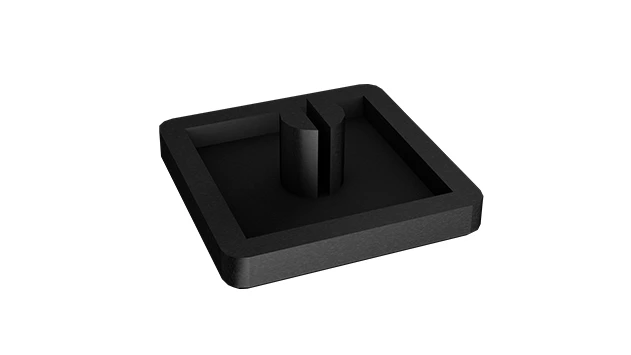
2020 Aluminum Profile End Cap
The aluminum profile end cap adds a finishing touch to your project and closes off profile ends to limit dust and debris buildup, also it can avaid some scratch for material and labor during the assemble work.
In the fast-paced world of manufacturing, where every second counts and efficiency is the cornerstone of success, lean manufacturing has emerged as more than just a methodology—it's a mindset. At its core, lean manufacturing is about eliminating waste, optimizing workflows, and creating value at every step. While much attention is paid to large machinery, automated systems, and complex workflows, some of the most critical contributors to lean success are the smallest components. Today, we're shining a spotlight on one such unsung hero: the 2020 aluminum profile end cap. Though tiny in size, this unassuming accessory plays a pivotal role in maintaining the integrity, safety, and efficiency of aluminum profile-based lean systems, from workbenches to material racks and beyond. Let's dive into why these small caps deserve a seat at the table in any conversation about lean excellence.
Understanding 2020 Aluminum Profiles: The Backbone of Modern Lean Systems
Before we explore the end caps, it's essential to understand the foundation they protect: 2020 aluminum profiles. These profiles are part of a broader family of aluminum extrusion profiles—hollow, lightweight structures with a consistent cross-section, designed for modular assembly. The "2020" designation refers to their dimensions: 20mm in width and 20mm in height, making them ideal for medium-duty applications in lean systems.
Aluminum profiles like the 2020 series have become the backbone of modern manufacturing setups for several reasons. They're lightweight yet surprisingly strong, resistant to corrosion, and infinitely customizable. Whether you're building a workbench for assembly line workers, a flow rack for material storage, or a turnover trolley for transporting goods, 2020 aluminum profiles provide the flexibility to design and reconfigure systems on the fly—aligning perfectly with lean manufacturing's emphasis on adaptability.
But here's the thing: even the most robust aluminum profiles rely on (aluminum profile accessories) to function at their best. From joints and clamps to brackets and end caps, these accessories turn individual profiles into cohesive, functional systems. And among these, the 2020 aluminum profile end cap might just be the most underrated.
The Unsung Hero: Why 2020 Aluminum Profile End Caps Matter
Walk through any manufacturing facility, and you'll likely spot 2020 aluminum profiles in action—supporting workbenches, framing material racks, or forming the structure of conveyor systems. What you might not notice, however, are the small, often unassuming caps covering the exposed ends of these profiles. To the untrained eye, they might seem like an afterthought, a cosmetic addition. But in reality, they're a critical component of a well-designed lean system.
Think about it: aluminum extrusion profiles are cut to length during manufacturing, leaving their ends raw and potentially sharp. Without protection, these ends can chip, dent, or corrode over time. They can also pose safety hazards to workers, catch on clothing or materials, and even disrupt the smooth operation of adjacent components. In a lean environment, where every inefficiency or risk is a form of waste, these small issues can add up to big problems. That's where 2020 aluminum profile end caps come in. Let's break down their key functions.

Key Function 1: Protecting Aluminum Profiles and System Integrity
At their most basic level, 2020 aluminum profile end caps are designed to protect the profiles themselves. Aluminum, while durable, is not impervious to damage. When profiles are cut, the exposed ends are vulnerable to impacts from tools, materials, or even accidental bumps during daily operations. Over time, these impacts can cause dents, cracks, or deformation at the ends, weakening the structural integrity of the entire system.
Consider a workbench built with 2020 aluminum profiles. Every day, workers place heavy tools, parts, or assemblies on the bench. If the profile ends supporting the bench top are unprotected, repeated contact with these items could chip the aluminum, creating rough edges that not only look unprofessional but also compromise the bench's stability. A damaged profile end might not fit snugly with joints or brackets, leading to wobbling or misalignment—exactly the kind of inefficiency lean manufacturing aims to eliminate.
End caps act as a barrier, absorbing impacts and preventing direct damage to the profile ends. Made from durable materials like plastic or rubber (depending on the application), they cushion the blow when the profile comes into contact with other objects. This protection extends the lifespan of the aluminum profiles, reducing the need for premature replacements and lowering maintenance costs—both key pillars of lean cost management.
Additionally, end caps shield the interior of hollow aluminum profiles from dust, debris, and moisture. Without them, particles can accumulate inside the profiles, potentially clogging T-slots (the grooves along the profile length used for attaching accessories) or causing internal corrosion. In a lean system, where quick adjustments and reconfigurations are essential, a clogged T-slot could slow down assembly or require time-consuming cleaning—wasting valuable labor hours. End caps keep the profiles clean and functional, ensuring that when you need to add a bracket, clamp, or other accessory, the T-slot is ready to use.

Key Function 2: Enhancing Workplace Safety—A Lean Non-Negotiable
Lean manufacturing isn't just about efficiency—it's about people. A safe workplace is a productive workplace, and any risk of injury is a form of waste that disrupts workflows, damages morale, and incurs unnecessary costs (e.g., workers' compensation, downtime). This is where 2020 aluminum profile end caps play a vital role in safety enhancement.
Raw aluminum profile ends are often sharp, with burrs or rough edges left behind during the cutting process. These sharp edges pose a significant risk to workers who interact with the lean system daily. Imagine a line worker rushing to restock materials on a flow rack—they brush against an exposed profile end, and suddenly there's a cut on their arm. Not only does this injury require first aid and potentially time off work, but it also disrupts the workflow, as the task is delayed and other team members may need to cover the workload. In a lean environment, where every minute is accounted for, this is a costly setback.
End caps eliminate this risk by covering sharp edges with a smooth, rounded surface. Whether made of soft plastic or rubber, they create a barrier between the worker and the aluminum, reducing the likelihood of cuts, scrapes, or punctures. This is especially important in high-traffic areas, such as assembly lines or material handling zones, where workers are constantly moving around and interacting with lean system components like workbenches and trolleys.
Beyond direct injury prevention, end caps also contribute to overall workplace safety by reducing the risk of accidents involving materials or equipment. For example, a loose thread on a worker's glove could catch on an exposed profile end, causing the worker to stumble or drop a tool. Similarly, small parts or packaging materials could snag on sharp edges, creating tripping hazards or jamming conveyor systems. By smoothing out these potential snags, end caps help maintain a clean, hazard-free workspace—aligning with lean's focus on creating a continuous, uninterrupted flow of work.
| Safety Risk | How 2020 Aluminum Profile End Caps Mitigate It | Impact on Lean Manufacturing |
|---|---|---|
| Sharp edges on profile ends | Cover exposed ends with smooth, rounded surfaces to prevent cuts and scrapes. | Reduces workplace injuries and associated downtime. |
| Snagging of clothing/materials | Eliminates rough edges that catch on gloves, fabric, or small parts. | Prevents workflow disruptions and accident-related delays. |
| Debris accumulation in profiles | Seals profile ends to block dust, moisture, and particles. | Maintains T-slot functionality, reducing maintenance time. |
Key Function 3: Optimizing Workflow Efficiency—The Lean Way
Lean manufacturing thrives on efficiency, and efficiency often lies in the details. While end caps may not directly speed up production, they play a subtle yet significant role in optimizing workflow by reducing friction points and minimizing downtime. Let's break this down.
First, consider the assembly and disassembly of lean systems. One of the greatest strengths of aluminum profile-based systems is their modularity—they can be easily reconfigured to adapt to changing production needs. Whether you're rearranging a workbench to accommodate a new product or modifying a material rack to store larger components, the ability to quickly take apart and reassemble profiles is key. Exposed profile ends, however, can complicate this process. Burrs or damaged edges may make it harder to insert joints or slide accessories into T-slots, requiring extra force or time to adjust. End caps, by protecting the profile ends from damage, ensure that assembly and disassembly remain smooth and efficient. This means less time spent wrestling with components and more time focused on value-adding tasks.
Second, end caps reduce the need for maintenance and repairs. A damaged profile end might require filing down rough edges, applying touch-up paint to prevent corrosion, or even replacing the entire profile—all of which take time and resources. In a lean system, unplanned maintenance is a form of waste (specifically, "downtime waste"), as it halts production and diverts workers from their primary tasks. By protecting profile ends, end caps extend the time between maintenance intervals, keeping the system running smoothly and reducing interruptions to the workflow.
Third, end caps contribute to the overall neatness and organization of the workspace. A lean workplace is a visual workplace—clutter and disarray signal inefficiency and make it harder for workers to focus. Exposed, damaged profile ends can make a system look unkempt, even if it's functionally sound. End caps provide a clean, finished look, which not only boosts morale but also makes it easier to spot other issues (e.g., loose joints, missing accessories) that might disrupt workflow. When everything looks orderly, workers can quickly identify and address problems before they escalate into larger issues.
Key Function 4: Seamless Integration with Aluminum Profile Accessories
A lean system is only as strong as the sum of its parts, and 2020 aluminum profile end caps are designed to work harmoniously with other (aluminum profile accessories) to create a cohesive, functional whole. Whether it's joints, brackets, clamps, or panels, end caps ensure that the profile ends don't interfere with the performance of these accessories—nor do the accessories damage the profiles.
Take, for example, a 90-degree aluminum profile connector used to join two perpendicular 2020 profiles. The connector fits into the T-slots of both profiles, relying on a tight, secure fit to maintain stability. If one of the profile ends is damaged or deformed, the connector may not seat properly, leading to a loose joint. Over time, this looseness can cause the entire structure (e.g., a workbench or rack) to wobble, creating inefficiencies or safety risks. End caps protect the profile ends, ensuring that connectors and other accessories can be installed correctly and remain secure.
Similarly, when attaching panels (like those used for workbench surfaces or machine guards) to aluminum profiles, the edges of the panels often rest against the profile ends. Without end caps, the sharp edges of the profiles could scratch or damage the panels, reducing their lifespan or requiring replacements. End caps provide a soft, protective buffer, allowing panels to sit securely without risk of damage. This is especially important for ESD (electrostatic discharge) workbenches, where maintaining the integrity of the surface is critical to protecting sensitive electronic components.
Even simple accessories like casters (used to make workbenches or trolleys mobile) benefit from end caps. Casters are often mounted to the bottom of aluminum profiles, and the stability of the entire unit depends on the profiles being structurally sound. Damaged profile ends could compromise the caster mounting, leading to uneven rolling or premature wear on the casters themselves. By keeping the profile ends intact, end caps ensure that casters and other mobility accessories function as intended, supporting the lean principle of "flow" by allowing materials and workstations to move smoothly throughout the facility.
Key Function 5: Cost-Effectiveness—Maximizing Value in Lean Systems
At the heart of lean manufacturing is the goal of maximizing value while minimizing waste—and that includes financial waste. 2020 aluminum profile end caps may seem like a small expense, but their impact on the total cost of ownership of a lean system is significant. Let's consider the numbers.
First, end caps extend the lifespan of aluminum profiles. A single 2020 aluminum profile might cost anywhere from $5 to $20, depending on length and supplier. If a profile's end becomes damaged beyond repair, replacing it costs not just the price of the new profile but also the labor to remove the old one and install the new. Multiply this by dozens or hundreds of profiles in a typical facility, and the costs add up quickly. End caps, which often cost less than $1 each, act as an insurance policy, protecting the profiles and delaying the need for replacements. Over time, this translates to significant savings.
Second, end caps reduce maintenance costs. As mentioned earlier, damaged profile ends require time and resources to repair—filing down burrs, cleaning out debris, or applying corrosion-resistant coatings. Each hour spent on these tasks is an hour not spent on production. By preventing damage in the first place, end caps minimize the need for such maintenance, freeing up workers to focus on value-adding activities.
Third, end caps help avoid the costs associated with workplace injuries. A single minor cut from a sharp profile end could result in medical expenses, workers' compensation claims, or lost productivity. According to the National Safety Council, the average cost of a workplace injury is over $40,000—far more than the cost of equipping every profile in a facility with end caps. By investing in these small accessories, manufacturers can mitigate these risks and protect their bottom line.
Real-World Applications: End Caps in Action
To truly appreciate the value of 2020 aluminum profile end caps, let's look at a real-world example. Consider a mid-sized electronics manufacturer that relies heavily on lean principles to assemble circuit boards. Their production floor is filled with 2020 aluminum profile workbenches, each equipped with ESD mats, tool holders, and material racks. Initially, the facility didn't prioritize end caps, viewing them as an unnecessary expense. However, over time, they began noticing issues: workers reported minor cuts from sharp profile ends, workbenches started to wobble as profile ends became damaged, and maintenance crews spent hours filing down burrs and cleaning debris from hollow profiles.
After implementing 2020 aluminum profile end caps across all workbenches and racks, the changes were noticeable within weeks. Reports of cuts decreased by 75%, maintenance time for profile repairs dropped by 60%, and the workbenches felt sturdier, reducing errors in circuit board assembly due to wobbling surfaces. The facility estimated that the investment in end caps paid for itself within six months, thanks to lower maintenance costs and reduced downtime. This is just one example of how a small component can drive big results in a lean environment.
Choosing the Right 2020 Aluminum Profile End Caps
Not all end caps are created equal, and choosing the right ones for your lean system is essential. When selecting 2020 aluminum profile end caps, consider the following factors:
- Material: End caps are typically made of plastic (e.g., polypropylene) or rubber. Plastic end caps are durable and cost-effective, ideal for general-purpose use. Rubber end caps offer better shock absorption and grip, making them suitable for applications where profiles are frequently moved or bumped.
- Fit: Ensure the end caps are designed specifically for 2020 profiles—they should snap or press-fit securely without being too loose or too tight. A poor fit can lead to end caps falling off or being difficult to install.
- Color: While color doesn't affect functionality, some facilities use colored end caps to color-code workstations or systems, enhancing visual management—a key lean practice.
- ESD Compatibility: For electronics manufacturing or other ESD-sensitive environments, look for end caps made from static-dissipative materials to prevent electrostatic discharge.
Conclusion: Small Components, Big Impact in Lean Manufacturing
In the world of lean manufacturing, success is measured in the details. While large-scale innovations and process overhauls grab headlines, it's often the smallest components that keep the wheels turning smoothly. The 2020 aluminum profile end cap is a perfect example of this. By protecting profiles from damage, enhancing workplace safety, optimizing workflow efficiency, integrating seamlessly with other accessories, and reducing long-term costs, these unassuming caps play a critical role in maintaining the integrity and performance of aluminum profile-based lean systems.
So, the next time you walk through a manufacturing facility, take a moment to look at the workbenches, racks, and trolleys. Chances are, you'll spot 2020 aluminum profiles—and if you look closely, you'll see the end caps quietly doing their job. They may not be flashy, but they're a testament to the lean principle that every component, no matter how small, has a role to play in creating value. For manufacturers committed to excellence, investing in quality end caps isn't just a smart choice—it's a lean choice.