- Company Articles
- Products and Technology
- Product knowledge
- Key Functions of Aluminum Workbench C in Modern Factory Workflows

Key Functions of Aluminum Workbench C in Modern Factory Workflows
Related Product
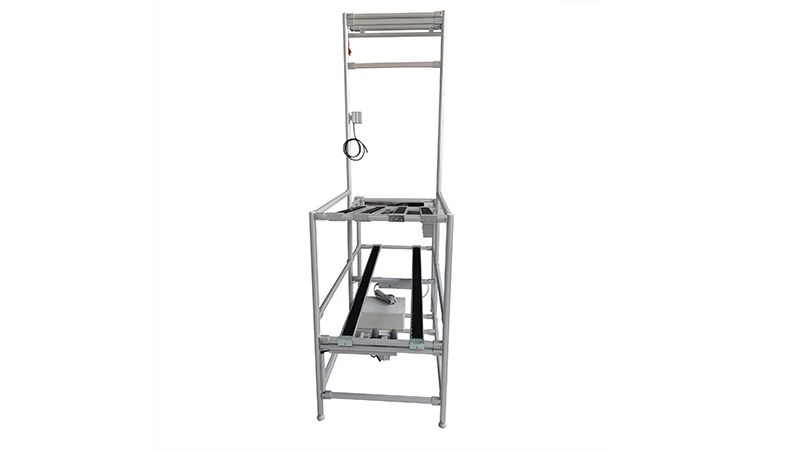
Aluminum Workbench C
aluminum-tube-workbench-is-more-flexible-and-durable,-compared-with-traditional-pe/abs-coated-steel-tube.-it-is-easy-to-assemble,-anti-corrosion,-rust-protection,-and-recycle-use-after-disassemble.
In the fast-paced world of modern manufacturing, where agility, efficiency, and worker well-being are paramount, the tools and equipment that form the backbone of factory operations have never been more critical. Among these, the workbench stands out as a silent hero—a central hub where assembly, inspection, packaging, and countless other tasks unfold. As factories evolve to meet the demands of Industry 4.0, traditional workbenches, often heavy, rigid, and one-size-fits-all, are struggling to keep up. Enter the Aluminum Workbench C: a modular, lightweight, and purpose-built solution designed to align with the dynamic needs of today's production lines. In this article, we'll explore the key functions that make Aluminum Workbench C an indispensable asset in modern factory workflows, from enhancing worker productivity to seamless integration with lean systems and beyond.
Understanding Aluminum Workbench C: Design and Core Components
Before diving into its functions, it's essential to grasp what sets Aluminum Workbench C apart from its predecessors. At its core, this workbench is a product of thoughtful engineering, leveraging high-quality aluminum extrusion profiles—materials renowned for their unique blend of strength, lightness, and corrosion resistance. Unlike traditional workbenches made of steel or wood, which often feel cumbersome and static, Aluminum Workbench C embodies flexibility from the ground up.
Structurally, the workbench features a single-deck design (though configurations with optional casters are available for mobility, the base model prioritizes stability with a fixed structure). Its frame is constructed using precision-engineered aluminum profiles, which are not only durable but also compatible with a wide range of accessories. This modularity is key: workers can attach tool holders, bins, monitor arms, or even small roller track segments directly to the workbench's T-slot aluminum pipe edges, customizing the space to fit their specific tasks. Whether it's an assembly station for small electronics or a packing hub for finished goods, Aluminum Workbench C adapts without the need for welding or specialized tools.
Another standout feature is its surface. Many models come with a smooth, non-slip aluminum honeycomb panel top, which is both scratch-resistant and easy to clean—critical in environments where spills, debris, or static electricity could compromise product quality. For factories dealing with sensitive components, ESD (Electrostatic Discharge) variants are also available, incorporating materials that dissipate static charges, protecting delicate electronics from damage. This versatility ensures that Aluminum Workbench C isn't just a one-trick pony; it's a chameleon, fitting into diverse manufacturing settings with ease.
Key Function 1: Ergonomic Excellence for Enhanced Worker Productivity
In any factory, the workforce is the most valuable asset—and their ability to perform tasks efficiently and safely directly impacts the bottom line. Poor ergonomics in workstations is a silent productivity killer, leading to fatigue, repetitive strain injuries, and decreased focus. Aluminum Workbench C addresses this head-on by prioritizing human-centered design.
One of the most notable ergonomic features is its adjustable height. Unlike fixed-height workbenches, which force workers of varying statures into uncomfortable positions, many models of Aluminum Workbench C come with manual or electric height-adjustment mechanisms. This allows each operator to set the work surface to their ideal level—typically between 700mm and 900mm for seated work, or 850mm to 1100mm for standing tasks—reducing strain on the neck, shoulders, and back. For example, a worker assembling circuit boards might prefer a seated position with the bench at 750mm, while a colleague packing boxes could opt for a standing setup at 950mm. This customization isn't just about comfort; studies show that ergonomically optimized workstations can boost productivity by up to 15% by minimizing distractions and physical discomfort.
Beyond height, the workbench's layout is designed to keep essential tools and materials within easy reach. The T-slot aluminum profile edges allow for the precise placement of accessories, such as magnetic tool strips above the work surface or sliding bins mounted under the deck. This "5S-friendly" design encourages organization—tools have designated spots, reducing time wasted searching for misplaced items. Imagine a production line where every screwdriver, pair of pliers, and component bin is within arm's length; workers spend less time stretching, bending, or walking, and more time focused on value-adding tasks. Over a full shift, these small time savings add up to significant gains in output.
Ergonomics also extends to the workbench's weight. Aluminum's lightweight nature means that even fully loaded workbenches are easier to reposition (when casters are added), allowing supervisors to rearrange the production line layout without hiring heavy machinery or risking worker injury. In a factory where workflow changes are frequent—say, shifting from manufacturing Product A to Product B overnight—this mobility ensures that workers aren't stuck with a workstation that no longer fits the task. It's a small detail, but one that speaks to Aluminum Workbench C's commitment to putting people first.

Key Function 2: Seamless Integration with Lean Systems
Lean manufacturing isn't just a buzzword; it's a philosophy that drives efficiency by eliminating waste—whether that's wasted time, materials, or space. Aluminum Workbench C is built with lean principles in mind, acting as a catalyst for continuous improvement on the factory floor. Let's break down how it supports core lean practices like 5S, just-in-time (JIT) production, and continuous flow.
First, 5S—Sort, Set in Order, Shine, Standardize, Sustain—relies on a clean, organized workspace. Aluminum Workbench C's modular design makes "Set in Order" and "Shine" effortless. With T-slot accessories, every tool and material has a defined home, making it easy to "Sort" (remove unnecessary items) and maintain order. The smooth, non-porous surface resists stains and is quick to wipe down, supporting the "Shine" (cleanliness) step. Over time, this consistency helps "Standardize" workflows: new employees can quickly learn where everything belongs, reducing onboarding time, while veteran workers can focus on refining processes rather than hunting for tools. Perhaps most importantly, the workbench's adaptability makes it easier to "Sustain" these habits—if a task changes, the workspace can be reconfigured without disrupting the 5S system.
Next, JIT production, which aims to deliver materials exactly when they're needed (and not a moment sooner), depends on efficient material flow. Aluminum Workbench C excels here, especially when paired with roller track systems—a common sight in lean factories. Many workbenches can be connected to adjacent roller track guide rails, allowing parts to glide directly from storage racks to the workbench surface. For example, in an automotive parts plant, a material rack B (3 row and 3 floor) might feed components via a plastic roller track guide rail (yellow or grey) to the Aluminum Workbench C, where workers assemble brake calipers. Once assembled, the finished parts can then roll onto another roller track leading to the next station. This eliminates the need for workers to walk to a distant storage area, reducing "motion waste" and keeping production flowing smoothly.
Continuous flow, another lean pillar, is also supported by the workbench's compact footprint and modularity. Traditional steel workbenches often take up excess space, creating bottlenecks between stations. Aluminum Workbench C, being lightweight and slim, fits into tighter layouts, allowing factories to arrange workstations in U-shapes or lines that minimize distance between tasks. Additionally, its compatibility with accessories like swivel roller balls (1 inch or 0.5 inch) means that small parts can be easily passed between adjacent workbenches, fostering collaboration and reducing "transport waste." In short, Aluminum Workbench C doesn't just coexist with lean systems—it amplifies their impact, turning abstract principles into tangible efficiency gains.

Key Function 3: Durability and Long-Term Cost Efficiency
In manufacturing, equipment is an investment—and factories need tools that stand the test of time. Aluminum Workbench C delivers here, thanks to its robust construction and low maintenance requirements, making it a cost-effective choice over the long haul.
Aluminum extrusion profiles are the unsung heroes of durability. Unlike wood, which can warp, rot, or splinter, or steel, which is prone to rust in humid or corrosive environments, aluminum resists corrosion naturally. This makes the workbench ideal for factories with strict cleanliness standards (like food processing or pharmaceutical plants) or those using water-based coolants or cleaning agents. Even in high-traffic areas, where bumps from trolleys or dropped tools are inevitable, the aluminum frame holds up, with dents and scratches being rare. Many manufacturers back this durability with warranties of 5–10 years, a testament to their confidence in the material.
Maintenance is another area where Aluminum Workbench C shines. Traditional workbenches often require regular painting (steel) or refinishing (wood) to stay functional. Aluminum, by contrast, needs little more than occasional wiping with a damp cloth to remove dust or spills. Its T-slot accessories are also designed for easy replacement: if a tool holder breaks or a roller track connector wears out, workers can swap in a new part in minutes, without calling in a repair crew. This minimizes downtime—a critical factor in factories where every minute of halted production costs money.
When it comes to cost, Aluminum Workbench C may have a higher upfront price tag than basic wood or steel models, but its longevity and adaptability make it a smarter investment. Consider this: a traditional steel workbench might last 5 years before needing replacement due to rust or damage, while an aluminum model can easily serve 15–20 years. Factor in lower maintenance costs and the ability to reconfigure the workbench as tasks change (avoiding the need to buy new workbenches altogether), and the total cost of ownership plummets. For factories looking to scale or pivot their production lines, this flexibility is invaluable—Aluminum Workbench C grows with the business, rather than becoming obsolete.

Aluminum Workbench C vs. Traditional Workbenches: A Comparative Look
| Feature | Traditional Steel Workbench | Wooden Workbench | Aluminum Workbench C |
|---|---|---|---|
| Weight | Heavy (50–80kg) | Moderate (30–50kg) | Lightweight (20–40kg) |
| Durability | Prone to rust; dents easily | Warping, splintering over time | Corrosion-resistant; scratch-proof |
| Customization | Limited (requires welding) | Basic (screws/nails only) | High (T-slot accessories; no tools needed) |
| ESD Compatibility | Available (costly add-on) | Not possible | Standard or optional (integrated materials) |
| Maintenance | High (painting, rust treatment) | Moderate (refinishing needed) | Low (wipe clean; replace accessories easily) |
| Longevity | 5–8 years | 3–5 years | 15–20+ years |
Table 1: A comparison of key features across workbench types, highlighting Aluminum Workbench C's advantages in modern factory settings.
Key Function 4: ESD Protection for Sensitive Manufacturing
For factories producing electronics—smartphones, circuit boards, medical devices, or semiconductors—electrostatic discharge (ESD) is a silent enemy. A single static spark, invisible to the naked eye, can fry a microchip, rendering a product useless. In such environments, an ESD workstation isn't a luxury; it's a necessity. Aluminum Workbench C, with its ESD-ready design, provides this critical protection, making it a staple in high-tech manufacturing.
ESD-compatible Aluminum Workbench C models are engineered with materials that control static electricity, rather than letting it build up. The work surface, for example, is often made of a carbon-filled aluminum honeycomb panel, which conducts static charges away from the workspace and into the ground via a grounding cable. Even the accessories, like tool holders or bins, are made of ESD-safe plastics or coated metals, ensuring that every part of the workstation works together to prevent static buildup. This is far more reliable than retrofitting a traditional workbench with ESD mats, which can wear out or lose their conductivity over time.
Beyond the surface, the workbench's aluminum frame itself plays a role. Aluminum is a natural conductor, so any static charge that might accumulate on the frame is quickly grounded, rather than jumping to nearby components. This holistic approach to ESD protection gives workers peace of mind: they can handle sensitive parts without worrying about accidental damage, reducing scrap rates and improving product quality. For factories operating in regulated industries (like aerospace or medical devices), this compliance with ESD standards (such as ANSI/ESD S20.20) is also critical for passing audits and maintaining certifications.
Even for non-electronics factories, the ESD variant offers benefits. In environments with flammable materials or powders, static charges can ignite fumes, posing safety risks. Aluminum Workbench C's ESD features mitigate this hazard, making it a safer choice for a wider range of applications. It's yet another example of how the workbench's design anticipates the diverse challenges of modern manufacturing.
Real-World Applications: Aluminum Workbench C in Action
To truly appreciate Aluminum Workbench C's impact, let's look at how it's transforming workflows in real factories across different industries.
Case Study 1: Electronics Assembly Plant
A mid-sized electronics manufacturer in California was struggling with high turnover and low productivity on its smartphone assembly line. Workers complained of neck and back pain from hunching over fixed-height steel workbenches, while static damage was causing a 3% scrap rate on circuit boards. The factory switched to ESD-compatible Aluminum Workbench C with adjustable height and roller track attachments. Within three months, the results were clear: worker-reported fatigue dropped by 40%, scrap rates fell to 0.5%, and productivity increased by 12% as assembly times shortened. The modular design also allowed the plant to reconfigure the line in a day when launching a new phone model, avoiding the week-long shutdown that previously accompanied retooling.
Case Study 2: Automotive Parts Supplier
A Michigan-based supplier of automotive sensors needed to streamline its lean manufacturing process. Its old wooden workbenches were warped, making it hard to maintain 5S standards, and material flow was disrupted by heavy, immobile stations. After installing Aluminum Workbench C with plastic roller track guide rails (grey) and swivel roller balls (1 inch), the factory saw immediate improvements. Parts now rolled directly from storage racks to workbenches, cutting material transport time by 60%. The workbenches' T-slot edges allowed workers to mount tool boards and bins, reducing "search waste" by 75%. Within six months, the supplier was able to increase output by 15% without adding staff, simply by eliminating inefficiencies in the workflow.
Case Study 3: Medical Device Packaging
A medical device company in Texas required a clean, sterile workspace for packaging surgical tools. Traditional steel workbenches were difficult to sanitize, and their weight made it hard to reposition stations for different product sizes. Aluminum Workbench C, with its smooth, corrosion-resistant surface and lightweight frame, proved ideal. Workers could easily wipe down the benches between shifts, meeting strict FDA cleanliness standards. The modular design also allowed the company to add small aluminum guide rail segments to sort tools by size, reducing packaging errors by 20%. Best of all, when the company expanded its product line, the workbenches were reconfigured in hours, not days, keeping production on track.
These examples highlight a common theme: Aluminum Workbench C isn't just a tool—it's a partner in problem-solving, adapting to each factory's unique challenges and delivering measurable results.
Maintenance Tips and Future Trends
To ensure Aluminum Workbench C continues to perform at its best, regular maintenance is key—though it's refreshingly minimal. Here are a few simple tips:
- Daily Cleaning: Wipe the work surface with a damp cloth to remove dust, debris, or spills. For ESD models, use a mild, alcohol-free cleaner to avoid damaging the static-dissipative coating.
- Accessory Checks: Inspect T-slot accessories (tool holders, roller track connectors) monthly to ensure they're tight. Loose accessories can cause tools to fall or materials to jam.
- Lubrication: If using roller track or swivel roller balls, apply a small amount of silicone lubricant to moving parts every three months to keep them rolling smoothly.
- Grounding (ESD Models): Test the workbench's grounding connection quarterly with an ESD meter to ensure static charges are properly dissipated.
Looking ahead, the future of Aluminum Workbench C is bright, with manufacturers exploring exciting innovations. One trend is the integration of smart technology: imagine workbenches with built-in sensors that monitor tool usage, track production times, or alert supervisors when a station needs maintenance. Another is sustainability: some suppliers are now using recycled aluminum in their profiles, reducing the workbench's carbon footprint. Finally, enhanced connectivity with IoT (Internet of Things) systems could allow workbenches to communicate with adjacent machines, automatically adjusting height or lighting based on the task at hand. Whatever the future holds, Aluminum Workbench C is poised to remain at the forefront of factory workflow innovation.
Conclusion: Aluminum Workbench C—More Than a Workbench, a Workflow Catalyst
In the ever-evolving landscape of modern manufacturing, success hinges on the ability to adapt, innovate, and prioritize both efficiency and people. Aluminum Workbench C embodies these principles, serving as more than just a surface to work on—it's a central hub that enhances ergonomics, integrates with lean systems, protects sensitive products, and stands the test of time. Its modular design, durability, and versatility make it a tool that grows with factories, whether they're small startups or large-scale production facilities.
As we've explored, the key functions of Aluminum Workbench C—ergonomic excellence, lean integration, durability, and ESD protection—are not just features; they're solutions to the real challenges factories face daily. From reducing worker fatigue to cutting scrap rates, from streamlining material flow to simplifying reconfigurations, this workbench delivers tangible value that ripples through every aspect of the production process.
For manufacturers looking to stay competitive in a fast-paced world, Aluminum Workbench C isn't just an investment in equipment—it's an investment in their most valuable assets: their workers, their processes, and their future. In the end, it's clear: Aluminum Workbench C isn't just changing workbenches—it's changing how factories work.