- Company Articles
- Products and Technology
- Product knowledge
- Key Functions of End Support for Roller Track Placon Mount with Stop in Conveyor Systems

Key Functions of End Support for Roller Track Placon Mount with Stop in Conveyor Systems
Related Product
End Support for Roller Track Placon Mount with Stop
Roller track placon mount work as a connector for roller track and pipe or aluminum profile in rack syetem, it is a necessary parts in rack system which widely used in industrial plant and logistic,warehouse storage.
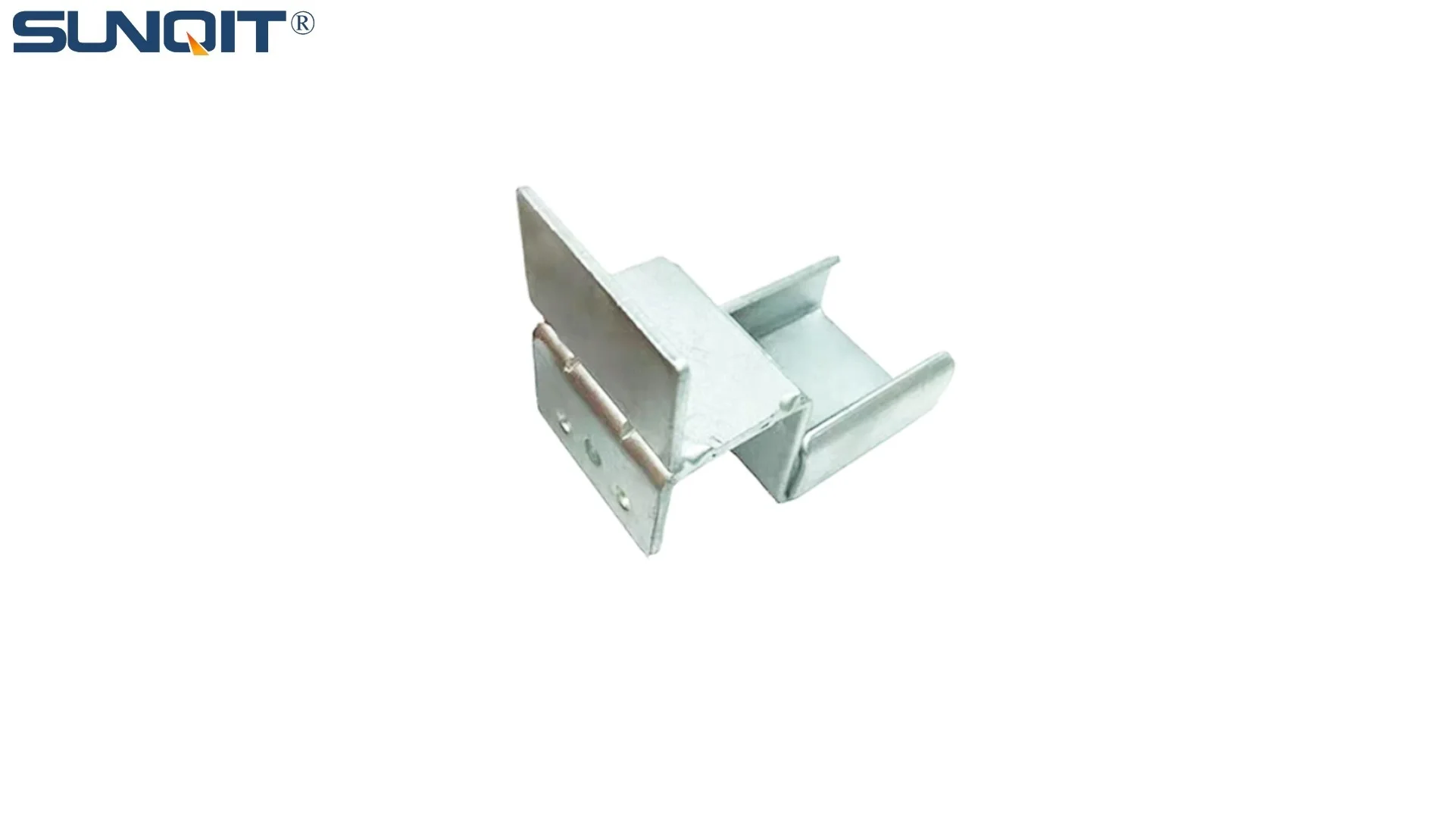
In the fast-paced world of modern manufacturing, where efficiency and precision can make or break production targets, every component in a conveyor system plays a critical role. From the smallest caster wheel to the largest aluminum profile, each part contributes to the seamless flow of materials—whether it's a delicate circuit board in a 3C assembly line or a heavy component in automotive manufacturing. Among these components, one that often goes unnoticed but holds immense importance is the end support for roller track placon mount with stop . This unassuming part is the unsung hero that ensures stability, accuracy, and safety in roller track systems, making it a cornerstone of reliable conveyor operations.
Understanding the Role of Roller Track Systems in Manufacturing
Before diving into the specifics of the end support with stop, it's essential to grasp why roller track systems matter in manufacturing. Roller tracks—often made from durable materials like aluminum or steel—are designed to facilitate the smooth movement of goods, parts, or components across workstations, assembly lines, or storage areas. They are the backbone of lean manufacturing, reducing manual handling, minimizing bottlenecks, and ensuring a consistent workflow. In industries like 3C assembly, where precision is non-negotiable, or (warehousing and logistics), where speed directly impacts order fulfillment, a well-designed roller track system can boost productivity by up to 30%, according to industry studies.
But a roller track is only as strong as its weakest link. Without proper support, even the highest-quality roller track can sag, misalign, or fail under load—leading to jams, damaged products, or costly downtime. This is where components like the end support with stop step in, acting as the critical interface between the roller track and the rest of the system (such as workbenches, material racks, or conveyor frames).
What Is an End Support for Roller Track Placon Mount with Stop?
At its core, the end support for roller track placon mount with stop is a specialized mounting component designed to secure the end of a roller track section. Unlike generic supports, it integrates a built-in "stop" mechanism—a small but robust feature that halts the movement of materials at a precise point. This combination of structural support and controlled stopping makes it indispensable in scenarios where materials need to be positioned accurately, whether for assembly, inspection, or transfer to another conveyor line.
Crafted from high-grade aluminum or steel (depending on load requirements), these supports are engineered to withstand the rigors of industrial environments—constant vibration, heavy loads, and repeated use. They are often compatible with various roller track types, including plastic roller track guide rails (yellow or grey), aluminum guide rails, and steel roller tracks, making them a versatile choice for diverse manufacturing setups.

Core Functions of End Support for Roller Track Placon Mount with Stop
The true value of this component lies in its multifaceted functionality. Let's break down its key roles in ensuring a reliable, efficient conveyor system:
1. Precision Positioning and Stop Control: Ensuring Materials Land Exactly Where They Need To
In manufacturing processes like 3C assembly, where components as small as a microchip are handled, even a millimeter of misalignment can lead to assembly errors or product defects. The "stop" feature in the end support addresses this by providing a fixed, consistent point where materials come to rest. For example, on a Workbench E (single deck, without caster)—a common setup in electronics manufacturing—components sliding down a roller track will hit the end support's stop, aligning perfectly with the workstation's assembly area. This eliminates the need for manual adjustment, reducing human error and speeding up the assembly process.
In warehouse settings, this precision is equally vital. When loading a Material Rack B (3 row and 3 floor), the end support ensures that boxes or bins stop at the edge of each shelf, preventing overhang and ensuring safe, organized storage. This level of control is why end supports with stop are a staple in lean solution implementations—they turn chaotic material flow into a predictable, repeatable process.
2. Structural Stability: Reinforcing the Roller Track for Long-Term Reliability
A roller track without proper end support is like a table without legs—it may work temporarily, but it will eventually wobble, sag, or collapse under pressure. The end support acts as a sturdy anchor, distributing the weight of the roller track and its load evenly across the system's frame (often built with aluminum lean pipe or aluminum profiles). This reduces stress on individual roller track components, such as plastic roller track guide rails or steel wheel roller tracks, extending their lifespan and minimizing maintenance needs.
Consider a busy automotive parts plant, where roller tracks carry heavy engine components. Without a robust end support, the constant vibration and weight could cause the track to detach from its mounts, leading to catastrophic failures. By securing the track's end, the support ensures the entire system remains stable, even under maximum load—keeping production running smoothly shift after shift.
3. Compatibility and Flexible Integration: Adapting to Diverse Manufacturing Needs
Manufacturing facilities are rarely "one-size-fits-all." A medical device assembly line, for instance, requires delicate handling of sterile components, while a consumer electronics plant may need to integrate ESD (Electrostatic Discharge) protection into its conveyor systems. The end support for roller track placon mount with stop is designed with this diversity in mind, offering compatibility with a wide range of roller track types and accessories.
Whether paired with 40 steel roller track (yellow wheel for visibility) in a high-traffic area or mini aluminum roller track (black) for lightweight components, the end support seamlessly integrates into existing systems. It also works with placon mount connectors, rail connections, and aluminum profile brackets, making it easy to customize the conveyor layout as production needs evolve. This flexibility is a hallmark of modern lean pipe systems, where adaptability is key to staying competitive.
4. Safety Enhancement: Protecting Products and Personnel
Safety is non-negotiable in any manufacturing environment. Loose or misaligned roller tracks can lead to materials sliding off, causing damage to products or injury to workers. The end support with stop mitigates this risk by preventing materials from overshooting the track's end. For example, in a facility using swivel roller balls (1 inch) for omnidirectional movement, the stop feature ensures that parts don't roll off the track and onto the floor—reducing trip hazards and product loss.
Additionally, the support's robust construction (often made from aluminum or stainless steel) withstands impact, even if a heavy load hits it unexpectedly. This durability is especially important in fast-paced environments like 3C assembly lines, where the momentum of moving components can generate significant force. By acting as a barrier, the end support keeps both products and people safe, aligning with the highest industrial safety standards.
5. Simplified Maintenance and Cost Efficiency: Supporting Lean Manufacturing Principles
Lean manufacturing is all about eliminating waste—whether it's time, materials, or resources. The end support with stop embodies this principle by being easy to install, adjust, and replace. Unlike complex, custom-made supports, it uses standard mounting mechanisms (compatible with aluminum profile accessories or lean pipe joints), allowing maintenance teams to swap out parts quickly without specialized tools.
This ease of maintenance translates to lower downtime and reduced labor costs. For example, if a stop mechanism wears out after months of heavy use, a technician can replace just the end support instead of overhauling the entire roller track. This modularity is a key feature of lean pipe system design, where components are built to be reusable and replaceable—aligning with the "sustainable improvement" ethos that drives modern manufacturing.

Real-World Applications: How End Supports Drive Efficiency Across Industries
To truly appreciate the impact of end supports with stop, let's look at how they perform in two critical industries:
Case 1: 3C Assembly Lines – Precision in High-Volume Production
In a 3C assembly plant producing smartphones, every second counts. Components like screens, batteries, and circuit boards move along roller tracks from one workstation to the next, where operators assemble them into finished products. Here, end supports with stop are installed at each workstation's roller track entry point. As a circuit board slides down the track, it hits the stop, aligning perfectly with the ESD workstation's surface—ensuring the operator can pick it up without fumbling or misalignment. This precision reduces assembly time per unit by 15%, allowing the plant to meet tight production deadlines.
Case 2: Warehousing and Logistics – Streamlining Order Fulfillment
In a large e-commerce warehouse, roller tracks are used to move packages from storage racks to packing stations. End supports with stop are placed at the end of each packing station's roller track, ensuring packages stop exactly at the packer's workspace. This eliminates the need for packers to reach or pull packages, reducing fatigue and speeding up order processing. During peak seasons, when order volumes spike, this efficiency boost can mean the difference between meeting delivery deadlines and falling behind.

The Synergy Between End Supports and a Comprehensive Lean Solution
While the end support for roller track placon mount with stop is a powerful component on its own, its true potential is unlocked when integrated into a broader lean solution. A lean solution isn't just about individual parts—it's about designing a system where every component works together to minimize waste, maximize efficiency, and adapt to changing needs. For example, pairing end supports with adjustable aluminum guide rails allows manufacturers to modify roller track heights or angles on the fly, while combining them with ESD workbenches ensures sensitive components remain protected from static damage.
This holistic approach is why leading manufacturers partner with experienced lean pipe suppliers. These suppliers don't just sell parts—they collaborate with clients to design custom systems that incorporate end supports, roller tracks, conveyors, and workbenches into a cohesive, efficient workflow. By leveraging modular components like aluminum lean pipe and internal rotary aluminum joints, these systems can be reconfigured as production needs change, ensuring long-term value and sustainability.
Key Features at a Glance: A Summary of End Support Benefits
| Function | Primary Benefit | Industry Application Example |
|---|---|---|
| Precision Positioning & Stop Control | Reduces assembly errors; ensures consistent material placement | 3C assembly lines (smartphone production) |
| Structural Stability | Extends roller track lifespan; minimizes maintenance | Automotive parts manufacturing (heavy component handling) |
| Compatibility & Flexibility | Adapts to diverse roller track types and layouts | Medical device assembly (sterile, lightweight components) |
| Safety Enhancement | Prevents product damage and worker injuries | Warehousing (package handling) |
| Easy Maintenance | Reduces downtime and repair costs | General manufacturing (all industries) |
Why Quality Matters: Choosing the Right End Support for Your System
Not all end supports are created equal. A low-quality support—made from flimsy materials or with poor craftsmanship—can fail under stress, leading to the very problems it's supposed to prevent: misalignment, product damage, or downtime. That's why partnering with a reputable lean pipe supplier is crucial. Look for suppliers that prioritize:
- Material Quality: Supports made from high-grade aluminum or steel, resistant to corrosion and wear.
- Engineering Expertise: Components designed to meet industry standards for load capacity and safety.
- Customization Capabilities: The ability to adapt supports to unique roller track setups or industry-specific needs (e.g., ESD protection for electronics).
- Lean Principles: A commitment to sustainability, reusability, and continuous improvement—values that align with modern manufacturing goals.
Conclusion: The End Support as a Foundation for Lean Success
In the grand scheme of manufacturing, the end support for roller track placon mount with stop may seem small, but its impact is anything but. It's the component that turns a basic roller track into a precision tool, ensuring materials move smoothly, stop accurately, and stay safe—all while reinforcing the system's stability for long-term reliability. Whether in 3C assembly, automotive production, or warehousing, this unassuming part plays a vital role in driving efficiency, reducing waste, and supporting lean manufacturing principles.
As manufacturing continues to evolve, with a growing focus on agility, sustainability, and smart technology, components like the end support with stop will only become more important. They are the building blocks of the flexible, resilient conveyor systems that power the factories of today and tomorrow. So the next time you walk through a manufacturing plant and see a smooth, efficient roller track in action, remember: behind that seamless flow is a small but mighty end support, working tirelessly to keep production on track.