- Company Articles
- Products and Technology
- Product knowledge
- Key Functions of Two Way Lean Pipe Joint in Flexible Production Systems

Key Functions of Two Way Lean Pipe Joint in Flexible Production Systems
Related Product
Two Way Lean Pipe Joint
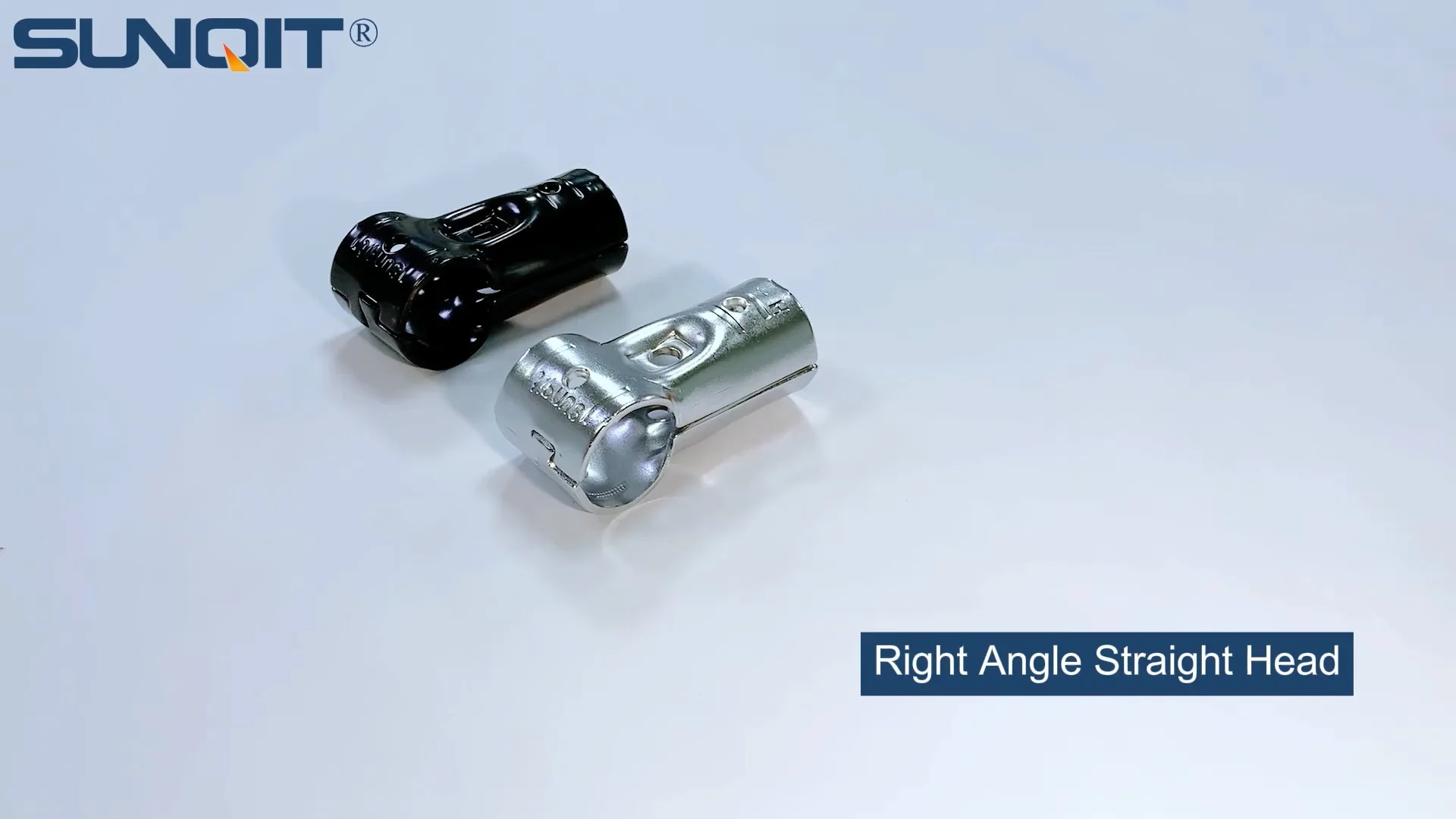
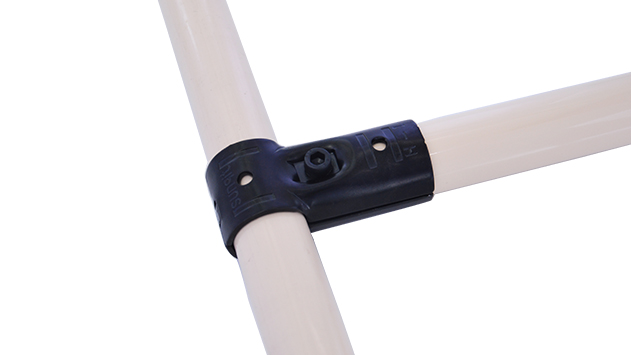
Two way lean pipe joint for 2 pcs 28MM lean pipe connection in straight angle, which used widely in workbench, flow rack, hand trolley frame connection.
In today's fast-paced manufacturing landscape, flexibility isn't just a buzzword—it's the cornerstone of staying competitive. Production lines that can adapt to shifting customer demands, new product designs, and evolving efficiency goals are the ones that thrive. At the heart of this adaptability lies the lean system, a framework built on minimizing waste and maximizing value. And within every lean system, small components often play the biggest roles. Enter the two way lean pipe joint: a deceptively simple piece that acts as the "glue" holding lean pipe structures together, yet its impact on flexibility, cost-efficiency, and operational flow is anything but minor. Let's dive into how this unassuming component shapes the way modern factories design, build, and reimagine their production spaces.
Understanding the Basics: Lean Pipes, Systems, and the Role of Joints
Before we zoom in on the two way lean pipe joint, let's set the stage with a quick overview of the components that make up a typical lean system. At its core is the lean pipe—a lightweight, durable tube (often made of steel with a plastic coating, aluminum, or stainless steel) that forms the skeleton of workbenches, material racks, trolleys, and conveyor systems. These pipes aren't just static; they're meant to be rearranged, extended, or repurposed as needs change. But pipes alone can't create structure—they need joints to connect them. That's where components like the two way lean pipe joint come in.
Lean pipe joints are the connectors that link pipes at specific angles, enabling the creation of everything from simple frames to complex multi-level workstations. They come in various configurations: two way (connecting two pipes), three way (three pipes), four way (four pipes), and even specialty designs for unique angles or loads. Each type serves a purpose, but the two way joint is the workhorse of simplicity and versatility. Think of it as the most basic building block—you can't build much without it, and its flexibility makes it indispensable in dynamic environments.
So, what exactly is a two way lean pipe joint? In essence, it's a small, often metal (or sometimes plastic) fitting designed to securely fasten two lean pipes together at a fixed or adjustable angle (usually 90 degrees, but some models allow for rotation). Its design prioritizes quick assembly—no welding or specialized tools required—and easy disassembly, which is critical for lean principles like "just-in-time" adaptation. Whether you're building a lean pipe workbench for assembly line workers or a lightweight material rack for parts storage, the two way joint is likely holding it all together.
Design Features of the Two Way Lean Pipe Joint: Built for Flexibility
To understand why the two way lean pipe joint is so integral to flexible production, let's break down its key design features. These aren't arbitrary—each element is engineered to solve common pain points in manufacturing setups:
Tool-Free Assembly
Gone are the days of waiting for a welder or fumbling with complex fasteners. Most two way lean pipe joints use a simple clamping mechanism: slide the joint onto the ends of two pipes, tighten a screw or lever, and you're done. This "click-and-go" design cuts setup time from hours to minutes, which is a game-changer when a production line needs to reconfigure overnight to meet a rush order.
Adjustable Angles (in Some Models)
While many two way joints are fixed at 90 degrees, some feature rotating or swiveling components that let users set angles between 0 and 180 degrees. This adaptability means the same joint can be used for straight lines (e.g., the edge of a workbench) or angled supports (e.g., a sloped material rack for gravity-fed part flow). For example, a factory producing small electronics might use adjustable two way joints to tilt a roller track slightly, ensuring components glide smoothly to workers without jamming.
Durable Materials
Two way joints are built to withstand the wear and tear of factory floors. Most are made from high-strength steel (often chrome-plated for corrosion resistance) or aluminum (for lighter setups). The choice of material depends on the application: steel joints handle heavier loads (like a workbench holding power tools), while aluminum is ideal for mobile structures (like a hand trolley that needs to be pushed around the shop floor).
Compatibility with Standard Lean Pipes
Interchangeability is key in lean systems, and two way joints are designed to fit standard lean pipe diameters (typically 28mm or 30mm for steel pipes, 20mm or 30mm for aluminum). This means you can mix and match joints from different suppliers (as long as they adhere to size standards) without worrying about compatibility issues. For a manufacturer using lean pipe and accessories from multiple vendors, this standardization prevents headaches and keeps replacement costs low.
Key Function 1: Enabling Rapid Reconfiguration (The "Flexibility Engine")
Perhaps the most critical function of the two way lean pipe joint is its ability to make reconfiguration fast and painless. In traditional manufacturing setups, workbenches and racks are often custom-built, welded steel structures. If a factory wants to resize a workbench or move a rack to a new location, it's a major project—cutting, welding, repainting, and downtime. With lean pipe systems and two way joints, that same process becomes a matter of loosening a few screws, rearranging the pipes, and tightening them back up.
Consider a scenario: A car parts manufacturer suddenly gets a rush order for a new component that requires a longer assembly line. The existing lean pipe workbench is 6 feet long, but they need it to be 10 feet. With two way joints, the team can simply add two more sections of lean pipe, connect them using two way joints, and have the extended workbench ready in under an hour. No welding, no special tools, no production delays. That's the power of flexibility—and it's all thanks to how easily the two way joint lets pipes be added or removed.
This rapid reconfiguration also supports "cellular manufacturing," a lean approach where production is organized into small, self-contained "cells" instead of linear lines. Each cell can be tailored to a specific product or task, and if demand shifts, cells can be merged, split, or rearranged. Two way joints make it possible to reconfigure cell boundaries on the fly, ensuring workers always have the tools and materials they need within arm's reach.

Key Function 2: Reducing Costs Through Reusability and Modularity
Manufacturing is all about the bottom line, and the two way lean pipe joint delivers cost savings in ways both obvious and subtle. Let's start with reusability: unlike welded joints, which are permanently fixed (and thus useless if the structure is disassembled), two way joints can be reused indefinitely. When a project ends or a structure is no longer needed, the joints can be detached, cleaned, and used in a new setup. A factory that frequently launches new product lines might save thousands over time by reusing joints instead of buying new ones for each project.
Modularity is another cost driver. With two way joints, you don't need to buy custom-built furniture or racks. Instead, you can start with a basic lean pipe workbench and expand it as your team grows—adding shelves, side extensions, or tool holders using the same joints and pipes. This "build-as-you-go" approach eliminates over-investment in underutilized equipment. For example, a startup electronics manufacturer might begin with a single workbench, then use the same two way joints to add a material rack, a testing station, and a packing trolley as orders increase.
There's also the cost of downtime to consider. When a traditional structure breaks or needs modification, production stops for hours (or days). With two way joints, repairs are quick: if a joint wears out, swap it out in 5 minutes and get back to work. No waiting for a maintenance crew or specialized equipment. Over time, these small time savings add up to big cost savings in labor and lost production.

Key Function 3: Seamless Integration with Other Lean Components
A lean system isn't just pipes and joints—it's a ecosystem of components working together. Rollers, casters, workbench tops, and conveyor tracks all need to attach to the pipe structure, and the two way lean pipe joint acts as the hub for this integration. Its simple design allows it to pair with almost any accessory, turning basic frames into fully functional workstations.
Take roller track, for example. Roller tracks are used to move materials along a path (e.g., parts sliding from a storage rack to an assembly line). To attach a roller track to a lean pipe frame, you'd use two way joints to secure the track's supports to the vertical or horizontal pipes of the frame. The joint ensures the track is stable and at the correct angle, preventing jams or misalignment. Similarly, casters (wheels for mobility) often mount to frames via plates that connect to pipes using two way joints, letting workers easily move trolleys or mobile workbenches around the factory floor.
Even specialty components like ESD (electrostatic discharge) workbench tops or tool hooks can be integrated using two way joints. The joint's ability to create stable, customizable frames means you're not limited to off-the-shelf solutions—you can design a workstation that fits your exact tools, parts, and workflow. For instance, a medical device manufacturer might use two way joints to attach a static-dissipative top to a lean pipe frame, then add side rails (also connected via two way joints) to hold sterilized tools within easy reach.
Key Function 4: Supporting Safety and Ergonomics
Flexibility and cost-efficiency are critical, but they mean little if a workspace isn't safe or comfortable for workers. The two way lean pipe joint plays a quiet but vital role in promoting both safety and ergonomics.
Safety first: two way joints create secure connections that reduce the risk of structures collapsing. Unlike makeshift solutions (e.g., zip ties or tape), which can loosen over time, properly tightened two way joints hold pipes firmly in place, even under heavy loads. This is especially important in environments with moving parts or heavy materials—imagine a material rack holding 50-pound boxes; a failed joint could lead to injuries or damaged inventory. Additionally, many two way joints feature rounded edges or plastic coatings, minimizing the risk of cuts or scrapes when workers bump into them.
Ergonomics, too, benefits from the two way joint's adjustability. Lean systems are all about designing workspaces around the worker, not the other way around. With two way joints, you can adjust the height of a workbench, the angle of a material rack, or the position of a tool holder to reduce strain. For example, assembly line workers often suffer from back pain due to bending over low workbenches. Using two way joints, a supervisor can raise the workbench height by a few inches, aligning it with the workers' waist level—no need to buy a new workbench, just reposition the pipes and joints.
Another ergonomic win: mobility. By adding casters (connected via two way joints) to a lean pipe structure, you can create mobile workstations that follow workers to where they're needed, reducing walking time and fatigue. A warehouse picker, for example, might use a mobile trolley (built with two way joints) to collect orders, eliminating the need to carry heavy bins across the facility.
Comparing Joints: Why Two Way Stands Out Among Lean Pipe Connectors
To truly appreciate the two way lean pipe joint, it helps to see how it stacks up against other common joint types. Let's compare it to three way and four way joints, two of the most popular alternatives, in terms of use cases, flexibility, and limitations.
| Joint Type | Number of Pipe Connections | Best For | Flexibility Level | Load Capacity | Common Limitations |
|---|---|---|---|---|---|
| Two Way Lean Pipe Joint | 2 pipes | Straight lines, 90-degree corners, simple frames, workbench edges, trolley handles | High (easily reused; many models adjustable) | Medium to high (depends on material; steel joints handle heavier loads) | Cannot connect more than two pipes; limited for complex structures |
| Three Way Lean Pipe Joint | 3 pipes | Multi-level racks, T-junctions, corner supports for shelves | Medium (reusable but bulkier than two way) | Medium (extra connection point may reduce stability under extreme loads) | Bulky design; overkill for simple structures |
| Four Way Lean Pipe Joint | 4 pipes | Cross-shaped structures, central support columns, complex multi-directional frames | Low (specialized use case; less versatile) | Low to medium (best for lightweight applications) | Heavy; limited to specific configurations; expensive compared to two way |
The takeaway? While three way and four way joints have their place, the two way joint is the most versatile and cost-effective for 80% of lean system applications. It's the "default" joint you'll reach for when building everything from simple frames to semi-complex workstations, and its simplicity makes it easy for anyone on the team to use—no training required.
Real-World Applications: How Factories Use Two Way Lean Pipe Joints
Let's ground this in real examples. Across industries, from automotive to electronics to food packaging, two way lean pipe joints are solving everyday challenges. Here are a few scenarios where they shine:
Case Study 1: Automotive Parts Manufacturer
A mid-sized automotive parts factory was struggling with frequent changes to their assembly lines. Each new part design required a different layout for tools and materials, and their welded steel workbenches couldn't keep up. They switched to a lean system using two way lean pipe joints, aluminum lean pipes, and roller tracks. Now, when a new part is introduced, the team disassembles the old workbench, reuses the joints and pipes to build a new one, and has production up and running within a day. The two way joints also allow them to add custom features, like angled roller tracks for feeding parts to workers, reducing reach time by 30%.
Case Study 2: Electronics Assembly Plant
An electronics plant needed ESD-safe workstations to prevent static damage to sensitive components. They built lean pipe workbenches using two way joints, ESD-rated lean pipes, and conductive tops. As their product line expanded, they used the same two way joints to add side shelves for tools and under-bench storage for ESD-safe bins. When a new team joined, they simply extended the workbench with extra pipes and joints, avoiding the cost of buying new furniture. The joints' tool-free assembly also meant the IT team could quickly reconfigure workstations for new equipment (e.g., adding monitor mounts) without disrupting production.
Case Study 3: Food Packaging Facility
A food packaging facility needed hygienic, easy-to-clean material racks for ingredients. They chose stainless steel lean pipes and two way joints (resistant to corrosion and easy to sanitize). The two way joints allowed them to build racks with adjustable shelf heights, accommodating everything from small spice containers to large flour bags. When a new ingredient was introduced, they added a new shelf using spare pipes and joints, ensuring the rack always fit their needs. The joints' smooth surfaces also prevented crumbs or debris from getting trapped, maintaining compliance with food safety standards.
Maintenance and Care: Keeping Your Two Way Joints (and Lean System) in Top Shape
Like any component, two way lean pipe joints perform best with a little care. Fortunately, maintaining them is simple—no specialized skills required. Here are a few tips to extend their lifespan and keep your lean system running smoothly:
Regular Inspections
Make it a habit to check joints during routine safety walks. Look for loose screws, cracks in the joint body, or signs of corrosion (especially in humid or food-processing environments). Tighten any loose screws with a standard wrench—over time, vibration from machinery or frequent movement can loosen connections. A quick 5-minute check of key joints on a lean pipe workbench or material rack can prevent costly accidents down the line.
Cleaning
Dust, grease, and debris can build up on joints, making disassembly harder. Wipe them down with a damp cloth (or a mild detergent for greasy environments) every few months. For stainless steel joints in food or pharmaceutical settings, use a sanitizing solution to meet hygiene standards. Avoid abrasive cleaners, which can scratch the joint's surface and lead to rust.
Lubrication (for Adjustable Joints)
If you're using adjustable two way joints (those with rotating parts), apply a small amount of lubricant (like silicone spray) to the moving components once a year. This prevents seizing and ensures smooth adjustment. Just be sure to use food-safe lubricant if the joint is in a food-processing area.
replace Worn Parts Promptly
Even the most durable joints wear out eventually. If a joint cracks, the screw strips, or the clamping mechanism fails, replace it immediately. Using damaged joints puts the entire structure at risk. Keep a few spare joints on hand—they're inexpensive, and having them available means minimal downtime if a replacement is needed.
Looking Ahead: The Future of Lean Systems and the Two Way Joint
As manufacturing continues to evolve—with trends like automation, customization, and "lights-out" factories gaining steam—the demand for flexible lean systems will only grow. And as lean systems become more sophisticated, the two way lean pipe joint will remain a critical component. Why? Because even in high-tech environments, the need for quick, low-cost reconfiguration doesn't disappear. Automated assembly lines might have robots, but those robots still need workstations, tool racks, and material handlers that can adapt as new products are introduced.
We're also seeing innovation in joint design, with manufacturers developing lighter, stronger, and more versatile two way joints. Some models now feature quick-release levers for even faster assembly, while others use composite materials to reduce weight without sacrificing strength. There's also a push for smarter joints—though not "smart" in the digital sense, but in their ability to integrate with new lean components, like modular sensors or IoT-enabled tool holders.
At the end of the day, the two way lean pipe joint embodies the spirit of lean manufacturing: it's simple, efficient, and focused on value. It doesn't try to do everything, but what it does—connect, adapt, and enable—it does exceptionally well. For factories looking to stay agile in a world of constant change, investing in quality lean pipe joints isn't just about buying a component; it's about investing in the ability to reimagine their production space, one connection at a time.
Conclusion: Small Component, Big Impact
It's easy to overlook the two way lean pipe joint amid the buzz of advanced machinery and high-tech systems. But in the world of lean manufacturing, success lies in the details—and this small connector is a detail that delivers big results. From enabling rapid reconfiguration to cutting costs, integrating with other lean components, and keeping workers safe, the two way joint is the unsung hero of flexible production.
Whether you're building your first lean pipe workbench or scaling a global manufacturing operation, remember: the strength of your lean system depends on the strength of its connections. And with the right two way lean pipe joints, those connections aren't just strong—they're ready for whatever the future throws at them.