- Company Articles
- Products and Technology
- Procurement Guidelines
- Key Specifications to Check When Buying Aluminum Profile Rubber Strips

Key Specifications to Check When Buying Aluminum Profile Rubber Strips
Related Product
Aluminum Profile Rubber Strip
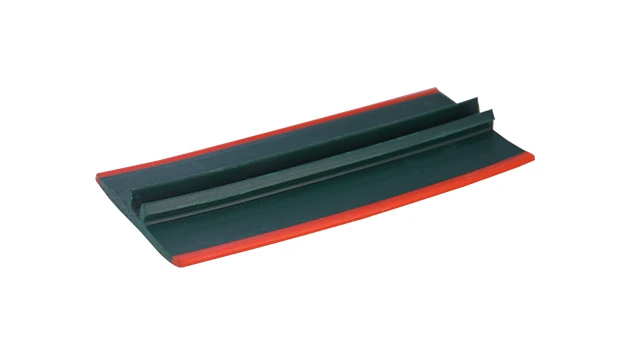
The tread strip fits into a T-slot channel and provides an anti-slip ribbed surface. It has a key pad that presses into a T-slot and is commonly used for adding traction on steps or as padding for doors. Tread strip can be ordered by rolls. The high quali
Walk into any modern workshop, manufacturing plant, or logistics hub, and you'll likely spot the clean lines and functional design of aluminum extrusion profiles. These versatile structures form the backbone of workbenches, conveyor systems, material racks, and assembly stations—quietly powering the efficiency of daily operations. But behind their seamless functionality lies a small yet critical component: aluminum profile rubber strips. Often overlooked, these unassuming accessories play a starring role in sealing gaps, protecting edges, reducing noise, and ensuring safety. Whether you're outfitting a new production line or replacing worn parts, choosing the right rubber strips requires careful attention to specific specifications. In this guide, we'll break down the key factors that separate a reliable, long-lasting rubber strip from one that fails prematurely, focusing on how each specification impacts real-world performance.
1. Material Composition: The Foundation of Performance
At the heart of every aluminum profile rubber strip is its material composition. The type of rubber used dictates nearly every aspect of its performance, from weather resistance to flexibility. With so many options available—EPDM, silicone, neoprene, nitrile, and more—understanding which material aligns with your application is the first step toward a smart purchase.
EPDM (Ethylene Propylene Diene Monomer) is the workhorse of the rubber world, and for good reason. Ideal for both indoor and outdoor use, EPDM excels in resisting UV radiation, ozone, and extreme weather conditions. Its ability to withstand temperatures from -40°C to 120°C makes it a top choice for applications exposed to sunlight or fluctuating climates, such as outdoor material racks or loading dock conveyor systems. EPDM also offers excellent water and steam resistance, making it suitable for environments where moisture is a concern, like food processing facilities or car washes.
Silicone rubber, on the other hand, is the go-to for high-temperature environments. With a temperature range of -60°C to 230°C (and even higher for specialty grades), it thrives in settings like industrial ovens, heat-sealing machinery, or engine compartments. Silicone is also prized for its flexibility at low temperatures, making it a favorite for cold-storage facilities where other rubbers might harden or crack. However, it's important to note that silicone is less resistant to abrasion than EPDM, so it may not be the best choice for high-wear areas like heavy-duty conveyor guides.
Neoprene (Polychloroprene) stands out for its oil, grease, and chemical resistance. If your application involves exposure to motor oil, hydraulic fluids, or mild solvents, neoprene rubber strips are a reliable pick. It also offers good weather resistance, though not as robust as EPDM, and performs well in temperatures from -40°C to 100°C. Common uses include automotive assembly lines, machine tool enclosures, and parts wash stations where chemical exposure is frequent.
Nitrile (Buna-N) is the heavyweight for fuel and solvent resistance. Designed to withstand gasoline, kerosene, and mineral oils, it's a staple in automotive and aerospace industries, where contact with fuels or lubricants is unavoidable. Nitrile's temperature range (-40°C to 120°C) overlaps with EPDM, but its chemical resilience sets it apart. However, it's less flexible than silicone and can degrade in ozone-rich environments, so outdoor use is generally not recommended.
To ensure you're getting the right material, always check the product specifications or ask your aluminum profile supplier for a material safety data sheet (MSDS). Reputable suppliers will readily provide certificates of compliance, confirming the rubber type and its properties. Avoid vague descriptions like "general-purpose rubber"—these often hide low-quality blends with fillers that compromise performance. Remember: the material is the foundation—cutting corners here leads to frequent replacements and downtime.
2. Hardness (Shore A Rating): Balancing Flexibility and Durability
If material composition is the "what" of rubber strips, hardness is the "how" they perform. Measured on the Shore A scale (ranging from 0, extremely soft, to 100, rigid like plastic), hardness determines how the strip compresses, seals, and resists wear. Choosing the right hardness is a balancing act: too soft, and the strip may lose shape under pressure; too hard, and it may fail to seal gaps or cushion impacts.
For most aluminum profile applications, the sweet spot lies between 60 and 70 Shore A. Let's break down why this range works and how to adjust based on your needs:
60-65 Shore A: This softer range prioritizes flexibility and conformability. Strips in this category compress easily, making them ideal for sealing irregular gaps or cushioning edges. For example, on an aluminum workbench, a 65A rubber strip along the edge provides a comfortable, non-slip surface for workers leaning on the bench, reducing fatigue during long shifts. In T-slot sealing, a 60A strip can mold to minor imperfections in the aluminum extrusion profile, ensuring a tight seal against dust and debris. However, softer strips may wear faster in high-friction areas—avoid using them on conveyor tracks where parts slide over the strip repeatedly.
65-70 Shore A: The mid-range sweet spot for versatility. Strips here offer a balance of flexibility and durability, making them suitable for most general-purpose applications. A 70A strip works well as a guide on roller conveyors, where it needs to withstand contact with moving packages without deforming. It also holds its shape in T-slots, resisting compression set (permanent deformation) even after long-term use. This range is the default choice for material racks, assembly line workstations, and machine guards, where reliability and longevity are key.
70-80 Shore A: Harder strips in this range prioritize rigidity and wear resistance. They're less likely to compress under heavy loads, making them ideal for high-impact areas. For example, on the edges of a metal turnover trolley, an 80A strip can absorb bumps from forklifts or pallet jacks without tearing. However, their stiffness comes at a cost: they may not seal as effectively in T-slots with uneven surfaces, and they offer less cushioning. Use this range only when durability is the primary concern, and test for sealing performance if needed.
How do you verify hardness? Most suppliers list the Shore A rating in product specs, but if in doubt, ask for a sample. A quick test: press your thumbnail into the strip—60A will leave a deep indent that slowly rebounds; 70A will leave a shallow indent; 80A will barely indent at all. For critical applications, invest in a handheld Shore A durometer (affordable and easy to use) to confirm the rating matches the supplier's claims. Remember, consistency matters too—strips from the same batch should have uniform hardness; variations indicate poor manufacturing control.

3. Dimensions: Ensuring a Perfect Fit with Aluminum Extrusion Profiles
Imagine ordering a new T-slot rubber seal cover, only to find it's too narrow to fill the slot or too thick to close the profile's end cap. Mismatched dimensions are one of the most common mistakes when buying rubber strips—and one of the easiest to avoid. To ensure a perfect fit, focus on three key measurements: length, width, and thickness, plus cross-sectional shape.
Length: Rubber strips are typically sold in rolls (50m, 100m, or custom lengths) or pre-cut segments. For large projects like outfitting an entire production line, rolls offer cost savings and reduce waste from leftover pieces. Pre-cut strips, however, are convenient for small repairs or when exact lengths are needed (e.g., 1.2m strips for a 1.2m workbench edge). When ordering rolls, check the roll's core diameter—larger cores (300mm+) are easier to handle with a dispenser, preventing tangles during installation. For custom lengths, confirm the supplier uses precision cutting (tolerance ±1mm) to avoid uneven ends that gap when installed.
Width: This measurement is critical for T-slot sealing, as the strip must exactly match the slot's opening. Aluminum extrusion profiles come in standard sizes (e.g., 2020, 3030, 4040), each with T-slots of specific widths. A 4040 profile, for example, typically has T-slots 8mm wide, so the rubber strip should also be 8mm wide. A strip that's 1mm too narrow will slide around in the slot, failing to seal; 1mm too wide will bulge out, looking unprofessional and catching on tools or materials. To find your T-slot width, measure the opening with calipers or consult the profile's technical drawing (available from your aluminum profile supplier). For edge protection strips (not T-slot), width should match the profile's edge thickness—e.g., a 3mm thick edge needs a 3mm wide strip to fully cover it.
Thickness: Thickness determines how well the strip compresses and seals. For T-slot applications, the strip should be slightly thicker than the slot's depth to create a compression seal. If the T-slot is 5mm deep, a 6mm thick strip will compress by 1mm when the end cap is installed, filling the gap tightly. Too thin (4mm), and there's no compression—dust and water can still enter. Too thick (7mm), and the end cap may not close properly, or the strip may bulge and tear. For edge strips, thickness affects cushioning: a 2mm thick strip offers minimal protection, while 5mm provides substantial impact absorption (ideal for workbenches used with heavy tools).
Cross-Sectional Shape: Rubber strips come in various shapes, each designed for specific tasks:
- D-shaped: Rounded on one side, flat on the other. Perfect for T-slot sealing— the flat side adheres to the slot bottom, and the rounded top compresses when covered. Common in material racks and machine enclosures.
- U-shaped: A channel design that wraps around profile edges. Used for edge protection on workbenches, trolleys, and conveyor rails, where it cushions impacts and prevents cuts.
- Flat: Simple rectangular shape. Ideal for non-slip surfaces (e.g., on aluminum workbench tops) or as a spacer between profiles.
- T-shaped: Designed to lock into T-slots, with a stem that fits the slot and a flange that covers the opening. Used when a secure, permanent seal is needed, such as in outdoor racks exposed to rain.
To avoid dimension mistakes, always measure twice and confirm with your supplier. If possible, request a sample strip and test-fit it in your aluminum extrusion profile before placing a bulk order. A few minutes of testing can save hours of frustration and costly returns.

4. Temperature Resistance: Matching the Environment
Rubber is sensitive to temperature extremes—too hot, and it melts or hardens; too cold, and it becomes brittle or cracks. For aluminum profile rubber strips, understanding the operating temperature range of your environment is critical to ensuring longevity. Let's explore how temperature affects different rubber types and how to choose accordingly.
Low-Temperature Performance: In cold environments (e.g., freezers, cold storage warehouses, or outdoor winter settings), rubber strips can lose flexibility, becoming stiff and prone to tearing. Silicone rubber excels here, remaining flexible down to -60°C—even in sub-zero freezers, a silicone strip will still compress and seal. EPDM also performs well, down to -40°C, making it suitable for unheated workshops in temperate climates. Avoid nitrile or neoprene below -30°C, as they tend to harden and crack. Signs of cold damage include visible cracks, loss of elasticity, or the strip breaking when bent.
High-Temperature Performance: High heat (e.g., near ovens, welding stations, or engine bays) can cause rubber to soften, melt, or emit harmful fumes. Silicone is the champion here, withstanding up to 230°C (and specialty grades up to 300°C). EPDM follows, with a max temp of 120°C—suitable for most indoor manufacturing environments. Neoprene and nitrile top out around 100°C, making them risky for high-heat areas. If your application involves intermittent heat spikes (e.g., a conveyor passing near a heat lamp), opt for a strip rated 20-30°C higher than the peak temperature to account for thermal stress.
Temperature Cycling: Even if temperatures stay within a strip's rated range, frequent cycling (e.g., a warehouse that heats up during the day and cools at night) can degradation. EPDM and silicone handle cycling best, as their molecular structures resist thermal fatigue. Nitrile, however, may harden over time with repeated temperature swings. If your environment experiences daily temperature changes of 20°C or more, prioritize EPDM or silicone.
To determine your environment's temperature range, use a data logger to record highs and lows over a week. Share these readings with your supplier to ensure the strip's rating aligns. Don't forget to account for "hidden" heat sources—e.g., a conveyor motor that emits heat, or sunlight reflecting off metal surfaces, which can raise local temperatures by 10-15°C. When in doubt, err on the side of a higher temperature rating; a strip rated for 150°C will last longer in a 100°C environment than one rated exactly 100°C.
5. Installation Compatibility: T-Slot Fit and T-Slot Rubber Seal Cover Design
A rubber strip may have perfect material, hardness, and dimensions, but if it doesn't install easily or stay in place, it's useless. Installation compatibility ensures the strip works with your aluminum profile accessories—like T-slots, end caps, and mounting hardware—and stays secure during use. Let's focus on two critical aspects: T-slot fit and the design of T-slot rubber seal covers.
T-Slot Fit: Most aluminum extrusion profiles feature T-slots, and rubber strips are often designed to fit directly into these slots. The key here is a snug, secure fit that doesn't require adhesives (though adhesive-backed options are available for permanent installations). Look for strips with gripping ribs —small protrusions along the sides that press against the T-slot walls, preventing slippage. Without ribs, the strip may slide out when the profile is moved or vibrated (common in conveyor systems). Test the fit by sliding the strip into the T-slot: it should require slight pressure to insert and stay in place when the profile is tilted vertically.
T-Slot Rubber Seal Cover Design: Some rubber strips are specifically labeled as "T-slot rubber seal covers," designed to not only fill the slot but also create a smooth, finished surface. These often have a flanged top that sits flush with the profile's surface, preventing debris from catching in the slot. For example, in a cleanroom environment, a flanged seal cover ensures no dust accumulates in T-slots, maintaining sterility. When choosing a seal cover, check the flange width—it should match the profile's outer edge to avoid overhang. Also, ensure the cover is compatible with end caps: some end caps have notches to accommodate the seal cover, while others require the cover to be trimmed to length before capping.
Adhesive-Backed vs. Friction-Fit: Friction-fit strips rely on gripping ribs and compression to stay in place—easy to install and remove, making them ideal for temporary setups or areas where strips need periodic cleaning. Adhesive-backed strips (with 3M or similar industrial tape) offer permanent installation, perfect for high-vibration environments like machinery guards. However, adhesive performance depends on surface preparation: the T-slot must be clean and dry, and the strip should be pressed firmly for 30 seconds to activate the adhesive. Avoid adhesive-backed strips in high-heat areas, as the adhesive may fail above 80°C.
Compatibility with Other Accessories: Ensure the rubber strip doesn't interfere with other aluminum profile accessories, like brackets, connectors, or shelf supports. For example, a thick T-slot strip may block the insertion of a 90° aluminum profile connector, requiring you to trim the strip around the connector—time-consuming and messy. Check the accessory's installation depth and compare it to the strip's thickness; there should be at least 2mm of clearance to avoid conflicts.
6. Durability and Longevity: Investing in Quality to Avoid Downtime
At the end of the day, the best rubber strip is one that lasts—reducing the need for frequent replacements and the downtime that comes with them. Durability depends on a combination of the specs we've covered (material, hardness, temperature resistance) plus manufacturing quality. Here's how to assess a strip's longevity before buying:
Compression Set Resistance: Over time, rubber strips under constant compression (e.g., in a T-slot with an end cap) may develop compression set—permanent deformation where the strip no longer rebounds to its original shape. To test this, compress a sample strip between two plates at 25% of its thickness for 24 hours, then measure the recovery. A good strip should rebound to at least 70% of its original thickness. EPDM and silicone have excellent compression set resistance; cheaper blends (e.g., natural rubber) may only recover 40-50%.
Abrasion Resistance: For strips exposed to friction (e.g., conveyor guides, workbench edges), abrasion resistance is key. The DIN abrasion test (measuring weight loss after rubbing against a rough surface) is the industry standard—look for values below 200 mm³ (lower is better). EPDM and neoprene score well here; silicone is less abrasion-resistant. If the strip will be in contact with moving parts, ask the supplier for abrasion test results.
UV and Ozone Resistance: Outdoor use or exposure to fluorescent lights (which emit low-level ozone) can cause rubber to degrade, turning brittle and cracking. EPDM and silicone are UV/ozone resistant; nitrile and natural rubber are not. Look for strips labeled "UV-stabilized" or "ozone-resistant" for outdoor applications—these contain additives that slow degradation, extending lifespan by 2-3 years.
Manufacturing Quality: Inspect the strip for signs of poor manufacturing: uneven thickness, visible seams, or inconsistent color. A high-quality strip will have smooth edges, uniform dimensions, and no air bubbles (which weaken the structure). Avoid strips with a "tacky" feel, as this indicates excess plasticizer, which will leach out over time, causing the strip to harden.
Warranty and Supplier Reputation: A reputable aluminum profile supplier will stand behind their rubber strips with a warranty (typically 1-5 years). Be wary of suppliers offering no warranty or vague guarantees—this often signals low-quality products. Check online reviews or ask for customer references to gauge the supplier's track record for durability.
Conclusion: Making an Informed Purchase
Aluminum profile rubber strips may be small, but their impact on your operation's efficiency, safety, and cost-effectiveness is huge. By focusing on material composition, hardness, dimensions, temperature resistance, installation compatibility, and durability, you can avoid the common pitfalls of buying subpar strips. Remember, the goal isn't just to find a strip that "works"—it's to find one that works reliably for years, reducing downtime and replacement costs.
Start by defining your application's needs: Is it indoors or outdoors? Exposed to heat, cold, chemicals, or abrasion? Then, use this guide to match those needs to the right specifications. Don't hesitate to ask your aluminum profile supplier for samples, material certificates, or test data—reputable suppliers will welcome the opportunity to demonstrate their product's quality. And when comparing prices, remember: the cheapest strip upfront may cost far more in the long run when you factor in replacements and downtime.
In the end, the right aluminum profile rubber strip is one that blends seamlessly into your operation—quietly doing its job so you can focus on what matters most: keeping your production line running smoothly.