- Company Articles
- Products and Technology
- Product knowledge
- Large-Scale Production: Three Way Lean Pipe Joint in Big Facilities

Large-Scale Production: Three Way Lean Pipe Joint in Big Facilities
Related Product
Three Way Lean Pipe Joint
Three way lean pipe joint for 3 pcs 28MM lean pipe connection in straight angle, which used widely in workbench, flow rack, hand trolley frame connection.
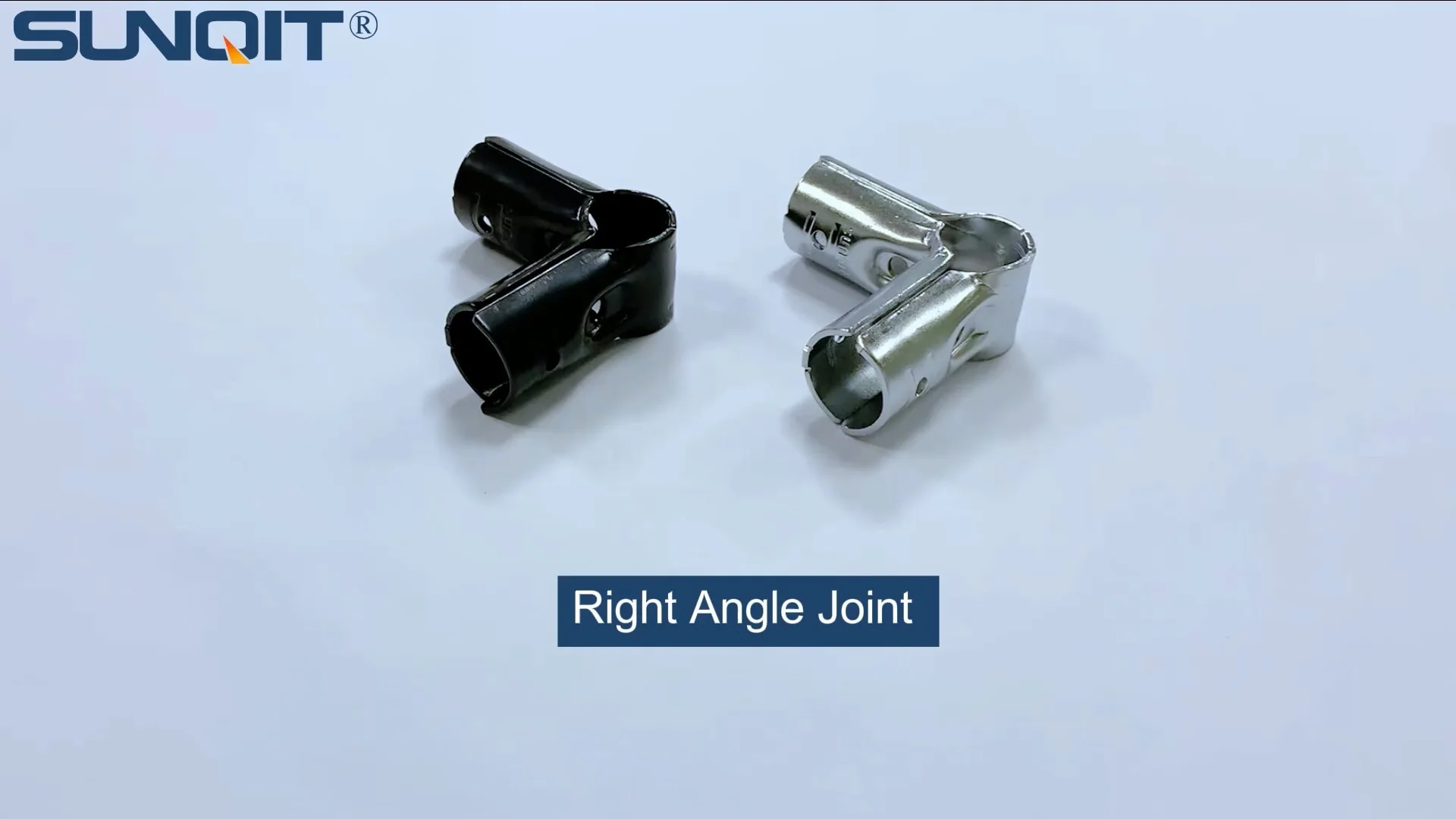
In the bustling world of large-scale production, where every second counts and efficiency is the lifeblood of operations, it's easy to fixate on the big players—the massive assembly lines, high-tech robotics, and state-of-the-art machinery. But anyone who's walked a factory floor knows the truth: the smallest components often hold the biggest impact. Enter the three way lean pipe joint, a humble yet indispensable part of modern lean systems that quietly keeps production agile, adaptable, and waste-free. In this article, we'll explore how this unassuming connector has become a cornerstone of large facilities, supporting everything from workbenches to flow racks and ensuring that when production needs shift, your infrastructure can shift with it.
Understanding Lean Systems in Modern Factories
Before diving into the specifics of the three way lean pipe joint, let's take a step back to understand the "why" behind lean systems. At their core, lean systems are all about eliminating waste—whether that's wasted time, materials, or space—and fostering continuous improvement. In large facilities, where production lines can stretch the length of football fields and hundreds of workers collaborate daily, waste isn't just inefficiency; it's a bottleneck that can grind operations to a halt.
Modularity is the secret sauce of lean systems. Unlike rigid, fixed infrastructure (think welded steel frames that take weeks to reconfigure), lean systems are built on a foundation of pipes, joints, and accessories that can be assembled, disassembled, and reassembled in hours. This flexibility is critical in today's fast-paced manufacturing landscape, where product lines change, demand fluctuates, and new technologies require updated workflows. A factory producing smartphones today might need to pivot to smartwatch components tomorrow, and a lean system ensures that the physical workspace can keep up without costly overhauls.
The Role of Lean Pipe Joints: Small Connectors, Big Impact
If lean pipe systems are the skeleton of a flexible factory, then lean pipe joints are the joints of that skeleton—they hold everything together while allowing for movement and adaptation. These small, often metal or aluminum components are designed to connect lengths of lean pipe (or aluminum profile, in more modern setups) at various angles, creating structures that range from simple workbenches to complex flow racks and material handling systems.
Not all joints are created equal, though. Some are fixed, designed for stability in static structures, while others are rotatable, allowing for angle adjustments on the fly. There are two-way joints for straight lines, four-way joints for intersecting paths, and yes—three way lean pipe joints, which connect three pipes at once, opening up a world of 3D structural possibilities. It's this versatility that makes the three way joint a standout in large facilities, where maximizing vertical and horizontal space is often as important as efficiency.
What Makes the Three Way Lean Pipe Joint Unique?
Imagine building a bookshelf, but instead of just connecting vertical and horizontal planks, you need to add a diagonal brace for stability, or a side shelf that juts out at a 45-degree angle. That's where a three way joint shines. Unlike two-way joints, which only connect two pipes along a single axis, three way joints can link three pipes at angles ranging from 90 degrees to 180 degrees (depending on the design), enabling the creation of multi-level, multi-directional structures.
Most three way lean pipe joints are designed with ease of use in mind. Many feature a clamping mechanism that tightens around the pipes using a hex key or wrench, eliminating the need for welding, drilling, or specialized tools. This "tool-less" assembly is a game-changer in large facilities, where maintenance teams might need to reconfigure a workbench or flow rack during a single shift change. A worker with basic training can disassemble a section of a material rack, add a three way joint to extend it, and have it back in operation in under an hour—something that would take days with traditional welded metal.
Durability is another key factor. In large-scale production, structures like workbenches and turnover trolleys are subjected to constant use: tools are dropped, heavy parts are placed on shelves, and trolleys are rolled over uneven floors. Three way joints, often made from high-strength steel, aluminum, or even reinforced plastic, are built to withstand this abuse. Many can support loads of up to 500 pounds or more per joint, making them suitable for everything from lightweight electronics assembly to heavy automotive parts handling.

Applications in Large Facilities: Where Three Way Joints Shine
To truly appreciate the three way lean pipe joint, let's look at some of its most common applications in large production facilities. These are the places where its flexibility, strength, and adaptability translate directly into better workflow and reduced waste.
Workbenches: The Heart of Assembly Lines
Every assembly line has workbenches—they're where the magic happens, where workers assemble components, test products, and package goods. But not all workbenches are created equal. In a large facility, a workbench might need to have a main surface, a side shelf for tools, a lower shelf for parts bins, and a overhead rack for hanging cables or instructions. This is where three way joints come in. By connecting the vertical legs of the workbench to horizontal surfaces and overhead supports, three way joints create a stable, multi-tiered workspace that keeps everything within arm's reach. And when the product changes—say, from assembling small circuit boards to larger mechanical parts—the workbench can be reconfigured: add a deeper top shelf with a three way joint, extend the legs for standing-height work, or attach a side rack for larger tools. No need to buy a whole new workbench; just adjust the existing one.
Flow Racks: Keeping Materials Moving
Flow racks are the unsung heroes of material handling, using gravity to feed parts from the back (where they're stocked) to the front (where workers pick them). In large facilities, flow racks can stretch for dozens of feet and hold thousands of parts, so stability and flexibility are critical. Three way joints are used here to connect the vertical supports, horizontal rails, and diagonal braces that make up the rack's frame. For example, a material rack with three rows and three floors (a common setup in automotive plants) relies on three way joints to connect the vertical posts to the horizontal beams of each floor, ensuring that the structure can support the weight of heavy plastic bins full of parts. If production increases and a fourth floor is needed, workers can simply add more pipes and three way joints to extend the rack upward—no need to tear it down and start over.
Turnover Trolleys: Mobility with Stability
Turnover trolleys are essential for moving materials between stations in a large facility, from the warehouse to the assembly line, or from QA to shipping. These trolleys need to be lightweight enough to push by hand but sturdy enough to carry heavy loads. Three way joints are used to build the trolley's frame, connecting the vertical handles, horizontal shelves, and caster-mounted base. A well-designed trolley might use three way joints to add a middle shelf for smaller parts, or a diagonal brace between the handle and base to prevent tipping when loaded. And if a trolley needs to be repurposed—say, from carrying boxes to holding tools—adding a three way joint to attach a tool rack is a quick fix.
Case Study: A Day in the Life of an Automotive Plant
Let's put this into context with a real-world example. Consider a large automotive manufacturing plant that produces multiple car models on the same assembly line. One week, they're assembling sedans with smaller engines; the next, they switch to SUVs with larger, heavier components. The workbenches where engine parts are prepped need to be taller to accommodate the SUV engines, and the flow racks feeding those workbenches need to hold bigger bins.
In a traditional setup, this might require ordering new workbenches and flow racks, which could take weeks to arrive and install. But with a lean system built on three way lean pipe joints, the plant's maintenance team can act fast. They disassemble the existing workbenches, use three way joints to extend the legs by 6 inches, and reattach the top shelves. For the flow racks, they add vertical pipes using three way joints to create a fourth floor, allowing more bins to be stored without taking up extra floor space. The entire process takes less than a day, and production never skips a beat. That's the power of the three way joint in action.

Comparing Lean Pipe Joint Types: When to Choose Three Way
To understand why three way joints are so valuable, it helps to compare them to other common lean pipe joint types. Below is a table breaking down key differences, including their primary uses, load capacities, and flexibility.
| Joint Type | Primary Use | Typical Load Capacity | Flexibility (Angle Adjustment) | Best For |
|---|---|---|---|---|
| Two Way Lean Pipe Joint | Connecting two pipes along a straight line or 90° angle | Up to 400 lbs per joint | Low (fixed angles only) | Simple structures: straight shelves, single-level racks |
| Three Way Lean Pipe Joint | Connecting three pipes at 90°, 45°, or 180° angles | Up to 500 lbs per joint | Medium-High (some models swivel for angle adjustment) | Multi-level structures: workbenches with shelves, flow racks, trolleys |
| 90° Crossing Lean Pipe Joint | Connecting four pipes in a cross shape (e.g., vertical and horizontal intersecting) | Up to 450 lbs per joint | Low (fixed 90° angles) | Grid-like structures: overhead racks, partition walls |
| Rotary (Swivel) Three Way Joint | Connecting three pipes with adjustable angles (rotates 360°) | Up to 350 lbs per joint | High (infinitely adjustable angles) | Dynamic structures: adjustable workbenches, tiltable flow racks |
As the table shows, three way joints strike a balance between load capacity and flexibility, making them ideal for the most common challenges in large facilities. While two-way joints are simpler, they lack the multi-directional support needed for complex structures, and rotary joints, while flexible, often can't handle the same weight. For most day-to-day applications—workbenches, flow racks, trolleys—the three way joint is the sweet spot.

Materials Matter: Aluminum vs. Steel Three Way Joints
When choosing a three way lean pipe joint, material is a key consideration, and the two most common options are steel and aluminum. Each has its own advantages, depending on the facility's needs.
Steel three way joints are the workhorses of heavy-duty applications. They're strong, durable, and relatively inexpensive, making them a popular choice for automotive plants, warehouses, and other environments where loads are heavy and wear and tear is high. Many steel joints are coated in zinc or plastic to resist rust, extending their lifespan in humid or dusty conditions.
Aluminum three way joints, on the other hand, are lighter and more corrosion-resistant, making them ideal for cleanrooms, food processing facilities, or pharmaceutical plants where hygiene and weight matter. Aluminum lean pipe and aluminum profile systems are also popular in electronics manufacturing, where static control (ESD protection) is critical—many aluminum joints can be grounded to prevent electrostatic discharge that could damage sensitive components. While aluminum joints often have a slightly lower load capacity than steel, they're easier to handle during assembly, reducing worker fatigue during reconfigurations.
Some facilities even mix materials: using steel three way joints for the base of a flow rack (where the heaviest loads sit) and aluminum joints for the upper shelves (where lighter parts are stored). This hybrid approach balances strength and weight, ensuring the structure is both durable and easy to move if needed.
Accessories That Enhance Three Way Joint Performance
A three way lean pipe joint is only as good as the accessories that support it. In large facilities, pairing joints with the right accessories can turn a basic structure into a fully optimized workflow tool. Here are a few key accessories to consider:
- Casters and Wheels: Adding casters to a trolley or workbench frame (connected via three way joints) turns a static structure into a mobile one. Heavy-duty casters with brakes are essential for safety, ensuring that trolleys stay put when loading or unloading.
- End Caps and Pipe Covers: These plastic or rubber caps fit over the ends of lean pipes, preventing sharp edges that could snag clothing or damage parts. They're a small detail but critical for worker safety in busy facilities.
- Roller Track and Swivel Balls: When building flow racks, attaching roller track (via three way joints) allows bins to glide smoothly from the back to the front. Swivel roller balls (1 inch or 0.5 inch) are great for workbench surfaces, letting workers slide heavy parts across the table with minimal effort.
- Clamps and Brackets: Pipe clamps secure tools, cables, or bins to the structure, keeping the workspace organized. Brackets can be attached to three way joints to add shelves, hooks, or even small monitors for digital work instructions.
By combining three way joints with these accessories, facilities can create custom solutions tailored to their unique needs. For example, a workbench in an electronics plant might use three way joints to support a main surface, a side shelf with roller track for parts bins, and a overhead rack with hooks for tools—all in one compact, adaptable unit.
Installation and Maintenance: Keeping Joints in Top Shape
Even the best three way lean pipe joint won't perform well if it's installed incorrectly or neglected. In large facilities, where hundreds of joints might be in use, a proactive approach to installation and maintenance is key.
Installation Tips: Always start with a clear plan. Sketching the structure (even roughly) before assembly can prevent mistakes, especially when using three way joints to create complex angles. When tightening the joint's clamp, follow the manufacturer's torque guidelines—over-tightening can strip threads or crack the joint, while under-tightening can lead to wobbling or collapse. For tall structures like flow racks, use a level to ensure vertical pipes are straight; a slight lean can put extra stress on three way joints at the base.
Maintenance Checks: Schedule regular inspections (monthly is a good start) to check for loose joints, especially in high-traffic areas like assembly lines or near loading docks. A quick tighten with a hex key can prevent a small wobble from turning into a structural failure. Also, clean joints regularly—dust, oil, and debris can build up in the clamping mechanism, making it harder to adjust later. For aluminum joints, wipe down with a mild cleaner to prevent corrosion; for steel, check for rust and touch up with paint if needed.
Future Trends: The Three Way Joint in Smart Factories
As factories evolve into smart, connected spaces (Industry 4.0), the role of the three way lean pipe joint is set to grow even more important. Here's how:
Integration with IoT: Some manufacturers are experimenting with "smart joints" embedded with sensors that monitor load capacity, vibration, or temperature. For example, a three way joint in a flow rack might send an alert to maintenance if it detects a load exceeding its capacity, preventing a collapse. This data can also help facilities optimize workflows by identifying which structures are underused or overloaded.
Sustainable Materials: With a focus on eco-friendly manufacturing, we're seeing more three way joints made from recycled aluminum or biodegradable plastics. These materials maintain strength while reducing the facility's carbon footprint.
3D-Printed Custom Joints: For ultra-specific applications, 3D printing allows facilities to create custom three way joints with unique angles or features (like built-in cable management). While still niche, this technology could make lean systems even more adaptable in the future.
Conclusion: The Unsung Hero of Flexible Production
In the grand scheme of large-scale production, the three way lean pipe joint might not get the same attention as a robotic arm or a high-speed conveyor belt. But as we've explored, its impact is undeniable. It's the connector that turns rigid infrastructure into flexible systems, the enabler of quick reconfigurations, and the backbone of lean principles like waste reduction and continuous improvement. Whether it's supporting a workbench on an assembly line, holding up a flow rack in a warehouse, or stabilizing a turnover trolley in a shipping area, the three way joint quietly ensures that large facilities can adapt, grow, and thrive in an ever-changing market.
So the next time you walk through a factory floor, take a moment to look at the structures around you—the workbenches, the racks, the trolleys. Chances are, there's a three way lean pipe joint holding them together, doing its job so well that you might not even notice it. And that, in the end, is the mark of a truly essential component: it works so seamlessly that it becomes part of the background, letting the real stars—your workers and your products—shine.