- Company Articles
- Products and Technology
- Technology Sharing
- Latest Innovations in Suction Cup Anti-Slip Foot Adjuster Technology

Latest Innovations in Suction Cup Anti-Slip Foot Adjuster Technology
Related Product
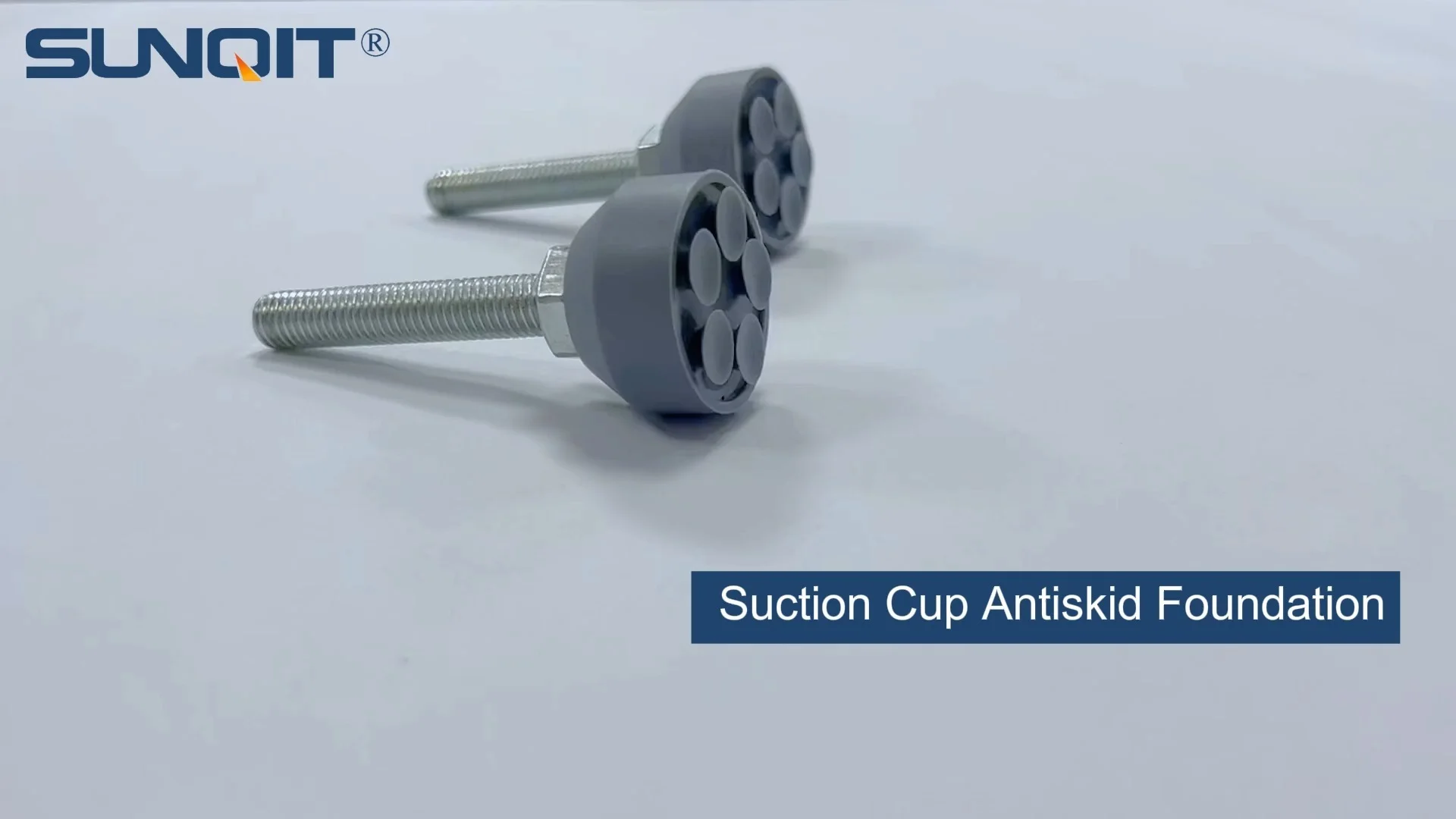
Suction Cup Anti-slip Foot Adjuster
D=35mm suction cup anti-slip foot adjusterï¼screw M10*55ï¼with a blot, used for workbench, flowrack pipe contact with groud.
How small upgrades are transforming stability, safety, and efficiency on the factory floor
The Unsung Hero of Industrial Stability
Walk into any manufacturing plant, warehouse, or assembly facility, and you'll notice the big players: the roaring machinery, the conveyor belts zipping products along, the workers in bright vests focused on their tasks. But if you look closer—under the workbenches, beside the roller tracks, at the base of material racks—you'll find a component so, it's often overlooked. Yet its impact is enormous: the foot adjuster. Specifically, the suction cup anti-slip foot adjuster, a technology quietly revolutionizing how we build, work, and stay safe in industrial spaces.
For decades, foot adjusters have been the silent guardians of stability. They keep workbenches level, prevent roller tracks from shifting, and stop heavy equipment from wobbling during operation. But as manufacturing evolves—leaner, faster, more precise—the demands on these small but critical tools have grown. Today's facilities need adjusters that don't just "work"; they need adjusters that adapt, endure, and enhance the human experience of work. Enter the latest innovations in suction cup anti-slip foot adjusters: a blend of smart design, durable materials, and user-centric engineering that's turning "good enough" into "game-changing."
From Basic to Brilliant: The Evolution of Foot Adjusters
To appreciate today's innovations, it helps to understand where we've been. Traditional foot adjusters were simple affairs: often a metal bolt with a rubber pad, twisted by hand to raise or lower a piece of equipment. They did the job—sort of. But they had flaws: rubber pads wore out quickly, metal bolts rusted in humid environments, and adjusting them required brute force, especially when gloves were on. Worse, they rarely provided true "anti-slip" protection; on smooth or oily floors, even a slightly loose adjuster could send a workbench sliding mid-task.
Then came the first generation of suction cup models. A rubber or silicone cup replaced the flat pad, creating a tighter seal with the floor. It was a step forward, but early designs had limits: the cups were prone to tearing, suction weakened on uneven surfaces, and they still relied on manual adjustment that felt more like a chore than a tool. For workers like Raj, a third-shift assembler at an electronics plant, this meant starting each shift with a 10-minute battle: kneeling, grunting, and twisting adjusters to stabilize his workbench, only to have it wobble again by lunch as the cups lost grip.
| Feature | Traditional Foot Adjusters | Latest Suction Cup Anti-Slip Models |
|---|---|---|
| Material | Basic rubber pads, steel bolts | Reinforced silicone suction cups, aluminum alloy bodies |
| Grip Strength | Moderate; relies on friction alone | High; combines suction, friction, and pressure distribution |
| Adjustability | Manual twist; requires effort, no visual cues | Ergonomic knobs, color-coded indicators, self-leveling options |
| Durability | 6–12 months; prone to rust, pad wear | 3–5 years; corrosion-resistant, tear-proof cups |
| Compatibility | Limited to flat, dry surfaces | Works on concrete, tile, even slightly uneven or oily floors |
Today's models? They're a different beast. Think of them as the "Swiss Army Knife" of stability: designed to adapt to real-world conditions, easy to use, and built to last. Let's break down the innovations driving this transformation.

The Innovations Redefining Stability
1. Materials That Outlast the Workday
At the heart of any foot adjuster is its ability to stand up to the chaos of the factory floor: oil spills, heavy loads, constant vibration, and the occasional bump from a forklift. The latest suction cup anti-slip adjusters tackle this with a material revolution, starting with the cup itself. Instead of basic rubber, manufacturers now use high-grade silicone blends—resistant to oils, chemicals, and temperatures from -40°C to 200°C. These cups don't just "stick"; they seal , even on slightly porous surfaces like concrete. And they're tough: drop a 50kg toolbox on one, and it bounces back without a tear.
Then there's the body of the adjuster. Many now feature aluminum alloy frames (a nod to the durability of aluminum profile systems, a staple in modern lean system setups). Aluminum is lightweight but strong, resisting rust and corrosion even in humid or washdown environments. It also conducts heat poorly, so adjusters stay cool to the touch—no more burning fingers when adjusting near hot machinery.
2. Design That Puts Workers First
In the past, adjusting a foot adjuster meant getting on your knees, fumbling with a wrench, and hoping for the best. Today's models? They're designed for people , not just machines. Take the ergonomic adjustment knob: textured, oversized, and shaped to fit a gloved hand. A quick twist—no tools needed—raises or lowers the adjuster with minimal effort. Some models even have a "click" mechanism, so you can feel when it's locked into place, eliminating guesswork.
But the real breakthrough is self-leveling technology. On uneven floors (and let's face it, few factory floors are perfectly flat), traditional adjusters require tedious tweaking of each foot to balance a workbench. New self-leveling models use a spring-loaded design: the suction cup automatically tilts up to 5 degrees, conforming to the floor's contour and maintaining full contact. For someone like Mei, who assembles precision medical devices, this means no more "rocking" workbenches mid-task—her tools stay put, and her focus stays on the job, not on stability.
"Before, I'd spend 15 minutes every morning adjusting my workbench," Mei recalls. "If the floor was uneven, one corner would lift, and my circuit boards would slide. Now? I twist the knob until I hear the 'click,' and it stays level all day. Last week, we had a spill—oil on the floor—and my bench didn't budge. That's peace of mind."
3. Suction That Doesn't Quit
The "anti-slip" in "suction cup anti-slip" is no longer just a marketing term. Today's cups use a dual-action design: when lowered, they first compress to expel air, creating an initial vacuum. Then, as the equipment's weight bears down, tiny grooves in the cup's surface channel away any remaining air or liquid (like oil or water), strengthening the seal. Some models even add a "release valve"—a small button that breaks the suction when it's time to move the equipment, so you don't have to yank or pry.
This matters because stability isn't just about safety; it's about consistency. On a roller track system, for example, even a 1mm shift can disrupt material flow, causing jams or damaging products. With suction cup adjusters, the track stays anchored, ensuring smooth, predictable movement. For facilities running 24/7, that translates to less downtime, fewer damaged goods, and happier operators who don't have to stop production to realign tracks.

Integration with Lean Systems: More Than Just Stability
In today's manufacturing world, "lean" isn't just a buzzword—it's a way of life. Lean systems prioritize efficiency, waste reduction, and continuous improvement, and the latest foot adjusters fit right into this philosophy. How? By solving problems that create hidden waste: time spent adjusting equipment, rework due to unstable surfaces, and injuries from slips or falls.
Consider a typical lean goal: reducing setup time. In a facility using traditional adjusters, changing a workbench's configuration (say, switching from assembling small parts to large components) might take 20 minutes of adjusting, testing, and readjusting feet. With self-leveling suction cup models, that time drops to 5 minutes. Multiply that by 10 workbenches and 5 setups a day, and you're saving hours of labor—time that can be redirected to value-adding tasks.
Then there's durability. Lean systems hate waste, and replacing worn-out adjusters every few months is a classic example of "preventable waste." The latest models, with their aluminum alloy bodies and tear-resistant silicone cups, last 3–5 years instead of 6–12 months. That's fewer orders, fewer replacements, and less downtime—all while keeping the facility running smoothly.

Real-World Impact: Workbenches, Roller Tracks, and Caster Wheels
Let's ground this in specifics. Where do these innovations shine brightest? Three areas stand out: workbenches, roller tracks, and equipment with caster wheels.
Workbenches: The Heart of the Operation
Workbenches are where the magic happens—assembly, inspection, packaging—and they're also where stability matters most. A wobbly workbench isn't just annoying; it's a precision killer. For workers assembling microchips or wiring harnesses, a single slip can ruin hours of work. The latest suction cup adjusters transform these workhorses into havens of stability. Take Workbench E (a single-deck model without casters, a popular choice in electronics and light manufacturing). Equipped with self-leveling suction cup adjusters, it stays rock-steady even when tools are dropped or heavy parts are placed on one corner. Workers report fewer errors, less eye strain (from leaning to compensate for wobble), and a noticeable boost in confidence.
Roller Tracks: Smooth Flow, No Surprises
Roller tracks are the arteries of a facility, moving materials from station to station. But they're only as good as their foundation. Even a slight dip or shift in the track can cause jams, slowing production. Suction cup adjusters ensure the track's supports stay anchored, maintaining consistent alignment. For example, Material Rack B (a 3-row, 3-floor model common in warehouses) uses these adjusters to keep its roller tracks level, even when loaded with heavy boxes. The result? Boxes glide smoothly, no more "stuck" items, and workers spend less time troubleshooting and more time moving inventory.
Caster Wheels: Mobility Meets Stability
Many facilities use equipment on caster wheels for flexibility—think mobile workstations or portable tool carts. The challenge? Balancing mobility (casters down) with stability (casters up). Old adjusters often required lifting the equipment to engage, a back-straining task. New suction cup models solve this with a "one-touch" system: step on a pedal to raise the casters, and the adjusters lower automatically, suction cups engaging as they touch the floor. When it's time to move, step on the pedal again—the release valve breaks the suction, casters drop, and you're rolling. It's seamless, safe, and saves workers from unnecessary lifting.
The Bottom Line: Why It Matters for Workers and Businesses
At the end of the day, innovations in suction cup anti-slip foot adjusters are about more than "better hardware"—they're about better work. For workers, they mean less frustration, fewer aches from kneeling or lifting, and the confidence that their tools won't fail them mid-task. For businesses, they mean higher productivity, lower costs, and a safer workplace—all of which add up to a stronger bottom line.
Raj, the third-shift assembler we met earlier, sums it up best: "I used to dread adjusting my workbench. Now? I don't even think about it. It's stable, it's easy, and I can focus on my job. That's the difference between just working and working well ."
Looking Ahead: What's Next for Foot Adjuster Tech?
The future of suction cup anti-slip foot adjusters is bright—and surprisingly high-tech. Manufacturers are already experimenting with sensors that monitor suction strength, alerting maintenance when a cup needs replacement. Others are exploring IoT integration: adjusters that "talk" to facility management systems, reporting on floor conditions (like oil spills) or equipment movement patterns to optimize workflow. There's even talk of "smart" cups that change color when they're losing grip, giving workers a visual cue before stability becomes an issue.
But perhaps the most exciting trend is miniaturization. As facilities adopt smaller, more flexible equipment (think collaborative robots or compact assembly cells), adjusters are shrinking too—without losing strength. A new generation of "micro" suction cups, just 2 inches in diameter, can stabilize equipment weighing up to 500kg, opening doors for tighter, more efficient layouts.
Conclusion: Small Tool, Big Impact
Suction cup anti-slip foot adjusters may not be the flashiest technology in the factory, but they're among the most vital. They remind us that innovation isn't just about big machines or cutting-edge software—it's about improving the tools we use every day, making work safer, easier, and more human. As manufacturing continues to evolve, these small but mighty adjusters will keep standing (literally) at the foundation of progress.
So the next time you walk through a facility, take a moment to look down. Under those workbenches, beside those roller tracks, you'll see the future of manufacturing: not in the robots or the conveyor belts, but in the quiet, unassuming tools that make it all possible. And that's something worth celebrating.