- Company Articles
- Products and Technology
- Product knowledge
- Lead Time for 3030b EU Standard Aluminum Profile Orders: What to Expect

Lead Time for 3030b EU Standard Aluminum Profile Orders: What to Expect
Related Product
3030B EU Standard Aluminum Profile
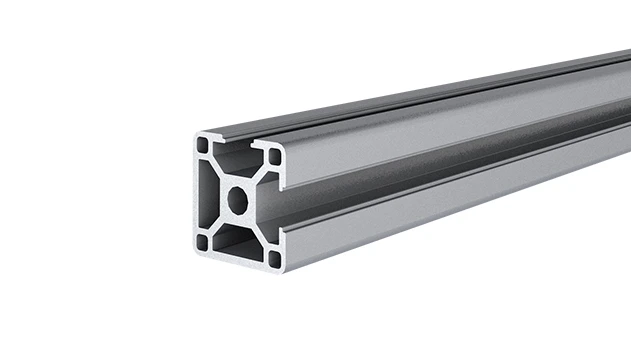
3030 is a 3.00 x 3.00CM fractional 30 series square extrusion T-slot profile with two side open T-slots, each side with 3.00cm face, 2 side with open slot, 2 side with closed face. The profile has align-a-grooves to assist in aligning connecting profiles.
Navigating the timelines that keep your manufacturing line moving
Imagine waiting weeks for a critical component, only to have your production line grind to a halt because it didn't arrive on time. For manufacturers, workshops, and facility managers, lead time isn't just a number on a quote—it's the backbone of operational efficiency. When it comes to aluminum profiles, a material so integral to lean systems, workbenches, and material racks, getting lead time right can mean the difference between meeting deadlines and missing opportunities. And if you're in the market for the 3030b EU Standard Aluminum Profile —one of the most versatile and widely used profiles in industrial setups—understanding its lead time isn't just helpful; it's essential.
In this article, we'll break down everything you need to know about lead times for 3030b EU Standard Aluminum Profile orders. From the factors that stretch or shorten timelines to how your choice of aluminum profile supplier impacts delivery, we'll cover the ins and outs of planning your next order. Whether you're building a new lean system, upgrading workbenches, or scaling up production, this guide will help you set realistic expectations and keep your operations running smoothly.
What is 3030b EU Standard Aluminum Profile, Anyway?
Before diving into lead times, let's make sure we're all on the same page about the star of the show: the 3030b EU Standard Aluminum Profile. If you've ever walked through a manufacturing plant, warehouse, or even a modern office, you've probably seen it without realizing it. This profile is a workhorse—its name gives away its key spec: 30mm x 30mm in cross-section, with a "b" designation that refers to specific groove dimensions and wall thickness (typically around 2mm) under EU standards.
Why is it so popular? For starters, it's incredibly versatile. Its T-slot design (the grooves running along its length) lets you easily attach aluminum profile accessories like connectors, end caps, hinges, and brackets—no welding or drilling required. This makes it perfect for building everything from workbenches and material racks to machine guards and lean system structures. It's also lightweight yet strong, corrosion-resistant, and compatible with other EU-standard profiles, making it a favorite for both small workshops and large-scale production facilities.
In short, the 3030b isn't just a piece of metal—it's a building block for efficiency. And when you're relying on it to build or upgrade your operations, knowing how long it will take to arrive is crucial.
Factors That Shape Lead Time: Why Your Order Might Take 2 Weeks (or 8)
Lead time for 3030b aluminum profiles isn't a one-size-fits-all number. It's a puzzle made up of several pieces, and each piece can shift the timeline. Let's break down the biggest factors that influence how long you'll wait for your order.
1. Raw Material Availability: The Starting Line
Every 3030b profile starts as an aluminum billet—a solid cylinder of aluminum alloy. If there's a shortage of billets (due to high demand, supply chain disruptions, or even geopolitical issues), your supplier might have to wait to start production. For example, in 2022, global aluminum prices spiked due to energy costs, leading to delays as suppliers prioritized high-volume orders. Even if your supplier has billets on hand, if they're using a specific alloy (like 6063-T5, common for extrusions), availability can vary.
2. The Manufacturing Process: From Billet to Profile
Turning a billet into a 3030b profile involves several steps, each adding time:
- Extrusion: The billet is heated, then pushed through a die to form the 30mm x 30mm shape with T-slots. This is fast for standard profiles, but if the die for 3030b is being used for another order, you might wait for it to be cleaned and prepped.
- Finishing: Most 3030b profiles get a finish—like anodizing (for corrosion resistance) or powder coating (for color and durability). Anodizing can take 1-3 days per batch, while powder coating adds a day or two for curing. If you need a custom color, that might mean longer waits as the supplier mixes the paint.
- Quality Checks: Reputable suppliers test profiles for straightness, dimensional accuracy, and finish quality. If a batch fails (e.g., warped profiles or uneven coating), it goes back to the drawing board—adding days to the timeline.
3. Order Complexity: Standard vs. "One-of-a-Kind"
A standard order—say, 100 pieces of 3030b profile, 2 meters long, with a standard anodized finish—will move much faster than a custom order. Why? Because standard specs are what suppliers produce regularly. They might even have them in stock. But if you need:
- Unusual lengths (e.g., 2.7 meters instead of 2m or 3m)
- Special finishes (like a textured powder coat or hard anodizing)
- Additional machining (drilled holes, notches, or custom cuts)
Your supplier will need to adjust their production line, which takes time. For example, a supplier we spoke to noted that adding custom holes to 3030b profiles can add 3-5 days to lead time, as each piece has to be clamped and drilled individually.
4. Supplier Capacity: How Busy Is Your Supplier?
If your aluminum profile supplier is swamped with orders, your 3030b request might end up at the back of the queue. Large suppliers with multiple extrusion presses can handle more orders, but even they have limits. Smaller suppliers might only have one press, so if it's down for maintenance or tied up with a big order, your lead time could stretch. Seasonality also plays a role—many manufacturers ramp up orders in Q1 to prepare for the year, so suppliers often see a rush in January and February, leading to longer lead times.
5. Logistics: Getting It to Your Door
Even if production finishes on time, shipping can throw a wrench in the timeline. If your supplier is local (e.g., within the same country), shipping might take 1-3 days. But if you're ordering from overseas (common for lower costs), you could face:
- Ocean freight (3-6 weeks for transatlantic or transpacific shipping)
- Customs clearance (which can take days or weeks if paperwork is missing)
- Last-mile delivery delays (especially for large or heavy shipments)

Typical Lead Time Breakdown: What to Expect for Your Order
Now that we know the factors, let's talk numbers. Based on industry data and interviews with suppliers, here's a general guide to lead times for 3030b EU Standard Aluminum Profile orders. Keep in mind these are estimates—always confirm with your supplier!
| Order Type | Description | Estimated Lead Time | Key Notes |
|---|---|---|---|
| In-Stock Standard | Standard length (2m/3m), standard finish (anodized), no customization. | 1-3 business days | Rare for large quantities; best for small orders (10-50 pieces). |
| Standard Production | Standard specs, but not in stock; requires extrusion and finishing. | 2-4 weeks | Most common for medium-large orders (50-500 pieces). |
| Custom Order | Non-standard lengths, finishes, or machining (drilling, notches). | 4-8 weeks | Time increases with complexity (e.g., special finishes add 1-2 weeks). |
| Rush Order | Standard specs, prioritized production. | 1-2 weeks | Often has a 20-50% price premium; depends on supplier capacity. |
Remember, these are averages. A local supplier might deliver standard orders in 2 weeks, while an international one could take 4-6 weeks (including shipping). Always ask for a detailed timeline breakdown when requesting a quote—reputable suppliers will be happy to explain where the time goes.
The Supplier Effect: How Choosing the Right Partner Cuts Lead Time
Your aluminum profile supplier isn't just a vendor—they're a partner in your timeline. A supplier with a streamlined process, strong inventory management, and clear communication can turn a stressful wait into a smooth experience. Here's what to look for:
Lean Systems: Efficiency from Start to Finish
Suppliers who use lean system principles (like Toyota's famous lean manufacturing) are often faster. Lean focuses on reducing waste—whether that's excess inventory, idle time, or unnecessary steps in production. For example, a lean supplier might keep a small stock of 3030b profiles to cover sudden orders, or use just-in-time (JIT) production to avoid bottlenecks. When we visited a lean-focused supplier in Germany, they showed us how their extrusion presses are scheduled back-to-back for similar profiles (like 3030b and 3030a), reducing die changeover time from 2 hours to 30 minutes. That adds up to faster lead times!
Transparency: No More "It's in Transit" Excuses
The best suppliers keep you in the loop. They'll send order confirmations with a clear timeline, update you if there's a delay (and why), and provide tracking info once it ships. Avoid suppliers who are vague about lead times or slow to respond to questions—those are red flags for potential delays.
Local vs. International: Weighing Speed vs. Cost
International suppliers (especially from Asia) often offer lower prices, but shipping can add 2-6 weeks to lead time. Local suppliers (within your country or region) might charge more, but they can deliver in 2-4 weeks for standard orders. For example, a U.S.-based manufacturer ordering from a Chinese supplier might wait 6-8 weeks total (production + shipping), while a German manufacturer ordering from a Polish supplier could get their 3030b profiles in 3 weeks. If you need the profiles quickly, paying a bit more for a local supplier might be worth it.
Aluminum Profile Accessories: The Hidden Lead Time Factor
Here's a common mistake: focusing only on the lead time for the 3030b profiles and forgetting about the aluminum profile accessories you need to assemble them. Connectors, end caps, hinges, and brackets are essential for building workbenches, racks, or lean systems. If your accessories come from a different supplier—or if your main supplier doesn't have them in stock—they could arrive after your profiles, leaving you with a pile of metal and no way to put it together.
To avoid this, ask your supplier if they can bundle accessories with your 3030b order. Many suppliers stock common accessories (like 90° connectors or T-slot end caps) and can ship them with the profiles, adding 0-3 days to the lead time. For custom accessories (like special hinges or brackets), you might need to order them separately, so factor in their lead time too (usually 1-4 weeks, depending on complexity).
Tips to Manage Lead Time: How to Avoid Delays (or At Least Plan For Them)
Even with the best supplier, delays can happen. But with a little planning, you can minimize their impact. Here are our top tips:
1. Order Early (Like, Really Early)
This might seem obvious, but it's worth repeating: Don't wait until the last minute. If you know you'll need 3030b profiles for a project starting in 8 weeks, order them at week 4 (not week 6). This gives you a buffer for delays.
2. Build Relationships with Multiple Suppliers
Having a backup supplier can save you if your main one hits a snag. Even if you don't order from them regularly, maintaining a relationship means you can turn to them for rush orders or emergencies.
3. Ask for a Detailed Timeline (and Get It in Writing)
When requesting a quote, ask for a breakdown: "When will production start? When will it finish? When will it ship?" A reputable supplier will provide these details. Put them in your order agreement so there's no confusion later.
4. Consider Safety Stock for Critical Profiles
If your operations rely heavily on 3030b profiles (e.g., you build workbenches for clients), keep a small safety stock (10-20% of your typical monthly usage). It takes up space, but it can keep production running if an order is delayed.
Conclusion: Lead Time is Manageable—With the Right Knowledge
Lead time for 3030b EU Standard Aluminum Profile orders doesn't have to be a mystery. By understanding the factors that influence it—raw materials, manufacturing complexity, supplier capacity, and logistics—you can set realistic expectations and plan accordingly. Remember, the key is to partner with a reliable aluminum profile supplier who communicates clearly and uses efficient processes (like lean system principles) to keep timelines on track.
Whether you're ordering standard profiles for a quick upgrade or custom pieces for a unique project, a little preparation goes a long way. With the right approach, you'll have your 3030b profiles in hand when you need them—keeping your production line moving, your team productive, and your operations efficient.
Here's to smooth lead times and even smoother manufacturing!