- Company Articles
- Products and Technology
- Product knowledge
- Lean Management Accessories: Adjustable Leveling Feet for Continuous Improvement

Lean Management Accessories: Adjustable Leveling Feet for Continuous Improvement
Related Product
Adjustable Leveling Feet
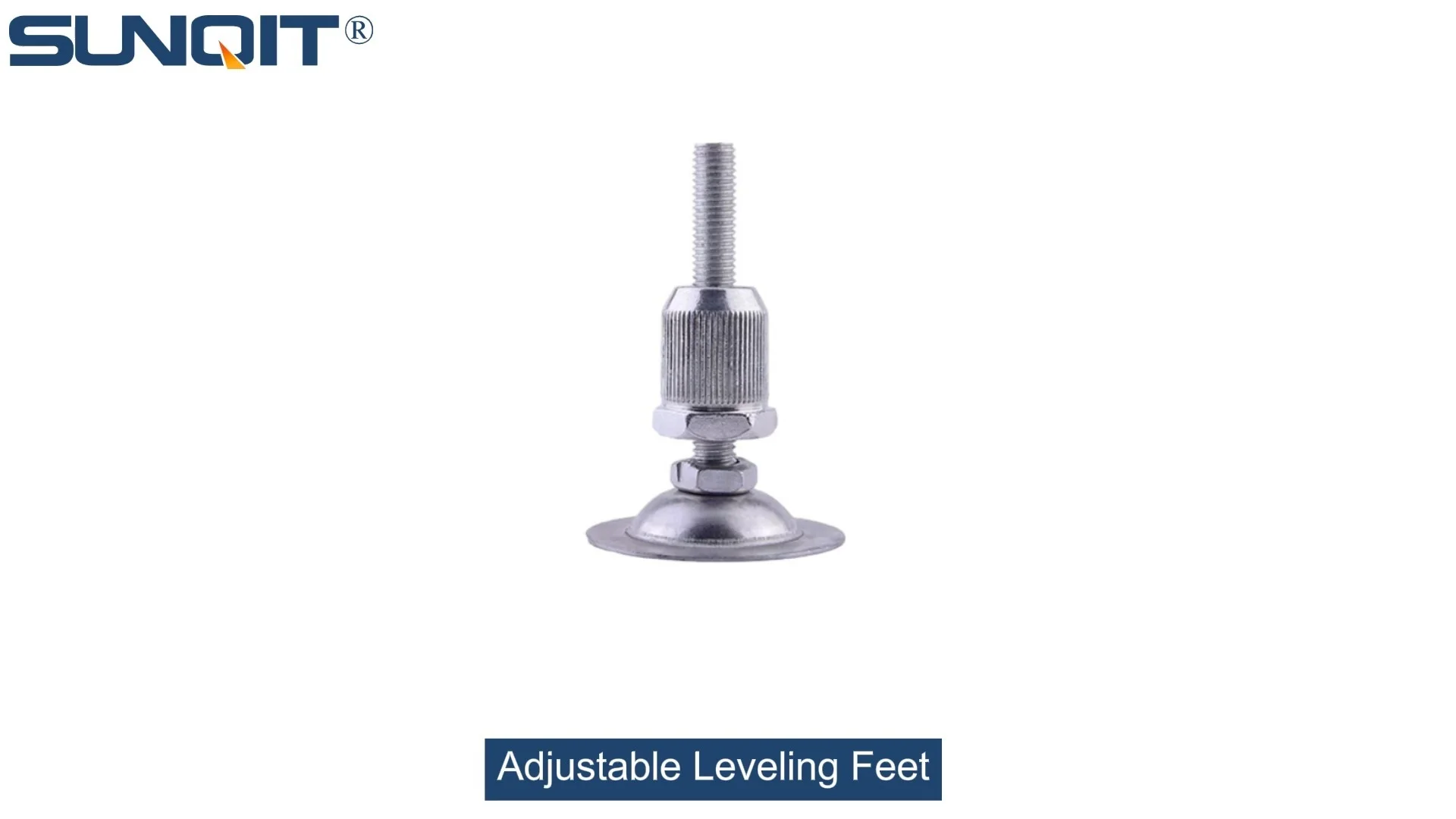
Adjustable leveling feet are designed to keep machines level when placed on uneven or sloped ground. Otherwise known as adjustable equipment feet, they are available to order in a wide variety of size and load capacity combinations.
In the world of lean management, where every process is scrutinized for efficiency and every component is evaluated for value, it's often the smallest parts that make the biggest difference. Think about the last time you walked through a manufacturing plant or a warehouse—what caught your eye? The sleek assembly lines? The organized workbenches? The buzzing conveyor belts? These are the stars of the show, but behind them, quietly holding everything together, are the unsung heroes of lean systems: accessories like adjustable leveling feet. They might not grab headlines, but without them, the stability, precision, and adaptability that lean management demands would simply fall flat. Today, we're diving into why adjustable leveling feet are more than just "parts"—they're foundational tools for continuous improvement, and how choosing the right ones can transform your workflow from good to great.
The Foundation of Lean: Why Stability Isn't Optional
Lean management is built on the idea of eliminating waste—whether that's time, resources, or effort—and creating value for customers. But here's the thing: none of that is possible without a stable foundation. Imagine a workbench where tools wobble as you use them, or a material rack that tilts under the weight of inventory, causing products to shift or even fall. In those scenarios, workers aren't focused on production—they're busy readjusting, fixing errors, or worse, dealing with accidents. That's waste in its purest form, and it's exactly what lean aims to eliminate.
Stability isn't just about preventing chaos; it's about enabling precision. In industries like electronics manufacturing, where components are smaller than a grain of rice, a level work surface can mean the difference between a perfectly assembled circuit board and a costly mistake. In logistics, a stable conveyor system ensures products glide smoothly from one station to the next, avoiding jams that disrupt the entire flow. And in ergonomics—a cornerstone of lean—stable workstations reduce strain on workers, lowering fatigue and injury rates. Simply put, stability is the quiet enabler of every lean principle, from 5S (Sort, Set in Order, Shine, Standardize, Sustain) to kaizen (continuous improvement).
This is where adjustable leveling feet step in. They're not just "feet"—they're problem-solvers. Uneven floors? Adjust them. Heavy loads? Reinforce them. Changing workflows? Adapt them. By ensuring that every piece of equipment, from workbenches to material racks, sits solidly and levelly, adjustable leveling feet lay the groundwork for efficiency. They turn wobbly setups into reliable systems, and reliable systems are where lean truly thrives.
Stability isn't just about preventing chaos; it's about enabling precision. In industries like electronics manufacturing, where components are smaller than a grain of rice, a level work surface can mean the difference between a perfectly assembled circuit board and a costly mistake. In logistics, a stable conveyor system ensures products glide smoothly from one station to the next, avoiding jams that disrupt the entire flow. And in ergonomics—a cornerstone of lean—stable workstations reduce strain on workers, lowering fatigue and injury rates. Simply put, stability is the quiet enabler of every lean principle, from 5S (Sort, Set in Order, Shine, Standardize, Sustain) to kaizen (continuous improvement).
This is where adjustable leveling feet step in. They're not just "feet"—they're problem-solvers. Uneven floors? Adjust them. Heavy loads? Reinforce them. Changing workflows? Adapt them. By ensuring that every piece of equipment, from workbenches to material racks, sits solidly and levelly, adjustable leveling feet lay the groundwork for efficiency. They turn wobbly setups into reliable systems, and reliable systems are where lean truly thrives.
What Are Adjustable Leveling Feet, Anyway?
Let's start with the basics. Adjustable leveling feet are components designed to attach to the bottom of equipment—think workbenches, racks, trolleys, or even conveyor frames—to adjust height, compensate for uneven surfaces, and ensure the equipment remains stable and level. They typically consist of three parts: a threaded stem (which screws into the equipment), a base (which touches the floor), and often a locking nut (to keep the height fixed once adjusted). The magic is in the threading: by twisting the stem, you raise or lower the base, fine-tuning the height to match the floor's contours or the needs of the task at hand.
But not all leveling feet are created equal. Some are made for light-duty use, like small workbenches in a workshop, while others are built to handle tons of weight, such as industrial material racks. Some have rubber bases for grip, others have metal for durability, and some even come with anti-slip or anti-static features for specialized environments. The key is that they're adaptable—no two floors are perfectly even, no two workflows have identical needs, and adjustable leveling feet bridge that gap.
Take, for example, a typical lean pipe workbench. These workbenches are popular in lean systems because they're modular—you can add shelves, tool holders, or lighting as needed. But even the most modular setup is useless if the bench itself isn't level. A slight tilt might not seem like a big deal, but over time, it can cause tools to roll off, materials to shift, and workers to hunch or strain to compensate. By adding adjustable leveling feet to the bench's legs, you instantly fix that. Now the bench stays level, whether the floor in your facility dips slightly near a door or rises in a corner due to years of foot traffic. It's a small change, but it turns a generic workbench into a customized, lean-friendly tool.
But not all leveling feet are created equal. Some are made for light-duty use, like small workbenches in a workshop, while others are built to handle tons of weight, such as industrial material racks. Some have rubber bases for grip, others have metal for durability, and some even come with anti-slip or anti-static features for specialized environments. The key is that they're adaptable—no two floors are perfectly even, no two workflows have identical needs, and adjustable leveling feet bridge that gap.
Take, for example, a typical lean pipe workbench. These workbenches are popular in lean systems because they're modular—you can add shelves, tool holders, or lighting as needed. But even the most modular setup is useless if the bench itself isn't level. A slight tilt might not seem like a big deal, but over time, it can cause tools to roll off, materials to shift, and workers to hunch or strain to compensate. By adding adjustable leveling feet to the bench's legs, you instantly fix that. Now the bench stays level, whether the floor in your facility dips slightly near a door or rises in a corner due to years of foot traffic. It's a small change, but it turns a generic workbench into a customized, lean-friendly tool.

Key Features of High-Quality Adjustable Leveling Feet
Not all adjustable leveling feet will deliver the stability and durability your lean system needs. To truly drive continuous improvement, you need to look for features that align with the demands of your workflow. Here are the must-haves to keep in mind:
1. Load Capacity: It's All About the Weight
The first question to ask is: How much weight will this foot need to support? A small workbench for assembling small parts might only need a foot that handles 50kg, but a material rack loaded with heavy machinery components could require 500kg or more. Choosing a foot with a load capacity that's too low is a recipe for failure—literally. Over time, the stem might bend, the base might crack, or the foot could sink into the floor, undoing all your stability efforts. Look for manufacturers that clearly state load ratings, and always opt for a foot that exceeds your expected weight (it's better to be safe than sorry).
2. Material Matters: Durability in Every Environment
Where will your equipment live? A dry, climate-controlled factory floor is gentle on most materials, but a food processing plant with frequent washdowns, a warehouse with oily floors, or an outdoor loading dock exposed to rain and snow? That's where material choice becomes critical. For example:
3. Adjustability Range: Flexibility for Imperfect Floors
No floor is perfectly flat, even in brand-new facilities. Over time, concrete settles, heavy machinery creates indentations, and wear and tear take their toll. That's why the adjustability range of a leveling foot—how much you can raise or lower it—is so important. A foot with a range of 10-20mm might work for minor unevenness, but if your floor has larger dips (say, 30mm or more), you'll need a foot with a longer stem. Some adjustable feet, like aluminum pipe adjustable leveling feet, are designed to pair with lean pipes or aluminum profiles, giving you even more flexibility to extend or shorten the stem as needed.
4. Anti-Slip and Safety Features: No More Sliding
In lean systems, safety is non-negotiable. A foot that slips on the floor isn't just unstable—it's a hazard. That's where anti-slip features come in. Many high-quality feet, like anti-slip adjustable leveling feet, have rubber bases with textured surfaces that grip the floor, even if it's slightly oily or wet. For environments where static electricity is a risk (like electronics manufacturing), some feet even come with conductive rubber bases to dissipate static, protecting sensitive components from damage.
5. Compatibility: Playing Well With Others
Lean systems are modular, which means your accessories need to play nice with existing equipment. If you're using aluminum profiles for your workbenches or material racks, you'll want leveling feet that can easily attach to those profiles—no custom drilling or adapters required. Similarly, if your setup uses lean pipes, look for feet with stems that fit standard pipe threads. The goal is to minimize hassle: the easier it is to install and adjust the feet, the faster you can get back to production.
1. Load Capacity: It's All About the Weight
The first question to ask is: How much weight will this foot need to support? A small workbench for assembling small parts might only need a foot that handles 50kg, but a material rack loaded with heavy machinery components could require 500kg or more. Choosing a foot with a load capacity that's too low is a recipe for failure—literally. Over time, the stem might bend, the base might crack, or the foot could sink into the floor, undoing all your stability efforts. Look for manufacturers that clearly state load ratings, and always opt for a foot that exceeds your expected weight (it's better to be safe than sorry).
2. Material Matters: Durability in Every Environment
Where will your equipment live? A dry, climate-controlled factory floor is gentle on most materials, but a food processing plant with frequent washdowns, a warehouse with oily floors, or an outdoor loading dock exposed to rain and snow? That's where material choice becomes critical. For example:
- Rubber bases (like those found in M10*56 rubber leveling feet) are ideal for indoor use on smooth floors. They offer excellent grip, reduce noise (no scraping when adjusting), and are often anti-slip—perfect for workbenches where tools or small parts might slide.
- Aluminum or stainless steel bases are better for harsh environments. Aluminum is lightweight and corrosion-resistant, making it a good fit for cleanrooms or electronics facilities. Stainless steel, on the other hand, stands up to moisture, chemicals, and extreme temperatures—think pharmaceutical labs or marine manufacturing.
- Plastic bases are budget-friendly and work well for light loads in dry areas, but they're not the best choice for heavy use or rough floors.
3. Adjustability Range: Flexibility for Imperfect Floors
No floor is perfectly flat, even in brand-new facilities. Over time, concrete settles, heavy machinery creates indentations, and wear and tear take their toll. That's why the adjustability range of a leveling foot—how much you can raise or lower it—is so important. A foot with a range of 10-20mm might work for minor unevenness, but if your floor has larger dips (say, 30mm or more), you'll need a foot with a longer stem. Some adjustable feet, like aluminum pipe adjustable leveling feet, are designed to pair with lean pipes or aluminum profiles, giving you even more flexibility to extend or shorten the stem as needed.
4. Anti-Slip and Safety Features: No More Sliding
In lean systems, safety is non-negotiable. A foot that slips on the floor isn't just unstable—it's a hazard. That's where anti-slip features come in. Many high-quality feet, like anti-slip adjustable leveling feet, have rubber bases with textured surfaces that grip the floor, even if it's slightly oily or wet. For environments where static electricity is a risk (like electronics manufacturing), some feet even come with conductive rubber bases to dissipate static, protecting sensitive components from damage.
5. Compatibility: Playing Well With Others
Lean systems are modular, which means your accessories need to play nice with existing equipment. If you're using aluminum profiles for your workbenches or material racks, you'll want leveling feet that can easily attach to those profiles—no custom drilling or adapters required. Similarly, if your setup uses lean pipes, look for feet with stems that fit standard pipe threads. The goal is to minimize hassle: the easier it is to install and adjust the feet, the faster you can get back to production.

Where Adjustable Leveling Feet Shine: Applications Across Lean Environments
Adjustable leveling feet aren't one-trick ponies—they're versatile tools that add value to nearly every corner of a lean operation. Let's break down some of the most common (and impactful) applications:
Workbenches: The Heart of Production
Workbenches are where the magic happens—whether it's assembling products, inspecting parts, or packing orders. But a wobbly workbench is a productivity killer. Imagine trying to solder a tiny wire or label a package when the surface moves with every tap. Adjustable leveling feet turn that frustration into focus. For example, the "Workbench E (Single Deck-Without Caster)" from many lean suppliers is a popular choice for its simplicity, but without casters, it relies entirely on leveling feet for stability. By adding anti-slip adjustable leveling feet to its legs, you ensure the bench stays rock-solid, even during repetitive tasks. Workers can concentrate on precision, not balancing, and that translates to faster, more accurate work.
Material Racks: Keeping Inventory Safe and Accessible
Material racks, like "Material Rack B (3 Row and 3 Floor)" models, are workhorses in warehouses and factories, holding everything from raw materials to finished goods. But when a rack isn't level, items can shift, stack unevenly, or even fall—wasting time, damaging products, and risking injury. Adjustable leveling feet solve this by letting you tweak each corner of the rack to match the floor's contours. Even better, as you add or remove shelves (a common lean practice to adapt to changing inventory needs), you can readjust the feet to maintain balance. It's a small step that prevents big headaches.
Conveyor Systems: Smooth Flow, No Jams
Conveyors are the arteries of lean production, moving materials from one station to the next. But if a conveyor frame is tilted, products can bunch up, slide off, or get stuck—disrupting the entire flow. Adjustable leveling feet at the base of conveyor supports ensure the belt stays level, so items glide smoothly. This is especially critical for roller track conveyors, where even a slight tilt can cause rollers to spin unevenly, slowing down or stopping the line. With leveling feet, you can fine-tune the conveyor's angle to match the product's weight and size, keeping things moving at peak efficiency.
Turnover Trolleys: Mobility Without Compromise
Turnover trolleys are essential for moving materials between workstations, but they often face a trade-off: mobility vs. stability. Trolleys with casters are easy to move, but when parked, they can roll or wobble. That's where leveling feet with "caster accessories" come in. Some trolleys are designed with both casters and leveling feet—when you need to move, you raise the feet; when you need to work, you lower them to lock the trolley in place. It's the best of both worlds: flexibility to transport materials and stability to work safely once you arrive.
ESD Workstations: Protecting Sensitive Electronics
In electronics manufacturing, ESD (electrostatic discharge) workstations are non-negotiable—they prevent static electricity from damaging delicate components like microchips. But ESD protection isn't just about mats or wristbands; it starts with the workstation itself. An unlevel ESD workbench can cause tools or parts to slide, increasing the risk of falls (and costly damage). Adjustable leveling feet with conductive rubber bases not only keep the bench stable but also help dissipate static, adding an extra layer of protection. It's a small detail that makes a big difference in quality control.
Workbenches: The Heart of Production
Workbenches are where the magic happens—whether it's assembling products, inspecting parts, or packing orders. But a wobbly workbench is a productivity killer. Imagine trying to solder a tiny wire or label a package when the surface moves with every tap. Adjustable leveling feet turn that frustration into focus. For example, the "Workbench E (Single Deck-Without Caster)" from many lean suppliers is a popular choice for its simplicity, but without casters, it relies entirely on leveling feet for stability. By adding anti-slip adjustable leveling feet to its legs, you ensure the bench stays rock-solid, even during repetitive tasks. Workers can concentrate on precision, not balancing, and that translates to faster, more accurate work.
Material Racks: Keeping Inventory Safe and Accessible
Material racks, like "Material Rack B (3 Row and 3 Floor)" models, are workhorses in warehouses and factories, holding everything from raw materials to finished goods. But when a rack isn't level, items can shift, stack unevenly, or even fall—wasting time, damaging products, and risking injury. Adjustable leveling feet solve this by letting you tweak each corner of the rack to match the floor's contours. Even better, as you add or remove shelves (a common lean practice to adapt to changing inventory needs), you can readjust the feet to maintain balance. It's a small step that prevents big headaches.
Conveyor Systems: Smooth Flow, No Jams
Conveyors are the arteries of lean production, moving materials from one station to the next. But if a conveyor frame is tilted, products can bunch up, slide off, or get stuck—disrupting the entire flow. Adjustable leveling feet at the base of conveyor supports ensure the belt stays level, so items glide smoothly. This is especially critical for roller track conveyors, where even a slight tilt can cause rollers to spin unevenly, slowing down or stopping the line. With leveling feet, you can fine-tune the conveyor's angle to match the product's weight and size, keeping things moving at peak efficiency.
Turnover Trolleys: Mobility Without Compromise
Turnover trolleys are essential for moving materials between workstations, but they often face a trade-off: mobility vs. stability. Trolleys with casters are easy to move, but when parked, they can roll or wobble. That's where leveling feet with "caster accessories" come in. Some trolleys are designed with both casters and leveling feet—when you need to move, you raise the feet; when you need to work, you lower them to lock the trolley in place. It's the best of both worlds: flexibility to transport materials and stability to work safely once you arrive.
ESD Workstations: Protecting Sensitive Electronics
In electronics manufacturing, ESD (electrostatic discharge) workstations are non-negotiable—they prevent static electricity from damaging delicate components like microchips. But ESD protection isn't just about mats or wristbands; it starts with the workstation itself. An unlevel ESD workbench can cause tools or parts to slide, increasing the risk of falls (and costly damage). Adjustable leveling feet with conductive rubber bases not only keep the bench stable but also help dissipate static, adding an extra layer of protection. It's a small detail that makes a big difference in quality control.

Driving Continuous Improvement: How Leveling Feet Fuel Lean Success
Lean management isn't a one-time project—it's a mindset of continuous improvement (kaizen). Every process, every tool, and yes, every accessory should be evaluated for how it contributes to that mindset. Adjustable leveling feet might seem simple, but their impact on kaizen is profound. Here's how:
1. Reducing Waste: No More "Do-Overs"
Waste in lean terms includes "defects"—products that don't meet quality standards and need to be reworked or scrapped. A wobbly workbench or tilted material rack is a defect waiting to happen. For example, if a worker assembles a part on an unlevel surface, measurements might be off, leading to a product that doesn't fit with others downstream. That means rework, wasted materials, and delayed timelines. Adjustable leveling feet eliminate this risk by ensuring precision from the start, cutting down on defects and the waste they create.
2. Improving Ergonomics: Happy Workers = Productive Workers
Ergonomics is about designing workspaces that fit the people who use them, reducing strain and fatigue. An unlevel workstation forces workers to compensate—leaning to one side, stretching to reach tools, or hunching over to see what they're doing. Over time, this leads to soreness, injuries, and high turnover. Adjustable leveling feet let you customize the height of workbenches and racks to match each worker's needs, promoting better posture and reducing physical stress. When workers are comfortable, they're more focused, more efficient, and less likely to take time off—all wins for lean.
3. Enhancing Safety: Fewer Accidents, More Uptime
A stable workspace is a safe workspace. Wobbly equipment is a leading cause of workplace accidents, from tools falling off benches to racks tipping over. By keeping everything level and secure, adjustable leveling feet reduce the risk of injuries, which means fewer disruptions to production, lower workers' compensation costs, and a team that feels valued (because safety is a priority). In lean, uptime is everything—accidents are one of the biggest threats to that, and leveling feet help keep the line moving.
4. Scalability: Adapt Fast Without Starting Over
Lean systems need to adapt to changing customer demands, new products, or updated processes. Maybe you're adding a new assembly step to a workbench, or expanding a material rack to hold more inventory. With adjustable leveling feet, you don't need to buy new equipment—you can modify what you have. Need to raise a workbench to accommodate a taller worker? Adjust the feet. Adding heavier shelves to a rack? Swap out the feet for higher-load ones. It's scalability without the cost, which is the essence of lean: doing more with less.
1. Reducing Waste: No More "Do-Overs"
Waste in lean terms includes "defects"—products that don't meet quality standards and need to be reworked or scrapped. A wobbly workbench or tilted material rack is a defect waiting to happen. For example, if a worker assembles a part on an unlevel surface, measurements might be off, leading to a product that doesn't fit with others downstream. That means rework, wasted materials, and delayed timelines. Adjustable leveling feet eliminate this risk by ensuring precision from the start, cutting down on defects and the waste they create.
2. Improving Ergonomics: Happy Workers = Productive Workers
Ergonomics is about designing workspaces that fit the people who use them, reducing strain and fatigue. An unlevel workstation forces workers to compensate—leaning to one side, stretching to reach tools, or hunching over to see what they're doing. Over time, this leads to soreness, injuries, and high turnover. Adjustable leveling feet let you customize the height of workbenches and racks to match each worker's needs, promoting better posture and reducing physical stress. When workers are comfortable, they're more focused, more efficient, and less likely to take time off—all wins for lean.
3. Enhancing Safety: Fewer Accidents, More Uptime
A stable workspace is a safe workspace. Wobbly equipment is a leading cause of workplace accidents, from tools falling off benches to racks tipping over. By keeping everything level and secure, adjustable leveling feet reduce the risk of injuries, which means fewer disruptions to production, lower workers' compensation costs, and a team that feels valued (because safety is a priority). In lean, uptime is everything—accidents are one of the biggest threats to that, and leveling feet help keep the line moving.
4. Scalability: Adapt Fast Without Starting Over
Lean systems need to adapt to changing customer demands, new products, or updated processes. Maybe you're adding a new assembly step to a workbench, or expanding a material rack to hold more inventory. With adjustable leveling feet, you don't need to buy new equipment—you can modify what you have. Need to raise a workbench to accommodate a taller worker? Adjust the feet. Adding heavier shelves to a rack? Swap out the feet for higher-load ones. It's scalability without the cost, which is the essence of lean: doing more with less.
Choosing the Right Adjustable Leveling Feet: A Buyer's Guide
Now that you know why adjustable leveling feet matter, how do you choose the right ones for your needs? It starts with asking the right questions. Here's a step-by-step guide to help you decide:
Step 1: Assess Your Environment
Start by looking at where the feet will be used. Is the area dry, or is it exposed to moisture (like a washdown area)? Do you need to worry about corrosion (e.g., near chemicals or saltwater)? Will the floor be smooth (concrete) or rough (asphalt)? For wet or corrosive environments, stainless steel or aluminum feet are best. For dry, indoor spaces, rubber or plastic bases might be sufficient.
Step 2: Calculate the Load
Next, figure out how much weight each foot will support. If you're adding feet to a workbench, calculate the total weight (bench + tools + materials) and divide by the number of feet (usually 4). Then, choose a foot with a load capacity that's 20-30% higher than that number to account for unexpected weight spikes (e.g., a worker leaning on the bench).
Step 3: Measure the Floor's Unevenness
Grab a level and check the floor where the equipment will sit. How much does it slope or dip? This will determine the adjustability range you need. For minor unevenness (5-10mm), a standard foot will work. For larger dips (15mm+), opt for a foot with a longer stem or extendable design.
Step 4: Check Compatibility
Make sure the feet fit your existing equipment. If you're using aluminum profiles (a common choice in lean systems), look for feet with brackets or stems that attach directly to the profile's T-slots. If you're using lean pipes, check the thread size (most lean pipes use M10 or M12 threads). The goal is to avoid adapters—they add cost and complexity.
Step 5: Compare Features (With a Little Help from Our Table)
To make it easier, we've put together a comparison of three popular types of adjustable leveling feet, based on common needs in lean systems:
Step 1: Assess Your Environment
Start by looking at where the feet will be used. Is the area dry, or is it exposed to moisture (like a washdown area)? Do you need to worry about corrosion (e.g., near chemicals or saltwater)? Will the floor be smooth (concrete) or rough (asphalt)? For wet or corrosive environments, stainless steel or aluminum feet are best. For dry, indoor spaces, rubber or plastic bases might be sufficient.
Step 2: Calculate the Load
Next, figure out how much weight each foot will support. If you're adding feet to a workbench, calculate the total weight (bench + tools + materials) and divide by the number of feet (usually 4). Then, choose a foot with a load capacity that's 20-30% higher than that number to account for unexpected weight spikes (e.g., a worker leaning on the bench).
Step 3: Measure the Floor's Unevenness
Grab a level and check the floor where the equipment will sit. How much does it slope or dip? This will determine the adjustability range you need. For minor unevenness (5-10mm), a standard foot will work. For larger dips (15mm+), opt for a foot with a longer stem or extendable design.
Step 4: Check Compatibility
Make sure the feet fit your existing equipment. If you're using aluminum profiles (a common choice in lean systems), look for feet with brackets or stems that attach directly to the profile's T-slots. If you're using lean pipes, check the thread size (most lean pipes use M10 or M12 threads). The goal is to avoid adapters—they add cost and complexity.
Step 5: Compare Features (With a Little Help from Our Table)
To make it easier, we've put together a comparison of three popular types of adjustable leveling feet, based on common needs in lean systems:
| Type of Leveling Foot | Key Features | Best For | Load Capacity (Per Foot) | Adjustability Range |
|---|---|---|---|---|
| Anti-Slip Adjustable Leveling Feet | Rubber base with anti-slip texture; conductive options available; corrosion-resistant stem. | Workbenches, ESD stations, indoor dry environments. | 100-300kg | 10-25mm |
| Aluminum Pipe Adjustable Leveling Feet | Aluminum stem; lightweight; compatible with lean pipes and aluminum profiles; weather-resistant. | Material racks, outdoor trolleys, conveyor supports. | 200-500kg | 15-40mm |
| M10*56 Rubber Leveling Feet | Standard M10 thread; durable rubber base; budget-friendly; easy to install. | Light-duty workbenches, small trolleys, assembly stations. | 50-150kg | 8-20mm |
Step 6: Think Long-Term
Finally, consider the future. Will your needs change? If you anticipate adding more weight to a rack or expanding a workbench, choose feet that can grow with you. Modular designs, like aluminum pipe adjustable feet that can be paired with different bases or stems, offer the most flexibility. Remember: in lean, the goal is to invest in tools that last and adapt, not ones that become obsolete in a year.
Finally, consider the future. Will your needs change? If you anticipate adding more weight to a rack or expanding a workbench, choose feet that can grow with you. Modular designs, like aluminum pipe adjustable feet that can be paired with different bases or stems, offer the most flexibility. Remember: in lean, the goal is to invest in tools that last and adapt, not ones that become obsolete in a year.
Real-World Impact: How Companies Used Leveling Feet to Boost Lean Results
Still not convinced that adjustable leveling feet can make a measurable difference? Let's look at two real-world examples:
Case Study 1: Automotive Parts Manufacturer Cuts Defects by 18%
A mid-sized automotive parts manufacturer was struggling with high defect rates on their brake caliper assembly line. After investigating, they found that the workbenches where workers installed brake pads were slightly unlevel—by just 3-5mm in some cases. This tiny tilt caused workers to misalign the pads, leading to calipers that failed quality checks. The company replaced the standard fixed feet on 12 workbenches with anti-slip adjustable leveling feet, allowing them to level each bench precisely. Within three months, defect rates dropped by 18%, and rework time decreased by 22 hours per week. The ROI? The feet cost $45 per bench, totaling $540—and the savings from reduced defects and rework exceeded $20,000 in the first year.
Case Study 2: Warehouse Reduces Product Damage by 30% with Material Rack Upgrades
A large e-commerce warehouse was dealing with frequent product damage in their "Material Rack B (3 Row and 3 Floor)" units. The issue? The concrete floor in their storage area had settled over time, causing the racks to tilt. As a result, boxes on the top shelves would slide off, damaging contents. The warehouse team added aluminum pipe adjustable leveling feet to the base of each rack, allowing them to level the units even on the uneven floor. Within six weeks, product damage from falling boxes dropped by 30%, and workers reported feeling safer when restocking shelves. The best part? They didn't need to replace the racks—just the feet—saving tens of thousands of dollars in new equipment costs.
Case Study 1: Automotive Parts Manufacturer Cuts Defects by 18%
A mid-sized automotive parts manufacturer was struggling with high defect rates on their brake caliper assembly line. After investigating, they found that the workbenches where workers installed brake pads were slightly unlevel—by just 3-5mm in some cases. This tiny tilt caused workers to misalign the pads, leading to calipers that failed quality checks. The company replaced the standard fixed feet on 12 workbenches with anti-slip adjustable leveling feet, allowing them to level each bench precisely. Within three months, defect rates dropped by 18%, and rework time decreased by 22 hours per week. The ROI? The feet cost $45 per bench, totaling $540—and the savings from reduced defects and rework exceeded $20,000 in the first year.
Case Study 2: Warehouse Reduces Product Damage by 30% with Material Rack Upgrades
A large e-commerce warehouse was dealing with frequent product damage in their "Material Rack B (3 Row and 3 Floor)" units. The issue? The concrete floor in their storage area had settled over time, causing the racks to tilt. As a result, boxes on the top shelves would slide off, damaging contents. The warehouse team added aluminum pipe adjustable leveling feet to the base of each rack, allowing them to level the units even on the uneven floor. Within six weeks, product damage from falling boxes dropped by 30%, and workers reported feeling safer when restocking shelves. The best part? They didn't need to replace the racks—just the feet—saving tens of thousands of dollars in new equipment costs.
Looking Ahead: The Future of Adjustable Leveling Feet in Lean Systems
As lean management evolves, so too do the accessories that support it. What does the future hold for adjustable leveling feet? Here are a few trends to watch:
Smart Leveling Feet: Data-Driven Stability
Imagine leveling feet with built-in sensors that monitor stability in real time. If a foot starts to loosen or the floor shifts, the sensor sends an alert to a dashboard, letting maintenance teams fix the issue before it causes problems. This "predictive maintenance" aligns perfectly with lean's focus on preventing waste, not just reacting to it. While still in early stages, some manufacturers are already testing prototypes of these smart feet.
Eco-Friendly Materials: Sustainable Lean
Sustainability is becoming a core part of lean management, and that includes choosing accessories made from recycled or biodegradable materials. Look for feet with recycled aluminum stems or rubber bases made from plant-based materials—without sacrificing durability. It's lean meets green, and it's a trend that's only growing.
Modular Designs: One Foot, Multiple Uses
Modularity is key in lean systems, and future leveling feet will likely be even more adaptable. Think feet with interchangeable bases (rubber for indoor, stainless steel for outdoor) or stems that can be swapped out to fit different equipment. This "one-size-fits-most" approach reduces inventory (no need to stock 10 types of feet) and makes it easier to adapt to changing needs.
Smart Leveling Feet: Data-Driven Stability
Imagine leveling feet with built-in sensors that monitor stability in real time. If a foot starts to loosen or the floor shifts, the sensor sends an alert to a dashboard, letting maintenance teams fix the issue before it causes problems. This "predictive maintenance" aligns perfectly with lean's focus on preventing waste, not just reacting to it. While still in early stages, some manufacturers are already testing prototypes of these smart feet.
Eco-Friendly Materials: Sustainable Lean
Sustainability is becoming a core part of lean management, and that includes choosing accessories made from recycled or biodegradable materials. Look for feet with recycled aluminum stems or rubber bases made from plant-based materials—without sacrificing durability. It's lean meets green, and it's a trend that's only growing.
Modular Designs: One Foot, Multiple Uses
Modularity is key in lean systems, and future leveling feet will likely be even more adaptable. Think feet with interchangeable bases (rubber for indoor, stainless steel for outdoor) or stems that can be swapped out to fit different equipment. This "one-size-fits-most" approach reduces inventory (no need to stock 10 types of feet) and makes it easier to adapt to changing needs.
Final Thoughts: Small Parts, Big Impact
Adjustable leveling feet might not be the most glamorous part of your lean system, but they're undeniably essential. They're the quiet foundation that enables stability, precision, and adaptability—three things no lean operation can thrive without. Whether you're assembling electronics, warehousing products, or manufacturing automotive parts, the right leveling feet can turn a good workflow into a great one, driving continuous improvement and bottom-line results.
So the next time you walk through your facility, take a second look at those feet under your workbenches and racks. They're not just holding things up—they're holding up your commitment to lean. And in the end, that's what makes all the difference.
So the next time you walk through your facility, take a second look at those feet under your workbenches and racks. They're not just holding things up—they're holding up your commitment to lean. And in the end, that's what makes all the difference.