- Company Articles
- Products and Technology
- Product knowledge
- Lean Manufacturing 101: Role of Four Way Straight Lean Pipe Joint Chrome

Lean Manufacturing 101: Role of Four Way Straight Lean Pipe Joint Chrome
Related Product
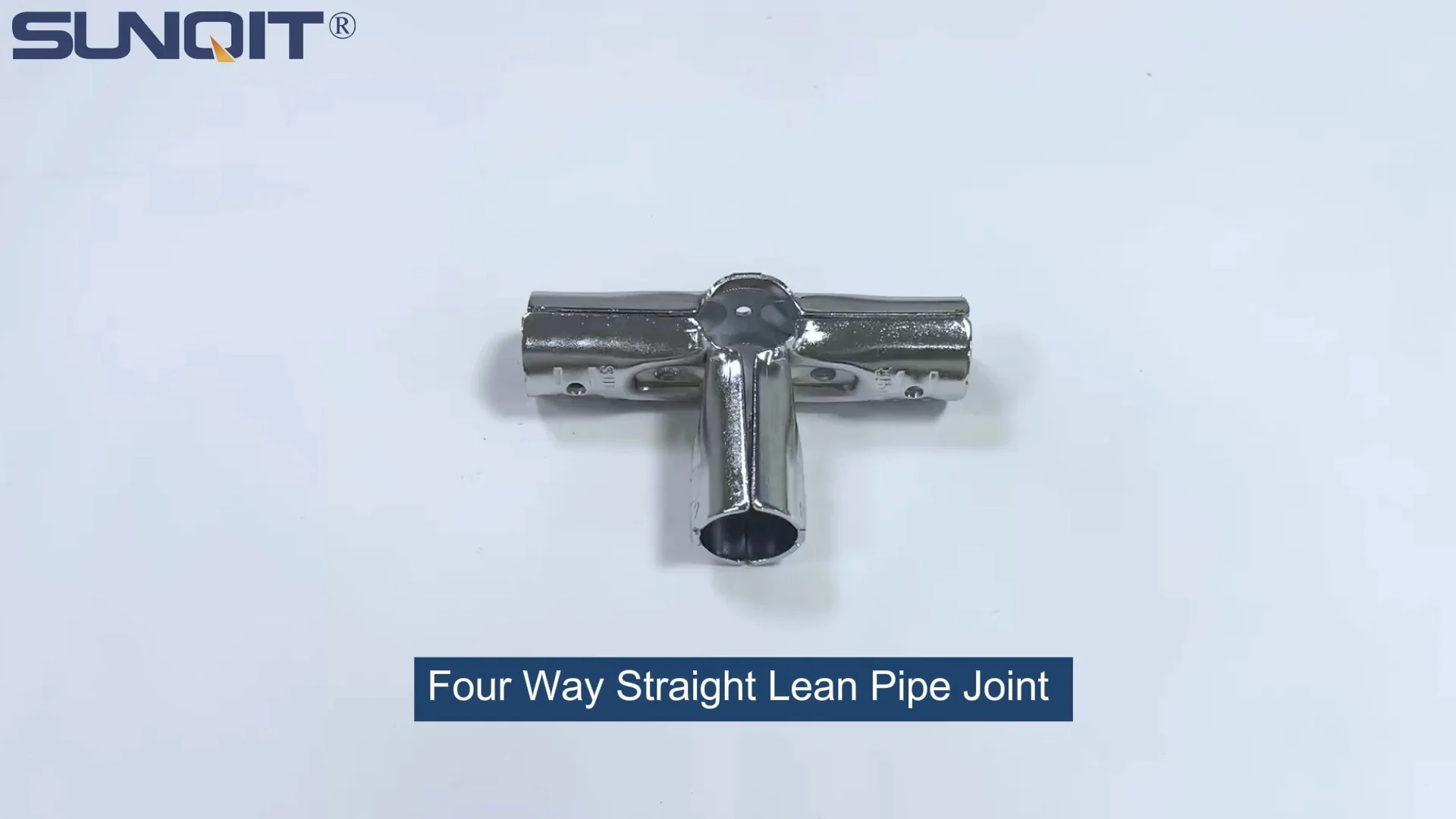
Four Way Straight Lean Pipe Joint Chrome
Four way lean pipe joint for 4 pcs 28MM lean pipe connection in straight angle, which used widely in workbench, flow rack, hand trolley frame connection.
Why Lean Manufacturing Isn't Just a Buzzword (And Why Your Workshop Needs It)
Walk into any high-performing manufacturing facility today, and you'll notice something different: the floor isn't cluttered with piles of unused materials, workstations aren't cramped with tools that rarely get used, and employees move with purpose, not frustration. That's the magic of lean manufacturing – a philosophy built on cutting waste, streamlining processes, and making every square inch of your workspace work for you, not against you. But here's the thing: lean isn't just about big-picture strategies like "reduce inventory" or "improve lead times." It starts with the smallest components – the ones that hold everything together, quite literally. And that's where the humble lean pipe joint comes into play.
Imagine trying to build a house without nails. You could stack bricks all day, but eventually, the whole thing would collapse. Lean systems work the same way. Your flow racks , workbenches, and material trolleys are only as strong, flexible, and efficient as the joints that connect their pipes. And among all those joints, there's one that stands out for its versatility and problem-solving power: the Four Way Straight Lean Pipe Joint Chrome. In this article, we're going to pull back the curtain on this unassuming component, explore why it's a cornerstone of effective lean setups, and show you how it can transform even the messiest workshop into a model of efficiency.
The Backbone of Lean: Why Modular Components Matter
Before we dive into the specifics of the Four Way Straight Lean Pipe Joint Chrome, let's talk about why modularity is non-negotiable in lean manufacturing. Traditional fixed structures – think heavy steel shelves bolted to the floor or custom-built workbenches – might seem sturdy, but they're a nightmare for adaptability. When your production line changes (and it will), or a new product requires a different workflow, those fixed structures become dead weight. You either live with inefficiency or spend thousands ripping them out and starting over.
Modular lean systems, on the other hand, are like building blocks for adults. They use lightweight pipes (often aluminum or steel with a plastic coating) and a variety of joints to create everything from simple workbench setups to complex material handling systems. The beauty? You can disassemble, reconfigure, and rebuild them in hours, not weeks. Need to add a shelf to a flow rack? Swap out a joint. Want to shorten a trolley to fit through a narrow doorway? Just remove a pipe section. This flexibility is why lean manufacturers swear by modular components – and why the joints that connect those components are so critical.
Real-Life Example: From Chaos to Order in 3 Days
A small electronics manufacturer I worked with recently was drowning in inefficiency. Their assembly line had workstations scattered haphazardly, and components were stored in plastic bins stacked on the floor – meaning employees wasted 20 minutes per shift just bending down to grab parts. We replaced their fixed wooden shelves with a modular flow rack system built using lean pipes and, you guessed it, Four Way Straight Lean Pipe Joints Chrome. Overnight, components were at eye level, workstations were aligned in a logical U-shape, and that 20 minutes of wasted time? It turned into 20 minutes of extra production. All because of better joints.
Meet the Star: What Is a Four Way Straight Lean Pipe Joint Chrome?
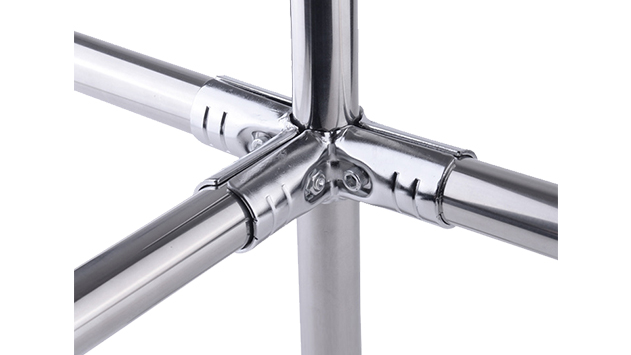
Let's start with the basics. A Four Way Straight Lean Pipe Joint Chrome is a small, often cylindrical component designed to connect four lean pipes at once, all in a straight line (think of a plus sign: +). It's typically made of durable metal (like steel) and coated in chrome for extra protection – hence the "chrome" in the name. But don't let its size fool you. This little joint is a multitasker. It can connect pipes horizontally, vertically, or diagonally, making it ideal for building structures that need to maximize vertical space, add extra tiers, or create custom angles.
What sets the chrome-plated version apart? Chrome isn't just for shine (though it does give your workshop a cleaner, more professional look). It's a workhorse finish. Chrome resists rust and corrosion, even in humid or dusty environments – crucial for workshops where spills, oil, or metal shavings are part of daily life. It also stands up to repeated assembly and disassembly, which is key if you're constantly reconfiguring your lean setups (and in lean manufacturing, you should be). Plus, the smooth chrome surface makes cleaning a breeze – no more scrubbing grime out of rough, uncoated metal joints.
Anatomy of the Joint: What Makes It Tick
Most Four Way Straight Lean Pipe Joints Chrome have a few key features:
- Four Connection Ports: Each port is sized to fit standard lean pipe diameters (usually 28mm or 30mm). The ports are precision-drilled to ensure a snug fit, so pipes don't wobble or slip once tightened.
- Internal Threads: A set screw (usually hex-head) inside each port lets you lock the pipe in place. Tighten it with a wrench, and the joint grips the pipe like a vice – no glue, no welding, no hassle.
- Reinforced Base: The center of the joint is thicker to handle heavier loads. This is why Four Way joints are trusted for structures like multi-level flow racks that hold boxes of parts or tools.

5 Ways Four Way Straight Lean Pipe Joint Chrome Transforms Your Workspace
Okay, so it's a sturdy joint – but how does that translate to real results on the factory floor? Let's break down five common workshop headaches and how this joint solves them.
1. "I Need More Storage, But I'm Out of Floor Space"
Floor space is gold in manufacturing. Every square foot used for storage is a square foot not used for production. The Four Way Straight Joint lets you build flow racks that go up , not out. For example, a standard 3-foot deep flow rack can become a 3-tiered system with vertical pipes connected by Four Way joints. Suddenly, you're storing three times as many parts in the same footprint. A client in the automotive parts industry used this trick to reduce their storage area by 40% – freeing up space for a new assembly line.
2. "My Workbench Isn't Built for My Team's Needs"
One-size-fits-all workbenches are a lean manufacturing sin. A mechanic needs tool hooks and a parts tray; an assembler needs a flat surface and a bin for finished products. With Four Way joints, you can customize your workbench on the fly. Add a side shelf for tools by connecting horizontal pipes to the bench legs with a Four Way joint. Mount a vertical rod for hanging cables or hoses. Even attach a small flow rack above the bench for easy access to materials. The best part? If someone new takes over the workstation, you can reconfigure it in 15 minutes – no carpenter required.
3. "Our Material Trolleys Keep Tipping Over"
Tipping trolleys aren't just annoying – they're dangerous. A loaded trolley with a wobbly frame can spill parts, damage equipment, or even injure someone. Four Way joints add stability by creating a "cage-like" structure. Instead of a basic two-pipe frame, you can add cross-braces or extra vertical supports using Four Way joints, distributing the weight evenly. A food packaging plant I advised switched to Four Way-jointed trolleys and reduced spills by 80% in the first month. The secret? The joints kept the load centered, even when employees pushed the trolleys around corners.
4. "We Can't Keep Track of Small Parts"
Small parts – screws, washers, connectors – have a way of vanishing into the void of a cluttered workshop. Enter the Four Way joint: build a mini parts rack with multiple small bins, each on its own tier, connected by Four Way joints. Mount it above your workbench, and suddenly every part has a home. A electronics repair shop used this setup to organize 50+ types of resistors and capacitors. Employees went from spending 10 minutes hunting for parts to 30 seconds – that's 90 minutes saved per day, per person.
5. "Our Lean System Feels Rigid – We Can't Adapt Fast Enough"
Lean manufacturing isn't a one-and-done project. It's about continuous improvement, which means your systems need to evolve. Maybe you add a new product line and need wider flow racks. Maybe a customer order requires taller trolleys. Four Way joints make adaptation easy. Unlike welded or glued joints, they're reusable. Loosen the set screws, swap out the pipes, and tighten – done. A furniture manufacturer I worked with recently needed to adjust their flow racks to fit larger table legs. With Four Way joints, they reconfigured 12 racks in an afternoon. With traditional fixed joints? They would have needed a welder and two days of downtime.
Not All Joints Are Created Equal: How Four Way Chrome Stacks Up
Okay, so Four Way joints are great – but how do they compare to other common lean pipe joints? Let's break it down with a quick comparison:
| Joint Type | Number of Connections | Best For | Load Capacity* | Chrome Option? |
|---|---|---|---|---|
| Four Way Straight | 4 (all straight) | Multi-tier racks, stable trolleys, workbench shelves | High (up to 200kg per joint) | Yes |
| Three Way | 3 (T-shape or Y-shape) | Simple shelves, corner connections | Medium (up to 150kg per joint) | Yes |
| 90-Degree Fixed | 2 (right angle) | Basic frames, table legs | Medium (up to 180kg per joint) | Yes |
| 180-Degree Rotational | 2 (straight, but rotatable) | Adjustable workbenches, tilting shelves | Low (up to 80kg per joint) | Rare |
*Load capacities are approximate and depend on pipe material, joint quality, and assembly.
The takeaway? Four Way Straight joints aren't the only option, but they're the most versatile. When you need to connect more than two pipes, add stability, or build upwards, they're the go-to. And the chrome coating? It's the cherry on top, adding durability that cheaper, uncoated joints just can't match.
Avoid These Mistakes: How to Get the Most Out of Your Four Way Joints
Even the best tools fail if you use them wrong. Here are four common mistakes to avoid with Four Way Straight Lean Pipe Joints Chrome:
1. Overloading the Joint
Yes, Four Way joints are strong – but they're not indestructible. Check the manufacturer's load rating (usually listed as "max vertical load" or "max horizontal load") and stick to it. Stacking 300kg of parts on a joint rated for 200kg is a recipe for bent pipes or collapsed racks.
2. Skipping the Wrench (or Using the Wrong One)
Hand-tightening the set screws might seem "good enough," but it's not. Vibrations from machinery, frequent movement, or heavy loads will loosen them over time. Use the correct size hex wrench (usually 5mm or 6mm) and tighten until the joint grips the pipe – you should feel resistance, but don't over-tighten (you could strip the threads).
3. Mixing Pipe Sizes
Four Way joints are designed for specific pipe diameters (e.g., 28mm). Using a 30mm pipe in a 28mm joint will leave gaps, making the structure wobbly. Always match pipe size to joint size – your lean pipe supplier should be able to confirm compatibility.
4. Ignoring the Chrome Finish
Chrome resists rust, but it's not invincible. Wipe down joints with a dry cloth if they get oily or wet – especially in humid environments. A little maintenance goes a long way in keeping that chrome shine (and rust-free strength) for years.
Choosing the Right Supplier: Why Quality Joints Matter
You've decided to invest in Four Way Straight Lean Pipe Joints Chrome – great! Now, where do you buy them? Not all lean pipe supplier options are created equal. A cheap, poorly made joint might save you a few dollars upfront, but it'll cost you in the long run: bent pipes, collapsed racks, wasted time fixing mistakes. Here's what to look for in a supplier:
- Material Quality: Ask if the joints are made of cold-rolled steel (stronger than hot-rolled) and if the chrome plating is at least 0.05mm thick (thicker plating = better rust resistance).
- Testing: Reputable suppliers test their joints for load capacity and durability. Don't be afraid to ask for test reports – if they can't provide them, walk away.
- Compatibility: Make sure their joints work with your existing pipes. Most suppliers sell pipes and joints as a set, which is safer than mixing brands.
- Customer Support: Lean systems can be tricky to design. A good supplier will help you figure out how many joints you need, which sizes to choose, and even share design tips for your specific workflow.
Red Flag: The "Too Good to Be True" Supplier
A manufacturer once told me they bought Four Way joints from an online supplier for $1 each – half the price of their usual supplier. Within a month, the joints started bending under light loads. Turns out, they were made of thin, low-grade metal with a chrome "paint" instead of real plating. They ended up replacing all 200 joints – and spending twice as much as they would have with a quality supplier. Lesson learned: when it comes to lean pipe joints, you get what you pay for.
Final Thoughts: Small Joints, Big Impact
Lean manufacturing is about the details. It's about noticing that 10-minute walk to get materials and turning it into a 30-second reach. It's about seeing a cluttered workstation and turning it into a space where employees can focus on what they do best. And none of that happens without the right tools – tools like the Four Way Straight Lean Pipe Joint Chrome.
This little joint might not get the same attention as flashy new machinery or high-tech software, but it's the backbone of your lean system. It's the reason your flow rack doesn't collapse under heavy boxes. It's why you can reconfigure your workbench in an hour instead of a week. It's how you turn a "good enough" workshop into a great one.
So, the next time you walk through your facility, take a look at the joints holding your lean systems together. Are they sturdy? Are they flexible? Do they make your workflow easier, or harder? If the answer is "harder," maybe it's time to upgrade to Four Way Straight Lean Pipe Joints Chrome. Your employees will thank you. Your bottom line will too.