- Company Articles
- Products and Technology
- Product knowledge
- Lean Manufacturing Benefits: Reusable Flat Swivel Castor Wheel with Brake for Continuous Improvement

Lean Manufacturing Benefits: Reusable Flat Swivel Castor Wheel with Brake for Continuous Improvement
Related Product
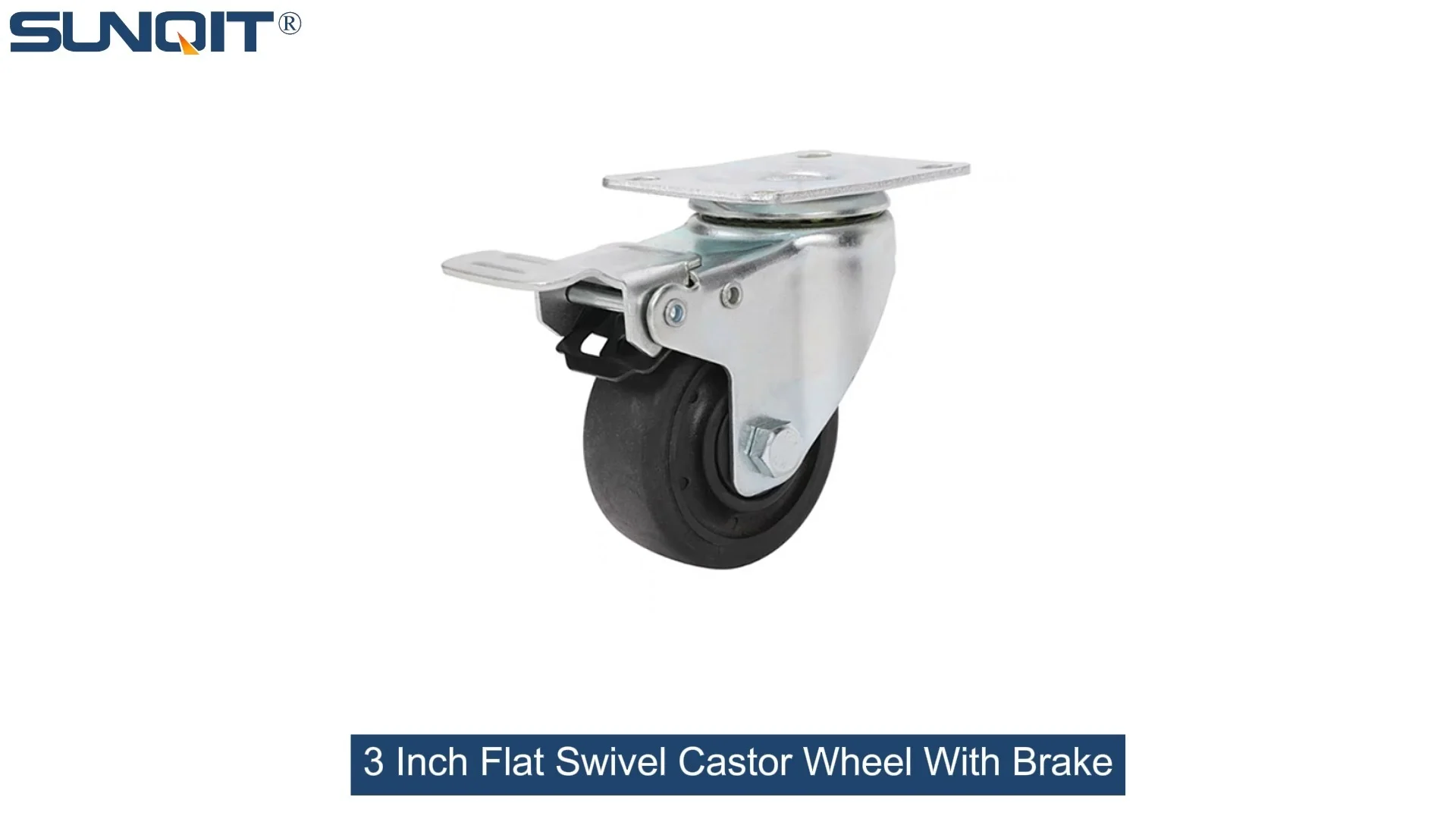
Flat Swivel Castor Wheel With Brake
Chair Casters Ball Bearing Wheels Rubber Base with brake design. Resistant to abrasion, impact and corrosion. Heavy payload can hold 70Kgs per pcs,which can make it works at a stable and smooth status.
Walk into any bustling factory, and you'll hear it before you see it: the hum of machinery, the clink of tools, the steady shuffle of workers moving materials from point A to point B. In that organized chaos, there's a quiet goal driving every action: better . Better efficiency. Better quality. Better use of time and resources. This is the heartbeat of lean manufacturing—a philosophy that turns "good enough" into "how can we make it better tomorrow?"
But here's the thing about lean: it's not just about big overhauls or fancy software. It's about the details—the small, often overlooked parts of your operation that add up to big results. Today, we're shining a light on one of those unsung heroes: the flat swivel castor wheel with brake . Sounds simple, right? A wheel with a brake? But in the world of lean systems, this little component might just be the key to unlocking smoother workflows, less waste, and a production line that adapts and improves—every single day.
First, Let's Talk Lean: What Even Is It?
If you're new to the term, lean manufacturing is all about cutting out the "fluff" and focusing on what matters . Think of it like cleaning out a cluttered closet: you keep the things you use (value), toss the things you don't (waste), and organize what's left so it's easy to find. In factory terms, "waste" could be anything from waiting around for materials, to moving products farther than necessary, to using tools that break down and slow you down.
At its core, lean is built on two big ideas: continuous improvement (always looking for ways to get better) and respect for people (making sure your team has the tools they need to do their jobs well). And here's where tools like castor wheels come in: they're not just "equipment"—they're part of the lean solution that helps your team work smarter, not harder.
The Castor Wheel: Small Part, Big Impact
Let's zoom in on a typical day in production assemble . Imagine a worker pushing a trolley loaded with circuit boards across the factory floor. They need to get from the soldering station to the testing area—quickly, but safely. If that trolley has stiff, fixed wheels, they might struggle to navigate around a corner, wasting 30 seconds (which adds up to hours over a week). If the wheels don't lock, the trolley might roll away when they stop to unload, risking damage to parts or even injury. Suddenly, that "simple" wheel isn't so simple anymore—it's a bottleneck.
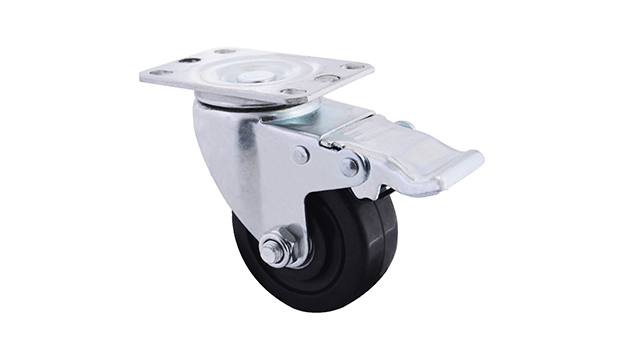
Now, swap those old wheels for a flat swivel castor wheel with brake . Swivel means 360-degree movement—no more struggling with corners. The flat design keeps the trolley low to the ground, so it's stable even with heavy loads. And the brake? A quick tap with your foot, and the wheel locks in place—no more chasing runaway trolleys. It sounds like a small change, but in a busy production line, small changes multiply.
Why "Reusable" Matters in Lean Systems
Lean isn't just about efficiency—it's about sustainability, too. Wasting resources (like buying new wheels every time an old one breaks) goes against everything lean stands for. That's where "reusable" comes in. A high-quality flat swivel castor wheel with brake isn't a one-and-done tool. It's built to last, with durable materials that stand up to daily wear and tear. But more than that, it's designed to be versatile .
Think about it: Maybe today, that castor wheel is on a workbench in the electronics department. Tomorrow, you rearrange the line, and suddenly that workbench becomes a mobile station for packaging. The same castor wheel? It can handle both jobs. No need to buy new wheels for the new setup—just detach, reattach, and go. That's reusability in action, and it's a game-changer for reducing waste (one of the 7 deadly wastes in lean, by the way: "unnecessary inventory" of tools and parts).

Let's Get Specific: Benefits You Can Actually See
Okay, so we've talked about the "why"—now let's get to the "what's in it for me." Here's how a flat swivel castor wheel with brake translates to real, tangible benefits on your factory floor:
1. Less Time Wasted on Movement
In production assemble , time is money. If your workers are wrestling with trolleys that don't turn or wheels that stick, they're not adding value—they're just moving. Swivel castors cut down on maneuvering time by up to 20%, according to some lean studies. That might not sound like much, but over a shift, that's extra time to assemble more products, check for quality, or help a teammate. And when you add the brake? No more stopping to prop trolleys with blocks or worrying about them rolling—unloading is faster and safer.
2. Adaptability for Changing Needs
Lean systems thrive on flexibility. One day you're assembling small components; the next, you're scaling up to larger products. Your equipment needs to keep up. A reusable castor wheel that works with workbenches, turnover trolleys, and even material racks means you can reconfigure your workspace in hours, not days. No more waiting for custom-built carts or new wheels—just swap, lock, and start production.
3. Safer Workspaces = Happier (and More Productive) Teams
Remember that "respect for people" part of lean? It includes keeping your team safe. A trolley that rolls away unexpectedly or a wobbly workbench can lead to trips, falls, or damaged products. The brake on these castors isn't just a convenience—it's a safety feature. Workers feel more confident moving heavy loads, which reduces stress and keeps morale high. And happy workers? They're more likely to spot ways to improve the process—another win for continuous improvement.

Traditional vs. Lean: A Quick Comparison
Still not convinced this little wheel makes a difference? Let's put it side by side with the "old way" of doing things. Check out this table comparing traditional fixed castors to the lean-friendly flat swivel castor wheel with brake :
| Feature | Traditional Fixed Castors | Flat Swivel Castor Wheel with Brake |
|---|---|---|
| Mobility | Only moves forward/backward; hard to turn corners | 360° swivel movement; easy to navigate tight spaces |
| Stability | May wobble with heavy loads; no brake means risk of rolling | Low-profile flat design for stability; brake locks wheel in place |
| Reusability | Often fixed to one piece of equipment; hard to repurpose | Detachable and compatible with multiple tools (workbenches, trolleys, racks) |
| Waste Reduction | Need to replace frequently; contributes to tool waste | Durable design = longer lifespan; reusability cuts down on new tool purchases |
| Impact on Workflow | Slower movement; more physical strain on workers | Faster, smoother movement; less worker fatigue = higher productivity |
Real Talk: How This Fits Into Your Lean Journey
Maybe you're thinking, "We already have a lean system in place. Do we really need new castor wheels?" Let me tell you a quick story. A few years back, I worked with a small electronics manufacturer that was struggling with their assembly line. They'd implemented lean training, mapped their workflows, and cut down on waiting time—but they were still falling short of their productivity goals. When we walked the floor, we noticed something: their workbenches were fixed to the ground. Every time they needed to adjust the line for a new product, they had to disassemble and rebuild the benches. It took hours .
We suggested swapping out their fixed legs for workbenches mounted on flat swivel castor wheels with brakes . The result? What used to take 4 hours now took 45 minutes. Workers could move benches into place, lock the brakes, and start assembling. Over six months, that saved them over 200 hours of setup time—time they used to train employees, improve quality checks, and even take on new orders. All because of a wheel with a brake.
The point is: lean isn't about perfection. It's about progress. And progress often starts with upgrading the tools you use every day—tools that make the hard parts of the job a little easier. The flat swivel castor wheel with brake isn't a magic solution, but it is a lean solution —one that fits into your existing system and helps you take that next step toward "better."
Wrapping Up: Small Changes, Big Results
At the end of the day, lean manufacturing is about seeing the potential in every part of your operation—even the ones that roll under your workbench. The flat swivel castor wheel with brake might not be the first thing you think of when you hear "continuous improvement," but maybe it should be. It's reusable, it's adaptable, it cuts down on waste, and it makes your team's job easier. And when your team's job is easier? They're free to focus on what really matters: making great products and finding new ways to make tomorrow better than today.
So, the next time you're looking for ways to boost your lean system, don't overlook the little things. Sometimes, the biggest improvements come from the smallest wheels.