- Company Articles
- Products and Technology
- Application Cases
- Lean Manufacturing Success: One Way Rotatory Straight Lean Pipe Joint Case Studies

Lean Manufacturing Success: One Way Rotatory Straight Lean Pipe Joint Case Studies
Related Product
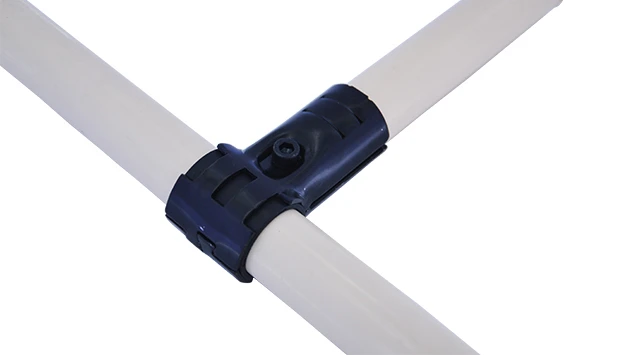
One Way Rotatory Straight Lean Pipe Joint
Two way lean pipe joint for 2 pcs 28MM lean pipe connection in straight angle with rotatory fucntion, which used widely in workbench, flow rack, hand trolley frame connection.
Lean manufacturing isn't just a buzzword—it's a promise. A promise to make workspaces smarter, workflows smoother, and teams more empowered. At its core, lean is about stripping away waste, but not the human element. It's about creating systems that adapt to people, not the other way around. And in that mission, the right tools aren't just helpful—they're transformative. One such tool, often overlooked but quietly revolutionary, is the one way rotatory straight lean pipe joint . This unassuming component, when paired with lean pipe workbenches, flow racks, and aluminum profiles, has helped businesses across industries turn frustration into efficiency, chaos into order, and stagnation into growth. Let's dive into four real-world stories of how this small but mighty joint became the unsung hero of lean success.
Case Study 1: PrecisionTech Electronics – From Bottlenecks to Breakthroughs
The Problem: Rigid Workbenches Stifling a Fast-Paced Assembly Line
On a typical Tuesday morning at PrecisionTech Electronics, the assembly line ground to a halt. Again. For Maria Gonzalez, the production manager, it was the third time that month. A last-minute design tweak for a new smartphone component meant the entire line needed to reconfigure—shifting from 6-inch to 8-inch circuit board assembly. The old workbenches, bolted to the floor with heavy steel frames, weren't having it. "We spent two full days taking them apart, drilling new holes, and rebuilding," Maria recalls, frustration still edging her voice. "By the time we were done, we were three days behind schedule, and my team was burned out from overtime. I kept thinking, 'There has to be a better way.'"
PrecisionTech's pain points were familiar to many in electronics manufacturing: rapid product cycles, small-batch production, and the constant need to pivot. Their fixed workstations, built for a single product, became bottlenecks when demand shifted. Workers strained to reach tools that no longer fit the new layout, and reconfiguration downtime ate into profit margins. "Our assemblers are some of the most skilled people I've ever worked with," Maria says. "But when you force them to work around clunky, unchanging equipment, even the best talent struggles."
The Solution: Modular Workstations with One Way Rotatory Straight Lean Pipe Joints
After a late-night search for "lean pipe suppliers," Maria connected with Raj Patel from Streamline Solutions, a local provider specializing in flexible manufacturing systems. Raj didn't just sell parts—he listened. "He walked our floor, talked to the assemblers, and kept asking, 'What would make your day easier?'" Maria says. His recommendation? replace the fixed steel workbenches with lean pipe workbenches built using one way rotatory straight lean pipe joints and aluminum profiles .
"The magic is in the joints," Raj explained during a demo. He picked up a lean pipe and a one way rotatory joint, twisting it gently. "See how it locks in place with a quarter-turn? No tools, no drilling. You can angle the pipes, add shelves, or reposition the entire workstation in minutes. And the aluminum profiles? Lightweight but strong enough to hold circuit boards, soldering tools, even small testing equipment. Your team won't just work faster—they'll work smarter."
Maria was skeptical at first. "We'd tried 'modular' systems before that still needed a wrench and a degree in engineering to adjust," she admits. But Raj brought in a prototype: a lean pipe workbench with a honeycomb aluminum top, adjustable height, and shelves that swung into place with a simple twist of the OWR joints. "Jake, our lead assembler, walked over, messed with it for 30 seconds, and said, 'Why didn't we get these five years ago?' That's when I knew we had to try."
The Results: 78% Less Downtime and a Team That Felt Heard
Three weeks later, the first batch of workbenches arrived. The team spent a morning assembling them—no contractors, no power tools, just a few hours of following color-coded instructions. "We had the line back up by lunch," Maria says. Then came the real test: a surprise order for a rush batch of smartwatch components, requiring a 45-degree angle shift in the assembly layout. "I expected groans, but instead, the team gathered around, twisted the OWR joints, repositioned the shelves, and had the new setup ready in 45 minutes. 45 minutes! Not two days. I almost cried."
By the end of the quarter, the results were staggering: reconfiguration downtime dropped by 78%, overtime costs fell by $12,000, and PrecisionTech earned its first on-time delivery bonus from a major client in over a year. But the biggest win? "The team's attitude," Maria says. "They stopped dreading design changes and started embracing them. Last month, Lily, one of our newer assemblers, suggested adding a side shelf using spare aluminum profiles and OWR joints to hold her soldering iron. It cut her task time by 15%. That's the power of giving people tools that let them solve their own problems."
"It's not just about the joints or the pipes," Maria reflects. "It's about trust. When you show your team you're invested in making their work easier, they don't just work harder—they care more. And that's when lean stops being a process and starts being a culture."
Case Study 2: AutoParts Dynamics – Letting Gravity Do the Heavy Lifting
The Problem: Heavy Parts, Strained Workers, and Stagnant Flow
Tom Reynolds, operations director at AutoParts Dynamics, had a problem that kept him up at night: his team was hurting. Literally. The supplier of brake components for mid-sized automakers relied on a decades-old system: workers manually pushed 50-pound metal parts from the machining shop to assembly via wooden flow racks with rusted rollers. "We had a backlog of injury reports—shoulders, lower backs, even a few sprains from slipping on parts that fell off the racks," Tom says. "And even when people were healthy, moving those parts was like wading through molasses. The line would sit idle waiting for materials, and we'd miss shipment deadlines."
The flow racks were the root of the issue. Fixed at a shallow angle, they relied on brute force to move parts. The wooden slats warped in humidity, jamming the rollers. And when production shifted to larger parts, the racks couldn't adjust—so workers resorted to dragging parts across the floor. "I had a meeting with HR where they showed me our workers' compensation claims were up 40%," Tom says. "That's when I realized: this wasn't just an efficiency problem. It was a people problem."
The Solution: Flow Racks with OWR Joints and Swivel Roller Balls
Tom reached out to Streamline Solutions, where Raj suggested a two-part fix: upgrade to flow racks using one way rotatory straight lean pipe joints and add 1-inch swivel roller balls. "The OWR joints let you angle the racks precisely," Raj explained, showing Tom a diagram. "Tilt them too steep, and parts crash; too shallow, and they stick. With these joints, you can dial in the perfect slope—gravity does the work, not your team." The swivel roller balls, he added, would ensure smooth movement even with heavier parts.
Tom was hesitant about cost. "We're a mid-sized company—we can't just throw money at every new gadget," he says. But Raj countered with a simple question: "What's the cost of one more injury? Or losing a key worker because they can't handle the physical strain?"
The first flow rack was installed in the machining area. Workers watched, skeptical, as Raj adjusted the OWR joints to a 7-degree angle and loaded a brake caliper onto the roller balls. "It glided down like it was on ice," Tom says. "Mike, our machinist with the bad shoulder, walked over, picked up another part, set it down, and just stared. Then he looked at me and said, 'You mean we could've been doing this all along?'"
The Results: 90% Fewer Injuries and a Line That Flows Like Water
Within two months, AutoParts Dynamics replaced all 12 of its old wooden racks. The impact was immediate: parts moved from machining to assembly in 30% less time, scratch defects (from dragging parts) dropped from 8% to 1.5%, and injury reports? "We haven't had a single one," Tom says. "Not one."
But the biggest change was in morale. "Last week, I walked through the shop, and I heard laughter," Tom says. "Not the stressed, 'we're behind' kind of laughter—the 'this is actually manageable' kind. Mike even stayed late to help train the new guy on adjusting the OWR joints. He said, 'If I'm gonna stick around another 10 years, I want to make sure the next guy doesn't wreck his back like I did.'"
"You can't put a price on a team that feels valued," Tom adds. "These joints and racks didn't just fix our workflow—they fixed our culture. And that's the kind of return on investment you can't measure in spreadsheets."

Case Study 3: SwiftLogistics Warehouse – Order Picking That Keeps Up with E-Commerce
The Problem: Static Shelving Strangling Holiday Orders
For Lina Chen, warehouse manager at SwiftLogistics, the holidays used to be a nightmare. The regional e-commerce warehouse handled 10,000+ orders daily during peak season, but its static metal shelving forced pickers to zigzag across the floor, doubling their steps and missing shipping windows. "We'd set up 'pick paths' based on last year's data, but customer demand changes fast," Lina says. "One day we're drowning in face masks, the next it's yoga mats. Our shelves couldn't keep up, so pickers wasted 40% of their time walking, not picking."
The numbers told the story: 15% of orders missed the 2-hour shipping window, customer complaints spiked, and turnover among pickers hit 30%. "I had a picker quit on the spot last December," Lina recalls. "She said, 'I'm not paid enough to run a marathon every day.' Can you blame her? We were asking people to work harder, not smarter."
The Solution: Modular Flow Racks with OWR Joints and Adjustable Roller Tracks
Raj from Streamline Solutions visited during a rare slow period in February. "He walked the warehouse and said, 'Your problem isn't space—it's flexibility,'" Lina says. His solution: modular flow racks built with one way rotatory straight lean pipe joints and adjustable roller tracks. "The OWR joints let you reconfigure the racks in hours, not days," Raj explained. "Need more space for holiday toys? Add sections. Slow season? Break them down and store the parts. And the roller tracks? Angle them so products slide forward as they're picked—no more reaching to the back of shelves."
Lina was sold, but her team needed convincing. "Pickers are creatures of habit," she says. "They'd been using those metal shelves for years." So Raj brought in a small test rack, loaded with popular items, and let the pickers try it. "Mia, our fastest picker, took one look and said, 'This is cheating.' Then she picked 20 orders in the time it usually took her to do 10. That's when the team got on board."
The Results: 99.8% On-Time Shipping and Pickers Who Stay
By Black Friday, SwiftLogistics had 24 modular flow racks spread across the warehouse. Pickers now walked 40% fewer steps, and the 2-hour shipping window hit rate jumped to 99.8%. "We even had time to add a second shift without hiring extra staff," Lina says. "The racks paid for themselves in three months—between saved labor costs and fewer missed orders."
Turnover? It dropped to 5%. "Pickers aren't just staying—they're asking for more training on the OWR joints," Lina laughs. "Last week, a new hire suggested angling the toy section racks steeper for faster flow. We tried it, and pick times dropped another 10%. When your team starts innovating, you know you've done something right."

Case Study 4: MicroMachinery Works – A Small Shop with Big Dreams (and Limited Space)
The Problem: A Family Workshop Cramped by Fixed Furniture
Carlos Mendez started MicroMachinery Works in his garage 20 years ago, building custom tools for local farmers. Today, it's a 5,000-square-foot shop with 12 employees—but the space still felt like a garage. "We built workbenches, shelves, and racks as we needed them, but nothing matched," Carlos says. "One bench was too low, another too narrow. When we took on a big order for industrial drills, we had to pile parts on the floor because there was no room on the shelves. My daughter, Sofia, joined last year and said, 'Dad, this isn't lean—this is chaos.'"
Sofia, fresh out of business school, pushed for change. "We were turning down orders because we couldn't fit the projects in," she says. "I kept saying, 'We need workspaces that do more than one thing.' But Dad was attached to the old benches—he'd built them with his own hands."
The Solution: A Multi-Purpose Lean Pipe Workbench with OWR Joints
Carlos relented after Sofia showed him a video of a lean pipe workbench online. They called Streamline Solutions, and Raj designed a custom setup: a lean pipe workbench with one way rotatory straight lean pipe joints, caster wheels, and a fold-down side shelf. "The OWR joints let us adjust the height—so Maria, who's 5'2", and Juan, who's 6'1", can both work comfortably," Sofia explains. "The casters mean we can roll it out of the way when we need floor space, and the fold-down shelf doubles the workspace for big projects."
Carlos was nervous about replacing his "vintage" workbench. "That thing had character!" he jokes. But when the new bench arrived, he spent an hour testing it out. "I adjusted the height, folded the shelf, rolled it across the shop. Then I looked at Sofia and said, 'Why didn't you make me do this sooner?'"
The Results: 30% More Orders and a Workshop That Feels Like Home (But Better)
Eight months later, MicroMachinery Works has taken on 30% more projects. The lean pipe workbench became the heart of the shop, with workers adding custom hooks (using spare aluminum pipe accessories) for tools and a small flow rack (with OWR joints, of course) for parts. "We even use it as a meeting table when we're not building," Sofia says. "It's like the Swiss Army knife of workbenches."
Carlos, once resistant to change, now raves about the OWR joints. "I was worried it would feel cheap, but this thing is solid," he says, tapping the aluminum profile frame. "And the best part? Sofia was right. Lean isn't about getting rid of what matters—it's about making what matters work better."
Comparing the Results: How OWR Joints Transformed Four Businesses
| Industry | Core Problem | Key Solution Components | Productivity Gain | Team Impact |
|---|---|---|---|---|
| Electronics Assembly | Rigid workbenches causing reconfiguration delays | Lean pipe workbenches, OWR joints, aluminum profiles | 78% less downtime; $12k overtime savings | Workers, |
| Automotive Parts | Manual material handling leading to injuries | Flow racks with OWR joints, swivel roller balls | 30% faster material flow; 90% fewer injuries | , |
| E-Commerce Warehousing | Static shelving slowing order picking | Modular flow racks, OWR joints, adjustable roller tracks | 40% fewer picker steps; 99.8% on-time shipping | , |
| Custom Machinery | Cramped space with fixed workstations | Multi-purpose lean pipe workbench, OWR joints, casters | 30% more projects completed; space savings | , |
Conclusion: Lean Success Starts with Listening
At the end of the day, the one way rotatory straight lean pipe joint isn't just a piece of metal and plastic. It's a symbol of what happens when you prioritize people in manufacturing. PrecisionTech, AutoParts Dynamics, SwiftLogistics, and MicroMachinery Works didn't just buy a tool—they invested in a mindset: that workspaces should adapt to the people who use them, not the other way around.
Lean manufacturing is often talked about in terms of waste reduction and efficiency, but the real magic happens when those efficiencies translate to happier, healthier, more engaged teams. When a worker can adjust their workstation in minutes instead of waiting for a contractor, when a machinist can move parts without straining their back, when a picker can meet their quota without running a marathon—those are the moments that turn a job into a career, and a company into a community.
So if you're considering a lean transformation, start small. Start with the tools that let your team take control: a joint that twists, a bench that moves, a rack that adapts. Because in the end, lean success isn't about the parts you buy—it's about the people you empower.