- Company Articles
- Products and Technology
- Technology Sharing
- Lean Manufacturing: Why Internal Straight Aluminum Joints Support Sustainable Improvement

Lean Manufacturing: Why Internal Straight Aluminum Joints Support Sustainable Improvement
Related Product
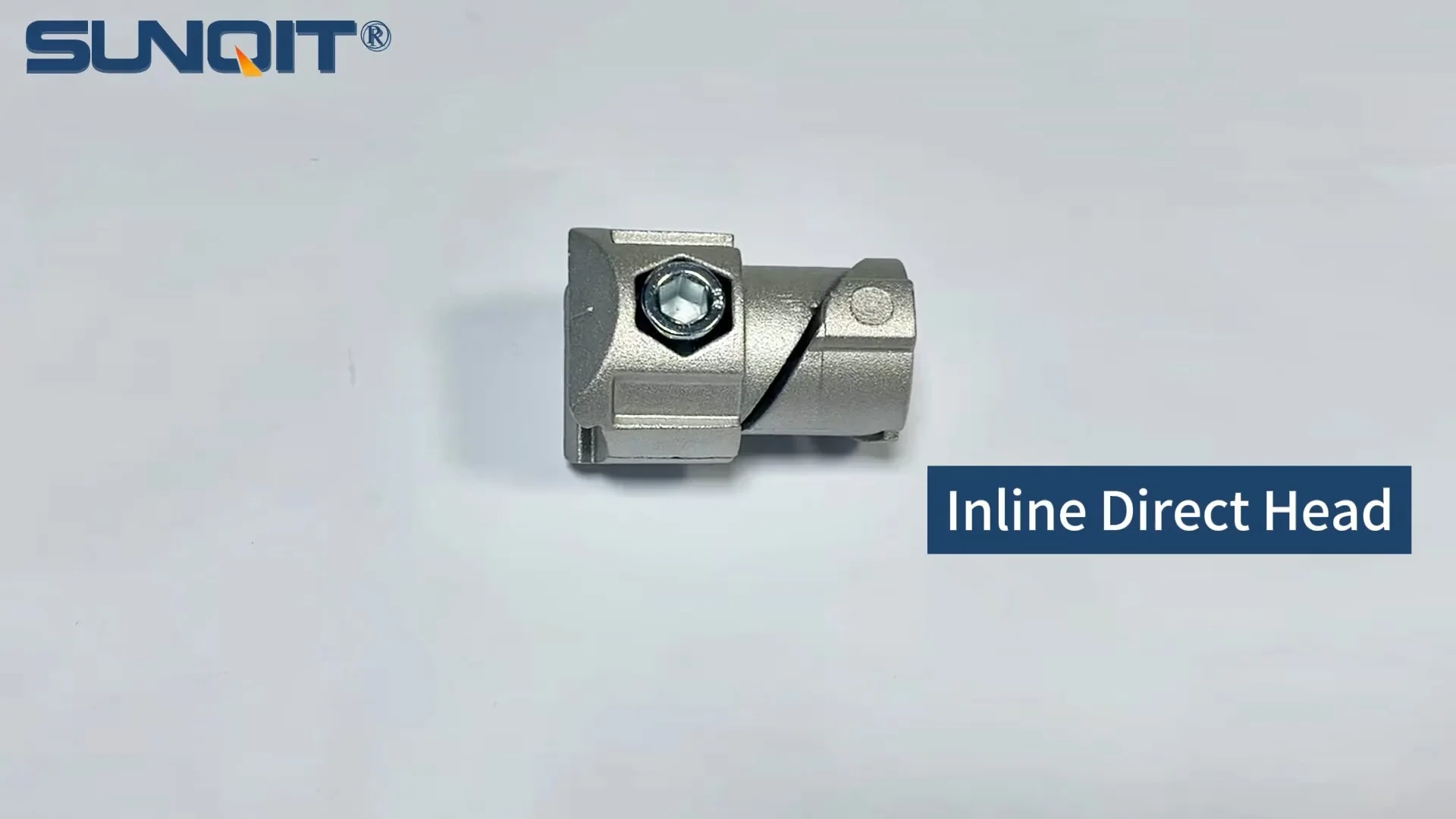
Internal straight aluminum joint
Aluminum pipe joint inside connection used for two pcs 28pcs aluminum pipe connection in straight angle,it connects two pcs pipe from inside.
Walk into any thriving manufacturing facility today, and you'll notice a quiet revolution unfolding on the shop floor. It's not just about robots or high-tech software—though those play a role. It's about the bones of the operation: the workbenches that adjust to new product lines, the material racks that reconfigure in hours instead of weeks, the conveyors that flow like water around changing needs. These aren't just pieces of metal and plastic; they're the physical embodiment of lean manufacturing. And at the heart of this transformation? Often, a small but mighty component: the internal straight aluminum joint.
Lean manufacturing isn't a one-time project—it's a promise to keep getting better. To cut waste, boost efficiency, and adapt faster than the competition. But that promise is only as strong as the tools that build it. For decades, manufacturers relied on rigid, one-size-fits-all infrastructure: welded steel frames that stayed put, wooden shelves that warped, joints that rusted or broke when you tried to move them. These weren't just inconvenient; they actively fought against lean's core principle: flexibility . Today, though, a new generation of components is changing that. Internal straight aluminum joints, in particular, have emerged as unsung heroes, turning static workspaces into dynamic ecosystems that grow and evolve with the business. Let's dive into why they matter—and how they're quietly driving sustainable improvement in lean manufacturing.
The Lean Dream: Flexibility as a Foundation
Before we talk about joints, let's ground ourselves in what lean manufacturing
To eliminate that waste, lean systems demand two things: adaptability and durability . Adaptability so that when a customer order changes, or a new product is launched, the shop floor doesn't grind to a halt while infrastructure is rebuilt. Durability so that these adaptations don't come with a hidden cost—like replacing flimsy parts every few months. For years, these two needs felt conflicting. You could have flexibility (think: cheap plastic joints that broke easily) or durability (think: heavy steel joints that required welding). But internal straight aluminum joints? They're the sweet spot.
What Even Is an Internal Straight Aluminum Joint?
Let's start with the basics. An internal straight aluminum joint is exactly what it sounds like: a connector, made of high-grade aluminum, designed to link aluminum profiles (those long, T-slot rails you see on modern workbenches and racks) in a straight line. But "straight" doesn't mean "stiff." The "internal" part is key: unlike traditional external clamps or bolt-on joints, these joints fit inside the profile's T-slot, creating a clean, tight connection without protruding parts. And many models include a clever twist (literally): internal rotation mechanisms that let you lock the joint in place with a simple turn of a hex key, no welding or heavy tools required.
Imagine building with Legos, but for adults—and for industrial use. You slide the joint into the aluminum profile, align it with another profile, twist the internal screw, and boom: a rock-solid connection that can hold hundreds of pounds. Need to reconfigure? Twist the screw the other way, pull it apart, and rebuild. It's that easy. But why does this matter for lean manufacturing? Let's break it down.
Flexibility: The Ability to "Pivot Without Panic"
In 2023, a mid-sized electronics manufacturer in Ohio faced a crisis. Their biggest client suddenly shifted from producing 6-inch circuit boards to 10-inch ones—a change that should have been exciting, but instead sparked panic. Their existing workbenches? Fixed at 30 inches high, with shelves spaced exactly 7 inches apart. The new boards didn't fit. The material racks, bolted to the floor with steel joints, couldn't be adjusted to hold the larger components. The production manager estimated it would take 3 weeks and $20,000 to weld new frames, buy new shelves, and get back on track. But here's the kicker: the client needed the first batch in 10 days.
Desperate, the team turned to a local supplier who specialized in aluminum lean systems. They swapped out their old steel workbenches for aluminum profiles connected with internal straight aluminum joints. Overnight, they adjusted the workbench height to 36 inches, repositioned the shelves to 12-inch spacing, and even added side extensions for extra workspace—all without a single weld. The new material racks (similar to the material rack b (3 row and 3 floor) design) went up in hours, not days. The client got their order on time, and the manufacturer saved over $15,000 in labor and materials. "We didn't just solve a problem," the production manager later said. "We realized we'd been working with one hand tied behind our back for years."
This is the power of flexibility. Internal straight aluminum joints turn "we can't" into "we can—right now." They let teams adapt to:
- Product changes : New sizes, weights, or shapes? Adjust the workbench height, widen the material rack, or add dividers in minutes.
- Seasonal demand : Ramp up production in Q4 by adding extra conveyor sections or extending workbenches; scale back in slow months by breaking them down and storing components.
- Continuous improvement : After a kaizen event, when the team identifies a better workflow, they don't need to wait for maintenance to build it—they can prototype it themselves with joints and profiles.
Traditional joints? They'd require cutting, welding, or drilling—steps that take time, create waste (scrap metal, sawdust), and often result in a "good enough" solution that's hard to tweak later. Internal straight aluminum joints? They turn the shop floor into a living, breathing system that grows with the business.
Durability: Built to Last (and Last, and Last)
Flexibility without durability is just a toy. A joint that bends under heavy loads or rusts after a year of use isn't solving problems—it's creating new ones. That's where aluminum shines. Aluminum is naturally resistant to corrosion, so even in humid factories or environments with oils and coolants, these joints won't degrade. And because they're made from high-strength aluminum alloys (often T6-grade, which is heat-treated for extra toughness), they can handle the daily grind: the bumps from forklifts, the weight of 50-pound bins, the constant adjustments.
Consider a food packaging plant in Texas. For years, they used plastic joints on their material racks, thinking they'd save money. But the plastic cracked under the weight of canned goods, and the humid air made them brittle. They were replacing joints every 6 months, at a cost of $3,000 per year. Then they switched to internal straight aluminum joints. Five years later, those same joints are still in use. No cracks, no rust, no replacements. "We thought aluminum would be pricier upfront," the plant manager admitted, "but it's paid for itself ten times over."
| Feature | Traditional Steel Joints | Plastic Joints | Internal Straight Aluminum Joints |
|---|---|---|---|
| Corrosion Resistance | Poor (rusts without paint/coating) | Good (but brittle in humidity) | Excellent (aluminum's natural protection) |
| Weight Capacity | High (but heavy to move) | Low (cracks under heavy loads) | High (lightweight but strong) |
| Reusability | Low (welded joints are permanent) | Medium (breaks after 2-3 reconfigurations) | High (can be reused indefinitely) |
| Maintenance Cost | High (repainting, welding repairs) | High (frequent replacements) | Low (no maintenance needed) |
The numbers speak for themselves. Aluminum joints last longer, require less upkeep, and can be reused dozens of times—making them not just durable, but economically durable. In lean terms, that's eliminating waste from replacement parts, maintenance labor, and downtime. It's sustainability in action.
Sustainability: Lean for the Planet, Too
Lean manufacturing has always been about reducing waste—but today, that waste includes environmental impact. Customers, regulators, and employees all demand more from manufacturers: less energy use, fewer emissions, less landfill waste. Internal straight aluminum joints align with this mission in three key ways:
1. Recyclable by Design
Aluminum is 100% recyclable, and recycling it uses just 5% of the energy needed to produce new aluminum. When a joint finally reaches the end of its life (which, let's be clear, is decades down the line), it can be melted down and turned into new profiles, joints, or even soda cans. Traditional steel joints? They're often coated in paints or chemicals that make recycling harder, and they degrade more quickly, leading to more frequent replacements and more scrap. Plastic joints? Most end up in landfills, where they take centuries to break down.
2. Less Waste in Production
Welding steel creates fumes, sparks, and scrap metal. Cutting wood or plastic creates sawdust or shavings. Internal straight aluminum joints? They're precision-machined to fit perfectly into aluminum profiles, so there's no guesswork, no excess material, no messy byproducts. Even better, because they're reusable, you don't need to buy new joints every time you reconfigure—you just repurpose the ones you have. A study by the Aluminum Association found that manufacturers using aluminum lean systems reduced their annual waste by 30% compared to those using traditional steel or plastic setups.
3. Energy Efficiency
Aluminum is lightweight—about 1/3 the weight of steel. That means workbenches, material racks, and trolleys built with aluminum joints are easier to move, requiring less energy (or) to reposition. In warehouses with automated systems, lighter infrastructure even reduces wear and tear on robots and forklifts, extending their lifespans and cutting energy use. Over time, these small savings add up to big reductions in carbon footprints.
Take a furniture manufacturer in Sweden that switched to aluminum lean systems with internal straight joints. They reduced their annual scrap metal waste by 45%, cut energy use for material handling by 20%, and even qualified for a government sustainability grant. "We didn't set out to be 'green,'" the CEO said. "We set out to be leaner. But the environmental benefits? They were a happy bonus that turned into a competitive advantage."
Cost: The "Hidden" Savings of Lean Infrastructure
Let's talk money. It's true: internal straight aluminum joints and aluminum profiles cost more upfront than, say, plastic joints or welded steel. A basic aluminum profile might cost $20 per foot, vs. $5 for a wooden board or $10 for a steel pipe. But lean manufacturing teaches us to look at total cost of ownership (TCO)—not just the first price tag. And when you factor in all the savings, aluminum joints win hands down.
Consider a small auto parts supplier with 10 workbenches. They're deciding between steel (welded, $500 per workbench) and aluminum (with internal straight joints, $800 per workbench). The steel option is cheaper upfront—$5,000 vs. $8,000. But let's track TCO over 5 years:
- Steel workbenches : Need repainting every 2 years ($300 per bench, total $3,000). Welds crack after 3 years, requiring repairs ($200 per bench, total $2,000). Can't reconfigure, so when a new product line launches, they need to buy 5 new benches ($500 each, $2,500). Total TCO: $5,000 + $3,000 + $2,000 + $2,500 = $12,500.
- Aluminum workbenches : No repainting needed. Joints never crack. When the new product line launches, they reconfigure 5 existing workbenches (no new purchase). Total TCO: $8,000. Savings: $4,500 over 5 years.
That's a 36% savings—all because the aluminum joints enabled flexibility and durability. And this doesn't even include intangibles, like the ability to take on new clients (like the Ohio electronics manufacturer) or the morale boost from a shop floor that feels modern and adaptable.
Beyond the Joint: Building a Lean Ecosystem
Internal straight aluminum joints don't work alone. They're part of a larger ecosystem of aluminum profiles, accessories, and tools that together create a lean infrastructure. Let's take a closer look at how they integrate with other key components:
Aluminum Profiles: The Perfect Partner
Aluminum profiles (like the aluminum extrusion profile or 2020 national standard profile ) are the "rails" that internal straight aluminum joints connect. They're strong, lightweight, and feature T-slots that let you add accessories—shelves, bins, lights, even monitors—anywhere along their length. Pair a profile with an internal straight joint, and you've got a building block that can become anything: a workbench, a material rack, a conveyor frame, or a mobile trolley.
Workbenches: Where Precision Meets Adaptability
A workbench is more than a table—it's where the magic happens. With internal straight aluminum joints, workbenches become customizable hubs. Need a larger surface for assembly? Add a profile extension. Want to mount tools under the bench? Slide a bracket into the T-slot. Even specialized workbenches, like ESD workstations (designed to prevent static electricity damage), benefit: the joints ensure the ESD mat stays securely attached, and the frame can be adjusted to fit anti-fatigue mats or ergonomic seating.
Material Racks: From Chaos to Order
Material racks (think material rack b (3 row and 3 floor) ) are the backbone of inventory management. With internal straight aluminum joints, these racks can be adjusted to hold bins of different sizes, add dividers for small parts, or even tilt shelves to make picking easier. No more wasted space from shelves that are too tall or too short—just a rack that fits your parts, not the other way around.

The Future of Lean: Small Parts, Big Impact
Lean manufacturing will always evolve. New technologies—AI, IoT, automation—will change how we work. But the core need for flexibility, durability, and sustainability? That won't go away. If anything, it will grow stronger as markets become more volatile, product life cycles shorter, and environmental expectations higher.
Internal straight aluminum joints are a reminder that lean isn't just about software or processes. It's about the tools that make those processes possible. They're small, they're simple, and they don't make headlines. But ask any production manager who's swapped out rigid infrastructure for aluminum lean systems, and they'll tell you: these joints aren't just components. They're the difference between a manufacturing facility that survives and one that thrives .
So the next time you walk into a manufacturing plant, take a closer look at the workbenches, the material racks, the conveyors. If they're light, clean, and obviously adaptable, chances are good there's an internal straight aluminum joint holding them together. And if there is? That's a facility that gets it: lean isn't about being perfect. It's about being ready—ready to improve, ready to adapt, ready to build a better tomorrow. One joint at a time.