- Company Articles
- Products and Technology
- Product knowledge
- Lean Pipe Clamp B Chrome: Defining Its Role in Continuous Improvement

Lean Pipe Clamp B Chrome: Defining Its Role in Continuous Improvement
Related Product
Lean Pipe Clamp B Chrome
Lean pipe clamp is used for turnover trolley, workbench, flowrack adjust the frame or fix some accessory.
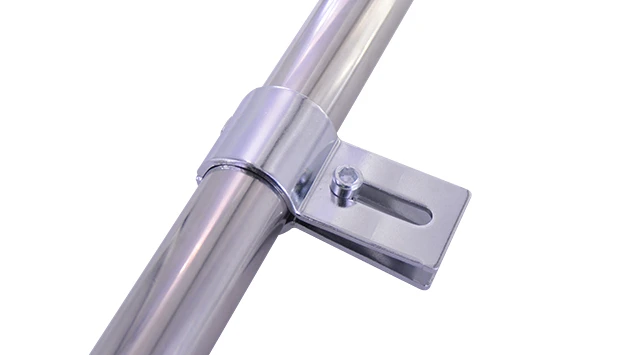
In the bustling world of manufacturing, where every second counts and efficiency is the lifeblood of success, it's often the smallest components that hold the power to transform operations. Today, we're shining a light on one such unsung hero: the Lean Pipe Clamp B Chrome. More than just a metal fastener, this unassuming tool is a cornerstone of lean systems, enabling the flexibility, durability, and adaptability that modern production lines depend on. Let's dive into how this tiny but mighty component is redefining continuous improvement on factory floors around the globe.
The Hidden Cost of "Good Enough": A Story from the Factory Floor
Picture this: It's a Tuesday morning at a mid-sized electronics assembly plant. The production line for smartphone chargers is supposed to hit 500 units per hour, but for the third week in a row, they're stuck at 420. The floor manager, Maria, sighs as she watches a technician spend 15 minutes adjusting a wobbly workbench. "Again?" she mutters. The workbench, held together by generic plastic clamps, keeps slipping out of alignment, forcing operators to pause, readjust, and lose precious time. Down the line, a flow rack designed to feed components to the assembly station keeps jamming—its metal clamps, rusted from years of exposure to factory humidity, have grown stiff, making it hard to reposition when production needs shift.
Maria knows the problem isn't laziness or lack of skill; it's the tools. The plant invested in lean training last year, focusing on eliminating waste and streamlining workflows, but they overlooked the "small stuff"—the clamps, joints, and fasteners that hold their physical systems together. "We're trying to build a race car," she thinks, "but we're using bicycle bolts." That afternoon, she meets with the maintenance team and a supplier rep, who introduces her to the Lean Pipe Clamp B Chrome. "This might be the missing piece," he says. Three months later, the chargers are rolling off the line at 510 units per hour. The workbenches stay stable. The flow racks glide smoothly. And Maria? She's finally seeing the fruits of their lean efforts—all thanks to a clamp.
What Is Lean Pipe Clamp B Chrome, Anyway?
Before we unpack its role in continuous improvement, let's get clear on what makes the Lean Pipe Clamp B Chrome unique. At its core, it's a specialized fastener designed to connect lean pipes (also called "lean tubes")—hollow metal pipes commonly used in manufacturing for building workbenches, flow racks, material carts, and other modular structures. But not all clamps are created equal. The "B Chrome" designation tells us two key things: its design (the "B" likely refers to a specific size or shape optimized for standard lean pipes) and its finish (chrome plating, a critical detail for industrial durability).
The Chrome Advantage: More Than Just Shine
Chrome plating isn't about aesthetics here (though it does add a sleek, professional look). In factory environments—where moisture, oils, and occasional spills are par for the course—corrosion resistance is non-negotiable. Chrome creates a hard, protective layer over the underlying metal (usually steel), shielding it from rust and wear. This means the clamp lasts longer, even in harsh conditions, reducing the need for frequent replacements. For plants running two or three shifts, that translates to less downtime spent swapping out broken clamps and more time focused on production.
Design That Works: Precision and Compatibility
The Lean Pipe Clamp B Chrome is engineered for a snug, secure fit with standard lean pipes (typically 28mm or 30mm in diameter). Its design includes a threaded bolt or lever that tightens firmly around the pipe, creating a connection that can withstand the vibrations of assembly lines, the weight of heavy materials, and the constant adjustments that come with lean manufacturing. Unlike generic clamps, which may slip or loosen over time, this clamp's precision machining ensures a consistent grip—so that workbench Maria struggled with? Once assembled with Lean Pipe Clamp B Chrome, it stays level, even when operators lean on it or place heavy tools on top.
Another key feature is compatibility. It plays well with other lean pipe accessories, from elbows and tees to hinges and brackets. This modularity is the backbone of lean systems: if a production line needs to reconfigure a flow rack to accommodate a new product, or a workbench needs to be extended to fit more tools, the clamps can be quickly loosened, adjusted, and retightened—no welding, no drilling, no waiting for a custom part.
Why Lean Systems Can't Thrive Without It
Lean manufacturing is all about continuous improvement —the relentless pursuit of eliminating waste (muda) and creating value. To do that, production systems need to be flexible (able to adapt to changing demands), efficient (no unnecessary steps), and responsive (quick to adjust when problems arise). The Lean Pipe Clamp B Chrome isn't just a tool; it's a enabler of these principles. Here's how:
1. Waste Reduction: The "No Downtime" Promise
In lean terms, "waste" includes anything that doesn't add value to the customer—like waiting for repairs, reworking faulty setups, or replacing broken equipment. Loose or corroded clamps are a classic source of waste. A wobbly workbench leads to operator fatigue and errors; a stuck flow rack causes bottlenecks as materials pile up. The Lean Pipe Clamp B Chrome's durability cuts down on these issues. Its chrome finish resists rust, so it doesn't seize up. Its tight grip prevents slippage, so setups stay stable. The result? Less time spent fixing problems, more time adding value.
2. Flexibility: The "Shape-Shifter" of Production
One of lean's most powerful tools is heijunka (level scheduling)—smoothing out production to avoid peaks and valleys. To do this, lines need to shift quickly between products, batch sizes, or workflows. Imagine a toy factory that makes dolls one week and action figures the next. The assembly workbenches need to change: different tools, different material bins, different heights. With generic clamps, reconfiguring a workbench might take hours (or require a whole new bench). With Lean Pipe Clamp B Chrome? It takes minutes. Loosen the clamps, adjust the pipes, retighten—and the line is ready. This flexibility lets plants respond to customer demand faster, without the cost of building custom fixtures for every product.
3. Employee Empowerment: Letting Teams Own Improvement
Continuous improvement isn't just top-down; it thrives when frontline employees have the tools to solve their own problems. Operators know their workstations better than anyone—where a shelf is too high, where a flow rack is too slow, where a cart is too wobbly. With modular systems built using Lean Pipe Clamp B Chrome, they don't have to wait for maintenance or engineering to make changes. A team can brainstorm a better layout, grab a few pipes and clamps, and test it out the same day. This ownership boosts morale and leads to smarter, more sustainable improvements—because the people doing the work are the ones designing the solutions.
Where It Shines: Real-World Applications
To truly understand the Lean Pipe Clamp B Chrome's impact, let's look at its most common applications—and how it transforms them. From workbenches to flow racks, these are the spaces where clamps turn "good enough" into "excellent."
Workbenches: The Foundation of Productivity
A workbench is an operator's office. If it's unstable, cluttered, or poorly designed, productivity plummets. Lean Pipe Clamp B Chrome helps build workbenches that are sturdy (no more wobbling mid-assembly), adjustable (height can be tweaked for ergonomics), and customizable (add shelves, tool hooks, or bins as needed). For example, a electronics plant might use a single deck workbench (without casters) for soldering, then add a second level with a flow rack (using roller tracks and clamps) to feed components directly to the operator. The clamps ensure the shelves stay in place, even when loaded with heavy circuit boards, and make it easy to reposition the flow rack if the workflow changes.
Flow Racks: Keeping Materials Moving
In lean manufacturing, "flow" is king. Materials should move smoothly from receiving to production to shipping, with no delays or bottlenecks. Flow racks—tilted racks with roller tracks—are designed to do just that: gravity pulls materials forward, so operators always have what they need at their fingertips. But a flow rack is only as good as its construction. If the roller tracks are misaligned or the frame is wobbly, materials jam, and the whole line slows down. Lean Pipe Clamp B Chrome secures the roller tracks to the frame, ensuring they stay level and aligned. Its rust resistance is especially critical here, as flow racks are often near wash stations or in humid environments (like food packaging plants). With chrome clamps, the tracks glide smoothly for years, reducing jams and keeping materials flowing.
Turnover Trolleys: Moving Materials Without the Hassle
Turnover trolleys (also called material carts) are the workhorses of the factory, shuttling parts between stations. But a rickety trolley can damage materials, slow down transport, or even cause injuries. Lean Pipe Clamp B Chrome helps build trolleys that are lightweight but strong—thanks to the clamps' secure grip on the pipes, the frame can support heavy loads without bending. Casters (another key accessory) attach easily via clamps, making the trolley mobile and maneuverable. For a warehouse moving pallets of auto parts, this means fewer dropped items, faster transport times, and less strain on workers' backs.
Lean Pipe Clamp B Chrome: Applications & Benefits
| Application | Key Benefit of Clamp B Chrome | Impact on Continuous Improvement |
|---|---|---|
| Workbenches (e.g., single deck, double deck) | Stable, adjustable, and customizable | Reduces operator fatigue; enables quick layout changes |
| Flow Racks (e.g., 3-row, 3-floor material racks) | Secures roller tracks; resists rust in humid environments | Eliminates material jams; speeds up material flow |
| Turnover Trolleys | Builds lightweight, strong frames; easy caster attachment | Faster material transport; fewer injuries and damaged parts |
| Material Carts with Roller Tracks | Aligns roller tracks for smooth product movement | Reduces manual handling; improves line-side material access |
Why Chrome? Comparing to Other Clamp Types
You might be wondering: Are there other clamps out there? Absolutely. From plastic to aluminum to unplated steel, the market offers plenty of options. But in industrial settings, Lean Pipe Clamp B Chrome stands out for three key reasons:
1. Durability vs. Plastic Clamps
Plastic clamps are cheap, but they're no match for factory life. They crack under heavy loads, warp in high temperatures, and degrade when exposed to oils or chemicals. In contrast, chrome-plated steel clamps are built to last. A plastic clamp might survive 6 months in a busy production line; a Chrome B clamp can last 5 years or more. Over time, the upfront cost of chrome clamps pays for itself in fewer replacements and less downtime.
2. Grip vs. Aluminum Clamps
Aluminum clamps are lightweight and corrosion-resistant, but they're softer than steel. This means they can loosen over time, especially under vibration (like from nearby machinery). Chrome-plated steel clamps have a tighter, more consistent grip—critical for setups that need to stay stable. For high-vibration environments (think automotive assembly lines with heavy machinery), steel is the safer bet.
3. Cost vs. Custom Metal Clamps
Some plants use custom-welded metal brackets instead of clamps. While strong, welding is permanent. If you need to reconfigure a workbench, you have to cut the welds, grind them down, and reweld—costing time and labor. Lean Pipe Clamp B Chrome offers the strength of metal without the permanence. It's modular, reusable, and infinitely adjustable—making it far cheaper in the long run for plants focused on continuous improvement.
The Ripple Effect: Small Clamps, Big Results
It's easy to dismiss clamps as "small stuff," but their impact ripples through the entire operation. Let's break down the numbers. A mid-sized plant with 100 workbenches and 50 flow racks might use 500-1,000 clamps. If generic clamps cause 1 hour of downtime per week (due to adjustments, replacements, or jams), that's 52 hours per year—over 2 full days of lost production. With Lean Pipe Clamp B Chrome, that downtime drops to near zero. At $50 per hour in labor and lost output, that's a savings of $2,600 per year—just from clamps.
But the real value is in the intangibles. When workbenches are stable and flow racks glide, operators feel more confident and in control. They spend less time fighting tools and more time focusing on quality. Morale improves, and with it, retention. And as teams see how small changes (like upgrading clamps) lead to big results, they become more engaged in continuous improvement—suggesting bigger, better ideas for streamlining workflows. It's a cycle: better tools → better performance → better culture → even better performance.
Choosing the Right Partner: The Role of a Reliable Lean Pipe Supplier
Of course, not all Lean Pipe Clamp B Chrome products are created equal. To get the full benefits, you need a supplier who prioritizes quality. Look for a lean pipe supplier with a track record of manufacturing precision clamps—ones that meet strict tolerances, use high-grade steel, and apply thick, even chrome plating. A good supplier will also offer technical support, helping you choose the right clamps for your application (e.g., heavier-duty clamps for flow racks vs. standard clamps for workbenches) and providing guidance on assembly best practices.
Avoid suppliers who cut corners on materials or plating—thin chrome will chip, and low-grade steel will rust, undoing all the benefits we've discussed. Remember: The cheapest clamp isn't a bargain if it costs you downtime. Invest in quality, and you'll reap the rewards for years.
Conclusion: The Clamp That Builds Better Systems
Continuous improvement isn't about grand gestures or expensive software. It's about the details—the tools, the processes, and the small components that make daily work easier, faster, and more reliable. The Lean Pipe Clamp B Chrome is a perfect example: a simple, affordable tool that transforms how factories operate. It turns wobbly workbenches into pillars of stability, jamming flow racks into smooth highways for materials, and frustrated teams into empowered problem-solvers.
So the next time you walk a factory floor, take a closer look at the clamps holding everything together. They might not grab headlines, but they're the quiet architects of efficiency. And in the race to build better, faster, and smarter manufacturing systems, they're the unsung heroes we can't afford to overlook.