- Company Articles
- Products and Technology
- Product knowledge
- Lean Pipe Clamp B Chrome Explained: Structure, Function & Industrial Role

Lean Pipe Clamp B Chrome Explained: Structure, Function & Industrial Role
Related Product
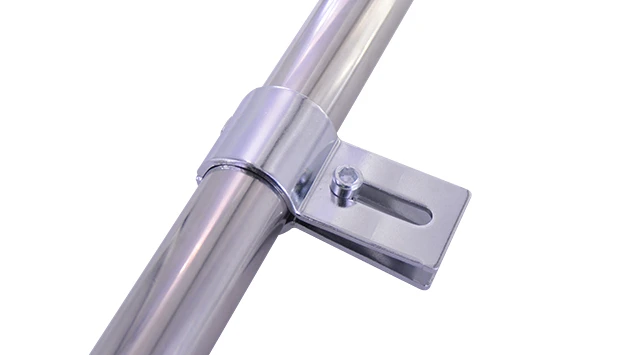
Lean Pipe Clamp B Chrome
Lean pipe clamp is used for turnover trolley, workbench, flowrack adjust the frame or fix some accessory.
In the fast-paced world of modern manufacturing, efficiency isn't just a goal—it's the backbone of survival. Every tool, every component, and every process must contribute to smoother workflows, reduced waste, and adaptability. Enter the Lean Pipe Clamp B Chrome: a small but mighty component that has quietly revolutionized how factories, workshops, and assembly lines are built and reconfigured. Far more than just a "clamp," this unassuming piece of hardware is a cornerstone of modular industrial systems, enabling teams to build, adjust, and scale workspaces with unprecedented speed. Let's dive into what makes this clamp indispensable, from its physical design to its critical role in lean manufacturing ecosystems.
The Anatomy of Lean Pipe Clamp B Chrome: Built for Precision & Durability
At first glance, the Lean Pipe Clamp B Chrome might seem simple, but its design is a masterclass in functional engineering. Crafted to connect and secure lean pipes—hollow metal tubes used in modular structures—it balances strength, flexibility, and ease of use. Let's break down its key components and specifications:
Material: Chrome-Plated Steel for Longevity
The clamp's body is typically made from high-grade steel, then coated with a layer of chrome. This isn't just for aesthetics; chrome plating adds a hard, corrosion-resistant barrier that stands up to the wear and tear of industrial environments—think oil, grease, frequent handling, and even minor impacts. Unlike uncoated steel, which can rust over time, the chrome finish ensures the clamp remains functional for years, even in damp or dusty workshops.
Design: A Shape That Prioritizes Grip & Versatility
Most Lean Pipe Clamp B Chrome models feature a semi-circular "jaw" design, curved to match the outer diameter of standard lean pipes (often 28mm or 30mm). This curvature isn't accidental: it ensures maximum contact between the clamp and the pipe, distributing pressure evenly to prevent slippage, even under heavy loads. On either end of the jaw, you'll find threaded holes for bolts—usually M8 or M10 screws—that tighten the clamp around the pipes, creating a secure connection without welding or drilling.
What sets "Type B" apart? Unlike some one-size-fits-all clamps, the B Chrome variant often includes a reinforced rib along its back, boosting its load-bearing capacity. This makes it ideal for supporting heavier structures, such as multi-tiered material racks or workbenches loaded with tools and components. Most models also feature a compact profile, measuring around 60-80mm in length and 30-40mm in width, ensuring they don't add unnecessary bulk to assemblies.
Compatibility: A Key Player in Lean Pipe and Accessories
No industrial component exists in isolation, and the Lean Pipe Clamp B Chrome is no exception. It's designed to work seamlessly with lean pipe and accessories —a ecosystem that includes straight pipes, elbows, tees, and other connectors. Whether paired with standard steel lean pipes, stainless steel variants, or even aluminum lean pipes, this clamp maintains consistent performance, making it a versatile choice for mixed-material setups. Its compatibility with standard bolts and wrenches also means no specialized tools are needed for installation, keeping assembly straightforward and accessible to any team member.
How It Works: Functionality That Drives Lean Principles
At its core, the Lean Pipe Clamp B Chrome solves a fundamental challenge in industrial design: how to build sturdy structures that can still evolve with changing needs. Traditional fixed structures—welded frames, bolted shelves, or custom-built workbenches—are rigid. If a production line needs to expand, or a workspace needs to be reorganized, these structures become obstacles, requiring time-consuming (and costly) disassembly or replacement. The Lean Pipe Clamp B Chrome eliminates this problem by turning rigidity into flexibility.
Modular Assembly: Build, Adjust, Repeat
The clamp's magic lies in its simplicity. To connect two lean pipes at a 90-degree angle, for example, you position the pipes in the clamp's jaw, insert the bolts, and tighten them with a wrench. No welding, no cutting, no specialized training. This "tool-less" (or minimal-tool) assembly cuts setup time by up to 70% compared to traditional methods, according to industry estimates. But the real advantage is adjustability: if a workbench needs to be taller, or a flow rack needs an extra shelf, you simply loosen the clamps, reposition the pipes, and retighten. It's like building with industrial-scale Legos—only stronger.
Load-Bearing Power: Strength Without Compromise
Don't let its modularity fool you—this clamp is built to handle heavy loads. Thanks to its chrome-plated steel construction and reinforced design, most Lean Pipe Clamp B Chrome models can support between 50kg to 150kg per connection, depending on pipe thickness and installation quality. This makes it suitable for everything from lightweight tool holders to heavy-duty material racks. For context, a typical assembly line workbench built with these clamps can easily support the weight of power tools, electronic testing equipment, and batches of components without sagging or shifting.
The Role of the Lean Pipe Joint
While the Lean Pipe Clamp B Chrome is often referred to simply as a "clamp," it's more accurately classified as a lean pipe joint —a term that emphasizes its role in linking components into cohesive systems. Unlike fixed joints (e.g., welded elbows), which lock pipes into permanent angles, this clamp-based joint allows for controlled movement and reconfiguration. This flexibility aligns perfectly with lean manufacturing principles, where "just-in-time" adaptation to workflow changes is critical. For instance, in an automotive parts plant, a production line might switch from assembling sedan components to SUV parts overnight; with clamp-based joints, the workbenches and flow racks can be reconfigured in hours, not days.
Industrial Impact: Where Lean Pipe Clamp B Chrome Shines
To truly appreciate the Lean Pipe Clamp B Chrome, we need to look beyond its technical specs and into the real-world environments where it operates. From automotive factories to electronics workshops, this clamp is the unsung hero of spaces that demand both structure and adaptability. Let's explore its most common applications and why it's become a staple in these settings.
Workbenches: The Heart of the Workshop
Workbenches are the workhorses of manufacturing, and the Lean Pipe Clamp B Chrome is their backbone. Whether it's a single-deck workbench for assembly tasks or a multi-tiered station for quality control, the clamp enables teams to customize height, shelf placement, and accessory mounting (e.g., tool hooks, cable management). In electronics manufacturing, for example, ESD workbenches (designed to prevent static electricity damage) rely on these clamps to secure anti-static mats, grounding straps, and component bins—all while allowing quick adjustments if a new device model requires a different layout.
Flow Racks & Material Handling
Efficiency in material flow can make or break a production line, and flow racks—used to store and transport parts from storage to assembly—depend on sturdy, adjustable frameworks. Lean Pipe Clamp B Chrome excels here, as it allows for the creation of inclined roller tracks (using roller track and accessories, another key part of the lean ecosystem) that guide components to workers via gravity. If production volume increases, adding extra levels or extending the rack is as simple as adding more pipes and clamps. Warehouses also use these clamps to build turnover trolleys, which can be customized with shelves, dividers, and casters to transport parts across facilities without damage.
Automotive and Aerospace: High-Stakes Adaptability
In industries where production lines are constantly evolving, the clamp's adaptability is a game-changer. Automotive plants, for instance, frequently update assembly processes to accommodate new safety features or design changes. A line building electric vehicle batteries, for example, might need taller workbenches to house larger battery packs; with clamp-based joints, the transition is seamless. Similarly, aerospace manufacturers use these clamps to build modular tool storage systems that can be reorganized when new aircraft models require specialized equipment.
The Supply Chain: From Lean Pipe Supplier to Factory Floor
Behind every successful deployment of Lean Pipe Clamp B Chrome is a reliable lean pipe supplier . These suppliers don't just provide clamps—they offer expertise in system design, ensuring that components like pipes, clamps, and accessories work together harmoniously. A quality supplier will also provide technical support, helping factories calculate load capacities, select the right clamp size for specific pipes, and troubleshoot assembly issues. For example, a supplier might recommend using reinforced B Chrome clamps for a heavy-duty material rack versus standard clamps for a lightweight tool trolley, ensuring safety and longevity.
How It Stacks Up: Lean Pipe Clamp B Chrome vs. Alternatives
While the Lean Pipe Clamp B Chrome is widely used, it's not the only option for joining lean pipes. Let's compare it to two common alternatives—plastic lean pipe clamps and stainless steel fixed joints—to understand why it often emerges as the preferred choice in industrial settings.
| Feature | Lean Pipe Clamp B Chrome | Plastic Lean Pipe Clamp | Stainless Steel Fixed Joint |
|---|---|---|---|
| Material | Chrome-plated steel | Polypropylene or nylon | Stainless steel (welded or glued) |
| Load Capacity | 50-150kg per joint | 10-30kg per joint | 200+kg (but permanent) |
| Adjustability | High (reconfigurable with tools) | Medium (may wear over time) | None (permanent angle) |
| Corrosion Resistance | High (chrome plating) | High (chemical-resistant plastic) | Very high (stainless steel) |
| Cost | Moderate ($3-$8 per clamp) | Low ($1-$4 per clamp) | High ($10-$20 per joint + labor) |
| Best For | Heavy-duty, adaptable systems (workbenches, flow racks) | Lightweight, low-wear applications (lab shelving, small tool holders) | Permanent, high-load structures (industrial machinery frames) |
*Cost estimates based on bulk wholesale pricing from leading lean pipe suppliers.
Choosing a Lean Pipe Supplier: What to Look For
Not all Lean Pipe Clamp B Chrome products are created equal. The quality of the clamp—from the thickness of the steel to the precision of the threading—directly impacts its performance and lifespan. That's why selecting the right lean pipe supplier is as important as choosing the clamp itself. Here are the key factors to consider:
Material Quality
Start by asking about the clamp's material composition. Reputable suppliers use high-carbon steel (e.g., Q235) for the base, then apply a thick chrome plating (at least 0.05mm) for corrosion resistance. Avoid suppliers that cut corners with thin plating or low-grade steel, as these clamps may bend under load or rust quickly in humid environments.
Range of Lean Pipe and Accessories
A top-tier supplier won't just sell clamps—they'll offer a full suite of lean pipe and accessories , including pipes (steel, stainless, aluminum), elbows, tees, casters, and workbench components. This ensures compatibility across your entire system. For example, if you buy clamps from Supplier A and pipes from Supplier B, you might end up with mismatched diameters, leading to loose connections.
Customization and Technical Support
Every factory has unique needs. A good supplier should offer customization options, such as clamps with special coatings (for ESD protection) or modified jaw sizes for non-standard pipes. They should also provide technical support, like load capacity charts, assembly guides, and troubleshooting help. For instance, if you're building a heavy-duty material rack, they can advise on how many clamps per joint are needed to safely support the weight.
Consistency and Certifications
Industrial components need to meet strict standards. Look for suppliers whose clamps are tested for load capacity (e.g., ISO 9001 certification) and have consistent dimensions. Inconsistent sizing—even a 1mm difference in jaw width—can lead to wobbly structures. Ask for sample clamps before placing a bulk order to test fit and durability.
Caring for Your Clamps: Maintenance Tips for Longevity
Like any industrial tool, the Lean Pipe Clamp B Chrome performs best with regular care. Fortunately, maintaining these clamps is simple and requires minimal time—ensuring they continue to support your workflows for years. Here's how to keep them in top shape:
Regular Inspections
Schedule monthly checks of clamps in high-use areas (e.g., assembly line workbenches, frequently moved trolleys). Look for signs of wear: loose bolts, bent jaws, or chipped chrome plating. Tighten any loose bolts with a wrench—over time, vibration can cause them to loosen, reducing grip strength. If a clamp's jaw is bent or the plating is peeling (exposing raw steel), replace it immediately to prevent rust and maintain load capacity.
Cleaning and Lubrication
Industrial environments are dusty, greasy, and prone to buildup. Wipe clamps down with a dry cloth every few weeks to remove debris; for heavier grime, use a mild detergent and a soft brush (avoid abrasive cleaners, which can scratch the chrome). If clamps are used in wet or humid areas (e.g., food processing plants), apply a thin layer of anti-corrosion spray (e.g., WD-40) to the bolts and jaw hinges to prevent rust. Avoid over-lubricating, as excess oil can attract dust.
Proper Disassembly and Reuse
When reconfiguring structures, take care to loosen bolts gradually to avoid stripping the threads. If a bolt is stuck (common in clamps that haven't been adjusted in months), apply a penetrating oil and let it sit for 10-15 minutes before trying again. With proper handling, most clamps can be reused dozens of times—making them a sustainable choice for eco-conscious facilities.
The Future of Lean Pipe Clamp B Chrome: Adaptation in a Smart Manufacturing World
As industries shift toward smart manufacturing—powered by automation, IoT sensors, and data-driven workflows—one might wonder: Will traditional components like the Lean Pipe Clamp B Chrome become obsolete? The answer is a resounding no. In fact, their modularity makes them even more valuable in a world where flexibility and scalability are paramount.
Emerging trends suggest clamps may evolve to integrate with smart systems. For example, some manufacturers are experimenting with "smart clamps" equipped with RFID tags, allowing teams to track which components are used in which structures via digital inventory systems. Others are exploring lighter materials (e.g., aluminum-chrome composites) to reduce weight without sacrificing strength, making clamps easier to handle in manual assembly tasks.
Perhaps most importantly, the clamp's role in lean manufacturing aligns with the growing focus on sustainability. By enabling endless reconfiguration, it reduces the need for new materials—cutting down on waste and lowering carbon footprints. In an era where "circular economy" principles are gaining traction, the ability to disassemble, reuse, and repurpose components is more valuable than ever.
Why Lean Pipe Clamp B Chrome Matters
In the grand scheme of industrial machinery, the Lean Pipe Clamp B Chrome is easy to overlook. It's not flashy, it doesn't have a digital interface, and it won't make headlines. But for the workers on the factory floor, the engineers designing workflows, and the businesses striving to stay competitive, it's nothing short of essential. It's a tool that turns rigid spaces into adaptable ecosystems, that turns "we can't" into "we can reconfigure," and that turns wasted time into productive innovation.
So the next time you walk through a manufacturing plant, take a closer look at the workbenches, the flow racks, and the trolleys. Chances are, you'll spot the telltale shine of a chrome clamp, holding it all together—quietly, reliably, and ready for whatever the next shift brings.