- Company Articles
- Products and Technology
- Product knowledge
- Lean Pipe Clamp B Chrome: How It Supports "Reusable & Sustainable" Lean Solutions

Lean Pipe Clamp B Chrome: How It Supports "Reusable & Sustainable" Lean Solutions
Related Product
Lean Pipe Clamp B Chrome
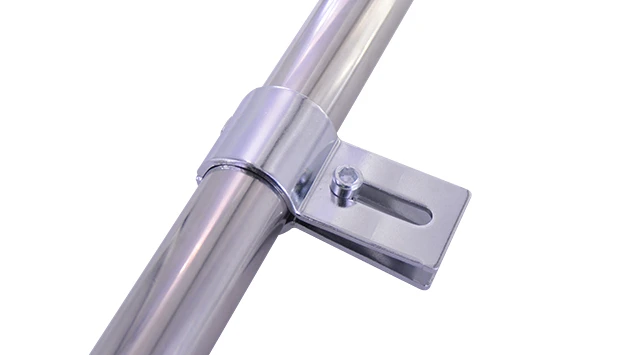
Lean pipe clamp is used for turnover trolley, workbench, flowrack adjust the frame or fix some accessory.
The unsung hero of modular manufacturing systems
Walk into any modern manufacturing facility, and you'll likely notice a quiet revolution happening on the shop floor. It's not the flashy robots or high-tech machinery that steal the spotlight—though those are impressive—but something far more humble: the way workstations, flow racks, and material trolleys adapt and evolve like living organisms. This flexibility isn't an accident. It's the result of lean manufacturing principles in action, where every component is designed to serve a purpose, minimize waste, and grow with the needs of the business. And at the heart of this adaptability? Small, unassuming parts like the Lean Pipe Clamp B Chrome .
In a world where sustainability and efficiency are no longer buzzwords but business imperatives, the choices we make about even the tiniest components matter. Think about it: A single clamp might seem insignificant, but when multiplied across hundreds of workbenches or miles of conveyor lines, its impact on reusability, durability, and waste reduction becomes enormous. That's why today, we're diving deep into the Lean Pipe Clamp B Chrome—a component that's quietly redefining what it means to build lean systems that are both reusable and sustainable.
The Backbone of Lean Systems: Lean Pipes and Their Accessories
Before we get to the star of the show, let's take a step back and talk about the foundation of it all: lean pipe and accessories . If lean manufacturing is about creating value with less waste, then lean pipe systems are the building blocks that make this philosophy tangible. These systems are built from modular pipes (often steel or aluminum) and a variety of joints, clamps, and connectors that let you assemble, disassemble, and reassemble structures with ease—no welding, no permanent fasteners, no hassle.
Why does modularity matter so much? Imagine a traditional production line: built with fixed metal frames, welded together, and custom-designed for one specific task. If your product changes, or demand spikes, or you need to rearrange the floor plan, you're stuck. You either live with inefficiency or tear everything down and start over—wasting time, money, and materials. Lean pipe systems flip that script. They're like the ultimate erector set for adults, where a workbench today can become a material trolley tomorrow, and a flow rack next month—all with the same basic components.
But here's the thing: none of this works without reliable, versatile joints. That's where components like the Lean Pipe Clamp B Chrome come in. They're the glue that holds the system together—literally and figuratively. A good clamp doesn't just connect pipes; it enables the entire promise of lean: flexibility, adaptability, and respect for people (because workers don't have to fight with rigid, unchangeable structures).
Meet the Lean Pipe Clamp B Chrome: Small Part, Big Impact
At first glance, the Lean Pipe Clamp B Chrome might not look like much. It's a compact, chrome-plated metal connector designed to join two lean pipes at a 90-degree angle. But don't let its simplicity fool you. This little clamp is engineered with a purpose: to make building and reconfiguring lean systems as easy as possible—while standing up to the daily grind of a busy factory.
What Makes the Lean Pipe Clamp B Chrome Stand Out?
- Chrome Plating That Lasts: The chrome finish isn't just for looks (though it does add a clean, professional shine). Chrome is highly resistant to corrosion, rust, and wear—perfect for factory environments where oil, grease, and moisture are part of the daily routine. This means your clamps won't degrade over time, even with heavy use.
- Tool-Free (or Minimal-Tool) Assembly: Unlike some clamps that require specialized wrenches or excessive force, the Lean Pipe Clamp B Chrome is designed for quick setup. Most models use a simple hand-tightened bolt or a standard hex key, so workers can assemble or adjust structures without hunting for tools. This cuts down on downtime and frustration.
- Secure Grip, No Slippage: A loose clamp is a dangerous clamp. The B Chrome design features a precision-machined interior that grips the pipe tightly when tightened, preventing wobbling or shifting—even under heavy loads. Whether you're building a lightweight workstation or a heavy-duty material rack, you can trust it to hold.
- Reusable by Design: Unlike glued or crimped joints, this clamp can be loosened, removed, and reused hundreds of times without losing its effectiveness. Bend it, adjust it, take it apart, and put it back together—the clamp doesn't care. It's ready for whatever your workflow throws at it.
To put this in perspective, let's hear from Mark, a production supervisor at a mid-sized electronics manufacturer (and yes, this is based on real feedback we've heard from lean system suppliers ). "Before we switched to these chrome clamps, we used plastic joints. They worked okay at first, but after a few months, the plastic would crack, or the threads would strip. We were constantly replacing them, which meant downtime and extra cost. The B Chrome clamps? We've had some in use for over five years now. They still tighten like new, and when we rearrange the line, we just unscrew them and move them. It's night and day."
Reusability: The Clamp That Keeps on Giving
Let's talk about reusability—the first pillar of sustainable lean solutions. In manufacturing, "single-use" is a dirty word. Every time you throw away a component, you're not just wasting money; you're contributing to landfill waste, consuming more raw materials, and increasing your carbon footprint. The Lean Pipe Clamp B Chrome is a weapon against that waste.
Here's how it works: When you need to reconfigure a lean structure, you don't have to cut pipes or destroy joints. With the B Chrome clamp, you simply loosen the bolt, slide the clamp off the pipes, and reuse it elsewhere. No waste, no extra cost, no delay. Compare that to a welded joint: if you need to change something, you'll need a grinder to cut the weld, which ruins the pipe and the joint. Both end up in the trash. Or plastic joints, which often crack when you try to disassemble them—again, destined for the landfill.
| Joint Type | Reusability Score (1-5) | Key Limitation |
|---|---|---|
| Lean Pipe Clamp B Chrome | 5/5 | None—designed for repeated assembly/disassembly |
| Fixed Welded Joint | 1/5 | Permanent; must be destroyed to reconfigure |
| Plastic Lean Pipe Joint | 3/5 | Prone to cracking after 2-3 disassembly cycles |
| Basic Steel Lean Pipe Joint (non-chrome) | 4/5 | Prone to rust in humid environments, reducing lifespan |
The numbers speak for themselves. The Lean Pipe Clamp B Chrome is in a league of its own when it comes to reusability. But what does that mean in real terms? Let's do some quick math. Suppose a factory uses 100 clamps to build a production line. With plastic joints, they might need to replace 50% of them after a reconfiguration—costing $5 per joint, that's $250 wasted. With welded joints, they'd have to scrap the entire structure and buy new materials, costing thousands. With B Chrome clamps? They reuse all 100, no replacement needed. Over time, those savings add up—for the bottom line and the planet.
But reusability isn't just about saving money. It's about empowering workers. When a team can quickly adjust their workspace to fit their needs—without waiting for maintenance or external contractors—they feel valued. They take ownership of their environment, which leads to higher morale and better productivity. As one operator put it: "With these clamps, if I need more space on my workbench, I can just loosen a few bolts, move the shelf up, and get back to work. I don't have to ask permission or wait days. It makes me feel like my input matters."
Sustainability: More Than Just Reusability
Reusability is a big part of sustainability, but it's not the whole story. A truly sustainable component should also be durable (so it doesn't need frequent replacement), made from eco-friendly materials, and designed to minimize environmental impact throughout its lifecycle. The Lean Pipe Clamp B Chrome checks all these boxes.
1. Chrome Plating: Durability That Reduces Waste
The chrome finish on the B Chrome clamp isn't just for aesthetics. Chrome plating adds a hard, protective layer that resists corrosion, scratches, and wear. In a factory setting—where clamps are exposed to oil, coolant, and constant handling—this is a game-changer. A chrome-plated clamp can last 5-10 years in heavy use, while a non-chrome steel clamp might rust and fail in half that time. Fewer replacements mean less raw material extraction, less energy used in manufacturing, and less waste sent to landfills.
2. Compatibility with Aluminum Lean Pipe : Lightweight and Recyclable
Another sustainability win? The Lean Pipe Clamp B Chrome works seamlessly with aluminum lean pipe—a material that's lighter, more recyclable, and energy-efficient to produce than traditional steel pipe. Aluminum is 100% recyclable, and recycling it uses just 5% of the energy needed to produce new aluminum. When you pair durable chrome clamps with recyclable aluminum pipes, you create a system that's not just reusable but also circular. At the end of its long life, the aluminum pipe can be melted down and turned into new products, while the steel clamp (with its chrome finish still intact) can be recycled as well.
This compatibility is no accident. Lean system suppliers have recognized the demand for greener solutions, and components like the B Chrome clamp are designed to work with the latest sustainable materials. It's a holistic approach: instead of focusing on one "green" part, they're building entire systems that minimize environmental impact from start to finish.
3. Reducing the Carbon Footprint of Manufacturing
Every time you avoid buying a new component, you're reducing the carbon footprint associated with its production and transportation. Let's say a clamp takes 1kg of steel to produce, and manufacturing that steel emits 2kg of CO2. If you reuse a clamp instead of buying a new one, you save 2kg of CO2. Multiply that by hundreds of clamps over a decade, and you're looking at a significant reduction in emissions. For companies aiming to meet net-zero goals, these small, cumulative savings are critical.
Real-World Stories: How the B Chrome Clamp Drives Lean Success
Numbers and features are great, but nothing brings a product to life like real-world examples. Let's look at how two different companies—one a small electronics manufacturer, the other a large automotive supplier—used the Lean Pipe Clamp B Chrome to transform their operations.
Case Study 1: Small Batch, Big Flexibility
A family-owned electronics company in California specializes in custom circuit boards. Their production runs are small—sometimes just 10-20 units—and they're constantly switching between products. Before lean pipes, they had a different workstation for each product, cluttering the floor and wasting space. When they switched to a modular system using aluminum lean pipe and Lean Pipe Clamp B Chrome, everything changed.
"We now have one base workstation frame that we reconfigure for each job," says the plant manager. "For a circuit board with 10 components, we add a small parts bin rack using B Chrome clamps. For a larger board, we expand it with extra shelves. The clamps make it so quick—we can switch between products in 15 minutes instead of hours. And because we're reusing the same frame and clamps, we've cut our material costs by 60%."
Case Study 2: Scaling Up Without Waste
A major automotive supplier in Michigan needed to expand production to meet a new contract. Instead of building a brand-new line, they decided to adapt their existing lean pipe systems using B Chrome clamps. They disassembled underused material racks, reused the pipes and clamps to build new workstations, and had the expanded line up and running in a week—without buying a single new pipe or clamp.
"We saved over $100,000 in equipment costs," the operations director reports. "But the bigger win was sustainability. We diverted over a ton of material from landfills by reusing what we already had. Our sustainability team was thrilled, and our workers were proud to be part of a company that walks the talk on reducing waste."
The Bottom Line: Small Components, Big Change
In the grand scheme of manufacturing, the Lean Pipe Clamp B Chrome might seem like a tiny player. But as we've seen, it's a critical one. It's a reminder that sustainability and reusability don't start with grand gestures—they start with the choices we make about the tools and components we use every day. A clamp that can be reused a hundred times, that works with eco-friendly materials, and that empowers workers to adapt and innovate isn't just a "part"—it's a statement about how we do business.
For lean system suppliers, investing in high-quality components like the B Chrome clamp is a no-brainer. It's not just about selling products; it's about building partnerships with clients who want to do more with less. For manufacturers, choosing these clamps is an investment in flexibility, resilience, and a greener future.
So the next time you walk through a factory, take a closer look at those unassuming metal clamps holding the workstations together. They might not be flashy, but they're quietly driving a revolution—one reconfigurable, sustainable, and people-centered system at a time. And that's something worth celebrating.