- Company Articles
- Products and Technology
- Application Cases
- Lean Pipe Clamp B Chrome in Computer Peripheral Assembly: Modular Builds

Lean Pipe Clamp B Chrome in Computer Peripheral Assembly: Modular Builds
Related Product
Lean Pipe Clamp B Chrome
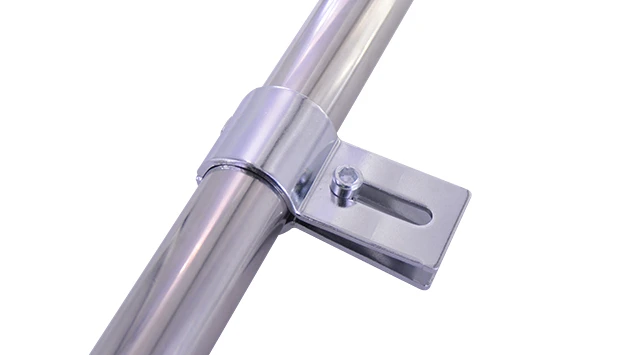
Lean pipe clamp is used for turnover trolley, workbench, flowrack adjust the frame or fix some accessory.
Walk into any computer peripheral assembly plant, and you'll likely be hit by the hum of machinery, the clink of components, and the quiet focus of workers piecing together keyboards, mice, and printers. But beneath that rhythm lies a hidden challenge: how to keep up with the relentless pace of innovation. Today's consumers want sleeker designs, faster response times, and smarter features—and that means assembly lines can't stay static. A keyboard with a new wireless chip, a mouse with an ergonomic redesign, a printer with a larger paper tray—each change demands a production line that can adapt without grinding to a halt. This is where modular builds step in, and at the heart of that flexibility? The unsung hero of lean manufacturing: the lean pipe clamp B chrome .
In this article, we'll dive into how this small but mighty component transforms rigid assembly lines into dynamic, adaptable workspaces. We'll explore its role in building lean pipe workbench setups, integrating with flow rack systems, and supporting the delicate balance of speed and precision required in computer peripheral manufacturing. We'll also touch on why pairing it with aluminum profile and esd workbench solutions creates a holistic system that doesn't just keep up with change—it thrives on it.
The Problem with Rigid Assembly Lines: Why Flexibility Matters More Than Ever
Let's start with a scenario many factory managers know all too well. Imagine a line that's been churning out the same wireless mouse for two years. It's efficient, predictable, and the team knows every step like the back of their hand. Then, the design team drops a bombshell: the next generation mouse will have a curved grip and a new sensor, requiring a 30% larger circuit board. Overnight, the old workbench—with its fixed shelving and bolted-down tool holders—becomes obsolete. The team spends three days disassembling, reconfiguring, and reinstalling, losing production time and frustrating workers who just want to get back to building quality products.
This isn't just a hypothetical. In computer peripheral manufacturing, product lifecycles are shorter than ever. A top-selling keyboard might only stay in production for 18 months before a slimmer, more responsive model takes its place. Rigid assembly lines—built with welded steel frames, permanent shelving, and one-size-fits-all workstations—can't keep up. They're expensive to modify, slow to adapt, and often lead to wasted space, bottlenecked workflows, and demotivated teams.
The solution? Modular systems built with lean pipe and compatible components. These systems are designed to be reconfigured in hours, not days, using simple tools and standardized parts. And at the center of that modularity is the humble clamp—a component that might look unassuming, but holds the power to turn a static line into a dynamic, ever-evolving workspace.
Lean Pipe Clamp B Chrome: What It Is and Why It Stands Out
At first glance, the lean pipe clamp B chrome might blend in with the other metal components on an assembly line. It's a small, chrome-plated joint designed to connect lean pipe (also known as "lean tube") to other pipes, brackets, or workbench surfaces. But don't let its size fool you. This clamp is engineered for two critical things: strength and flexibility.
Let's break down its design. The "B" in its name refers to its dual-functionality: it can both secure pipes in a fixed position and allow for limited rotation, making it ideal for setups that need a balance of stability and adjustability. The chrome plating isn't just for looks—it adds corrosion resistance, a must in factories where spills (of cleaning fluids or lubricants) are common, and where components like circuit boards demand a clean environment. Under that chrome, the clamp is typically made of high-grade steel, giving it a load capacity of up to 50kg per joint—more than enough to support the plastic molds, circuit boards, and small tools used in computer peripheral assembly.
But what really sets the lean pipe clamp B chrome apart is its ease of use. Unlike welded joints or bolted connections, which require power tools and technical expertise to adjust, this clamp can be tightened or loosened with a simple hex key. That means a line worker or supervisor can reposition a shelf, adjust a tool holder, or even rebuild an entire lean pipe workbench in minutes, not hours. No more waiting for the maintenance team, no more halting production for reconfigurations—just quick, on-the-fly adjustments that keep the line moving.
Building Better Workspaces: Lean Pipe Clamp B Chrome in Action
To understand the real impact of the lean pipe clamp B chrome, let's zoom in on two common setups in computer peripheral assembly: the lean pipe workbench and the flow rack system. These are the workhorses of the factory floor, and the clamp plays a starring role in both.
1. Lean Pipe Workbench: Where Precision Meets Adaptability
A typical computer peripheral workbench needs to juggle multiple tasks. On one side, a worker might be soldering tiny wires onto a keyboard's circuit board; on the other, another might be testing the tactile feedback of mouse buttons. That means the workbench needs fixed stations for tools (like soldering irons or screwdrivers) and adjustable sections for holding components of different sizes.
Here's how the lean pipe clamp B chrome shines. The frame of the workbench is built using lean pipe connected by a mix of fixed joints and B clamps. The fixed joints secure the legs and main supports, ensuring stability. The B clamps, however, are used for the "working surfaces": adjustable shelves for component bins, pivoting arms for magnifying lamps, or sliding tool holders. For example, when the line switches from assembling a compact wireless mouse to a larger ergonomic model, the worker can loosen the B clamps holding the component bins, slide them 10cm to the left to make space, and retighten—all in under a minute. No disassembly, no downtime.
Pair this with an esd workbench top (ESD stands for "electrostatic discharge"), and you've got a setup that protects sensitive components while staying adaptable. The B clamps secure the ESD top to the lean pipe frame, ensuring it stays grounded (critical for preventing static electricity from frying circuit boards) but can still be swapped out if the top gets scratched or worn.
2. Flow Rack: Keeping Components Moving, Without the Bottlenecks
In computer peripheral assembly, time is money—and nothing kills time like waiting for components. A flow rack solves this by using gravity to feed parts (like mouse shells, keyboard keycaps, or USB connectors) directly to the assembly line, so workers never have to step away to grab supplies. But flow racks need to be customized to the size and weight of the components—and that's where the lean pipe clamp B chrome comes in.
A standard flow rack has sloped shelves with roller tracks, allowing bins to glide forward as the front bin is emptied. The angle of the slope, the height of the shelves, and the spacing between tracks all need to be adjusted based on the components. For example, a bin of small USB-C connectors might need a steeper slope than a bin of larger printer paper trays. With B clamps, adjusting the slope is simple: loosen the clamps holding the roller track brackets, tilt the track to the desired angle, and retighten. No need to replace the entire shelf—just tweak the existing one.
And when a new component is introduced—say, a bulkier battery pack for a wireless keyboard—the B clamps make it easy to add a new shelf. Just cut a length of lean pipe , connect it to the existing rack with B clamps, and attach the roller track. In 20 minutes, the flow rack is ready for the new part, without disrupting the rest of the line.
Why Chrome? Why B? Comparing Lean Pipe Joints for Assembly Lines
You might be wondering: with so many lean pipe joints on the market—like fixed 90° joints, rotating 180° joints, or even plastic-coated variants—why choose the lean pipe clamp B chrome? The answer lies in balance. Let's compare it to three common alternatives to see why it's the go-to for computer peripheral assembly:
| Joint Type | Rotation Range | Load Capacity | Best For | Limitations in Peripheral Assembly |
|---|---|---|---|---|
| Lean Pipe Clamp B Chrome | 0°–45° (limited rotation) | Up to 50kg | Workbenches, flow racks, tool holders | Not ideal for full 360° rotation needs |
| 90° Fixed Lean Pipe Joint | 0° (fixed) | Up to 60kg | Stationary frames, legs, vertical supports | Can't adjust angles; rigid for evolving products |
| 180° Rotating Lean Pipe Joint | 0°–180° (full rotation) | Up to 30kg | Swiveling tool arms, temporary setups | Lower load capacity; less stable for heavy bins |
| Plastic-Coated Lean Pipe Clamp | 0°–30° | Up to 25kg | Light-duty shelving, non-conductive setups | Not durable for high-traffic assembly lines |
As the table shows, the B chrome clamp hits the sweet spot for most computer peripheral tasks. It's strong enough to hold the bins of circuit boards and plastic molds that flow through a typical line, but flexible enough to adjust when product dimensions change. The 90° fixed joint is stronger, but its rigidity becomes a liability when a new mouse design requires a wider workbench surface. The 180° rotating joint is more flexible, but its lower load capacity can't handle the weight of full component bins on a flow rack. And plastic-coated clamps, while cheaper, wear down quickly in busy factories—meaning more replacements and more downtime.
Beyond the Clamp: Building a Holistic Lean System
The lean pipe clamp B chrome is powerful on its own, but its true potential shines when paired with other lean manufacturing components. Let's look at two key partners: aluminum profile and esd workbench solutions.
Aluminum Profile: Adding Strength Without the Weight
While lean pipe (typically steel with a plastic coating) is great for flexibility, aluminum profile brings rigidity and precision to the mix. Aluminum extrusion profiles—with their T-slot design—are perfect for building frames that need to support heavier loads or integrate with specialized equipment, like automated screwdrivers or testing stations. The lean pipe clamp B chrome acts as a bridge between the two systems: its steel construction can connect to aluminum profile brackets, creating a hybrid setup that's both flexible (where needed) and rigid (where required).
For example, imagine a workbench where the main frame is built with aluminum profile (to support a heavy testing machine), but the component shelves are made with lean pipe and B clamps (to adjust for different product sizes). This hybrid approach gives factories the best of both worlds: stability for expensive equipment and adaptability for ever-changing components.
ESD Workbench: Protecting the Heart of Peripherals
Computer peripherals rely on tiny, sensitive electronics—circuit boards, microchips, and sensors—that can be destroyed by a single static discharge. An esd workbench addresses this by grounding the workspace, preventing static buildup. But an ESD top is only effective if it's properly secured to a grounded frame. Here, the lean pipe clamp B chrome plays a critical role: it ensures the ESD top stays firmly attached to the lean pipe frame (which is grounded via conductive casters or feet), eliminating gaps that could break the grounding path. And when the top needs to be replaced (after years of wear), the B clamps make removal and reinstallation a breeze—no need to replace the entire frame.
A Day in the Life: How the B Clamp Changes Workflows
To put this all in perspective, let's walk through a typical day at a computer peripheral factory—before and after adopting lean pipe clamp B chrome systems. Meet Maria, a production supervisor at a mid-sized plant that makes wireless keyboards.
Before: The line uses fixed steel workbenches with welded shelves. When a new keyboard model with a slimmer design arrives, the component bins (which are too wide for the new parts) need to be moved. Maria has to call the maintenance team, who spend two hours unbolting the shelves, drilling new holes, and reattaching them. The line is down for half a shift, and the team misses their daily production target. Workers grumble about the delays, and Maria spends the afternoon apologizing to her manager.
After: The line is rebuilt with lean pipe workbenches, flow racks, and lean pipe clamp B chrome joints. When the new keyboard model arrives, Maria grabs a hex key, loosens the B clamps holding the bins, slides them 15cm to the right, and retightens. The whole process takes 15 minutes, and the line is back up. The workers adjust quickly to the new layout, and by lunch, they're ahead of schedule. Maria spends the afternoon brainstorming with the team about how to rearrange the flow rack to reduce (bending) when grabbing keycaps—a small change that makes the job easier and cuts down on fatigue.
This isn't just about efficiency. It's about empowerment. When workers can adjust their own workspaces, they take ownership of their productivity. They notice small improvements—like angling a shelf to reduce eye strain or moving a tool holder closer to their dominant hand—that a rigid system would never allow. And that leads to better morale, fewer errors, and a team that feels valued.
Future-Proofing Your Line: Why the B Clamp Matters for Tomorrow's Peripherals
The computer peripheral industry isn't slowing down. We're already seeing keyboards with haptic feedback, mice that charge wirelessly through desks, and printers that connect to smart home systems. Each of these innovations will bring new component sizes, new assembly steps, and new challenges. Factories that stick with rigid systems will find themselves struggling to keep up, while those with modular setups—built around components like the lean pipe clamp B chrome—will adapt with ease.
But the benefits go beyond just keeping up. Modular systems are also more sustainable. Instead of scrapping an entire workbench when a product line ends, you can reconfigure it with new pipes and clamps. The lean pipe clamp B chrome, with its durable steel and chrome plating, can last for years, even through multiple reconfigurations. This reduces waste and cuts long-term costs—an important consideration in an industry where margins are tight.
Conclusion: The Clamp That Holds It All Together
In the world of computer peripheral assembly, where change is the only constant, the lean pipe clamp B chrome is more than just a component—it's a catalyst for adaptability. It turns rigid lines into dynamic workspaces, empowers workers to shape their own environments, and helps factories keep up with the fast pace of innovation. When paired with lean pipe workbench, flow rack, aluminum profile, and ESD workbench solutions, it creates a system that doesn't just build products—it builds resilience.
So the next time you pick up a wireless mouse or type on a sleek keyboard, take a moment to appreciate the invisible work happening behind the scenes. Somewhere, in a factory far away, a small chrome clamp is holding it all together—one adjustment, one component, one productive day at a time.