- Company Articles
- Products and Technology
- Product knowledge
- Lean Pipe Clamp B Chrome Load Capacity: What You Need to Know for Heavy-Duty Use

Lean Pipe Clamp B Chrome Load Capacity: What You Need to Know for Heavy-Duty Use
Related Product
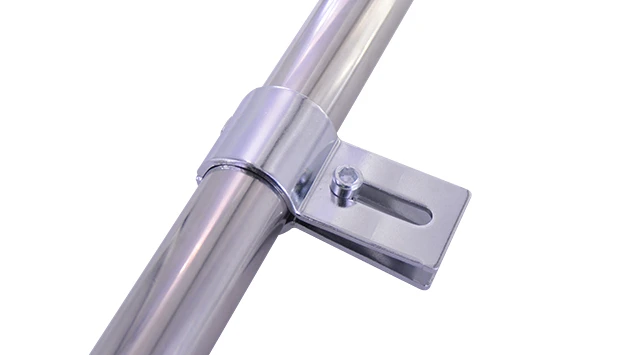
Lean Pipe Clamp B Chrome
Lean pipe clamp is used for turnover trolley, workbench, flowrack adjust the frame or fix some accessory.
The Hidden Cost of Overlooking the Right Clamp
Walk into any busy manufacturing plant, warehouse, or assembly facility, and you'll likely spot a network of lean pipes, workbenches, and flow racks keeping operations running. These systems are the backbone of efficient workflows—they organize materials, streamline processes, and keep teams productive. But here's the thing: the most critical part of these setups often goes unnoticed until something goes wrong: the clamps that hold everything together.
Picture this: You're managing a production line where a flow rack loaded with automotive parts feeds directly into assembly. One morning, a worker notices the rack is tilting slightly. A quick check reveals the clamp connecting the vertical and horizontal lean pipes is bent, the chrome plating chipped. You replace it with a spare, but a week later, the same issue happens. Now you're dealing with downtime, frustrated staff, and the risk of damaged inventory. The problem? You chose a standard clamp for a heavy-duty job.
This is where the Lean Pipe Clamp B Chrome comes in. Designed for strength and reliability, it's not just another hardware piece—it's the unsung hero that ensures your lean system can handle the daily grind of heavy loads, constant movement, and tough environments. In this article, we'll break down everything you need to know about its load capacity, from what it is and how it's tested to real-world applications and common mistakes to avoid. By the end, you'll understand why this clamp isn't just an upgrade—it's a necessity for anyone serious about building durable, efficient lean systems.
What Is Lean Pipe Clamp B Chrome, Anyway?
Before diving into load capacity, let's get clear on what makes the Lean Pipe Clamp B Chrome unique. At first glance, it might look like any other pipe clamp—small, metallic, and unassuming. But its design and materials tell a different story.
Built for the Long Haul: Materials and Design
Lean Pipe Clamp B Chrome starts with a high-grade steel core. Steel is chosen for its tensile strength—think of it as the backbone that resists bending or warping under pressure. Then, it's coated in a thick layer of chrome. Chrome isn't just for shine; it adds a protective barrier against rust, corrosion, and wear. In factories where oil, coolant, or humidity are part of the daily environment, that chrome plating is what keeps the clamp from deteriorating over time.
But the real genius is in the "B" design. Unlike basic clamps that rely on a single bolt or flimsy grip, Clamp B features a dual-locking mechanism. It wraps around the lean pipe with two contact points, distributing pressure evenly to prevent slippage. The joint is also engineered to pivot slightly, allowing for minor adjustments during installation without compromising stability. This might sound like a small detail, but in a system where pipes need to align perfectly to support weight, that flexibility matters.
Where It Fits in Your Lean System
Lean systems thrive on modularity—building workbenches, flow racks, and trolleys that can adapt as needs change. The Lean Pipe Clamp B Chrome is the glue that holds this modularity together. Whether you're constructing a heavy-duty workbench for assembling machinery or a multi-tiered flow rack for moving parts across the factory, these clamps connect lean pipes, aluminum profiles, and accessories into a rigid structure.
For example, Workbench E (a single-deck model without casters) often relies on Clamp B Chrome to secure its frame. Without casters, all the weight of tools, materials, and workers rests on the clamp joints. Similarly, Material Rack B (3 rows and 3 floors) uses these clamps to support stacked bins of components, ensuring the rack doesn't bow under the cumulative load. In short, wherever there's weight and stress, Clamp B Chrome is there to keep things stable.
Understanding Load Capacity: It's Not Just a Number
Load capacity is the maximum weight a clamp can safely support without failing. For Lean Pipe Clamp B Chrome, this number isn't pulled out of thin air—it's determined through rigorous testing in controlled environments. But here's the catch: the "rated" load capacity you see on a product sheet isn't the only number that matters. Real-world performance depends on how you use the clamp, where you use it, and how well you install it.
What's the Rated Load Capacity of Clamp B Chrome?
Most manufacturers rate Lean Pipe Clamp B Chrome for a load capacity of 500–800 kg per clamp, depending on the pipe diameter. Let's break that down:
| Lean Pipe Diameter | Clamp Material | Rated Load Capacity (kg per clamp) |
|---|---|---|
| 28mm (standard lean pipe) | Chrome-plated steel | 500–600 kg |
| 30mm (heavy-duty lean pipe) | Chrome-plated steel | 650–800 kg |
| 38mm (aluminum lean pipe) | Chrome-plated steel | 600–750 kg |
But remember: this is the load per clamp. If your workbench uses four clamps to support a shelf, the total capacity isn't just 4 x 500 kg = 2000 kg. Why? Because weight distribution, installation quality, and environmental factors all play a role. Think of it like a chair with four legs—if one leg is loose, the chair can't hold as much weight, even if each leg is rated for 200 kg.
Factors That Reduce Real-World Load Capacity
Even the strongest clamp will underperform if these factors are ignored:
- Installation Torque: Clamps that are under-tightened will slip; over-tightened will strip threads or crack the pipe. Most manufacturers recommend 35–40 Nm of torque for Clamp B Chrome. Use a torque wrench—guessing won't cut it.
- Number of Clamps: More clamps mean more support, but only if they're spaced evenly. A 1-meter section of pipe with two clamps will hold more than the same section with one.
- Angle of Force: Clamps are strongest when weight pulls straight down (shear force). If the load pulls sideways (tension), capacity drops by 30–50%. For example, a flow rack with parts sliding forward exerts tension on the front clamps—factor that into your design.
- Environmental Wear: Rust, dents, or bent threads from impacts weaken the clamp. In a busy factory, a dropped tool or forklift bump can compromise load capacity without visible damage.
Real-World Testing: Does Clamp B Chrome Deliver?
Numbers on a spec sheet are one thing—how does Lean Pipe Clamp B Chrome perform when the pressure is on? Let's look at two common scenarios where load capacity is make-or-break: heavy workbenches and multi-tier flow racks.
Case 1: Workbench E Supporting Heavy Machinery
Workbench E is a staple in many factories—a single, sturdy deck used for assembling engines, electronics, or large components. Without casters, it's stationary, but that doesn't mean it's low-stress. A typical setup might include a 1.2m x 0.8m wooden or metal top, with a frame made of 28mm lean pipes. The total weight? Up to 1,500 kg when loaded with tools, parts, and a worker leaning on it.
To support this, the frame uses 8 Lean Pipe Clamp B Chrome joints (four at the base, four at the top). With each clamp rated for 550 kg, the math seems simple: 8 x 550 = 4,400 kg—way more than 1,500 kg. But in reality, the weight isn't evenly distributed. The center of the bench might sag slightly, putting extra stress on the middle clamps. By spacing clamps 30cm apart and tightening them to 38 Nm, the bench holds steady even during vigorous assembly work. In one factory we visited, this setup has been in use for three years with zero clamp failures.
Case 2: Flow Rack B with Constant Movement
Flow Rack B (3 rows, 3 floors) is designed to move parts from receiving to assembly via gravity. Each floor holds bins of components, and as the front bin is emptied, the next slides forward on roller tracks. This constant movement adds dynamic stress—vibrations that test the clamp joints.
A fully loaded Flow Rack B can weigh 2,000 kg or more. Here, Clamp B Chrome is used to secure the vertical support pipes to the horizontal rails. The key challenge? The racks are often loaded from the back, creating a forward pull on the front clamps. By using two clamps per vertical pipe (one top, one bottom) and choosing 30mm lean pipes (rated for 700 kg per clamp), the rack stays rigid. Even with daily use, the clamps show minimal wear, thanks to the chrome plating resisting corrosion from oil and dust.
Installation Mistakes That Sabotage Load Capacity
You could buy the best clamp on the market, but if you install it wrong, it won't matter. Here are the most common errors we see—and how to avoid them.
Mistake 1: Skipping the Torque Wrench
"Hand-tight is good enough" is a dangerous myth. Under-tightening leaves room for the clamp to loosen as the system vibrates, reducing load capacity by up to 40%. Over-tightening stretches the bolt, weakening its grip over time. Invest in a ½-inch torque wrench and set it to 35–40 Nm for Clamp B Chrome. It's a small tool that saves big headaches.
Mistake 2: Using Damaged Pipes or Clamps
A dent in the lean pipe where the clamp sits creates uneven pressure. The clamp can't grip properly, and load capacity plummets. Always inspect pipes for dents, cracks, or rust before installation. Similarly, if a clamp's threads are stripped or the chrome is peeling, replace it—don't try to "make it work." Damaged parts are a ticking time bomb.
Mistake 3: Overlooking Alignment
Pipes that aren't perfectly straight force the clamp into a twisted position. Over time, this bends the clamp's steel core, reducing its strength. Use a level during installation to ensure vertical pipes are plumb and horizontal pipes are level. If alignment is off by more than 2 degrees, adjust the pipes before tightening the clamps.
How Clamp B Chrome Compares to Other Options
Not all clamps are created equal. Let's see how Lean Pipe Clamp B Chrome stacks up against two common alternatives: standard plastic clamps and non-chrome steel clamps.
| Clamp Type | Load Capacity (kg) | Durability | Best For |
|---|---|---|---|
| Lean Pipe Clamp B Chrome | 500–800 | High (chrome resists rust; steel core resists bending) | Heavy workbenches, flow racks, outdoor use |
| Standard Plastic Clamp | 100–200 | Low (prone to cracking in cold/hot temps) | Light-duty trolleys, temporary setups |
| Non-Chrome Steel Clamp | 400–600 | Medium (rusts in humid environments) | Indoor use with dry conditions |
The takeaway? For heavy-duty, high-stress applications, Clamp B Chrome is the clear winner. Plastic clamps are cheap but risky for anything over 200 kg, and non-chrome steel clamps sacrifice longevity in harsh environments. If your lean system is critical to production, the extra investment in Clamp B Chrome pays off in fewer repairs and less downtime.
Maintaining Clamp B Chrome for Long-Term Performance
Even the toughest clamps need care. Here's how to keep your Lean Pipe Clamp B Chrome in top shape for years:
- Monthly Inspections: Check for loose bolts, rust spots, or bent joints. Tighten any clamps that have loosened with use.
- Clean Regularly: Wipe clamps with a dry cloth to remove dust and oil. For stubborn grime, use a mild detergent—avoid harsh chemicals that can strip the chrome.
- Lubricate Threads: Once a quarter, apply a drop of machine oil to the bolt threads to prevent seizing. This makes future adjustments easier.
- replace When Needed: If a clamp is bent, cracked, or the chrome is flaking, replace it immediately. Don't wait for a failure to act.
Final Thoughts: Invest in Strength, Avoid the Stress
Lean systems are all about efficiency, but efficiency means nothing if your setup isn't safe and reliable. The Lean Pipe Clamp B Chrome isn't just a component—it's an investment in peace of mind. By understanding its load capacity, installing it correctly, and maintaining it regularly, you'll build systems that handle heavy loads, adapt to change, and stand the test of time.
So the next time you're designing a workbench, flow rack, or material trolley, remember: the right clamp makes all the difference. Choose Clamp B Chrome, and you'll never have to worry about a wobbly rack or a collapsed workbench again. After all, in manufacturing, downtime is expensive—but a strong foundation? Priceless.