- Company Articles
- Products and Technology
- Product knowledge
- Lean Pipe Clamp B Chrome Quality Testing: What to Check Before Purchase

Lean Pipe Clamp B Chrome Quality Testing: What to Check Before Purchase
Related Product
Lean Pipe Clamp B Chrome
Lean pipe clamp is used for turnover trolley, workbench, flowrack adjust the frame or fix some accessory.
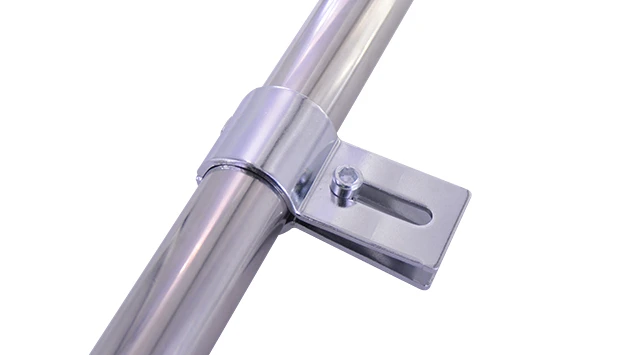
In the world of lean manufacturing, where efficiency, safety, and adaptability are the backbone of production lines, every component plays a silent but critical role. From the sturdiest workbench to the smallest connector, the quality of these parts directly impacts how smoothly your operations run. Among these unsung heroes are lean pipe clamp B chrome —small, unassuming pieces that hold together the frameworks of flow racks, assembly workstations, and material handling systems. Yet, despite their size, a subpar clamp can disrupt workflows, compromise safety, or even lead to costly downtime. That's why knowing how to test their quality before purchasing isn't just a "nice-to-have"—it's essential for anyone invested in building a reliable lean system.
Whether you're a procurement manager sourcing parts for a large-scale production assemble line or a small business owner setting up your first lean workspace, the goal is the same: to ensure every component, including those as seemingly minor as clamps, meets the standards your operations demand. In this guide, we'll walk through the key quality metrics to evaluate, practical testing methods, and how to partner with a trustworthy lean pipe supplier to avoid common pitfalls. Let's dive in.
Why Quality Testing for Lean Pipe Clamp B Chrome Can't Be Skipped
Imagine this: A busy assembly line where a flow rack, held together by dozens of lean pipe clamps, suddenly shifts under the weight of components. A worker notices a clamp has bent, causing a bin of parts to topple. The line stops. Technicians scramble to replace the clamp, but in the meantime, deadlines are missed, and frustration builds. This scenario isn't just hypothetical—it's a reality for teams that overlook the quality of their lean pipe and accessories . The cost of cutting corners on clamps extends far beyond the price tag of the part itself; it includes lost productivity, potential workplace injuries, and the need for frequent replacements.
Lean Pipe Clamp B Chrome, in particular, is designed to balance durability with versatility. Its chrome plating resists corrosion, making it suitable for both indoor and semi-outdoor environments, while its design allows for quick adjustments to reconfigure workstations. But these benefits only hold if the clamp is well-made. A poorly plated clamp might rust within months in a humid factory. A weak base material could snap under moderate load. Even a slight dimensional mismatch with a lean pipe joint could leave gaps, reducing stability and increasing wear over time.
Quality testing isn't just about avoiding disasters, though. It's about protecting your investment in lean principles. Lean manufacturing thrives on efficiency, and efficiency relies on predictability. When you know your clamps will hold, fit, and last, you can design systems with confidence—no second-guessing whether a workstation will withstand daily use or if a material rack will stay secure during peak production. In short, testing ensures your lean system works for you, not against you.
Key Quality Metrics to Evaluate
To assess a Lean Pipe Clamp B Chrome's quality, you'll need to look at five critical areas: material composition, structural integrity, dimensional accuracy, surface finish, and functional performance. Let's break down each one and why it matters.
1. Material Composition: The Foundation of Durability
At its core, a Lean Pipe Clamp B Chrome is typically made of a steel base with a chrome plating. The quality of both the base steel and the chrome layer directly impacts its lifespan and performance.
- Chrome Plating Quality: The chrome layer should be uniform, thick enough to resist scratches, and free of pinholes or cracks that could allow moisture to reach the steel beneath. A thin or flawed plating will quickly peel or rust, especially in environments with oils, coolants, or humidity.
- Base Steel Strength: The steel itself should be high-grade, often low-carbon steel, which offers a balance of strength and malleability. Inferior steel may be brittle, prone to bending, or unable to hold a tight grip on pipes over time.
How to test it? For plating thickness, a handheld coating thickness gauge (available at most industrial supply stores) can measure the chrome layer—aim for at least 0.0005 inches (12.7 microns) for standard use. For steel quality, ask the supplier for material certificates (like mill test reports) confirming the steel grade and tensile strength.
2. Structural Integrity: Can It Handle the Load?
A clamp's job is to hold weight—whether it's supporting a shelf of tools, a conveyor track, or a workbench top. Structural integrity refers to its ability to withstand stress without deforming, bending, or breaking.
Key tests here include:
- Load-Bearing Capacity: Most suppliers list a maximum weight rating for their clamps (e.g., 50 kg per clamp). To verify, apply gradual pressure using weights or a hydraulic press until the clamp shows signs of strain (bending, creaking). A quality clamp should exceed its rated capacity by at least 20% to account for dynamic loads (e.g., parts being placed or removed suddenly).
- Tensile Strength: This measures how much pulling force the clamp can withstand before snapping. While lab testing is ideal, a simple field test involves securing the clamp to two fixed points and applying force (using a pulley system or lever) to see when it fails. Compare results to industry standards—most lean pipe clamps should have a tensile strength of at least 300 MPa.
3. Dimensional Accuracy: Does It Fit Perfectly?
A clamp's effectiveness depends largely on how well it pairs with lean pipe joint s and the pipes themselves. Even a 1mm mismatch in diameter or thread alignment can lead to loose connections, wobbling frameworks, or difficulty assembling components.
Focus on these measurements:
| Dimension | Acceptable Tolerance | How to Measure |
|---|---|---|
| Inner Diameter (Fits Pipe) | ±0.1mm | Use a digital caliper to measure the clamp's inner opening; compare to the outer diameter of your lean pipe (typically 28mm or 30mm). |
| Clamp Width | ±0.2mm | Measure the distance between the clamp's two arms; ensure it aligns with the length of your pipe joint. |
| Thread Pitch (If Applicable) | ±0.05mm | Use a thread gauge to check alignment with bolts or screws; misaligned threads can strip easily. |
Pro tip: If possible, test the clamp with a sample pipe and joint from your existing setup. A snug fit should require minimal force to tighten but shouldn't leave gaps when secured.
4. Surface Finish: More Than Just Looks
The chrome finish on Lean Pipe Clamp B Chrome isn't just for aesthetics—it protects the steel from corrosion and reduces friction during assembly. A poor finish, however, can harbor bacteria (in cleanroom settings), catch on gloves or clothing, or flake off over time.
What to check:
- Smoothness: Run your finger along the clamp's surface. It should feel uniformly smooth, with no burrs, pits, or rough patches that could snag materials or cause injury.
- Chrome Adhesion: A quick "tape test" can reveal weak plating: Press a piece of masking tape firmly onto the chrome surface, then peel it off quickly. No chrome flakes should stick to the tape.
- Uniformity: Inspect under good lighting for discoloration, "orange peel" texture (uneven plating), or areas where the steel base is visible through the chrome.
5. Functional Performance: Does It Work as Intended?
Even if a clamp passes material and dimensional tests, it still needs to perform well in real-world use. This means being easy to install, holding tight under vibration, and maintaining grip after repeated adjustments.
Test scenarios to simulate:
- Assembly Ease: Try attaching and detaching the clamp from a pipe 10 times. It should loosen and tighten smoothly without sticking or requiring excessive force.
- Vibration Resistance: Secure the clamp to a pipe, then gently tap the setup with a rubber mallet. The clamp should stay tight; if it loosens, it may fail in high-vibration environments (e.g., near conveyor belts).
- Long-Term Grip: Leave the clamp secured to a pipe under moderate load (e.g., 10kg) for 72 hours. Check if it slips or deforms—quality clamps maintain tension without creep.
Practical Testing for Buyers: No Lab Required
Not everyone has access to industrial testing equipment, but that doesn't mean you can't perform meaningful quality checks. With a few simple tools and a keen eye, you can spot red flags before placing a bulk order. Here's how:
The "Quick Check" Toolkit
Gather these items before inspecting samples:
- A digital caliper (for measuring dimensions)
- A small level (to check for warping)
- A piece of masking tape (for adhesion tests)
- A sample lean pipe and joint (to test fit)
- A flashlight (for inspecting surface details)
- A small weight (e.g., a 5kg dumbbell, for load tests)
Step-by-Step Field Testing
-
Visual Inspection First:
Start with your eyes. Examine the clamp under bright light. Look for:
- Rust spots or discoloration (signals poor plating or storage conditions).
- Dents, cracks, or sharp edges (indicate rough handling or weak material).
- Uneven chrome coverage (check inside the clamp's arms, where plating is often thinner).
- Fit Test with Pipe and Joint: Slide the clamp onto your sample pipe and attach it to a joint. Twist gently—there should be no play or wobble. If the clamp feels loose even when fully tightened, it's a dimensional mismatch.
- Weight Test: Secure the clamped pipe-joint assembly to a stable surface. Hang your 5kg weight from the end of the pipe and leave it for 10 minutes. After removing the weight, check if the clamp has bent or if the pipe has slipped. If either happens, the clamp isn't strong enough for standard use.
- Finish Adhesion Test: As mentioned earlier, use masking tape to test chrome adhesion. For an extra check, rub a damp cloth over the clamp; if the cloth picks up silver flakes, the plating is weak.
- Edge Safety Check: Run a cotton ball along all edges of the clamp. If the cotton snags or tears, there are burrs that could cut hands during assembly.
Pro tip: Order a small sample batch (10–20 clamps) before committing to a large order. This lets you test multiple units—quality can vary even within a single shipment from an unreliable supplier.
Choosing a Lean Pipe Supplier: Your First Line of Defense
Even the most rigorous testing won't help if you're sourcing from a supplier with poor quality control. A reputable lean pipe supplier doesn't just sell parts—they invest in manufacturing processes, employee training, and third-party certifications to ensure consistency. Here's what to look for when vetting suppliers:
Certifications and Standards Compliance
Ask if the supplier's clamps meet industry standards like ISO 9001 (quality management) or RoHS (restriction of hazardous substances). Certifications aren't guarantees, but they indicate a commitment to process control. For example, an ISO 9001-certified supplier will have documented procedures for inspecting incoming materials, testing finished products, and addressing defects—steps that reduce the risk of faulty clamps reaching you.
Transparent Quality Reports
A trustworthy supplier should be willing to share test reports for their Lean Pipe Clamp B Chrome, including material composition, load-bearing data, and plating thickness. If a supplier hesitates to provide this information, it's a red flag—they may not conduct proper testing themselves.
Customer Reviews and Case Studies
Look for reviews from buyers in similar industries (e.g., automotive, electronics manufacturing) who use clamps for production assemble lines. Pay attention to comments about durability, consistency between batches, and how the supplier handles returns or quality issues. A supplier with mostly positive feedback about their lean pipe and accessories is more likely to deliver reliable clamps.
Warranty and Return Policies
A strong warranty (e.g., 12 months) shows the supplier stands behind their product. Be wary of suppliers that offer no warranty or charge restocking fees for defective items—this suggests they expect some products to fail.
Red Flags to Avoid: When to Walk Away
Even with testing, some clamps or suppliers are better left on the shelf. Watch for these warning signs:
- Unrealistically Low Prices: If a clamp costs 50% less than competitors, it's likely made with thinner chrome, cheaper steel, or skipped quality steps.
- Vague Product Descriptions: Phrases like "high-quality chrome" or "durable steel" without specifics (e.g., chrome thickness, steel grade) are red flags. Reputable suppliers provide detailed specs.
- Poor Packaging: Clamps arriving in flimsy boxes with no padding may have been damaged in transit—but it also suggests the supplier doesn't prioritize protecting their products.
- Inconsistent Samples: If the first sample clamp is perfect but the second has rust spots, the supplier's quality control is inconsistent.
- No Response to Questions: A supplier that takes days to answer emails or avoids technical questions about their clamps isn't worth the risk.
Final Thoughts: Invest in Quality, Reap the Rewards
Lean Pipe Clamp B Chrome may be small, but their impact on your lean system is enormous. By taking the time to test for material quality, structural integrity, fit, and finish, you're not just avoiding headaches—you're building a foundation for efficiency, safety, and long-term productivity. Remember, the goal of lean manufacturing is to eliminate waste, and nothing wastes more resources than frequent replacements, repairs, or accidents caused by subpar components.
Partnering with a reliable lean pipe supplier who shares your commitment to quality is equally crucial. A good supplier acts as an extension of your team, ensuring the parts you receive meet the standards you need. So, the next time you're sourcing clamps, arm yourself with the knowledge from this guide, test rigorously, and don't settle for anything less than the best. Your lean system—and your bottom line—will thank you.