- Company Articles
- Products and Technology
- Procurement Guidelines
- Lean Pipe Clamp B Chrome Selection Guide: Load, Environment & Budget Factors

Lean Pipe Clamp B Chrome Selection Guide: Load, Environment & Budget Factors
Related Product
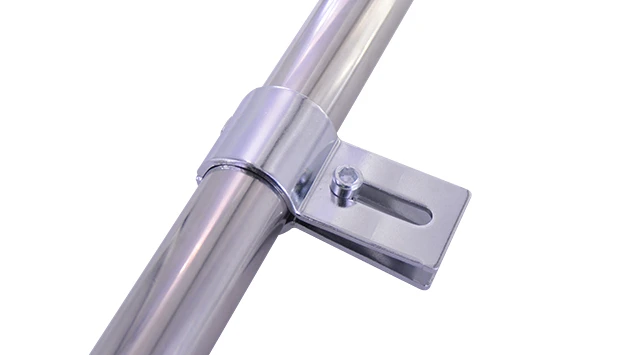
Lean Pipe Clamp B Chrome
Lean pipe clamp is used for turnover trolley, workbench, flowrack adjust the frame or fix some accessory.
If you've ever stood in front of a half-assembled workbench or a wobbly material rack, squinting at a pile of parts and wondering, "Did I pick the right clamp for this?"—you're not alone. In the world of lean manufacturing and workshop setups, the smallest components often hold the biggest impact. And when it comes to building sturdy, flexible systems—whether it's a production line conveyor, a turnover trolley, or a custom workbench—the Lean Pipe Clamp B Chrome is one of those unsung heroes. It's not just a metal piece; it's the quiet guarantee that your structure stays stable, your workflow stays smooth, and your team stays productive. But with so many options out there—different materials, load ratings, and price tags—how do you know which one is *yours*? Let's walk through this together.
First, let's get real: Choosing the wrong clamp isn't just a minor hassle. It's downtime. It's replacing bent or broken parts mid-project. It's the frustration of a workbench that sags under tool weight or a material rack that shifts when you load it—throwing off your carefully planned lean flow. On the flip side, the right clamp? It fades into the background, letting you focus on what matters: building, creating, and optimizing. So whether you're a small workshop owner setting up your first assembly line, a plant manager upgrading an existing system, or a hobbyist building a garage workbench, this guide is for you. We'll break down the three biggest factors that should shape your choice: load capacity, environment, and budget. And yes, we'll throw in some pro tips on compatibility with lean pipe joints and aluminum lean pipe , plus a handy comparison table to make your final decision a no-brainer.
Section 1: Load Capacity – It's Not Just About "Strong Enough"
Let's start with the basics: How much weight will your clamp actually need to hold? Sounds simple, but here's the catch: Most people guess, and guesswork is where problems start. The Lean Pipe Clamp B Chrome is designed to handle specific loads, but those numbers aren't just random—they're based on engineering, material strength, and real-world testing. So let's get precise.
First, calculate the total weight your structure will bear. Let's say you're building a workbench (a common project where these clamps shine). What will go on that workbench? Maybe a 50kg tool chest, 20kg of daily materials, and a 70kg operator leaning on it occasionally. That's 50 + 20 + 70 = 140kg. But wait—you don't just divide that by the number of clamps. Why? Because weight distribution isn't always even. If your workbench has four legs, each with two clamps, that's eight clamps total. But if the operator tends to lean on one corner, that corner's clamps will take more stress. Engineers call this "dynamic load" vs. "static load." Static load is the steady, unmoving weight (like the tool chest). Dynamic load is when weight shifts—someone bumping the bench, materials being set down quickly, or even vibrations from nearby machinery. For most workshops, you'll want to aim for clamps that can handle 1.5x to 2x your calculated static load to account for dynamic stress.
Now, let's talk about the Lean Pipe Clamp B Chrome itself. Chrome-plated steel gives it excellent tensile strength—typically, these clamps can handle anywhere from 150kg to 300kg per clamp, depending on the size and design. But don't take that at face value. Always check the manufacturer's specs. A reputable lean pipe supplier will list both static and dynamic load ratings clearly. For example, one supplier might rate their Clamp B Chrome at 200kg static and 150kg dynamic. That means if your workbench's dynamic load hits 140kg (as in our earlier example), and you have eight clamps, each clamp would only need to handle 17.5kg—well under the 150kg dynamic rating. That's a safe buffer. But if you skimp on clamps or choose a lower-rated model (say, a plastic clamp that maxes out at 50kg dynamic), you could be looking at failure.
Here's a real-world story: A friend of mine runs a small electronics assembly shop. He built a workbench using budget plastic clamps to save money, figuring, "How heavy can circuit boards be?" But he forgot about the ESD equipment on top—a 30kg anti-static mat, a 15kg soldering station, and a 25kg parts bin. Over time, the plastic clamps started to warp under the constant static load. One day, while his team was rushing to meet a deadline, the bench leg gave way, spilling parts everywhere and costing hours of downtime. He replaced those plastic clamps with Lean Pipe Clamp B Chrome the next day, and hasn't had an issue since. Moral of the story: When it comes to load capacity, overestimating is cheaper than replacing a collapsed structure.
Section 2: Environment – Your Clamp's "Home" Matters More Than You Think
Now, let's talk about where your clamp will live. A clamp that thrives in a dry, temperature-controlled factory might crumble in a humid warehouse or a dusty workshop. The Lean Pipe Clamp B Chrome is tough, but it's not invincible—and neither are other clamp types. So let's break down the most common environmental factors you need to consider.
Moisture and Corrosion: If your workspace is prone to moisture—think food processing, car washes, or outdoor loading docks—chrome plating is your best friend. Chrome acts as a barrier against rust and corrosion, making Lean Pipe Clamp B Chrome far more durable than bare steel or even zinc-plated clamps in wet conditions. But even chrome has limits. If you're dealing with saltwater (like in a marine workshop) or heavy chemicals, you might need stainless steel clamps instead. However, for most indoor workshops with occasional spills or high humidity, chrome is more than enough. Pro tip: Wipe down clamps regularly if they're exposed to moisture—even chrome benefits from a little care.
Temperature Extremes: Ever worked in a workshop during a summer heatwave? Metal expands. In winter, it contracts. These fluctuations can loosen clamps over time, especially if they're made of materials that don't handle thermal stress well. Plastic clamps, for example, can become brittle in cold temperatures or warp in extreme heat. Chrome-plated steel, though, handles a wide range—typically from -20°C to 80°C—without losing strength. If your workspace has ovens, freezers, or is unheated/uncooled, this is a big win for Lean Pipe Clamp B Chrome .
Static Electricity (ESD Concerns): If you're in electronics manufacturing—building circuit boards, handling semiconductors, or assembling sensitive tech—static electricity is a silent killer. A single static discharge can fry a $1000 component. That's where ESD-safe workbenches and clamps come into play. Now, Lean Pipe Clamp B Chrome itself isn't inherently ESD-safe, but when paired with ESD-rated aluminum lean pipe and conductive joints, it can be part of an ESD-protected system. Some suppliers offer chrome clamps with conductive coatings—ask your lean pipe supplier about this if ESD is a concern. It's a small upgrade that can save you from costly component failures.
Dust and Debris: Woodworking shops, foundries, or construction sites are full of dust, sawdust, or metal shavings. These tiny particles can get into clamp joints, gumming up the works and making adjustments hard. Chrome's smooth surface is easier to clean than rough, textured finishes—just a quick brush or wipe to keep debris from building up. Compare that to plastic clamps with crevices where dust can hide, leading to premature wear. For dusty environments, the smoother the clamp, the better—and chrome delivers that.
Section 3: Budget – The "Cheapest" Option Rarely Is (Here's Why)
Ah, budget. It's the first thing many of us look at, and for good reason—we all have limits. But when it comes to clamps, "cheap" and "affordable" are not the same thing. Let's talk about total cost of ownership (TCO)—the upfront price plus the cost of replacing, repairing, or dealing with failures over time. Spoiler: Lean Pipe Clamp B Chrome often has a higher upfront cost than plastic or basic steel clamps, but its TCO is usually lower.
Let's do the math. Suppose you need 20 clamps for a project. A pack of basic plastic clamps costs $2 each—total $40. Lean Pipe Clamp B Chrome might cost $5 each—total $100. That's a $60 difference upfront. But here's what happens next: Plastic clamps in a busy workshop might last 6 months before cracking or warping. Then you need to buy another 20—another $40. In a year, you've spent $80. Chrome clamps, though, can last 5+ years with proper care. Over 5 years, plastic clamps would cost you $400 (20 clamps x $2 x 10 replacements), while chrome clamps cost $100. That's a $300 savings. And that's not counting downtime: If a plastic clamp fails mid-project, you lose an hour of work to replace it. At $50/hour labor, that's $50 lost—suddenly, those "cheap" clamps aren't so cheap.
But maybe you're on a super tight budget right now. Is there a middle ground? Consider mixing clamp types. Use Lean Pipe Clamp B Chrome on high-stress areas (like workbench corners, heavy material racks) and cheaper clamps on low-stress parts (like lightweight shelving). Just don't skimp on the critical spots—those are where failures hurt the most.
Section 4: Compatibility – Making Sure Your Clamp Plays Well With Others
A clamp is only as good as how well it fits with the rest of your system. You could have the strongest, most corrosion-resistant clamp, but if it doesn't work with your lean pipe joints or aluminum lean pipe , it's useless. Let's talk about compatibility—because this is where many people get tripped up.
Lean Pipe Diameter: Most lean pipes come in standard diameters: 28mm (the classic "lean pipe"), 30mm, or 40mm for heavier duty. Lean Pipe Clamp B Chrome is typically designed for 28mm or 30mm pipes—check the clamp's specs to match your pipe size. Using a 28mm clamp on a 30mm pipe will result in a loose fit; too big, and it won't grip. Your lean pipe supplier should list compatible pipe sizes for each clamp model—don't guess here.
Joint Types: Lean pipe joints come in all shapes—90-degree elbows, T-joints, swivel joints, etc. The Lean Pipe Clamp B Chrome is designed to work with standard joints, but some specialty joints (like internal rotary aluminum joints) might require specific clamp styles. For example, if you're using a joint that swivels, you need a clamp that can handle movement without slipping. Chrome clamps with locking nuts are great here—they let you tighten securely but still adjust when needed.
Aluminum Lean Pipe Considerations: Aluminum lean pipe is lighter than steel, which is great for portability (think turnover trolleys). But aluminum is softer than steel, so you need to be careful not to overtighten clamps—you could dent or crush the pipe. Lean Pipe Clamp B Chrome often has rubber or plastic inserts on the clamping surface to protect aluminum pipes from damage. If your system uses aluminum, ask for these inserts—they're a small detail that makes a big difference in pipe longevity.
Adjustability: One of the beauties of lean manufacturing is flexibility—you might need to reconfigure your workbench or rack six months from now. A good clamp should let you loosen, adjust, and retighten without losing strength. Chrome clamps with hex nuts or wing nuts are easier to adjust than those with Phillips screws (which can strip). If you anticipate frequent reconfigurations, prioritize clamps with tool-free adjustment (wing nuts) for faster changes.
Section 5: The Lean Pipe Clamp Selection Table – Compare and Choose
To make this even easier, here's a comparison table of common clamp types, including Lean Pipe Clamp B Chrome , to help you visualize which is best for your needs:
| Clamp Type | Material | Static Load Capacity | Best For Environments | Price Range (Per Clamp) | Ideal Use Case |
|---|---|---|---|---|---|
| Lean Pipe Clamp B Chrome | Chrome-plated steel | 150-300kg | Indoor workshops, moderate moisture, temperature-stable areas | $4-$7 | Workbenches, material racks, conveyor systems, heavy-duty applications |
| Plastic Clamp | Nylon or PP | 30-80kg | Dry, low-temperature, lightweight use | $1-$3 | Light shelving, temporary structures, low-stress applications |
| Stainless Steel Clamp | 304/316 stainless steel | 200-400kg | Wet areas, chemical exposure, food processing | $8-$12 | Marine workshops, pharmaceutical facilities, high-corrosion environments |
| Zinc-Plated Steel Clamp | Zinc-plated steel | 100-200kg | Dry, indoor, low-moisture areas | $3-$5 | Light to medium-duty racks, non-critical structures |
Section 6: Final Tips – Because Even Experts Need a Checklist
You've got the basics down: load, environment, budget, compatibility. Now, let's wrap up with some pro tips to make sure you nail this selection.
Test Before Full Deployment: Buy a small batch of clamps first—say, 5-10—and build a test structure. Put it under stress: stack weights on it, wiggle it, expose it to your workshop's conditions for a week. If it holds up, great. If not, you've saved yourself from a full-system failure.
Ask About Warranty: Reputable lean pipe suppliers stand behind their products. A good warranty (6 months to a year) shows they believe in the clamp's quality. If a supplier won't offer a warranty, that's a red flag.
Don't Overlook Accessories: Lean pipe and accessories go hand in hand. Lock washers, extra nuts, or protective sleeves can extend clamp life. Your supplier should offer these—stock up on a few extras.
Consider Future Needs: Today, you might need a small workbench. Tomorrow, you might expand to a full production line. Choose clamps that can grow with you. Lean Pipe Clamp B Chrome is versatile enough for most future projects, making it a smart long-term investment.
Conclusion – You've Got This
Choosing the right clamp might seem like a small decision, but it's the kind of decision that makes your daily work smoother, safer, and more efficient. The Lean Pipe Clamp B Chrome isn't just a part—it's a tool that helps you build the lean, flexible workspace you need to thrive. By focusing on load capacity, environment, budget, and compatibility, you're not just buying a clamp—you're investing in peace of mind.
Remember: There's no "one size fits all," but with the tips here, you can confidently pick the clamp that fits *your* unique needs. And if you ever feel stuck, reach out to a trusted lean pipe supplier —they're there to help. Now go build something amazing. Your future self (and your sturdy, well-clamped workbench) will thank you.