- Company Articles
- Products and Technology
- Product knowledge
- Lean Pipe Clamp B Chrome Sizes: 28mm vs. 30mm – Which Fits Your Pipes?

Lean Pipe Clamp B Chrome Sizes: 28mm vs. 30mm – Which Fits Your Pipes?
Related Product
Lean Pipe Clamp B Chrome
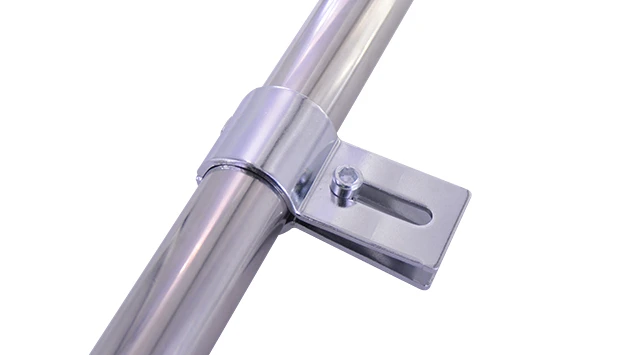
Lean pipe clamp is used for turnover trolley, workbench, flowrack adjust the frame or fix some accessory.
Let's start with a scenario we've all lived through (or heard about): You've spent weeks planning a new lean system upgrade for your workshop. You've ordered the lean pipes, the joints, the workbench frames, and even splurged on those fancy chrome clamps everyone recommended. Delivery day arrives, and you're ready to assemble—until you hold a clamp up to your pipe and realize: it doesn't fit. The clamp's too loose, or maybe too tight, and suddenly your entire timeline grinds to a halt. Sound familiar? If you've ever worked with lean pipe systems, you know that the smallest components—like the size of a clamp—can make or break your project.
Today, we're diving deep into two of the most common sizes of Lean Pipe Clamp B Chrome: 28mm and 30mm. These unassuming little pieces are the unsung heroes of stable, efficient lean setups—holding together everything from flow racks to workbenches to turnover trolleys. But choosing between 28mm and 30mm isn't just about grabbing the first one you see. It's about understanding your pipes, your application, and how these tiny clamps impact the safety, durability, and functionality of your entire system. By the end of this guide, you'll know exactly which size to reach for, saving you time, frustration, and maybe a few choice words when you're knee-deep in assembly.
First Things First: What Even Is a Lean Pipe Clamp B Chrome?
Before we compare sizes, let's make sure we're all on the same page. Lean Pipe Clamp B Chrome isn't just a random part number—it's a critical component in modular lean systems. These clamps are designed to connect lean pipes (the tubular structures that form the backbone of workbenches, racks, and conveyors) to other components like joints, brackets, or workbench surfaces. Think of them as the "glue" that keeps your system rigid but flexible—strong enough to support heavy materials, yet easy to disassemble and reconfigure when your needs change.
The "Chrome" in the name isn't just for show, either. Chrome plating adds a layer of durability, resisting rust and corrosion in busy, sometimes messy workshop environments. It also makes the clamps easier to clean—handy if you're working with oils, coolants, or other industrial fluids. And "B" denotes a specific design: these clamps are typically two-piece, with a bolt or lever that tightens around the pipe, creating a secure grip without damaging the pipe's surface (especially important if you're using PE-coated or aluminum lean pipes).
Now, onto the star of the show: size. The 28mm and 30mm measurements refer to the inner diameter of the clamp—the space where your lean pipe fits. Seems simple, right? But here's the catch: lean pipes themselves can vary in diameter, even within the same "standard" size. A 28mm pipe might actually measure 27.8mm on a cold day or 28.2mm if it's a thicker PE coating. Similarly, 30mm pipes can have slight tolerances based on material (stainless steel vs. aluminum) or manufacturer. That's why choosing the right clamp size isn't just about matching numbers—it's about understanding the nuances of your specific setup.
Why Size Matters: The Hidden Costs of Mismatched Clamps
You might be thinking, "Can't I just force a 28mm clamp onto a 30mm pipe? Or wrap some tape around a 28mm pipe to make it fit a 30mm clamp?" Spoiler: You could, but you'll regret it. Mismatched clamps lead to three big problems that no workshop can afford:
Safety Risks: A loose clamp means a wobbly structure. If you're building a flow rack to hold heavy components or a workbench where operators stand for hours, instability isn't just annoying—it's dangerous. A pipe that slips out of a clamp could cause materials to fall, tools to topple, or even the entire structure to collapse. On the flip side, a clamp that's too tight can warp the pipe or strip the threads on the clamp itself, weakening both components over time.
Wasted Time and Money: Let's say you "make it work" with mismatched clamps. A few weeks later, the clamps start to loosen, or the pipes develop cracks. Now you're taking apart the system, ordering new parts, and re-assembling—all while your production line is down. The cost of those replacement clamps? Minimal compared to the labor hours and lost productivity. It's cheaper (and smarter) to get the size right the first time.
Reduced Flexibility: One of the biggest perks of lean systems is their modularity. Need to add a shelf to your workbench? Move a flow rack to a new location? With the right clamps, you can disassemble and reconfigure in minutes. But if you've jury-rigged clamps to fit, taking things apart becomes a nightmare. You might bend the clamp, snap the bolt, or damage the pipe—turning a quick adjustment into a full replacement project.
The bottom line: Clamps are cheap compared to the consequences of getting them wrong. Let's break down the 28mm and 30mm options to help you choose.
28mm vs. 30mm: A Side-by-Side Comparison
To make this easy, let's put the key details in a table. We'll compare dimensions, compatible pipes, typical applications, and more. Then we'll dive into real-world use cases to see which size shines where.
| Feature | 28mm Lean Pipe Clamp B Chrome | 30mm Lean Pipe Clamp B Chrome |
|---|---|---|
| Inner Diameter | 28mm (tolerance: ±0.2mm) | 30mm (tolerance: ±0.2mm) |
| Compatible Pipe Types |
• 28mm PE-coated lean pipe
• 28mm aluminum lean pipe • 25mm stainless steel pipe (with thin walls) |
• 30mm PE-coated lean pipe
• 30mm aluminum lean pipe • 28mm stainless steel pipe (with thick walls) • Aluminum profile pipes with brackets |
| Typical Applications |
• Light-duty workbenches
• Small turnover trolleys • Roller tracks for lightweight parts • ESD workstations (sensitive electronics) |
• Heavy-duty flow racks
• Industrial conveyor systems • Material racks with 3+ floors • Workbenches with caster wheels (mobile setups) |
| Material Thickness | 1.5mm steel body (chrome plated) | 2.0mm steel body (chrome plated) |
| Weight Capacity (per clamp) | Up to 50kg (when paired with compatible joints) | Up to 80kg (when paired with compatible joints) |
| Installation Ease | Easier to tighten by hand; ideal for quick setups | May require a wrench for maximum tightness; better for permanent structures |
28mm Clamp B Chrome: Best for Precision and Light-to-Medium Duty
Let's start with the smaller of the two: 28mm. These clamps are the workhorses of precision setups, where stability and finesse matter more than brute strength. Here's where they excel:
PE-Coated Lean Pipes: Most standard PE-coated lean pipes are designed around a 28mm core. The PE coating adds 0.5-1mm to the diameter, so a 26mm steel pipe with a 1mm coating becomes ~28mm. The 28mm clamp fits snugly over this, gripping the coating without piercing it. If you're building a workstation for electronics assembly—where static control (ESD) is critical—you can't risk damaging the PE coating (which often contains ESD-safe additives). The 28mm clamp's tight, uniform grip ensures the coating stays intact, keeping your sensitive components safe.
Aluminum Lean Pipes: Aluminum is lighter than steel, making it perfect for mobile setups like turnover trolleys or temporary workbenches. Aluminum lean pipes often come in 28mm diameters because the material is strong enough to support medium loads without needing a thicker wall. A 28mm clamp on an aluminum pipe creates a lightweight but rigid connection—ideal for trolleys that need to be pushed around the shop floor. Plus, aluminum's smooth surface pairs well with the chrome clamp's finish, reducing friction during assembly and disassembly.
Light-Duty Flow Racks and Roller Tracks: If you're moving small parts—think screws, washers, or circuit boards—a 28mm clamp setup is more than enough. A flow rack with 28mm pipes and clamps can easily handle bins of lightweight components, and the clamps' lower profile (since they're smaller) leaves more space for roller tracks or guide rails. For example, a plastic roller track guide rail (yellow or grey, as you might see in electronics manufacturing) pairs seamlessly with 28mm clamps, creating a smooth, unobstructed path for parts to glide along.
Common Mistake with 28mm Clamps: Assuming they're "one size fits all" for small pipes. If you're using a stainless steel pipe with a thick wall (say, 2.0mm), a 28mm clamp might be too tight. Stainless steel has less give than PE or aluminum, so a 28mm stainless pipe could measure 28.5mm, making the clamp impossible to close. Always measure your pipe's outer diameter with a caliper before ordering—don't just trust the label.
30mm Clamp B Chrome: Built for Heavy Lifting and Durability
Now, let's talk about the bigger sibling: 30mm clamps. These are the heavyweights, designed for setups where "good enough" just isn't. Here's when to reach for 30mm:
Thick-Walled Stainless Steel Pipes: Stainless steel is tough, corrosion-resistant, and… thick. A 30mm stainless steel pipe with a 2.0mm wall thickness (common in food processing or chemical plants) needs a clamp that can accommodate its rigid structure. The 30mm clamp's wider diameter and thicker steel body (2.0mm vs. 1.5mm) provide the strength to hold these pipes securely, even under constant vibration or heavy loads.
Industrial Flow Racks and Material Racks: If you're storing large, heavy components—like engine parts, tooling fixtures, or bulk raw materials—you need a system that won't budge. A material rack with 3 rows and 3 floors (think: 9 bins, each holding 20kg) requires pipes and clamps that can distribute weight evenly. 30mm clamps paired with 30mm aluminum or stainless steel pipes create a grid-like structure that's stable enough to withstand daily use without sagging. Add caster wheels (and caster accessories like brakes) to make the rack mobile, and you've got a versatile storage solution that's both strong and flexible.
Conveyor Systems and Roller Tracks: Conveyors move products constantly, putting stress on every joint and clamp. A 30mm clamp on a roller track (like the 40 steel roller track with yellow wheels or 85 staggered roller track) ensures the track stays aligned, preventing jams or product damage. The clamp's extra width also provides more surface area for attaching brackets—like the roller track placon mount for aluminum profile (flat or high), which connects the roller track to the main frame. In high-speed environments, this stability is non-negotiable.
Workbenches with Heavy Tooling: A workbench where operators use power tools, welders, or hydraulic presses needs a rock-solid base. The 30mm clamp's higher weight capacity (up to 80kg per clamp) means you can mount heavy vises, tool holders, or even small machinery directly to the frame without worrying about the structure shifting. For example, a workbench E (single deck, without casters) built with 30mm pipes and clamps can support a 200kg load across the top—more than enough for most industrial tools.
Common Mistake with 30mm Clamps: Overestimating your needs. If you're building a small parts bin rack for your garage workshop, a 30mm clamp will feel bulky and overkill. You'll end up spending more money on larger clamps and heavier pipes than necessary, and the system will be harder to reconfigure later. Remember: bigger isn't always better—match the clamp size to the load.
How to Measure Your Pipes (and Avoid Guesswork)
By now, you're probably eager to check your pipes and pick a clamp size. But before you grab a ruler, let's make sure you're measuring correctly. Here's a step-by-step guide:
1. Use a Digital Caliper: A ruler might get you close, but a digital caliper (available for $20-$30 online) gives precise measurements down to 0.01mm. This is crucial for catching those tiny tolerances that can make or break a fit.
2. Measure at Three Points: Pipes can be slightly oval-shaped, especially if they've been stored improperly. Measure the diameter at the top, middle, and bottom of the pipe, then take the average. For example, if your pipe measures 27.9mm, 28.1mm, and 28.0mm, the average is 28.0mm—so a 28mm clamp is your best bet.
3. Account for Coatings or Layers: If your pipe has a PE coating, rubber sleeve, or any other outer layer, measure the total diameter (coating + core). A "28mm" PE pipe might actually be a 26mm steel core with a 1mm coating, totaling 28mm. If the coating is thicker (1.2mm), the total diameter could be 28.4mm—meaning a 30mm clamp might be needed. When in doubt, check the manufacturer's specs for coating thickness.
4. Test Before Buying in Bulk: Most lean pipe suppliers (including yours truly) will send sample clamps if you ask. Order one 28mm and one 30mm clamp, then test them on your pipes. Does the 28mm clamp slide on easily but stay put when tightened? Does the 30mm clamp feel loose even when fully tightened? The test will tell you more than any measurement.
The Final Verdict: Which Clamp Size Should You Choose?
At the end of the day, the choice between 28mm and 30mm Lean Pipe Clamp B Chrome comes down to two questions:
1. What's the outer diameter of my pipe (including coatings)? If it's 27.8mm-28.3mm, go with 28mm. If it's 29.7mm-30.3mm, go with 30mm. If it's right in the middle (28.5mm-29.5mm), consider your application: light duty? Size up to 30mm for a looser fit that's easier to adjust. Heavy duty? Size down to 28mm and check if the clamp can handle the slight stretch (most can, but test first).
2. What's the load and environment? Light loads, precision setups, or ESD workbenches? 28mm is your friend. Heavy loads, industrial environments, or mobile systems? 30mm will serve you better.
And remember: When in doubt, ask for help. Your lean pipe supplier (whether they specialize in lean pipe, aluminum profile, or roller track systems) has seen every scenario and can guide you to the right clamp size. After all, their job isn't just to sell you parts—it's to make sure your lean system works as hard as you do.
So, the next time you're staring at a pile of clamps and pipes, take a deep breath. Measure twice, test once, and choose the size that fits your pipes, your load, and your workflow. Your future self—busy assembling a perfectly stable, frustration-free lean system—will thank you.