- Company Articles
- Products and Technology
- Product knowledge
- Lean Pipe Clamp B Chrome: Supporting "Reusable" Lean Manufacturing Principles

Lean Pipe Clamp B Chrome: Supporting "Reusable" Lean Manufacturing Principles
Related Product
Lean Pipe Clamp B Chrome
Lean pipe clamp is used for turnover trolley, workbench, flowrack adjust the frame or fix some accessory.
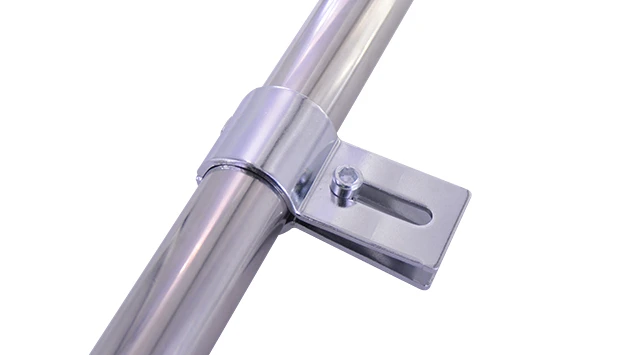
In the fast-paced world of manufacturing, where change is the only constant, the ability to adapt quickly isn't just a luxury—it's a survival skill. Production lines shift, product designs evolve, and customer demands fluctuate. Yet, for decades, many factories have been stuck with rigid, one-and-done equipment: workbenches bolted to the floor, flow racks welded into fixed shapes, and assembly stations that become obsolete the moment a new product rolls out. This rigidity doesn't just waste time and money; it contradicts the very essence of lean manufacturing—eliminating waste and maximizing value. Enter the unsung hero of modular production: the Lean Pipe Clamp B Chrome. This small but mighty component is redefining how manufacturers build, adapt, and reuse their workspaces, turning "throwaway" setups into "reconfigure-and-reuse" systems. Let's dive into how this unassuming clamp is quietly revolutionizing lean manufacturing, one connection at a time.
The Heart of Lean: Why Reusability Matters
Before we zoom in on the Lean Pipe Clamp B Chrome, let's ground ourselves in the core of lean manufacturing. At its heart, lean is about eliminating waste —whether that's wasted time, materials, or space. But in recent years, a new layer has emerged as critical: reusability . Traditional manufacturing setups often treat equipment as disposable. A workbench built for Product A gets torn down when Product B comes along, its parts tossed aside or melted down. That's not just wasteful; it's expensive. Reusability flips the script: instead of building for one purpose, you build for adaptability. Components that can be taken apart, rearranged, and repurposed become the building blocks of a lean system. This isn't just about saving money (though it does that); it's about creating a production floor that can keep up with the pace of modern business.
Meet the Lean Pipe Clamp B Chrome: Small Part, Big Impact
If lean manufacturing is a symphony, the Lean Pipe Clamp B Chrome is the conductor's baton—small, but essential for keeping everything in harmony. So, what exactly is it? At its simplest, it's a connector designed to join lean pipes, aluminum profiles, and other components into sturdy, yet flexible structures. But calling it "just a connector" would be like calling a smartphone "just a phone"—it's so much more. Let's break down its design, materials, and why it's become a staple for manufacturers embracing reusability.
Design: Built for Flexibility
The first thing you notice about the Lean Pipe Clamp B Chrome is its versatility. Unlike fixed joints that lock components into a single angle, this clamp is engineered for adjustability. Its design allows for 360-degree rotation and easy tightening/loosening with standard tools—no welding, no drilling, no permanent modifications. Imagine you're building a workbench: with traditional bolts, changing the height or adding a shelf would mean starting from scratch. With this clamp? Loosen a few screws, reposition the lean pipe, retighten, and you're done. It's like using Lego blocks for adults, but for industrial-grade structures. The clamp's shape is also intentional: a sleek, compact design that doesn't add unnecessary bulk, making it ideal for tight spaces or complex configurations, like the layers of a flow rack.
Materials: Chrome Plating for the Long Haul
Durability is non-negotiable in manufacturing. A clamp that rusts, cracks, or wears down after a few reconfigurations defeats the purpose of reusability. That's where the "chrome" in Lean Pipe Clamp B Chrome comes in. Chrome plating isn't just for shine (though it does look professional); it's a protective barrier. Chrome-coated steel resists corrosion, scratches, and the daily wear-and-tear of a busy production floor. Compare that to uncoated steel clamps, which might start rusting after a year in a humid environment, or plastic clamps that warp under heavy loads. The Lean Pipe Clamp B Chrome is built to last—we're talking years of repeated use, even in tough conditions. And when it does finally need replacing (which, let's be honest, will be a long time), its simple design means it's easy to swap out without disrupting the entire structure.
Compatibility: Works with Your Existing Tools
One of the biggest barriers to adopting new manufacturing tools is compatibility. No one wants to replace their entire inventory of lean pipes or aluminum profiles just to use a new clamp. The Lean Pipe Clamp B Chrome solves this by playing well with others. It's designed to fit standard lean pipes (think 28mm diameter, the industry norm), as well as common aluminum profiles, like the 4040 or 3030 series. This means if you already have a stock of lean pipe or aluminum extrusion profile, you don't need to start over—just add these clamps and unlock a whole new level of flexibility. It's like upgrading your phone's software instead of buying a new device: same hardware, better functionality.
How It All Comes Together: Building with Lean Pipe Clamp B Chrome
A great component is only as good as how it integrates with the system around it. The Lean Pipe Clamp B Chrome shines here, working seamlessly with other lean manufacturing staples to create everything from workbenches to flow racks to turnover trolleys. Let's walk through two common setups to see how it plays a starring role.
Example 1: The Adaptable Workbench
Workbenches are the workhorses of any production line, but their needs change constantly. One day, you're assembling small electronics; the next, you're testing larger components. A fixed-height workbench becomes a liability. Enter the Lean Pipe Clamp B Chrome. Here's how it works: start with basic aluminum tube as the legs. Use the clamps to attach horizontal aluminum profile across the top, creating the frame. Add a plywood or aluminum honeycomb panel for the surface, secured with more clamps. Need to raise the height? Loosen the clamps on the legs, adjust, retighten. Want to add a shelf below? Attach vertical supports with clamps, then horizontal bars for the shelf. Even adding caster wheels is a breeze—simply clamp them to the bottom of the legs for mobility. When the project ends, take it apart, and reuse the pipes, profiles, and clamps to build something new. No waste, no hassle, just pure adaptability.
Example 2: The Reconfigurable Flow Rack
Flow racks are all about keeping materials moving—from incoming inventory to the assembly line. But product sizes vary, and a flow rack that works for small boxes might not work for larger parts. The Lean Pipe Clamp B Chrome solves this by making shelf heights and angles adjustable. Start with vertical lean pipes as the frame. Use clamps to attach roller track (like the 40 steel roller track with yellow wheels) at the desired angle. Need to widen the shelves for bigger boxes? Loosen the clamps, slide the roller track apart, retighten. Switching from right-to-left flow to left-to-right? Just flip the angle of the roller track using the clamps. Even adding side guides (like the aluminum guide rail A) to prevent materials from slipping off is easy—clamp them on, and you're good to go. This isn't just a flow rack; it's a flow rack that grows with your business.
The Benefits: Why Manufacturers Can't Get Enough
By now, you might be thinking, "This clamp sounds useful, but is it really worth investing in?" The short answer: absolutely. Let's break down the tangible benefits that have made the Lean Pipe Clamp B Chrome a must-have for lean system suppliers and manufacturers alike.
Cost Savings: From "One and Done" to "Reuse and Repeat"
Let's do the math. Traditional fixed workbench: $500 to build, and when you need a new configuration, you have to buy or build a new one—another $500. With the Lean Pipe Clamp B Chrome? You build the first workbench for around $400 (since modular components are often cheaper than custom builds), and when you need to reconfigure, you reuse 90% of the parts. Over time, those savings add up. A mid-sized factory might replace 10 workbenches a year—with traditional setups, that's $5,000; with reusable clamps and components, it's closer to $500 (just for new panels or additional pipes). That's a 90% reduction in costs for workbench setups alone. Multiply that across flow racks, trolleys, and other structures, and the ROI becomes undeniable.
Time Efficiency: Less Downtime, More Production
In manufacturing, time is money—and downtime is the enemy. Traditional setups require hours (or days) of installation: welding, drilling, custom cutting. With the Lean Pipe Clamp B Chrome, a team can assemble a basic workbench in under an hour. Reconfiguring it? 15 minutes. Need to move a flow rack to a new part of the factory? Disassemble it with clamps, transport the components, and reassemble in under two hours. Compare that to tearing down a welded structure (which often gets destroyed in the process) and building a new one from scratch. The difference is night and day. Less time setting up means more time producing—and that directly impacts the bottom line.
Sustainability: Good for the Planet, Good for Your Brand
Sustainability isn't just a buzzword; it's a business imperative. Customers, investors, and regulators are all pushing for greener practices, and reducing waste is a big part of that. The Lean Pipe Clamp B Chrome supports sustainability by minimizing the need for new materials. Instead of sending old workbenches or flow racks to the landfill, you reuse their components. Chrome plating also extends the lifespan of the clamp itself, meaning fewer replacements and less waste. For manufacturers looking to boost their green credentials, modular, reusable systems are a simple, effective step forward.
Flexibility: Ready for Whatever Comes Next
The only thing certain about manufacturing is uncertainty. New products, shifting demand, supply chain disruptions—your production floor needs to handle it all. The Lean Pipe Clamp B Chrome gives you that agility. Got a rush order for a new product? Reconfigure your workbench in the morning, start production in the afternoon. Need to downsize a line during slow periods? Disassemble excess structures and store the components until needed. Expanding to a new facility? Pack up your clamps, pipes, and profiles, and rebuild your setup in the new space. This isn't just flexibility; it's future-proofing your operation.
How It Stacks Up: Comparing Lean Pipe Clamps
Not all lean pipe clamps are created equal. To understand why the Lean Pipe Clamp B Chrome stands out, let's compare it to two common alternatives: the 90° Fixed Lean Pipe Joint (a rigid, non-adjustable connector) and the Rotatory Two End Lean Pipe Joint (another adjustable option, but with a different design). The table below breaks down key features, best uses, and more.
| Clamp Type | Key Features | Material | Best For | Reusability (1-5) | Durability (1-5) |
|---|---|---|---|---|---|
| Lean Pipe Clamp B Chrome | 360° rotation, easy tightening/loosening, compatible with lean pipe and aluminum profile | Chrome-plated steel | Workbenches, flow racks, reconfigurable structures | 5 | 5 |
| 90° Fixed Lean Pipe Joint | Locked at 90°, no rotation, permanent angle | Zinc-plated steel | Static structures with no need for adjustment | 2 | 4 |
| Rotatory Two End Lean Pipe Joint | Rotates at two ends, limited angle range, bulkier design | Steel (no chrome plating) | Simple rotations, lightweight structures | 4 | 3 |
As the table shows, the Lean Pipe Clamp B Chrome leads in both reusability and durability, thanks to its adjustable design and chrome plating. While fixed joints have their place in static setups, they can't match the flexibility of the Chrome B Clamp. Rotatory joints come close, but their lack of chrome plating and bulkier design make them less ideal for heavy-duty or long-term use.
The Future of Lean Manufacturing: Reusability Starts Here
In a world where change is constant, the ability to adapt isn't just a competitive advantage—it's survival. Lean manufacturing has always been about eliminating waste, but today, that means more than just cutting costs; it means building systems that can evolve. The Lean Pipe Clamp B Chrome embodies this (philosophy) perfectly: small, simple, and designed to make reusability the default, not the exception. Whether you're building a workbench for a small workshop or outfitting an entire production line for a multinational corporation, this clamp isn't just a tool—it's a statement. It says, "We refuse to waste time, money, or materials. We build for today, and tomorrow."
So, to all the manufacturers, lean system suppliers, and production managers out there: if you haven't already, it's time to embrace the power of reusable components. Start small—swap out a few fixed joints for Lean Pipe Clamp B Chrome, build a reconfigurable workbench, and see the difference for yourself. Before long, you'll wonder how you ever worked without it. After all, in lean manufacturing, the best solutions are the ones that keep working—no matter what the future throws your way.