- Company Articles
- Products and Technology
- Product knowledge
- Lean Pipe Clamp B Chrome Warranty: What to Expect from Suppliers

Lean Pipe Clamp B Chrome Warranty: What to Expect from Suppliers
Related Product
Lean Pipe Clamp B Chrome
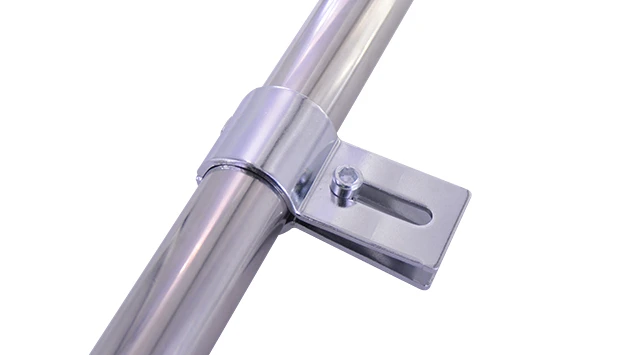
Lean pipe clamp is used for turnover trolley, workbench, flowrack adjust the frame or fix some accessory.
Let's start with a scenario we've all lived (or feared): It's a Tuesday morning, and your production line is humming. Assemblers are working on the final touches of a batch that's due to ship by week's end, and every second counts. Then—*clunk*. A workbench wobbles, and a tool tray crashes to the floor. You rush over to find the culprit: a cracked Lean Pipe Clamp B Chrome, the small but critical piece holding the workbench's frame together. Now, production stalls. You need a replacement fast, but the question hits you: Is this covered under warranty?
If you're in manufacturing, logistics, or any industry that relies on lean systems, you know that equipment failures aren't just inconvenient—they're costly. Downtime, replacement parts, labor to fix the issue: it all adds up. That's why the warranty on components like the Lean Pipe Clamp B Chrome isn't just fine print; it's a promise from your supplier that they stand behind their product. But not all warranties are created equal. Some suppliers offer rock-solid guarantees that make crises manageable, while others hide behind vague language that leaves you holding the bill. So, what should you really expect when it comes to warranties for Lean Pipe Clamp B Chrome? Let's break it down.
First, Let's Talk About the Lean Pipe Clamp B Chrome Itself
Before diving into warranties, it helps to understand why this particular clamp matters. The Lean Pipe Clamp B Chrome is a workhorse in lean manufacturing setups. Designed to connect lean pipes (often aluminum or steel) securely, it's the backbone of structures like workbenches, flow racks, and turnover trolleys. Its chrome plating isn't just for looks—it adds corrosion resistance, making it durable in factory environments where moisture or chemicals might be present. And unlike cheaper plastic clamps, its metal construction means it can handle the daily wear of heavy tools, constant adjustments, and the occasional bump from a forklift.
But here's the thing: Even the sturdiest components fail sometimes. Maybe it's a manufacturing flaw—a weak spot in the metal from the casting process. Maybe it's a defect in the chrome plating that leads to premature rust. Or maybe it's just bad luck. Whatever the cause, when a Lean Pipe Clamp B Chrome fails, you need to know your supplier has your back. That's where the warranty comes in.
What a Standard Warranty Should Cover (and What It Often Doesn't)
Warranties for industrial components like the Lean Pipe Clamp B Chrome can feel like a maze of legalese, but at their core, they're simple: They're a guarantee that the product will work as intended for a certain period. Let's break down the typical coverage you'll see from reputable suppliers, and where some cut corners.
1. Manufacturing Defects: The Basics
Most warranties start here. If your clamp cracks, bends, or breaks due to a flaw in how it was made—say, a bubble in the metal that weakens the structure, or a poorly welded joint—this should be covered. Reputable suppliers will replace the clamp free of charge, no questions asked. For example, if you notice the chrome peeling off after just a month (way too soon for normal wear), that's a plating defect, and it should be covered.
But watch out for suppliers who limit this to "visible defects only." Some will argue that a crack inside the clamp (invisible to the naked eye) isn't covered, even if it causes the clamp to fail. That's a red flag. A good warranty covers all manufacturing defects, visible or not, that affect performance.
2. Material Failures: When the Metal Let's You Down
Lean Pipe Clamp B Chrome is made from steel with a chrome coating, so material quality is key. A warranty should cover failures caused by subpar materials—like using low-grade steel that bends under normal load, or chrome that's too thin to resist rust. For instance, if you're using the clamp in a dry factory (no extreme conditions) and it rusts through in six months, that's a material failure, and the supplier should replace it.
What's not covered here? Normal wear and tear. If the clamp shows minor scratches after a year of use, that's expected. But if it snaps under the weight of a toolbox it's rated to hold? That's a material issue, and the warranty should kick in.
3. Duration: How Long Should the Warranty Last?
Warranty length varies, but for a component like the Lean Pipe Clamp B Chrome, you should expect at least 12 months from a decent supplier. Some top-tier suppliers offer 24 or even 36 months, especially if they're confident in their manufacturing process. Why does duration matter? Because defects don't always show up immediately. A clamp might work fine for six months, then suddenly fail due to a hidden stress fracture from poor welding. A longer warranty gives you peace of mind that you're covered when these issues arise.
Avoid suppliers offering 30-day or "90-day limited" warranties. These are often a sign they don't trust their own products to last.
A Closer Look: Comparing Supplier Warranties (with a Table)
To make this tangible, let's compare hypothetical warranty terms from three types of suppliers: a budget-focused supplier (Supplier X), a mid-range option (Supplier Y), and a premium lean pipe supplier (Supplier Z). This will show you what to aim for—and what to avoid.
| Warranty Aspect | Supplier X (Budget) | Supplier Y (Mid-Range) | Supplier Z (Premium) |
|---|---|---|---|
| Duration | 30 days | 12 months | 24 months |
| Covers Manufacturing Defects? | Only if reported within 10 days of delivery | Yes, for the full 12 months | Yes, including hidden defects |
| Covers Material Failures? | No (explicitly excluded) | Yes, under normal use | Yes, even in moderately humid environments |
| Claim Process | Email only; 14-day response time | Phone/email; 3-day response | 24/7 hotline; 24-hour resolution |
| Replacement Cost | You pay shipping both ways | Free replacement; you pay return shipping | Free replacement + free shipping both ways |
| Exclusions | "Any damage caused by use" (vague) | Misuse, extreme temperatures, chemical exposure | Only misuse (clearly defined: e.g., exceeding weight limits by 50%) |
As you can see, Supplier Z (the premium option) stands out with a longer warranty, clear coverage, and a customer-friendly claim process. Supplier X, on the other hand, makes it hard to get a replacement—even for defects. When shopping for Lean Pipe Clamp B Chrome, aim for a supplier that mirrors Supplier Z's terms. Your future self (and your production schedule) will thank you.
Red Flags: Warranty Terms That Should Make You Walk Away
Not all warranty language is created equal. Some suppliers use tricky wording to avoid honoring claims. Here are phrases to watch for—and why they're problematic:
"Warranty void if used with non-supplier parts." This is a common trap. If you use a Lean Pipe Clamp B Chrome with a lean pipe joint from another brand (even if it's compatible), the supplier might refuse coverage. Reputable suppliers only void warranties if the other parts are incompatible (e.g., a pipe that's too thin for the clamp). They won't penalize you for mixing brands that work together.
"Defects determined at our sole discretion." This gives the supplier total control. If they say, "We don't think that's a defect," you have no recourse. A fair warranty uses objective criteria: "Defects include cracks, bending under rated load, or rust in non-corrosive environments within 12 months."
"No warranty on 'consumable parts.'" Lean Pipe Clamp B Chrome isn't a consumable (like a drill bit that wears out). If a supplier calls it a "consumable" to avoid warranty claims, run. Consumables are items designed to be replaced regularly; clamps are built to last.
Another red flag? Lack of documentation. If the supplier can't provide a written warranty (not just a verbal promise), or if the warranty is only available "on request," they're likely hiding something. Always get the warranty in writing, and read it carefully before ordering.
How Reputable Lean Pipe Suppliers Go Above and Beyond
The best lean pipe suppliers don't just meet the minimum warranty standards—they exceed them. Here's what sets them apart:
1. They Stand Behind the Entire System, Not Just the Clamp
A clamp rarely fails in isolation. If your Lean Pipe Clamp B Chrome breaks, it might damage the lean pipe joint or the aluminum pipe accessories it's connected to. Reputable suppliers understand this and may cover related parts if the failure was due to a clamp defect. For example, if a faulty clamp snaps and bends the pipe, they'll replace both the clamp and the pipe—no extra charge.
2. They Offer Proactive Support (Not Just Reactive)
Instead of waiting for you to file a claim, top suppliers check in. They might send a tech to inspect your lean system during routine visits and spot potential clamp issues before they fail. One manufacturer I worked with had a supplier notice that several clamps were showing early signs of stress (due to a batch with weak welds). The supplier replaced all affected clamps—for free—before any failures occurred. That's the kind of service that builds trust.
3. They Simplify the Claim Process
Imagine dealing with a failed clamp at 8 a.m. on a Monday. The last thing you need is a 10-step claim process with endless forms. Great suppliers make it easy: Snap a photo of the failed clamp, email it to their support team, and have a replacement on the way by noon. Some even offer on-site replacement for critical systems, so you don't have to wait for shipping.
Real-Life Stories: When Warranties Saved the Day (and When They Didn't)
Let's ground this in reality with two stories—one where a warranty worked, and one where it didn't. Both involve the Lean Pipe Clamp B Chrome, but the outcomes couldn't be more different.
Success Story: A Small Electronics Shop Avoids Disaster
Maria runs a small electronics assembly shop with five workbenches, all built using lean pipe systems. One afternoon, a clamp on the main workbench (used for soldering) cracks, causing the bench to tilt. A circuit board teeters on the edge, but Maria catches it just in time. She contacts her lean pipe supplier, who she chose specifically for their 24-month warranty.
The supplier asks for a photo of the clamp and the workbench setup. Within two hours, they confirm it's a manufacturing defect (a weak spot in the weld) and overnight a replacement clamp—free of charge. They even include a small pack of aluminum pipe accessories as a goodwill gesture. Total downtime? Less than a day. Maria's shipment goes out on time, and she's a loyal customer for life.
Failure Story: A Manufacturer Gets Stuck with the Bill
Raj's automotive parts factory ordered 50 Lean Pipe Clamp B Chrome from a budget supplier with a "90-day warranty." At first, the clamps work fine. But at day 91 (literally the day after the warranty expires), three clamps on a flow rack snap, dumping parts onto the floor. Raj contacts the supplier, who says, "Sorry, warranty's up."
Raj argues that the clamps must have had a defect that took 91 days to show. The supplier responds with the warranty's fine print: "No claims after 90 days, regardless of defect onset." Raj has to buy new clamps, replace the damaged parts, and pay his team overtime to clean up and restart production. The "cheap" clamps ended up costing him three times as much as a quality option with a longer warranty.
Questions to Ask Before You Buy
To avoid Raj's situation, ask these questions before ordering Lean Pipe Clamp B Chrome:
- "Can you send me a written copy of the warranty?" If they hesitate, walk away.
- "What counts as a 'manufacturing defect' under the warranty?" Get specific examples.
- "How long does the warranty last, and when does it start?" (It should start from delivery, not manufacture.)
- "What's your claim process? How quickly can I expect a replacement?" Look for 24–48 hour turnaround.
- "Do you cover related parts if a clamp failure damages them?" A "yes" shows they care about your system, not just sales.
- "What's NOT covered under warranty?" Listen for vague answers like "miscellaneous damage"—push for specifics.
A reputable supplier will answer these clearly and confidently. If they dodge questions or get defensive, that's a sign they're not committed to honoring their warranty.
Final Thoughts: Your Warranty Is a Reflection of Their Trust in Their Product
At the end of the day, a warranty isn't just a piece of paper—it's a supplier's promise that they believe in their Lean Pipe Clamp B Chrome. A short, restrictive warranty says, "We hope this works, but we're not sure." A long, comprehensive warranty says, "We stand behind this product, and we'll make it right if it fails."
When you're shopping for lean pipe components, don't just compare prices. Compare warranties. The extra few dollars you spend on a clamp with a solid warranty will save you from headaches, downtime, and unexpected costs down the line. After all, in manufacturing, peace of mind is just as valuable as the parts themselves.
So, the next time you're ordering Lean Pipe Clamp B Chrome, take a minute to read that warranty. It might be the most important decision you make for your production line.