- Company Articles
- Products and Technology
- Product knowledge
- Lean Pipe Clamp B Color Options: Enhancing Visual Management in Workshops

Lean Pipe Clamp B Color Options: Enhancing Visual Management in Workshops
Related Product
Lean Pipe Clamp
Lean pipe clamp is used for rack system hang monitor or other panel for workbenck, flowrack in production daily use.
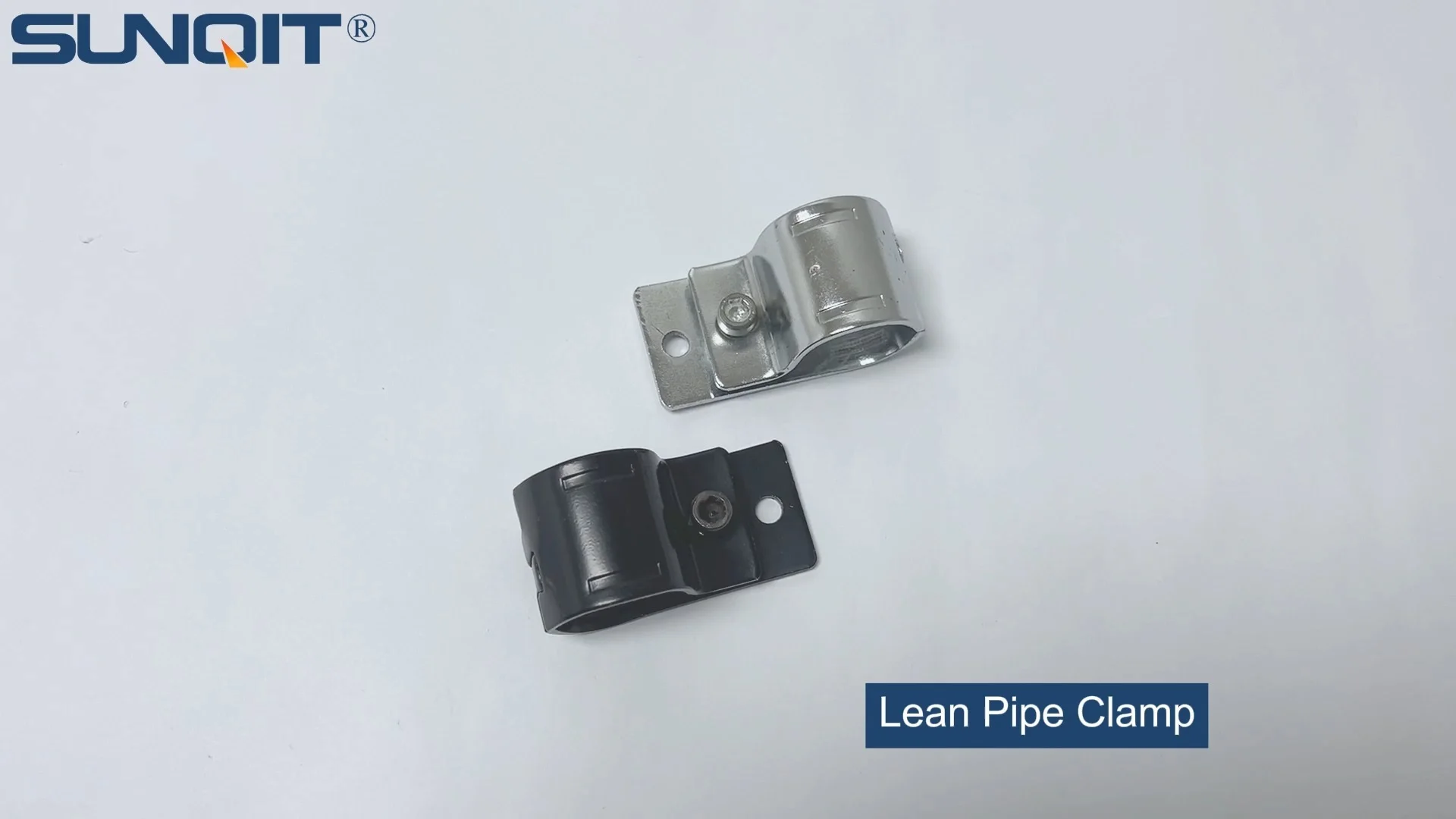
Walk into any high-performing workshop, and you'll notice something immediately: order. Not the rigid, sterile order of a laboratory, but the dynamic, purposeful kind that makes every tool, every material, and every step feel intentional. This isn't by accident—it's the result of thoughtful visual management, a cornerstone of efficient operations. And at the heart of this organization? Tools that do more than just hold things together. Enter the Lean Pipe Clamp B, a humble yet powerful component that, when paired with strategic color options, transforms cluttered workspaces into models of productivity. In this article, we'll explore how color-coded Lean Pipe Clamp B units elevate visual management, streamline workflows, and become indispensable in modern lean system setups—from workbenches to flow racks and beyond.
The Heart of Workshop Efficiency: Why Visual Management Matters
Before diving into the specifics of Lean Pipe Clamp B, let's take a step back. What is visual management, and why does it matter so much in today's fast-paced workshops? At its core, visual management is about making information instantly accessible. It's the idea that anyone—whether a seasoned technician or a new hire—should be able to walk into a space and understand, at a glance, where things belong, how processes flow, and what needs attention. In manufacturing, assembly, or logistics, this clarity isn't just nice to have; it's critical.
Consider the alternative: a workshop without visual cues. Employees spend precious minutes searching for tools. Materials get misplaced, leading to delays. Safety hazards go unnoticed because there's no clear way to mark high-risk areas. Errors creep in when steps aren't clearly defined. Over time, these small inefficiencies add up, eating into profits and morale. Visual management solves this by turning abstract rules and processes into tangible, visible guides. Think color-coded bins, labeled zones, and yes—strategically colored components like the Lean Pipe Clamp B.
In lean system philosophy, where waste reduction is king, visual management is a superpower. It aligns perfectly with principles like "Sort" and "Set in Order" from the 5S methodology, ensuring that only necessary items are present and that everything has a designated place. When implemented well, it reduces waste from motion (less searching), defects (fewer errors), and waiting (smoother workflows). And that's where our star component comes in: Lean Pipe Clamp B isn't just a fastener—it's a visual tool that reinforces these principles.
Lean Pipe Clamp B: More Than Just a Clamp
If you're unfamiliar with Lean Pipe Clamp B, let's start with the basics. These clamps are modular components designed to connect and secure lean pipes—versatile tubes used to build everything from workbenches and flow racks to material trolleys and assembly lines. Made from durable materials like steel or aluminum, they're built to withstand the rigors of daily workshop use, providing a sturdy, adjustable foundation for custom structures. But what truly sets Lean Pipe Clamp B apart is its adaptability. Unlike fixed fasteners, these clamps allow for quick adjustments, making it easy to reconfigure workspaces as needs change—a hallmark of agile lean systems.
But here's the game-changer: color options. Traditionally, clamps and fasteners came in one color—usually a utilitarian silver or black—blending into the background. While functional, they missed an opportunity to contribute to the workshop's visual language. Today's Lean Pipe Clamp B units, however, are available in a range of hues, each chosen for its ability to communicate. Suddenly, a simple clamp becomes a signal: "This section is for raw materials," "That zone is for quality control," or "Watch your step here—this area has moving parts."
Why does color matter here? Our brains process visual information faster than text. A red clamp catches the eye in a way a label never could, especially in noisy, busy environments. Color also transcends language barriers, making it ideal for diverse teams. And when consistently applied, it creates muscle memory: after a few weeks, an employee doesn't need to read a sign—they see a yellow clamp and instinctively know that's where work-in-progress (WIP) belongs. This kind of intuitive organization is the magic of visual management, and Lean Pipe Clamp B is its quiet enabler.

Color Options and Their Practical Applications: A Workshop Guide
Not all colors are created equal in a workshop setting. Each shade carries connotations and serves specific purposes, from indicating workflow stages to highlighting safety risks. Let's break down the most common color options for Lean Pipe Clamp B and how they're transforming workspaces:
| Clamp Color | Primary Use Case | Key Benefit | Example Scenario |
|---|---|---|---|
| Red | Safety-Critical Zones | Immediate hazard awareness | Clamping pipes near machinery with moving parts or electrical panels |
| Yellow | Work-in-Progress (WIP) | Clear workflow tracking | Securing flow rack sections where partially assembled products are staged |
| Blue | Finished Goods/Quality Control | Prevents mixing of completed and incomplete items | Attaching rails on workbenches where final inspections take place |
| Green | Tools & Equipment Storage | Reduces tool search time | Building tool hangers or shadow boards on workshop walls |
| Grey | General/Non-Specific Zones | Creates neutral backdrops for other colors | Structural supports or base frames that don't require special designation |
Red: The Color of Caution (and Safety)
Red is universally recognized as a warning color, and for good reason—it triggers an immediate "stop and pay attention" response. In workshops, red Lean Pipe Clamp B units are invaluable for marking safety-critical areas. Imagine a section of a flow rack positioned near a conveyor belt with moving rollers. Using red clamps here sends a clear message: "Proceed with caution." Similarly, red clamps might secure pipes around electrical outlets, emergency stop buttons, or areas with heavy foot traffic. By integrating red clamps into the physical structure of the workspace, safety becomes part of the environment, not just a sign on the wall.
Yellow: Tracking Work-in-Progress (WIP) with Precision
In lean system thinking, WIP is a double-edged sword: too much, and you're tying up resources; too little, and workflows stall. Yellow Lean Pipe Clamp B units solve this by creating visual boundaries for WIP. Picture a workbench dedicated to electronics assembly. The left side, clamped with yellow clamps, holds circuit boards that need components soldered. Once soldering is done, the boards move to the right side, secured with blue clamps (for quality check). This color transition makes it easy for supervisors to scan the workspace and spot bottlenecks: a pile-up of yellow-clamped materials means the soldering station is backed up. No spreadsheets, no meetings—just a quick glance.
Blue: Signaling Completion and Quality
Blue is often associated with trust and reliability, making it perfect for finished goods or quality control zones. On a flow rack, blue-clamped sections might hold products that have passed all inspections and are ready for shipping. This simple visual cue prevents mix-ups—employees know not to place incomplete items here, reducing the risk of shipping defective products. Even better, blue clamps can be paired with aluminum profile accessories like label holders, creating a one-two punch of visual clarity: the color draws the eye, and the label provides details like batch numbers or destination.
Green: Streamlining Tool Storage
Anyone who's worked in a workshop knows the frustration of hunting for a missing wrench or screwdriver. Green Lean Pipe Clamp B units tackle this by designating tool zones. A wall-mounted rack clamped with green clamps becomes the "home" for power tools, with each tool's outline traced in the same green (reinforcing the visual connection). When a tool is missing, the empty green outline is immediately obvious, prompting a quick search before delays occur. This not only saves time but also fosters accountability—team members know exactly where tools belong and take pride in keeping the space organized.
Grey: The Neutral Workhorse
Not every section of a workshop needs a flashy color, and that's where grey Lean Pipe Clamp B units shine. Grey is neutral, unobtrusive, and perfect for structural elements that don't require special designation—think the base frame of a workbench or the supporting rails of a material trolley. By using grey for non-critical components, you make the colored clamps stand out even more. It's a classic case of contrast: the neutral background makes the important signals (red, yellow, blue, green) pop, enhancing overall visual clarity.

From Clamps to Systems: Integrating Lean Pipe Clamp B into Workbenches and Flow Racks
Color-coded Lean Pipe Clamp B units don't work in isolation—they're part of larger, interconnected systems. Two of the most common applications are workbenches and flow racks, where these clamps turn generic structures into customized, efficient workstations.
Workbenches: Your Team's Command Center
A workbench is more than a table—it's where the magic happens. Whether assembling components, testing products, or packing orders, it's the hub of daily activity. Lean Pipe Clamp B units transform standard workbenches into ergonomic, organized command centers. For example, a workbench used for small-parts assembly might have:
- Green-clamped tool hooks above the bench, holding screwdrivers and pliers.
- Yellow-clamped bins to the left, holding WIP components.
- Blue-clamped trays to the right, for completed assemblies.
- Red-clamped edges near the power strip, reminding users to unplug tools when not in use.
This setup isn't just tidy—it's intuitive. A new team member can walk up, see the color pattern, and start contributing without extensive training. Even better, if the workflow changes—say, the team starts assembling a new product—the clamps can be quickly repositioned, and colors adjusted. No need for a new workbench; just a few tweaks to the existing structure.
Flow Racks: Keeping Materials Moving
Flow racks are the arteries of a workshop, ensuring materials move smoothly from receiving to production to shipping. Without visual cues, they can become chaotic: expired components get mixed with fresh ones, or high-priority materials get buried behind low-priority items. Lean Pipe Clamp B units solve this by color-coding lanes based on material type, urgency, or stage.
For instance, a flow rack in an automotive parts facility might use yellow-clamped lanes for engine components (WIP), blue lanes for finished gaskets, and red lanes for recalled parts (to be quarantined). Each lane's color corresponds to a step in the production cycle, making it easy for pickers to grab the right materials quickly. When paired with roller tracks (another key component in flow systems), color-coded clamps ensure that materials flow to the right workstation at the right time—no more bottlenecks, no more delays.

Real-World Impact: How Color-Coded Clamps Transformed a Mid-Sized Assembly Workshop
To truly understand the power of color-coded Lean Pipe Clamp B units, let's look at a real example. Consider "TechWorks," a mid-sized electronics assembly workshop with 50 employees. Before implementing color clamps, TechWorks struggled with two major issues: frequent errors in order fulfillment and low employee engagement due to a disorganized workspace.
Their workbenches were cluttered, with tools and components scattered across surfaces. Flow racks lacked clear labels, so pickers often grabbed the wrong parts, leading to defective products and customer returns. Safety was also a concern: employees occasionally leaned on unmarked machinery zones, risking injury.
TechWorks decided to overhaul their visual management system, starting with Lean Pipe Clamp B in five colors: red, yellow, blue, green, and grey. They trained the team on the color code (red for safety, yellow for WIP, etc.) and reconfigured their workbenches and flow racks using the new clamps. Within a month, the changes were dramatic:
- Error rates dropped by 35%: Pickers now used blue-clamped flow rack lanes for final assemblies, eliminating mix-ups with WIP (yellow lanes).
- Search time decreased by 40%: Green-clamped tool zones meant employees spent less time hunting for tools and more time assembling.
- Safety incidents fell to zero: Red-clamped machinery zones were universally recognized, reducing near-misses.
- Employee satisfaction scores rose by 25%: The organized workspace felt less stressful, and team members took pride in maintaining the color system.
TechWorks' experience isn't unique. Across industries, workshops that adopt color-coded visual management report similar gains: higher productivity, fewer errors, and happier teams. And at the center of it all? Simple, affordable components like the Lean Pipe Clamp B.
Choosing the Right Colors for Your Workshop: A Practical Guide
Ready to implement color-coded Lean Pipe Clamp B units in your workshop? Here's how to get started:
1. Audit Your Workflow First
Before picking colors, map out your current workflows. Where are the bottlenecks? What materials or tools are most often misplaced? Which areas have safety risks? This audit will help you identify which zones need visual cues the most.
2. Keep It Simple
Resist the urge to use every color under the sun. Stick to 3-5 colors max—any more, and the system becomes confusing. Start with the basics: red (safety), yellow (WIP), blue (finished goods), green (tools), and grey (neutral). You can always add more later if needed.
3. Involve Your Team
Your employees are the ones using the workspace daily—ask for their input! They'll have insights into which colors make sense for their specific tasks. When teams help design the system, they're more likely to follow it.
4. Document and Train
Create a simple visual guide (posters, digital) that explains the color code. Hold a short training session to walk everyone through the system. Reinforce the training with regular reminders until the colors become second nature.
5. Iterate and Improve
Visual management isn't set-it-and-forget-it. Check in after a month: Are the colors working? Are there zones that need adjustment? Be willing to tweak the system based on feedback—flexibility is key to long-term success.
Conclusion: Small Changes, Big Results
In the world of lean system optimization, it's often the smallest tools that make the biggest difference. The Lean Pipe Clamp B, with its simple design and strategic color options, is a perfect example. By turning a functional fastener into a visual cue, it transforms chaotic workspaces into organized, efficient environments where every tool, material, and step has a purpose.
Whether you're assembling electronics, packing orders, or manufacturing machinery, color-coded clamps help your team work smarter, not harder. They reduce errors, save time, enhance safety, and boost morale—all while being affordable and easy to implement. So the next time you look at your workshop, don't just see pipes and racks. See the potential: a space where color tells a story, and every clamp is a step toward better, more efficient work.
Lean Pipe Clamp B color options aren't just about making things look nice—they're about making things work. And in today's competitive landscape, that's the difference between falling behind and leading the pack.